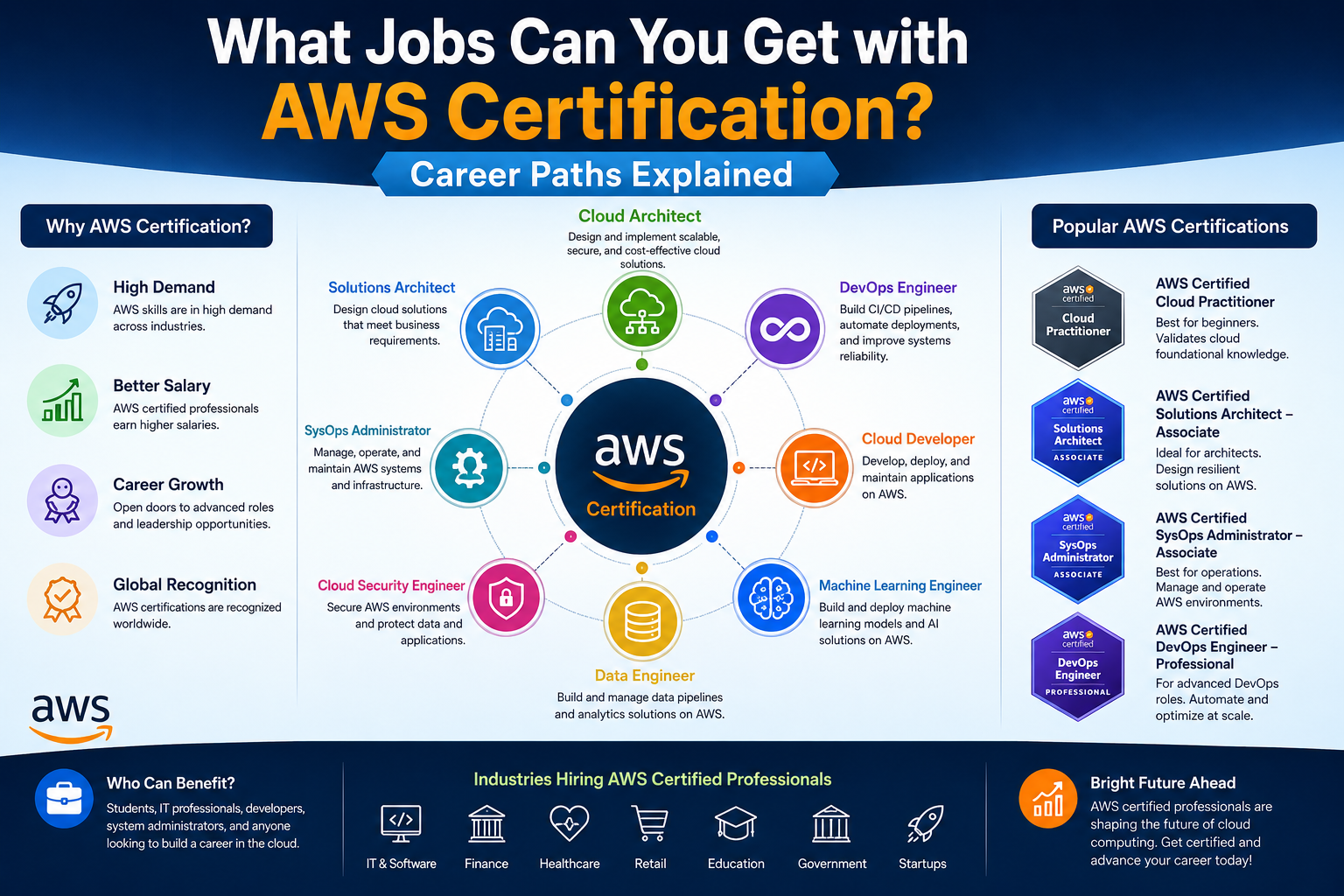
AWS certifications have become a widely recognized pathway for entering and advancing within cloud computing careers. As organizations continue shifting their infrastructure, applications, and data systems to cloud environments, the demand for professionals who understand how cloud platforms operate has grown significantly. AWS, being one of the most widely adopted cloud service providers, plays a central role in shaping these career opportunities.
At a foundational level, AWS certifications are designed to validate a person’s understanding of cloud concepts, architecture principles, and service models. However, their value goes beyond theoretical knowledge. They help bridge the gap between traditional IT roles and modern cloud-based responsibilities. Many job roles today require at least a basic understanding of cloud computing, even if the role is not fully cloud-focused.
One of the key reasons AWS certifications are so influential in career development is their structured progression. Individuals often start with foundational knowledge before moving into associate-level skills and then progressing into professional or specialized domains. This progression reflects real-world job evolution, where professionals gradually take on more complex responsibilities as they gain experience.
Cloud computing itself has transformed the way businesses operate. Instead of relying on physical servers and traditional data centers, organizations now use virtualized infrastructure that can scale dynamically. This shift has created demand for professionals who understand cloud architecture, resource optimization, security controls, and cost management.
AWS certifications help individuals align their skills with these modern requirements. They also signal to employers that a candidate understands standardized cloud practices. While certifications alone do not guarantee a job, they often serve as a strong differentiator in competitive hiring environments, especially for entry-level and mid-level positions.
Another important aspect of AWS-related careers is flexibility. Cloud jobs are no longer restricted to a single work environment. Professionals may work remotely, on-site, or in hybrid roles depending on organizational needs. Additionally, AWS-related skills are applicable across industries such as finance, healthcare, education, retail, and technology services. This broad applicability increases the range of job opportunities available to certified professionals.
AWS certifications also align with the evolving structure of IT teams. Traditional IT departments were often divided into separate roles such as system administrators, network engineers, and database administrators. In cloud environments, these responsibilities often overlap, requiring professionals to understand multiple domains. This convergence of skills has led to the emergence of hybrid job roles that combine infrastructure, development, and operations expertise.
As cloud adoption continues to grow, companies increasingly prioritize professionals who can not only manage systems but also design scalable and efficient cloud architectures. This is where AWS certifications become particularly valuable, as they emphasize both conceptual understanding and practical application of cloud services.
Entry-Level Opportunities After Foundational AWS Knowledge
Starting a career in cloud computing does not always require advanced technical expertise. Many individuals begin their journey with foundational-level knowledge that introduces them to core cloud concepts. This stage is important because it builds the mindset required to understand how cloud systems function at a high level before diving into complex technical implementations.
One of the most common entry-level directions is IT support roles that integrate cloud technologies. In modern IT environments, support professionals are no longer limited to managing local systems or troubleshooting hardware issues. Instead, they are often required to interact with cloud-based platforms, user accounts, and virtual environments. This shift has made cloud awareness an essential skill for IT support professionals.
In such roles, individuals may assist with user access issues, monitor system performance, and help configure cloud-based tools used by employees. They may also support onboarding processes where new users are granted access to cloud applications and services. As organizations increasingly rely on cloud infrastructure for daily operations, IT support teams must understand how cloud resources are provisioned and managed.
Another emerging entry-level opportunity lies in coordination and operational support roles within cloud projects. These roles often involve assisting project teams in organizing cloud deployments, tracking progress, and ensuring that technical requirements are met. While these positions may not require deep technical expertise, they do require a solid understanding of cloud terminology and workflows.
Individuals in these roles often act as a bridge between technical teams and business stakeholders. They help translate technical concepts into understandable language, ensuring that project goals are aligned with business objectives. This makes communication skills just as important as technical knowledge in early-stage cloud careers.
Cloud awareness also opens doors to roles involving basic financial and resource monitoring tasks. Since cloud computing operates on a usage-based pricing model, organizations must continuously track their resource consumption. Entry-level professionals may assist in monitoring usage reports, identifying cost trends, and ensuring that resources are being used efficiently.
This introduces individuals to the financial aspect of cloud computing, where understanding billing structures and cost optimization strategies becomes important. Even at a basic level, professionals learn how different services contribute to overall expenses and how inefficient configurations can lead to unnecessary costs.
In addition to operational and financial exposure, foundational cloud knowledge can also support roles in documentation and system coordination. Many organizations require individuals who can maintain accurate records of cloud configurations, system updates, and operational procedures. These documentation tasks are essential for maintaining consistency and ensuring that systems can be managed effectively over time.
As professionals gain experience in these entry-level roles, they naturally develop a deeper understanding of cloud architecture and service interactions. This gradual exposure prepares them for more advanced positions where they may be responsible for designing or managing cloud-based systems directly.
IT Support Roles in Cloud-Integrated Environments
IT support roles have evolved significantly with the rise of cloud computing. Traditionally, IT support professionals focused on maintaining physical infrastructure, troubleshooting hardware issues, and resolving software problems on local machines. However, the introduction of cloud services has expanded the scope of these responsibilities considerably.
In a cloud-integrated environment, IT support specialists must understand how cloud platforms interact with user devices and organizational systems. They may be responsible for managing cloud-based email services, collaboration tools, and storage platforms. This requires familiarity with cloud access controls, authentication systems, and basic network configurations.
One of the key responsibilities in modern IT support roles is user account management. Since many applications are now hosted in the cloud, user access is often controlled through centralized identity systems. IT support professionals must ensure that users can securely access the resources they need while maintaining organizational security policies.
Another important aspect of cloud-based IT support is troubleshooting connectivity and performance issues. Unlike traditional systems, where problems may be isolated to a single machine, cloud-related issues can involve multiple layers of infrastructure. Support professionals must be able to identify whether a problem originates from the user’s device, network connection, or cloud service configuration.
In addition to technical troubleshooting, IT support professionals also play a role in system maintenance and updates. Cloud platforms frequently introduce new features and updates, which may require configuration changes or user training. Support teams help ensure that these transitions occur smoothly without disrupting business operations.
Security awareness is another critical component of cloud-based IT support. With more systems being accessed remotely, the risk of unauthorized access and data breaches increases. IT support professionals must follow security best practices, such as enforcing strong password policies, monitoring suspicious activity, and ensuring proper access permissions.
Cloud-integrated IT support roles also involve working with automated tools and dashboards that monitor system performance. These tools provide real-time insights into system health, user activity, and resource utilization. Support professionals use this information to proactively identify potential issues before they impact users.
As organizations continue to adopt cloud-first strategies, IT support roles are becoming more strategic in nature. Instead of simply reacting to issues, support professionals are increasingly involved in planning and optimizing cloud usage. This shift highlights the importance of cloud knowledge even at the foundational level of IT careers.
Project Coordination and Cloud-Based Operational Roles
Project coordination in cloud environments requires a combination of organizational skills and technical awareness. Unlike traditional project management, cloud-based projects often involve rapidly changing technologies, distributed teams, and dynamic infrastructure requirements. This makes coordination a critical function in ensuring successful project execution.
Individuals in cloud project roles are often responsible for tracking progress across multiple teams, ensuring that deadlines are met, and maintaining communication between technical and non-technical stakeholders. They must understand the basics of cloud architecture to effectively interpret project requirements and identify potential challenges.
A significant part of cloud project coordination involves resource planning. Since cloud environments allow for scalable infrastructure, teams must carefully plan how resources are allocated throughout the project lifecycle. Coordinators may assist in monitoring resource usage and ensuring that provisioning aligns with project goals.
Documentation is another essential responsibility in cloud project environments. Coordinators maintain records of system configurations, deployment steps, and workflow processes. This documentation ensures that project knowledge is preserved and can be referenced in future implementations or troubleshooting scenarios.
Cloud projects often involve collaboration between multiple departments, including development, operations, security, and business teams. Coordinators act as a communication bridge, ensuring that each group understands its responsibilities and timelines. This helps prevent misalignment and reduces the risk of delays or misconfigurations.
Risk management is also an important aspect of cloud project coordination. Since cloud systems are highly dynamic, changes in configuration or service usage can introduce unexpected issues. Coordinators help identify potential risks early and work with technical teams to mitigate them before they escalate.
In addition to coordination responsibilities, individuals in these roles often gain exposure to cloud budgeting and financial tracking. They may assist in monitoring project expenses and ensuring that cloud resources are used efficiently. This introduces them to the concept of cost optimization, which is a critical skill in cloud environments.
Over time, professionals in cloud project coordination roles develop a deeper understanding of how cloud systems are designed and deployed. This experience can serve as a foundation for transitioning into more technical roles such as cloud architecture or operations management.
Cloud Financial Awareness and Resource Management Roles
Cloud computing introduces a unique financial model that differs significantly from traditional IT infrastructure. Instead of purchasing physical hardware upfront, organizations pay for cloud services based on usage. This model requires continuous monitoring and optimization to ensure cost efficiency.
Professionals working in cloud-related financial roles focus on analyzing usage patterns, tracking expenses, and identifying opportunities for cost savings. They must understand how different cloud services contribute to overall costs and how resource configurations impact billing.
One of the key responsibilities in these roles is monitoring resource consumption. Cloud environments provide detailed usage reports that show how computing power, storage, and network resources are being utilized. Financial analysts review this data to identify inefficiencies and recommend adjustments.
Another important aspect is budgeting and forecasting. Organizations often set monthly or yearly budgets for cloud usage. Professionals in financial roles help ensure that spending remains within these limits while still supporting business needs. This requires balancing performance requirements with cost constraints.
Cost optimization is a major focus in cloud financial management. Simple changes, such as shutting down unused resources or selecting more efficient service tiers, can lead to significant savings. Professionals in this field must be familiar with cloud pricing models and understand how different services are billed.
Cloud financial roles also involve collaboration with technical teams. Financial analysts often work closely with engineers and architects to understand why certain resources are being used and whether alternatives could reduce costs. This collaboration ensures that financial decisions are aligned with technical requirements.
Reporting is another critical responsibility. Financial professionals prepare reports that summarize cloud spending, highlight trends, and provide recommendations for optimization. These reports are often shared with senior management to support strategic decision-making.
As organizations continue to scale their cloud usage, the importance of financial management within cloud environments continues to grow. Professionals who understand both financial principles and cloud technologies are increasingly valuable in modern IT ecosystems.
Transition from Foundational Knowledge to Associate-Level AWS Careers
As individuals move beyond entry-level exposure to cloud computing, they begin entering a stage where technical depth and practical application become significantly more important. This transition marks the shift from understanding cloud concepts to actively designing, deploying, and managing cloud-based systems. AWS associate-level roles sit at this midpoint and are often considered the most common entry point into fully technical cloud careers.
At this stage, professionals are expected to understand not only what cloud services are but also how they interact with one another in real environments. This includes computing resources, storage systems, networking configurations, identity management, and application deployment pipelines. The focus shifts from general awareness to applied problem-solving within cloud ecosystems.
Associate-level AWS roles typically require individuals to work closely with system architecture, automation tools, and operational workflows. Unlike foundational roles where tasks are more supportive or observational, these positions involve direct responsibility for system behavior, performance, and reliability.
One of the key changes at this level is accountability. Professionals are no longer just assisting with cloud environments; they are actively building and maintaining them. This requires a deeper understanding of AWS services and how architectural decisions impact scalability, security, and cost efficiency.
Another important aspect of this transition is the increased reliance on hands-on experience. While foundational roles may involve theoretical understanding or basic usage, associate-level positions require practical familiarity with real cloud environments. This includes deploying applications, configuring services, and troubleshooting issues in production-like scenarios.
As professionals progress, they also begin to specialize in certain domains such as architecture design, system administration, development, or DevOps practices. Each of these paths builds on a shared foundation of cloud knowledge but diverges based on career interests and technical strengths.
Cloud Solutions Architect Roles and System Design Responsibilities
Cloud solutions architecture is one of the most important and widely recognized career paths within the AWS ecosystem. It focuses on designing cloud systems that meet business requirements while maintaining efficiency, scalability, and security. Unlike operational roles that focus on maintaining systems, solutions architects are responsible for creating the blueprint of cloud infrastructure.
A solutions architect works at the intersection of business needs and technical execution. They translate organizational goals into technical designs that can be implemented using AWS services. This requires a deep understanding of how different components of the cloud interact, including compute resources, storage layers, networking configurations, and security controls.
One of the primary responsibilities in this role is designing scalable systems. Cloud environments must be able to handle varying levels of demand without performance degradation. Solutions architects plan architectures that can automatically adjust resource usage based on traffic or workload changes. This ensures that applications remain stable even under unpredictable conditions.
Security is another critical aspect of cloud architecture. Solutions architects must ensure that systems are designed with security best practices from the beginning. This includes defining access controls, encryption strategies, and network isolation techniques. Rather than adding security later, it is integrated into the architecture itself.
Cost optimization is also a major consideration. Cloud resources are billed based on usage, so inefficient designs can lead to unnecessary expenses. Architects must carefully select services and configurations that balance performance with cost efficiency. This often involves evaluating different service options and choosing the most appropriate one for each use case.
In addition to technical design, solutions architects are heavily involved in stakeholder communication. They work with business leaders, developers, and operations teams to ensure that architectural decisions align with organizational goals. This requires the ability to explain complex technical concepts in simple terms.
Solutions architects also play a key role in cloud migration projects. Many organizations moving from traditional infrastructure to cloud environments rely on architects to plan and execute the transition. This includes assessing existing systems, identifying dependencies, and designing cloud-based replacements.
Another important responsibility is ensuring system reliability. Architects design systems with redundancy and failover mechanisms to minimize downtime. This includes distributing workloads across multiple availability zones and implementing automated recovery processes.
As cloud environments become more complex, solutions architects increasingly rely on automation and infrastructure-as-code practices. This allows them to define infrastructure using templates and scripts rather than manual configuration, improving consistency and reducing human error.
Cloud Systems Administration and Operational Engineering
Cloud systems administration represents the operational backbone of AWS environments. While architects focus on design, system administrators focus on implementation, maintenance, and day-to-day management of cloud infrastructure. This role is essential for ensuring that cloud systems remain functional, secure, and efficient.
In cloud environments, system administrators manage virtual servers, storage systems, and network configurations. They are responsible for provisioning resources, monitoring system health, and responding to operational issues. Unlike traditional IT environments, cloud administration often involves managing dynamic and scalable infrastructure.
One of the key responsibilities in this role is resource provisioning. System administrators create and configure virtual machines, databases, and storage systems based on organizational requirements. These resources must be properly sized to meet performance needs without wasting capacity.
Monitoring is another critical function. Cloud environments generate a large amount of operational data, including performance metrics, logs, and usage statistics. System administrators use monitoring tools to track system behavior and identify potential issues before they escalate.
Troubleshooting is also a core responsibility. When systems experience performance degradation or failures, administrators must quickly identify the root cause and implement solutions. This requires familiarity with multiple layers of the cloud stack, including networking, compute, and application services.
Patch management and system updates are also part of cloud administration. Cloud services frequently evolve, and administrators must ensure that systems remain up to date with the latest security patches and feature improvements. This helps maintain system stability and protect against vulnerabilities.
Automation plays a growing role in system administration. Many repetitive tasks, such as resource scaling or backup management, are now handled through automated scripts and cloud-native tools. This allows administrators to focus more on strategic tasks rather than manual operations.
Cloud system administrators also work closely with security teams to enforce access controls and compliance policies. They ensure that only authorized users have access to specific resources and that systems follow organizational security standards.
Over time, system administrators often develop skills that allow them to transition into more advanced roles, such as cloud operations engineers or DevOps specialists. This progression is natural as they gain deeper exposure to infrastructure automation and system design principles.
AWS Developer Roles and Cloud-Based Software Engineering
AWS developer roles focus on building and deploying applications within cloud environments. Unlike traditional software development, cloud-based development requires an understanding of distributed systems, scalability, and service integration.
Developers working in AWS environments often build applications that interact with multiple cloud services. These may include storage systems, databases, authentication services, and messaging systems. Understanding how these services communicate is essential for building efficient and reliable applications.
One of the key aspects of cloud development is scalability. Applications must be designed to handle varying levels of user demand without performance issues. Developers often use cloud-native tools that automatically scale resources based on usage patterns.
Another important aspect is integration with AWS services. Developers frequently work with APIs and service interfaces that allow applications to interact with cloud infrastructure. This includes storing data, processing requests, and managing user authentication.
Cloud developers also need to understand deployment pipelines. Applications are often deployed using automated processes that move code from development to production environments. This ensures consistency and reduces the risk of deployment errors.
Testing and debugging are also critical in cloud development. Since applications run in distributed environments, developers must test how systems behave under different conditions. This includes load testing, integration testing, and performance optimization.
Security is an integral part of cloud development. Developers must ensure that applications handle data securely, protect user information, and comply with organizational policies. This includes implementing encryption, secure authentication methods, and proper access controls.
In addition to traditional programming skills, AWS developers often work with cloud-specific tools that support application deployment, monitoring, and performance analysis. These tools help streamline development workflows and improve system reliability.
Over time, developers in AWS environments may specialize in areas such as backend development, API design, or serverless application architecture. This specialization allows them to focus on specific aspects of cloud-based software engineering.
DevOps Engineering and Continuous Delivery in AWS Environments
DevOps engineering represents a shift in how software systems are developed and deployed. Instead of separating development and operations teams, DevOps integrates both functions into a unified workflow that emphasizes automation, collaboration, and continuous delivery.
In AWS environments, DevOps engineers are responsible for building pipelines that automate the process of code integration, testing, and deployment. This ensures that software updates can be delivered quickly and reliably.
One of the core responsibilities in DevOps engineering is pipeline automation. Developers write code, and DevOps systems automatically build, test, and deploy that code to production environments. This reduces manual intervention and increases deployment speed.
Infrastructure automation is another key aspect of DevOps. Instead of manually configuring servers and environments, engineers use scripts and templates to define infrastructure as code. This allows systems to be replicated consistently across different environments.
Monitoring and logging are also critical in DevOps roles. Engineers must ensure that systems are continuously monitored for performance issues and errors. Real-time data helps teams respond quickly to problems and maintain system stability.
Collaboration is a fundamental principle of DevOps. Engineers work closely with developers, system administrators, and security teams to ensure that software is delivered efficiently. This collaborative approach helps reduce bottlenecks and improve overall productivity.
Security integration, often referred to as DevSecOps, is increasingly important. Security practices are integrated directly into development and deployment pipelines, ensuring that vulnerabilities are identified early in the process.
DevOps engineers also focus on scalability and reliability. They design systems that can automatically adjust to changing workloads and recover from failures without manual intervention.
Over time, DevOps professionals develop a deep understanding of both development and operational processes, making them highly valuable in modern cloud environments.
Cloud Security Engineering Roles in AWS Environments
Cloud security engineering is one of the most critical and in-demand career paths in the AWS ecosystem. As organizations migrate sensitive data, applications, and business operations to the cloud, the need for strong security practices becomes essential. Cloud security engineers are responsible for designing, implementing, and maintaining security controls that protect cloud-based systems from threats, unauthorized access, and data breaches.
In AWS environments, security is not treated as an afterthought but as a core part of system architecture. Cloud security engineers work closely with architects and developers to ensure that every layer of the infrastructure follows strict security principles. This includes identity management, encryption, monitoring, and compliance enforcement.
A major responsibility in this role is identity and access management. Engineers define who can access specific resources and under what conditions. This involves configuring roles, permissions, and authentication mechanisms to ensure that users only have access to what they need. Proper access control reduces the risk of internal and external security threats.
Encryption is another fundamental area. Cloud security engineers ensure that data is protected both at rest and in transit. This means securing stored data in databases and storage systems, as well as protecting data being transmitted between services and users. Encryption strategies are carefully designed based on sensitivity and compliance requirements.
Monitoring and threat detection are also key responsibilities. Cloud environments generate large volumes of logs and activity data. Security engineers analyze this data to detect unusual behavior, unauthorized access attempts, or potential vulnerabilities. Automated alerting systems are often used to respond quickly to security incidents.
Compliance management is another important aspect of cloud security roles. Many organizations must follow industry regulations related to data protection and privacy. Security engineers ensure that cloud systems meet these standards by implementing policies, conducting audits, and maintaining documentation.
Incident response is also part of the job. When a security breach or suspicious activity is detected, engineers must quickly investigate, contain, and resolve the issue. This requires strong analytical skills and familiarity with cloud infrastructure behavior.
As cloud adoption grows, security engineering roles continue to expand in complexity. Professionals in this field often develop expertise in advanced areas such as threat intelligence, vulnerability assessment, and security automation.
Data Engineering and Analytics Careers on AWS
Data engineering and analytics roles have become central to modern business decision-making. In AWS environments, data professionals work with massive volumes of structured and unstructured data to extract insights that drive business strategies. These roles combine technical skills with analytical thinking to transform raw data into meaningful information.
Data engineers are primarily responsible for building and maintaining data pipelines. These pipelines collect data from multiple sources, process it, and store it in systems optimized for analysis. In AWS environments, this often involves working with scalable storage and processing services that handle large datasets efficiently.
One of the key responsibilities in data engineering is data ingestion. Engineers design systems that continuously collect data from applications, devices, and external sources. This data is then cleaned and transformed to ensure consistency and usability.
Data transformation is another critical task. Raw data is often messy and inconsistent, so engineers apply rules and processes to structure it in a usable format. This step ensures that analytics tools can accurately interpret the data.
Data storage design is also important. Engineers choose appropriate storage systems based on data type, volume, and access requirements. Some data may require real-time access, while other datasets may be stored for long-term analysis.
On the analytics side, professionals focus on interpreting data to generate insights. Data analysts work with processed datasets to identify trends, patterns, and correlations. These insights help organizations make informed business decisions.
Visualization is often part of analytics roles. Data professionals present findings in a way that is easy for stakeholders to understand. This helps bridge the gap between technical data systems and business strategy.
Performance optimization is another key aspect of data roles. Engineers ensure that data pipelines run efficiently and can handle increasing volumes of information without delays or failures.
As organizations continue to rely on data-driven decision-making, the demand for skilled data engineers and analysts in AWS environments continues to grow rapidly.
Database Specialization and Data Management Roles
Database engineering is a specialized field that focuses on managing structured and unstructured data systems in cloud environments. AWS provides a wide range of database services, and professionals in this field are responsible for selecting, configuring, and maintaining the most suitable solutions for different applications.
Database engineers must understand different types of database systems, including relational and non-relational models. Each type serves different purposes depending on how the data is structured and accessed.
One of the key responsibilities is database design. Engineers structure databases in a way that ensures efficiency, scalability, and data integrity. This involves defining schemas, relationships, and indexing strategies.
Performance optimization is another critical area. As data volume grows, database performance can degrade if not properly managed. Engineers tune queries, optimize storage, and configure caching mechanisms to ensure fast data retrieval.
Backup and recovery planning is also essential. Database engineers ensure that data is regularly backed up and can be restored in case of failure or corruption. This is crucial for maintaining business continuity.
Security management is another important responsibility. Engineers implement access controls, encryption, and auditing mechanisms to protect sensitive data stored in databases.
Database migration is also a common task in cloud environments. Many organizations move from traditional database systems to cloud-based solutions. Engineers plan and execute these migrations while ensuring minimal disruption.
Monitoring and maintenance are ongoing responsibilities. Engineers track database performance, identify issues, and apply updates or patches as needed.
As cloud adoption increases, database specialization roles continue to evolve, requiring deeper expertise in distributed systems and scalable data architectures.
Network Engineering in AWS Advanced Networking Environments
Network engineering in AWS environments focuses on designing and managing the communication pathways between cloud resources and external systems. Networking is a foundational component of cloud infrastructure, as it ensures that services can communicate efficiently and securely.
Network engineers are responsible for configuring virtual networks that isolate and organize cloud resources. These networks define how data flows between applications, users, and external systems.
One of the primary responsibilities is designing network architecture. Engineers create structures that support scalability, security, and performance. This includes defining subnets, routing rules, and connectivity options.
Security is a major focus in network engineering. Engineers implement firewalls, access controls, and encryption protocols to protect data in transit. They also monitor network traffic to detect unusual activity.
Performance optimization is another key responsibility. Network engineers ensure that data flows efficiently between services with minimal latency. This is especially important for applications that require real-time communication.
Hybrid networking is also a common area of focus. Many organizations maintain both cloud and on-premises systems, requiring secure and efficient connections between the two environments.
Troubleshooting network issues is a critical skill. Engineers diagnose connectivity problems, latency issues, and configuration errors to maintain system stability.
As cloud systems become more complex, network engineers increasingly rely on automation tools to manage configurations and monitor performance.
Machine Learning Engineering in AWS Environments
Machine learning engineering is one of the most advanced and rapidly growing fields within AWS careers. It focuses on building systems that can learn from data and make predictions or decisions without explicit programming.
Machine learning engineers design and deploy models that process large datasets and identify patterns. These models are used in applications such as recommendation systems, fraud detection, and predictive analytics.
One of the key responsibilities is data preparation. Engineers collect and clean data to ensure it is suitable for training machine learning models. This step is crucial for achieving accurate results.
Model training is another core task. Engineers use algorithms to train models on historical data, allowing them to learn patterns and relationships.
Model evaluation is also important. Engineers test models to measure accuracy and performance, making adjustments as needed to improve results.
Deployment is another critical stage. Once a model is trained, it must be integrated into production systems where it can make real-time predictions.
Monitoring is essential in machine learning environments. Models must be continuously evaluated to ensure they remain accurate as data patterns change over time.
Automation plays a significant role in machine learning engineering. Many processes, including training and deployment, are automated to improve efficiency and scalability.
As organizations increasingly rely on artificial intelligence, machine learning engineering continues to be one of the most advanced and high-impact AWS career paths.
SAP on AWS and Enterprise System Integration Roles
Enterprise systems such as SAP play a major role in large organizations that manage complex business processes. SAP on AWS involves running enterprise resource planning systems within cloud environments, combining traditional enterprise software with modern cloud infrastructure.
Professionals in this field are responsible for deploying, managing, and optimizing SAP workloads on AWS. This requires understanding both SAP systems and cloud architecture principles.
One of the key responsibilities is system migration. Many organizations move SAP systems from on-premises infrastructure to the cloud. This process requires careful planning to ensure data integrity and system continuity.
Performance optimization is also critical. SAP systems are resource-intensive, so engineers must ensure that cloud infrastructure is properly configured to handle workloads efficiently.
Security is another important aspect. SAP systems often contain sensitive business data, so engineers must implement strict access controls and encryption measures.
Integration with other cloud services is also common. SAP systems may need to communicate with databases, analytics tools, or external applications hosted in the cloud.
Monitoring and maintenance are ongoing responsibilities. Engineers ensure that SAP systems remain stable, secure, and efficient in cloud environments.
As enterprise cloud adoption continues to grow, SAP on AWS roles remain highly specialized and valuable in large-scale organizations.
Emerging AWS Career Paths and Modern Cloud Roles
Beyond traditional roles, new career paths are emerging in AWS environments as cloud technology continues to evolve. These roles focus on optimizing cloud usage, improving reliability, and managing cost efficiency.
One emerging area is cloud financial management, often referred to as FinOps. Professionals in this field focus on optimizing cloud spending, analyzing usage patterns, and ensuring cost efficiency across cloud environments.
Another growing role is cloud reliability engineering. These professionals ensure that systems remain highly available and resilient. They focus on system uptime, fault tolerance, and performance stability.
Cloud automation engineering is also becoming increasingly important. These professionals design systems that reduce manual intervention by automating infrastructure management, deployments, and monitoring tasks.
Cloud governance roles are also emerging. These professionals ensure that cloud usage aligns with organizational policies, compliance requirements, and security standards.
As cloud environments become more complex, these emerging roles are becoming essential for maintaining efficiency and control across large-scale systems.
Long-Term AWS Career Development and Skill Progression
Building a long-term career in AWS requires continuous learning and skill development. Cloud technology evolves rapidly, and professionals must stay updated with new services, tools, and architectural practices.
Career progression in AWS environments typically follows a path from foundational knowledge to specialized expertise. Professionals often begin with a general understanding, move into technical roles, and eventually specialize in areas such as security, architecture, data, or machine learning.
Hands-on experience plays a critical role in career development. Working directly with cloud environments helps professionals understand real-world challenges and solutions.
Cross-functional knowledge is also valuable. Professionals who understand multiple domains, such as networking, security, and development, are often better equipped for senior roles.
As experience grows, individuals may transition into leadership or design-focused positions where they guide cloud strategy and architecture decisions.
Continuous adaptation is essential in AWS careers. New services and technologies are constantly introduced, and professionals must be willing to learn and evolve with the ecosystem.
Conclusion
AWS certifications and cloud computing skills have become a defining factor in shaping modern IT careers. Across industries, organizations are no longer treating cloud technology as an optional upgrade but as a core foundation for how they build, deploy, and manage digital systems. This shift has created a wide spectrum of job opportunities, ranging from entry-level support roles to highly specialized engineering and architecture positions.
What makes AWS career paths particularly valuable is their adaptability. Unlike traditional IT roles that often remain fixed within narrow technical boundaries, cloud-based roles evolve continuously as technology advances. Professionals working in AWS environments are expected to understand multiple domains such as networking, security, development, data management, and system design. This interconnected skill set allows individuals to grow in multiple directions rather than being limited to a single specialization.
Another important aspect of AWS careers is scalability—not just in systems, but in personal growth. As professionals gain experience, they naturally move from foundational understanding to more advanced responsibilities. Early exposure to cloud concepts helps individuals build confidence, while hands-on experience in associate and professional roles strengthens their ability to solve complex real-world problems. Over time, this progression can lead to leadership positions where strategic decision-making becomes a key responsibility.
AWS-related careers also offer a high degree of flexibility in work environments. Many roles support remote, hybrid, and on-site arrangements, reflecting the distributed nature of cloud infrastructure itself. Since cloud systems are accessible from anywhere, professionals are no longer tied to physical data centers or office-based setups. This flexibility has made cloud careers more attractive to a global workforce seeking a balance between technical work and personal lifestyle.
The demand for AWS professionals is also closely tied to the ongoing expansion of digital transformation. Businesses of all sizes are migrating to cloud platforms to improve efficiency, reduce infrastructure costs, and increase operational agility. This transition is not limited to technology companies alone; sectors such as healthcare, finance, education, and retail are all actively investing in cloud solutions. As a result, AWS skills have become universally relevant across industries.
Security and data protection further highlight the importance of cloud expertise. As more sensitive information moves to cloud environments, organizations require professionals who understand how to protect data, manage access controls, and ensure compliance with regulations. This makes cloud security knowledge an essential component of nearly every AWS-related role, regardless of specialization.
At the same time, emerging technologies such as artificial intelligence, machine learning, automation, and big data analytics are expanding the scope of AWS careers even further. These technologies rely heavily on cloud infrastructure, meaning professionals who understand AWS are better positioned to work on advanced, future-focused projects. This continuous evolution ensures that cloud careers remain relevant and in demand.
Ultimately, AWS certifications and skills represent more than just technical qualifications. They reflect a mindset of adaptability, continuous learning, and problem-solving in dynamic environments. Whether someone begins with foundational knowledge or enters directly into specialized roles, the AWS ecosystem provides a structured yet flexible pathway for long-term career development.
In a world where technology is rapidly reshaping how businesses operate, cloud computing stands at the center of innovation. Building expertise in AWS not only opens doors to a wide range of job opportunities but also equips professionals with the tools needed to thrive in an increasingly digital future.