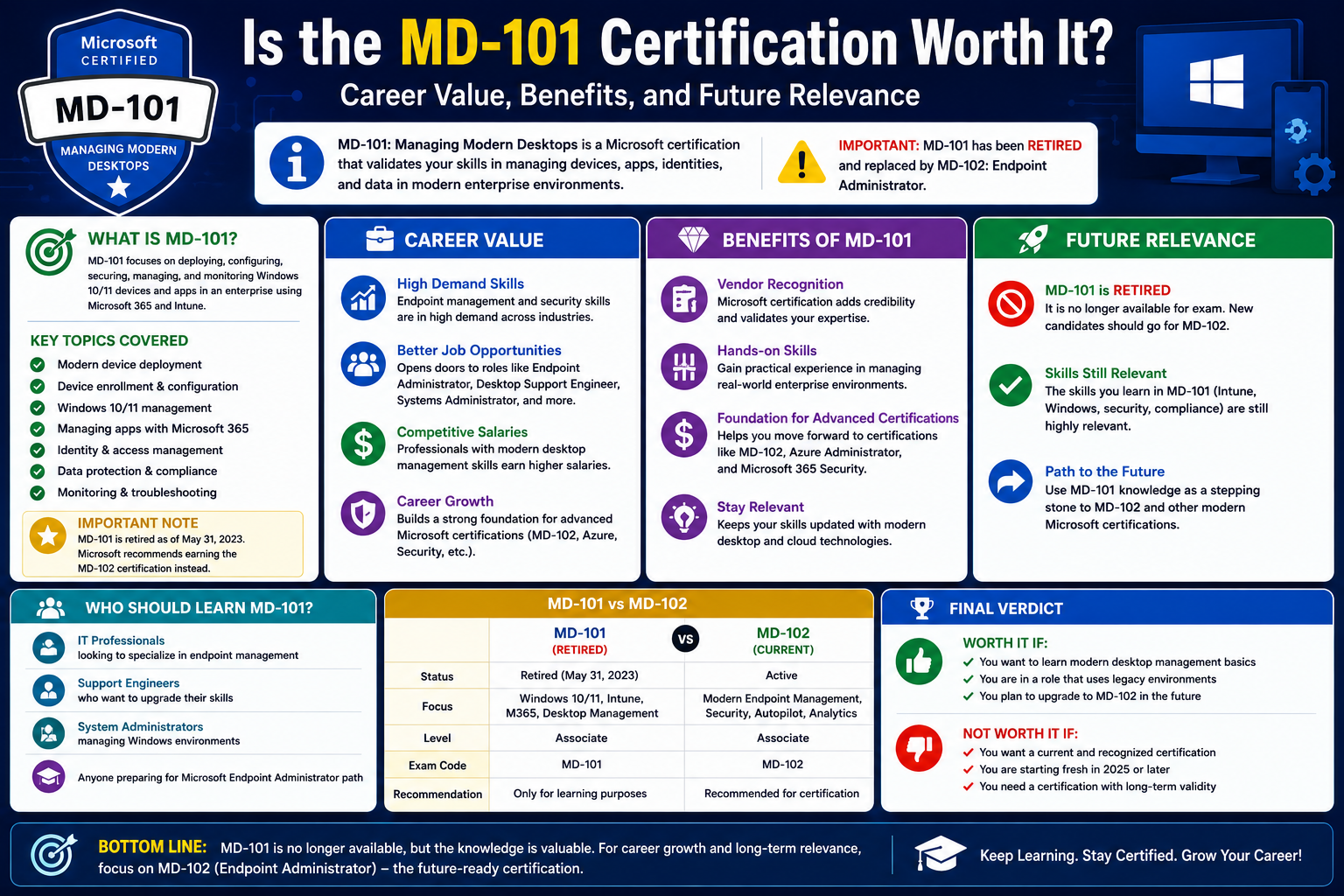
The MD-101 certification has long been considered an important milestone for professionals aiming to build a strong foundation in desktop and systems administration. It is designed to test practical knowledge of managing modern Windows environments in business settings, making it a relevant credential for IT specialists working with enterprise devices and Microsoft ecosystems. Understanding its value requires looking at what it covers, who it is for, and how it fits into a modern IT career path.
Modern Desktop Administration Certification Context
This certification was originally created as part of Microsoft’s desktop administration track, focusing on enterprise device management and Windows-based infrastructure. It was paired with another foundational exam to form a broader certification path aimed at validating skills in managing organizational endpoints. Over time, Microsoft updated its certification structure, replacing the older model with a more integrated and modern endpoint-focused certification that reflects current workplace technologies and cloud-based device management.
Transition to Updated Certification Path
As Microsoft evolved its certification framework, the MD-101 content was incorporated into a newer and more comprehensive exam that combines desktop administration and device management into a single track. This change reflects how IT environments have shifted toward cloud integration, centralized management tools, and hybrid workplace solutions. Even though the MD-101 itself is no longer the latest version, its core concepts remain highly relevant for understanding modern enterprise systems.
What the MD-101 Represents in IT Learning
The MD-101 focuses on evaluating how well an IT professional can manage devices, applications, and policies in a business environment. It is not just about theoretical knowledge but practical understanding of how enterprise systems operate. The exam emphasizes real-world tasks such as deploying operating systems, managing updates, securing devices, and controlling applications across multiple endpoints within an organization.
Enterprise Device Deployment and Management
A major part of the certification is centered on deploying and updating operating systems across enterprise devices. This includes methods for large-scale deployment, automated provisioning, and streamlined device setup processes. Professionals are expected to understand how modern tools simplify the deployment of Windows environments, especially in organizations that manage hundreds or thousands of devices simultaneously.
Operating System Update and Configuration Processes
Another key area involves managing updates and configurations across devices. IT administrators must ensure that systems remain secure, stable, and consistent by applying updates efficiently. This includes controlling update cycles, managing upgrade paths, and ensuring compatibility across different hardware environments. These tasks are essential for maintaining productivity and minimizing disruptions in enterprise networks.
Policy and Profile Management in Organizations
Managing policies and device profiles is another critical focus area. This involves setting rules that control how devices behave within an organization. These policies may include security settings, access controls, and configuration standards that ensure consistency across all endpoints. Device profiles help administrators apply standardized settings to groups of users or devices, making large-scale management more efficient and secure.
Device Security and Protection Strategies
Security is a major component of enterprise device management. The certification evaluates understanding of tools and strategies used to protect devices from threats and vulnerabilities. This includes endpoint protection systems, antivirus solutions, threat detection mechanisms, and compliance monitoring. Administrators are expected to know how to maintain secure environments while balancing usability and performance.
Application Management and Deployment
Managing applications is another important area covered in the certification. IT professionals must know how to deploy software across multiple devices using centralized tools and management platforms. This includes distributing applications through enterprise stores, managing licensing, and ensuring that users have access to the tools they need without compromising system security or stability.
Cost Considerations for Certification Exams
The cost of taking this certification exam is generally moderate compared to other professional IT certifications. However, since it was originally part of a two-exam requirement, candidates pursuing the full certification path would need to account for multiple exam fees. Despite this, many professionals view it as a worthwhile investment due to its career value and industry recognition.
Experience Level and Prerequisites
This certification is considered intermediate-level, meaning it is not intended for complete beginners but also not reserved for highly advanced professionals. While there are no strict prerequisites, having practical experience with Windows environments, system administration tasks, or IT support roles is highly beneficial. Without hands-on experience, the exam content can be challenging due to its focus on real-world enterprise scenarios.
Importance of Practical IT Experience
Hands-on experience plays a significant role in successfully understanding the concepts tested in this certification. Professionals who have worked with Windows systems in organizational environments tend to find the exam more manageable because they have already encountered many of the tools and processes covered. Experience with device management, troubleshooting, and system configuration provides a strong foundation for exam preparation.
Microsoft Ecosystem Tools and Technologies
The certification places strong emphasis on familiarity with Microsoft tools used in enterprise environments. These include device management platforms, security solutions, cloud-based administration tools, and productivity services. Understanding how these tools interact is essential for managing modern IT infrastructures effectively. The exam evaluates not only knowledge of individual tools but also how they work together in real-world environments.
Who Should Consider This Certification
This certification is particularly suitable for professionals working in desktop support, system administration, and IT operations roles. It is designed for individuals responsible for managing employee devices, maintaining system security, and ensuring smooth IT operations within organizations. For those looking to build or advance a career in enterprise IT, it provides a structured path for skill development.
Value for Desktop Support Professionals
For desktop support professionals, this certification aligns closely with daily responsibilities. These roles often involve installing and configuring systems, troubleshooting user issues, and maintaining device performance. The certification validates the skills needed to perform these tasks effectively in a structured and standardized way, making it a strong credential for career growth in this area.
Relevance for Systems Administrators
Systems administrators also benefit significantly from this certification, as it covers many aspects of managing enterprise environments. Their responsibilities often include overseeing networks of devices, managing configurations remotely, and ensuring system stability across multiple endpoints. The certification provides validation of these skills in a structured and industry-recognized format.
Career Advancement Potential in IT Fields
Holding this certification can contribute to better career opportunities in IT administration roles. Employers often value certifications that demonstrate both technical knowledge and practical ability to manage enterprise systems. It can help candidates stand out in job applications and support progression into more advanced roles within IT infrastructure and support teams.
Learning Value Beyond Certification
Beyond career advancement, the certification offers strong educational value. Preparing for it helps professionals gain a deeper understanding of enterprise device management, security practices, and Microsoft-based system administration. Even for those who already have experience, the structured learning approach helps reinforce best practices and fill knowledge gaps.
Skill Validation in Professional Environments
One of the most important benefits of this certification is skill validation. It serves as an industry-recognized confirmation that an individual understands how to manage modern desktop environments using standardized methods. Employers often rely on certifications as a way to assess candidate capability, especially when evaluating technical roles in large organizations.
Is the MD-101 Worth It for IT Professionals
From a career investment perspective, the certification has historically been considered valuable for those working in Microsoft-based environments. It provides both foundational knowledge and practical validation of skills required in enterprise IT roles. While the certification structure has evolved, the skills it represents remain relevant and applicable in modern workplace environments.
Value Perspective for Career Growth
For individuals aiming to build a long-term career in IT administration, the knowledge associated with this certification contributes significantly to professional development. It strengthens understanding of device management, security practices, and enterprise system operations. Even as certification paths evolve, the underlying skills continue to hold strong relevance in the IT industry.
Conclusion
The MD-101 certification has historically been a strong stepping stone for IT professionals aiming to build expertise in desktop and enterprise device administration within Microsoft environments. It focuses on practical, real-world skills such as deploying operating systems, managing policies, securing devices, and handling applications at scale, all of which are essential in modern IT workplaces.
Even though Microsoft has updated its certification structure and moved toward more integrated endpoint administration exams, the knowledge areas covered by the MD-101 remain highly relevant. The concepts it teaches still form the foundation of managing Windows devices in organizations that rely on Microsoft technologies.
For desktop administrators, system administrators, and IT support professionals, the value lies not only in the certification itself but also in the structured learning it encourages. It helps build confidence in using enterprise tools, understanding security practices, and managing large-scale environments more effectively.
From a career perspective, it can strengthen your profile, improve job opportunities, and validate your technical skills in a way that employers recognize. While newer certifications have taken its place, the skills behind it continue to hold strong importance in real-world IT operations.
Overall, the MD-101 remains worth understanding and learning from as part of a broader IT career path, especially for anyone working toward enterprise-level Windows and Microsoft-based system administration roles.