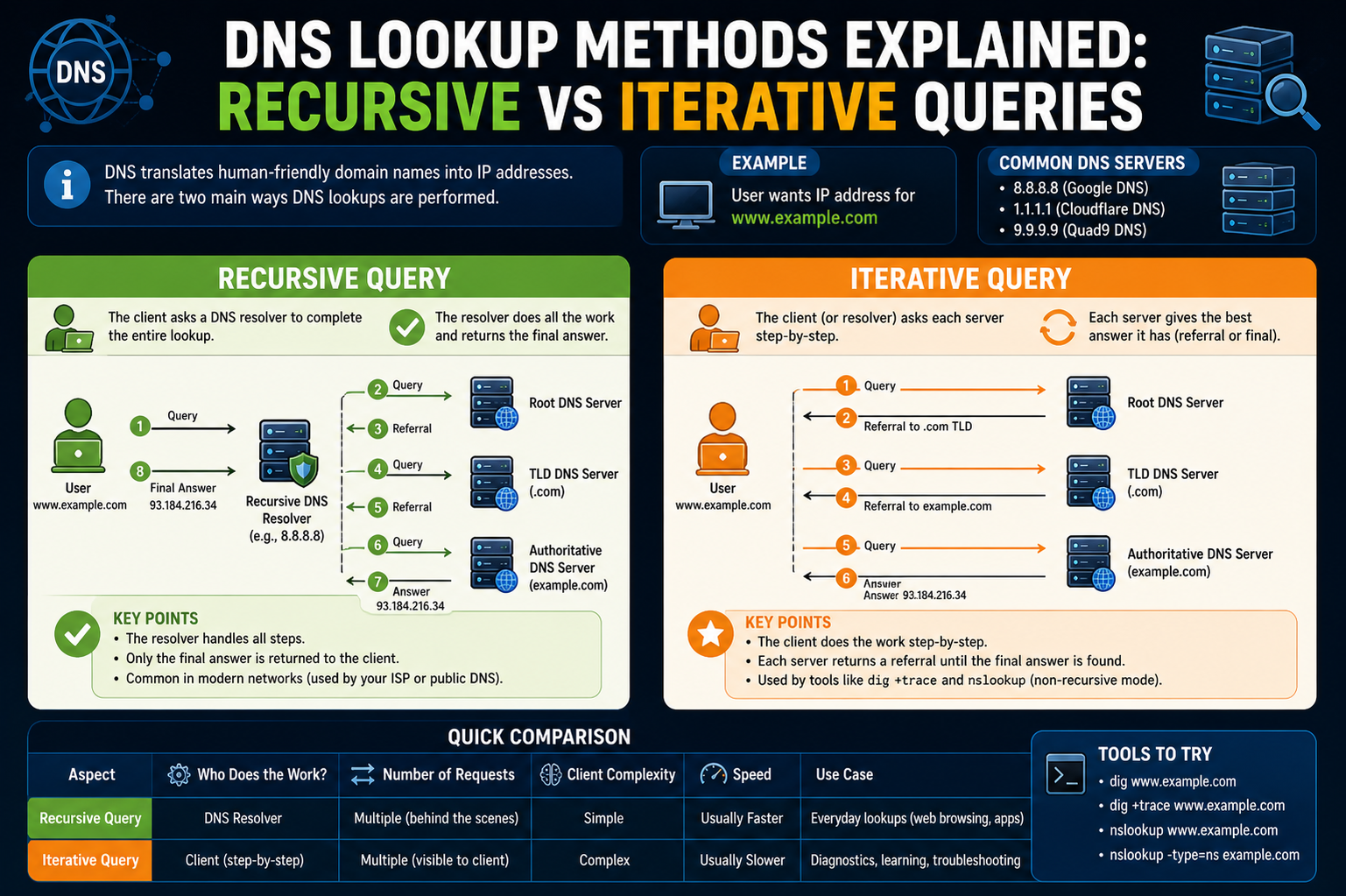
The Domain Name System, commonly known as DNS, is one of the most essential components of modern networking, quietly enabling nearly every online interaction. Whenever a user types a web address into a browser, DNS steps in to translate that human-friendly name into a machine-readable IP address. Without this translation mechanism, navigating the internet would require memorizing long strings of numerical addresses, which would be impractical and inefficient. DNS acts as a bridge between users and the underlying infrastructure of the internet, ensuring that requests are routed correctly to their intended destinations. This process happens in milliseconds, making it almost invisible to users, yet it is foundational to the seamless browsing experience people rely on daily.
Why DNS Exists Instead of Using IP Addresses Directly
Although computers communicate using IP addresses, humans are far better at remembering words than numbers. Imagine trying to recall dozens or even hundreds of numerical addresses for frequently visited sites. This challenge becomes even more complex in environments where IP addresses change dynamically through mechanisms like dynamic host configuration. DNS solves this problem by allowing domain names to act as consistent identifiers, even if the underlying IP addresses change. By separating the human-readable naming system from the technical addressing system, DNS introduces flexibility, scalability, and ease of use into the network. This design choice has been critical in supporting the rapid growth of the internet and ensuring that it remains accessible to users with varying levels of technical knowledge.
How DNS Lookup Works in a Hierarchical Structure
DNS does not rely on a single server to resolve domain names. Instead, it operates through a distributed and hierarchical system of servers, each responsible for different parts of the namespace. When a domain name needs to be resolved, the request typically starts with a local DNS resolver. If the resolver does not already have the answer stored in its cache, it begins querying other DNS servers in a structured order. This hierarchy starts from root servers, moves to top-level domain servers, and finally reaches authoritative servers that hold the definitive records. Each level plays a specific role in narrowing down the search until the correct IP address is found. This layered approach ensures reliability, redundancy, and scalability across the global network.
The Importance of DNS Caching for Performance
To improve efficiency and reduce unnecessary network traffic, DNS systems use caching extensively. When a DNS resolver successfully retrieves an IP address, it stores that information temporarily. If another request for the same domain is received within a certain time frame, the resolver can respond immediately without repeating the entire lookup process. This significantly reduces latency and decreases the load on upstream servers. Caching occurs at multiple levels, including the client device, local resolver, and intermediate servers. By minimizing repeated queries, caching enhances the overall speed and responsiveness of internet browsing while also contributing to the stability of the DNS infrastructure.
Introduction to DNS Lookup Methods
There are two primary methods used to resolve domain names within the DNS system: recursive lookup and iterative lookup. Both approaches ultimately achieve the same goal, which is to provide the correct IP address for a given domain name. However, the way they handle the lookup process differs significantly. These differences influence factors such as performance, resource usage, and the level of involvement required from the client. Understanding these methods is crucial for anyone studying networking concepts or working with systems that rely on DNS resolution.
Defining Recursive DNS Lookup in Simple Terms
A recursive DNS lookup is a process in which a client delegates the responsibility of resolving a domain name entirely to a DNS resolver. The client sends a request and expects a complete answer in return, without needing to interact with multiple servers. If the resolver does not already have the required information cached, it takes on the task of querying other DNS servers on behalf of the client. This continues until the resolver either finds the correct IP address or determines that the domain cannot be resolved. The key characteristic of recursive lookup is that the client relies on the resolver to do all the work, simplifying the process from the client’s perspective.
How a Recursive DNS Query Begins
The process starts when a client device, such as a computer or smartphone, sends a query to a DNS resolver. This resolver is typically provided by an internet service provider or configured manually. The query includes the domain name that needs to be resolved into an IP address. At this stage, the client does not concern itself with how the resolution will occur; it simply expects a final answer. This simplicity is one of the main advantages of recursive lookup, as it reduces the complexity involved in DNS interactions from the user’s point of view.
The Resolver’s Role in Handling Recursive Requests
Once the DNS resolver receives a recursive query, it becomes responsible for completing the entire lookup process. If the requested domain is already present in its cache, the resolver can immediately return the corresponding IP address. If not, it begins a sequence of queries to other DNS servers within the hierarchy. The resolver effectively acts as an intermediary, communicating with multiple servers and gathering the necessary information. This centralized handling of the lookup process ensures that the client does not need to manage multiple requests or interpret partial responses.
Querying Root Servers During Recursive Lookup
If the resolver does not have the answer cached, it typically starts by querying a root DNS server. Root servers are the highest level in the DNS hierarchy and do not contain specific domain records. Instead, they provide information about which servers are responsible for top-level domains. When the resolver contacts a root server, it receives a referral to the appropriate top-level domain server based on the domain being queried. This step is crucial in guiding the resolver toward the correct path for obtaining the final answer.
Navigating to Top-Level Domain Servers
After receiving a referral from a root server, the resolver proceeds to query a top-level domain server. These servers manage domains that share the same extension, such as those ending in common suffixes. The top-level domain server does not usually provide the final IP address but instead directs the resolver to the authoritative server responsible for the specific domain. This step further narrows down the search and brings the resolver closer to obtaining the required information.
Reaching the Authoritative DNS Server
The authoritative DNS server is the final destination in the recursive lookup process. This server holds the official records for the domain, including its IP address. When the resolver queries the authoritative server, it receives a definitive answer. This response is then sent back to the client, completing the lookup process. The resolver may also store this information in its cache for future use, improving efficiency for subsequent queries.
Delivering the Final Response to the Client
Once the resolver has obtained the IP address, it sends the complete response back to the client. From the client’s perspective, the process appears simple and straightforward, as it only involves sending a request and receiving an answer. However, behind the scenes, multiple steps and server interactions have taken place to ensure that the correct information is delivered. This abstraction is what makes recursive DNS lookup user-friendly and widely adopted in modern networks.
Advantages of Using Recursive DNS Lookup
Recursive DNS lookup offers several benefits, particularly in terms of simplicity and convenience. By offloading the responsibility of the lookup process to the resolver, clients can operate with minimal complexity. This approach is especially useful for devices with limited resources or those that are not designed to handle multiple network queries. Additionally, recursive resolvers often implement caching mechanisms that improve performance and reduce latency. By storing frequently accessed records, they can provide faster responses and decrease the overall load on the DNS infrastructure.
Challenges Associated with Recursive DNS Lookup
Despite its advantages, recursive DNS lookup also presents certain challenges. One of the primary concerns is the increased workload placed on DNS resolvers. Since they handle the entire lookup process for multiple clients, they can become bottlenecks if not properly managed. This can lead to slower response times or even service disruptions in high-demand scenarios. Additionally, recursive resolvers can be targets for certain types of attacks, such as cache poisoning, which aim to manipulate the stored DNS records. Proper security measures and configurations are essential to mitigate these risks and ensure reliable operation.
The Role of Recursive Lookup in Modern Networking Environments
Recursive DNS lookup plays a vital role in today’s internet ecosystem, serving as the default method for most client devices. Its ability to simplify the resolution process and provide quick, reliable answers makes it an essential component of network operations. Internet service providers, enterprise networks, and public DNS services all rely on recursive resolvers to handle user queries efficiently. As the internet continues to grow and evolve, the importance of recursive lookup remains significant, supporting everything from web browsing to cloud-based applications.
Understanding Iterative DNS Lookup from a Practical Perspective
Iterative DNS lookup represents a different approach to resolving domain names, where the responsibility of finding the correct IP address is not fully delegated to a single resolver. Instead, the client or resolver takes a more active role by communicating with multiple DNS servers step by step. In this method, each server contacted provides the best information it has at that moment, which may either be the final answer or a referral to another server that is closer to the authoritative source. This gradual narrowing of the search path defines the iterative process and distinguishes it clearly from recursive lookup.
How an Iterative Query Begins in the DNS Process
The process starts similarly to other DNS lookups, with a client initiating a query for a domain name. However, instead of expecting a complete answer from one resolver, the client or its configured resolver prepares to handle multiple responses. The initial query is typically sent to a DNS server that may not have the requested information readily available. Rather than resolving the query fully, this server responds with guidance on where to look next. This response is essential because it directs the client toward the next step in the resolution path.
The Role of Root DNS Servers in Iterative Lookup
When the resolver begins the lookup process and does not have cached information, it often queries a root DNS server. Root servers are designed to provide high-level direction rather than detailed answers. Upon receiving a query, a root server responds with information about the appropriate top-level domain server that can handle the request. This response does not include the final IP address but instead acts as a pointer, guiding the resolver to the next stage of the lookup process. This step highlights the cooperative nature of DNS servers in an iterative environment.
Moving Through Top-Level Domain Servers
After receiving a referral from a root server, the resolver proceeds to contact a top-level domain server. These servers are responsible for managing domains under specific extensions and can provide more detailed information than root servers. When queried, a top-level domain server responds with the address of the authoritative server for the requested domain. This step continues the process of narrowing down the search, bringing the resolver closer to obtaining the final IP address. Each interaction builds upon the previous one, forming a chain of queries that eventually leads to the correct destination.
Reaching Authoritative Servers in Iterative Lookup
The final step in the iterative process involves querying the authoritative DNS server for the domain. This server holds the official records and can provide the exact IP address associated with the domain name. When the resolver contacts the authoritative server, it receives the definitive answer needed to complete the lookup. Unlike earlier steps, this response does not include a referral but instead delivers the actual information requested. The resolver can then use this IP address to establish a connection to the desired resource.
Handling Referrals and Partial Responses
One of the defining characteristics of iterative DNS lookup is the handling of referrals. Instead of receiving a complete answer from each server, the resolver often receives partial information that points to another server. This process continues until the authoritative source is reached. Each referral represents a step closer to the final answer, and the resolver must interpret these responses correctly to proceed. This approach requires more involvement from the resolver compared to recursive lookup, as it must manage multiple queries and track the progression of the lookup process.
Client Involvement in Iterative DNS Lookup
In iterative lookup, the client or its resolver plays a more active role in the resolution process. Rather than relying entirely on a single server, it takes responsibility for querying multiple servers and following the chain of referrals. This increased involvement can provide greater transparency into how DNS resolution works, but it also introduces additional complexity. The client must be capable of handling multiple responses and making decisions about which server to query next. This makes iterative lookup more suitable for systems that are designed to manage such interactions effectively.
Performance Considerations in Iterative Lookup
Iterative DNS lookup can have different performance characteristics compared to recursive lookup. Since multiple queries are made sequentially, the total time required to resolve a domain name may be longer, especially if none of the information is cached. However, this approach can reduce the load on individual DNS servers, as each server only provides limited information rather than handling the entire lookup process. In environments where scalability and distributed workload are important, iterative lookup can offer certain advantages. The trade-off between speed and resource distribution is a key factor in choosing between lookup methods.
Caching Behavior in Iterative Resolution
Caching still plays an important role in iterative DNS lookup, although it may function differently compared to recursive lookup. When a resolver receives responses from various DNS servers, it can store this information temporarily for future use. This includes both final answers and intermediate referrals. By caching these responses, the resolver can skip certain steps in subsequent lookups, improving efficiency. For example, if the address of a top-level domain server is already known, the resolver can bypass the root server and proceed directly to the next stage. This optimization helps reduce latency and enhances overall performance.
Comparing Resolver Responsibilities in Both Methods
A key distinction between iterative and recursive lookup lies in how responsibilities are distributed. In iterative lookup, the resolver or client takes on the task of navigating through the DNS hierarchy. It must handle multiple queries, interpret responses, and determine the next steps. In contrast, recursive lookup centralizes these responsibilities within a single resolver, simplifying the process for the client. This difference has implications for system design, as it influences how resources are allocated and how complexity is managed within the network.
Security Implications of Iterative DNS Lookup
Security considerations are important in both iterative and recursive DNS lookups. In iterative lookup, the involvement of multiple servers and the handling of referrals can introduce potential risks if not properly managed. For instance, attackers may attempt to provide false referral information to redirect queries to malicious servers. Ensuring that responses are verified and that trusted servers are used is essential for maintaining the integrity of the lookup process. While iterative lookup does not inherently increase vulnerability, its distributed nature requires careful attention to security practices.
The Role of Iterative Lookup in DNS Infrastructure
Iterative DNS lookup is a fundamental part of how DNS infrastructure operates, particularly at higher levels of the hierarchy. Root servers and top-level domain servers typically respond to queries iteratively, providing referrals rather than complete answers. This design allows them to handle a large volume of requests efficiently without being overwhelmed by the need to perform full lookups. By distributing the workload across multiple servers, iterative lookup contributes to the scalability and resilience of the DNS system as a whole.
Balancing Efficiency and Control in Iterative Queries
One of the advantages of iterative lookup is the level of control it provides to the resolver or client. By managing each step of the process, it can make decisions about how to proceed and which servers to trust. This can be beneficial in specialized environments where custom configurations or optimizations are required. However, this control comes with increased complexity, as the resolver must handle more responsibilities. Balancing efficiency and control is an important consideration when implementing DNS solutions that rely on iterative lookup.
Understanding the Practical Use of Iterative Lookup Today
In modern networking environments, iterative lookup is often used behind the scenes as part of the overall DNS resolution process. While end-user devices typically rely on recursive resolvers, those resolvers themselves may use iterative queries to communicate with other DNS servers. This combination of methods allows the system to take advantage of the strengths of both approaches. Recursive lookup simplifies the experience for clients, while iterative lookup enables efficient communication within the DNS hierarchy. Together, they form a cohesive system that supports reliable and scalable domain name resolution.
Comparing Recursive and Iterative DNS Lookup in Real-World Scenarios
When examining recursive and iterative DNS lookup side by side, the most noticeable difference lies in how each method distributes responsibility across the network. In recursive lookup, the client hands over the entire task to a resolver and waits for a complete answer. In iterative lookup, the resolver or client actively participates in each step, querying multiple servers until the final result is achieved. In real-world environments, these two approaches often work together rather than existing in isolation. A user’s device typically interacts with a recursive resolver, while that resolver communicates iteratively with other DNS servers. This layered interaction ensures both simplicity for the user and efficiency within the broader DNS infrastructure.
Level of Client Involvement in Both Lookup Methods
Client involvement is one of the clearest distinctions between recursive and iterative DNS lookup. In a recursive approach, the client’s role is minimal. It sends a single request and expects a complete response, leaving all intermediate steps to the resolver. This design reduces complexity for the client and allows even simple devices to perform DNS queries effectively. In contrast, iterative lookup requires a higher level of participation from the resolver or client. Each response may contain partial information, requiring additional queries to different servers. This increased involvement can provide greater visibility into the resolution process but also demands more capability from the system handling the queries.
Impact on Network Performance and Efficiency
Performance is influenced by how each lookup method handles queries and distributes workload. Recursive lookup can provide faster responses to clients, especially when caching is involved, because the resolver handles all steps internally and returns a single, complete answer. However, this can place significant demand on the resolver, particularly in high-traffic environments. Iterative lookup, on the other hand, spreads the workload across multiple servers. Each server contributes a small part of the overall process, which can improve scalability but may increase the total time required to resolve a query if caching is not available. The balance between speed and resource distribution is a key factor in choosing how these methods are implemented.
Understanding DNS Caching Across Both Methods
Caching is a critical component in both recursive and iterative DNS lookups, significantly affecting performance and efficiency. In recursive lookup, caching is typically centralized at the resolver. Once a domain name is resolved, the resolver stores the result and can quickly respond to future queries without repeating the entire process. This reduces latency and minimizes the number of external queries required. In iterative lookup, caching can occur at multiple points, including the resolver and sometimes even the client. Intermediate responses, such as referrals to other servers, may also be cached, allowing future lookups to skip certain steps. This distributed caching approach enhances efficiency but requires careful management to ensure that outdated information does not persist.
Differences in Query Handling and Response Types
Another important distinction lies in how queries are handled and what type of responses are returned. Recursive lookup is designed to provide a final, definitive answer to the client. The resolver continues querying other servers until it obtains the required information or determines that the domain cannot be resolved. In contrast, iterative lookup often returns partial answers in the form of referrals. Each server provides the best information it has, which may direct the resolver to another server. This step-by-step process continues until the authoritative server is reached. Understanding these response types is essential for grasping how DNS resolution works at a deeper level.
Load Distribution Across DNS Infrastructure
The way workload is distributed across DNS servers differs significantly between the two methods. Recursive lookup concentrates the workload on the resolver, which must handle multiple queries and maintain caching for numerous clients. This can make resolvers critical points of performance and reliability within the network. Iterative lookup distributes the workload more evenly across the DNS hierarchy. Root servers, top-level domain servers, and authoritative servers each handle specific types of queries, reducing the burden on any single component. This distribution contributes to the overall scalability and resilience of the DNS system.
Latency and Response Time Considerations
Latency is an important factor in user experience, and both lookup methods influence it in different ways. Recursive lookup can reduce latency for the client by handling all queries internally and leveraging cached data. If the resolver already has the required information, the response can be nearly instantaneous. However, if the resolver must perform a full lookup without cached data, the process may take longer due to multiple queries. Iterative lookup may introduce additional latency because each step involves a separate query and response cycle. However, caching and efficient server responses can mitigate this delay, making the difference less noticeable in many cases.
Reliability and Fault Tolerance in DNS Resolution
Reliability is a crucial aspect of DNS, and both lookup methods contribute to it in different ways. Recursive resolvers often include mechanisms to retry queries, switch to alternative servers, and handle failures gracefully. This ensures that clients receive a response even if some parts of the network are unavailable. Iterative lookup inherently supports fault tolerance by allowing the resolver to query multiple servers independently. If one server does not respond or provides incomplete information, the resolver can continue with other options. This flexibility enhances the robustness of the DNS system and helps maintain consistent service availability.
Security Challenges in DNS Lookup Methods
Security is an important consideration in both recursive and iterative DNS lookups. Recursive resolvers can be targets for attacks such as cache poisoning, where malicious data is inserted into the cache to redirect users to harmful destinations. Protecting the integrity of cached data is essential to prevent such attacks. Iterative lookup also faces security challenges, particularly in verifying the authenticity of referrals provided by DNS servers. Without proper validation, a resolver could be directed to malicious servers. Implementing security measures such as validation mechanisms and strict configuration policies is critical for safeguarding DNS operations.
The Role of DNSSEC in Enhancing Security
DNS Security Extensions, commonly referred to as DNSSEC, play a vital role in addressing many of the security concerns associated with DNS lookups. By adding cryptographic signatures to DNS records, DNSSEC ensures that the information received from a DNS server has not been altered. This is particularly important in both recursive and iterative lookups, where multiple servers may be involved in the resolution process. With DNSSEC in place, resolvers can verify the authenticity of responses at each step, reducing the risk of attacks such as cache poisoning and man-in-the-middle interference.
Use Cases for Recursive and Iterative Lookup Methods
Different networking scenarios may favor one lookup method over the other, depending on requirements and constraints. Recursive lookup is commonly used in environments where simplicity and ease of use are priorities, such as end-user devices and general internet access. It allows clients to rely on dedicated resolvers for efficient and straightforward DNS resolution. Iterative lookup is often used within the DNS infrastructure itself, particularly by servers that need to handle large volumes of queries efficiently. By distributing the workload and providing referrals, iterative lookup supports the scalability of the system. Understanding these use cases helps in designing and managing network environments effectively.
Balancing Complexity and Usability in DNS Design
The coexistence of recursive and iterative DNS lookup methods reflects a balance between complexity and usability. Recursive lookup simplifies the process for clients, making DNS accessible to a wide range of devices and users. Iterative lookup, on the other hand, provides the flexibility and scalability needed to support the global DNS infrastructure. By combining these approaches, the system achieves both ease of use and efficient resource management. This balance is a key factor in the continued success and reliability of DNS as a foundational component of the internet.
Exploring DNS Security Risks in Lookup Processes
As DNS plays a central role in directing internet traffic, it naturally becomes a target for various types of attacks. Both recursive and iterative lookup methods can be exploited if proper safeguards are not in place. One of the most notable risks involves manipulating how DNS responses are handled, which can mislead users and systems into connecting to unintended destinations. Since DNS operates as a trust-based system, any weakness in validation or configuration can open the door to malicious interference. Understanding these risks is essential for maintaining a secure and reliable network environment.
Understanding DNS Cache Poisoning Attacks
DNS cache poisoning is a technique used by attackers to insert false information into a DNS resolver’s cache. When this happens, the resolver may return incorrect IP addresses for legitimate domain names. As a result, users attempting to access trusted resources may be redirected to malicious servers without realizing it. This type of attack takes advantage of the caching mechanism designed to improve performance. Once poisoned data is stored, it can affect multiple users until the cache is cleared or expires. Preventing cache poisoning requires strict validation of DNS responses and careful management of caching policies.
How Malicious Redirection Impacts Users
When DNS records are compromised, the consequences can extend beyond simple inconvenience. Users may be redirected to fraudulent websites that mimic legitimate services, leading to data theft or credential compromise. In other cases, malicious servers may deliver harmful software or intercept sensitive communications. Because DNS operates behind the scenes, users are often unaware that anything is wrong. This makes DNS-based attacks particularly dangerous, as they exploit the implicit trust users place in the system. Strengthening DNS security is therefore critical to protecting both individuals and organizations.
The Importance of Verifying DNS Responses
To mitigate security risks, it is important to verify the authenticity of DNS responses at every stage of the lookup process. This is especially relevant in iterative lookup, where multiple servers provide referrals that must be trusted. Without proper verification, a resolver could follow malicious directions and retrieve incorrect information. Validation mechanisms help ensure that responses come from legitimate sources and have not been altered in transit. By implementing these checks, network administrators can reduce the likelihood of successful attacks and maintain the integrity of DNS operations.
Implementing DNSSEC for Enhanced Protection
DNS Security Extensions introduce a layer of cryptographic validation to DNS records. With this approach, each record is digitally signed, allowing resolvers to confirm its authenticity. This significantly reduces the risk of tampering and ensures that the information received is trustworthy. DNSSEC is effective in both recursive and iterative lookup scenarios, as it provides a consistent method for verifying responses across the entire resolution process. While implementing DNSSEC requires careful configuration, its benefits in improving security make it a valuable addition to modern DNS systems.
Best Practices for Securing DNS Infrastructure
Maintaining a secure DNS environment involves more than just enabling advanced features. Regular updates to DNS software are essential to address vulnerabilities and improve performance. Network administrators should also configure firewalls to restrict DNS traffic to trusted sources, preventing unauthorized access. Monitoring DNS activity can help identify unusual patterns that may indicate an attack. Additionally, limiting recursion to trusted clients can reduce the risk of abuse. By following these best practices, organizations can strengthen their defenses and ensure reliable DNS operation.
Troubleshooting DNS Lookup Issues Effectively
Even with proper configuration, DNS issues can still arise, affecting connectivity and performance. Troubleshooting begins with verifying basic network connectivity to ensure that the client can communicate with the DNS resolver. If connectivity is intact, the next step is to examine resolver settings and confirm that they are correctly configured to handle queries. Misconfigurations can lead to failed lookups or incorrect responses. Systematic troubleshooting helps identify the root cause of issues and restore normal operation quickly.
Checking Connectivity Between Client and Resolver
A stable connection between the client and the DNS resolver is fundamental to successful lookups. If this connection is disrupted, queries cannot be sent or responses received. Tools that test network reachability can be used to confirm that the resolver is accessible. Firewalls, routing issues, or network outages may interfere with communication. Ensuring that these components are functioning correctly is the first step in resolving DNS-related problems.
Verifying DNS Resolver Configuration Settings
Configuration errors in the DNS resolver can prevent it from handling queries properly. For example, if recursion is disabled when it is needed, clients may not receive complete answers. Similarly, incorrect server addresses or outdated settings can lead to failed lookups. Reviewing and validating configuration parameters helps ensure that the resolver operates as expected. This includes checking forwarders, root hints, and security settings that influence how queries are processed.
Analyzing DNS Cache for Incorrect Entries
Cached data can sometimes cause unexpected behavior, particularly if it becomes outdated or corrupted. When a resolver relies on stale information, it may return incorrect results even though the authoritative data has changed. Clearing the cache can help resolve such issues by forcing the resolver to perform a fresh lookup. Regularly managing cache entries ensures that the system provides accurate and up-to-date information. This step is especially useful when troubleshooting persistent or inconsistent DNS problems.
Testing DNSSEC and Security Configurations
If DNSSEC is implemented, it is important to verify that it is functioning correctly. Misconfigured security settings can lead to validation failures, preventing legitimate responses from being accepted. Testing tools can be used to confirm that DNSSEC signatures are properly applied and recognized. Ensuring that security features are correctly configured helps maintain both the integrity and availability of DNS services.
Recognizing the Interplay Between Recursive and Iterative Methods
In practical deployments, recursive and iterative DNS lookup methods are not isolated from each other. Instead, they complement one another within the overall resolution process. A client typically interacts with a recursive resolver, which simplifies the experience by handling the entire lookup. That resolver then uses iterative queries to communicate with other DNS servers across the hierarchy. This combination allows the system to leverage the strengths of both methods, providing efficient and reliable resolution for users.
Final Thoughts
DNS lookup methods form the backbone of how domain names are translated into IP addresses, enabling seamless communication across networks. Recursive lookup offers simplicity by allowing clients to rely on resolvers for complete answers, while iterative lookup provides efficiency and scalability by distributing queries across multiple servers. Together, these approaches create a balanced system that supports both user convenience and infrastructure performance. By understanding how each method works, along with their security considerations and troubleshooting techniques, it becomes easier to manage and optimize DNS operations in any networking environment.