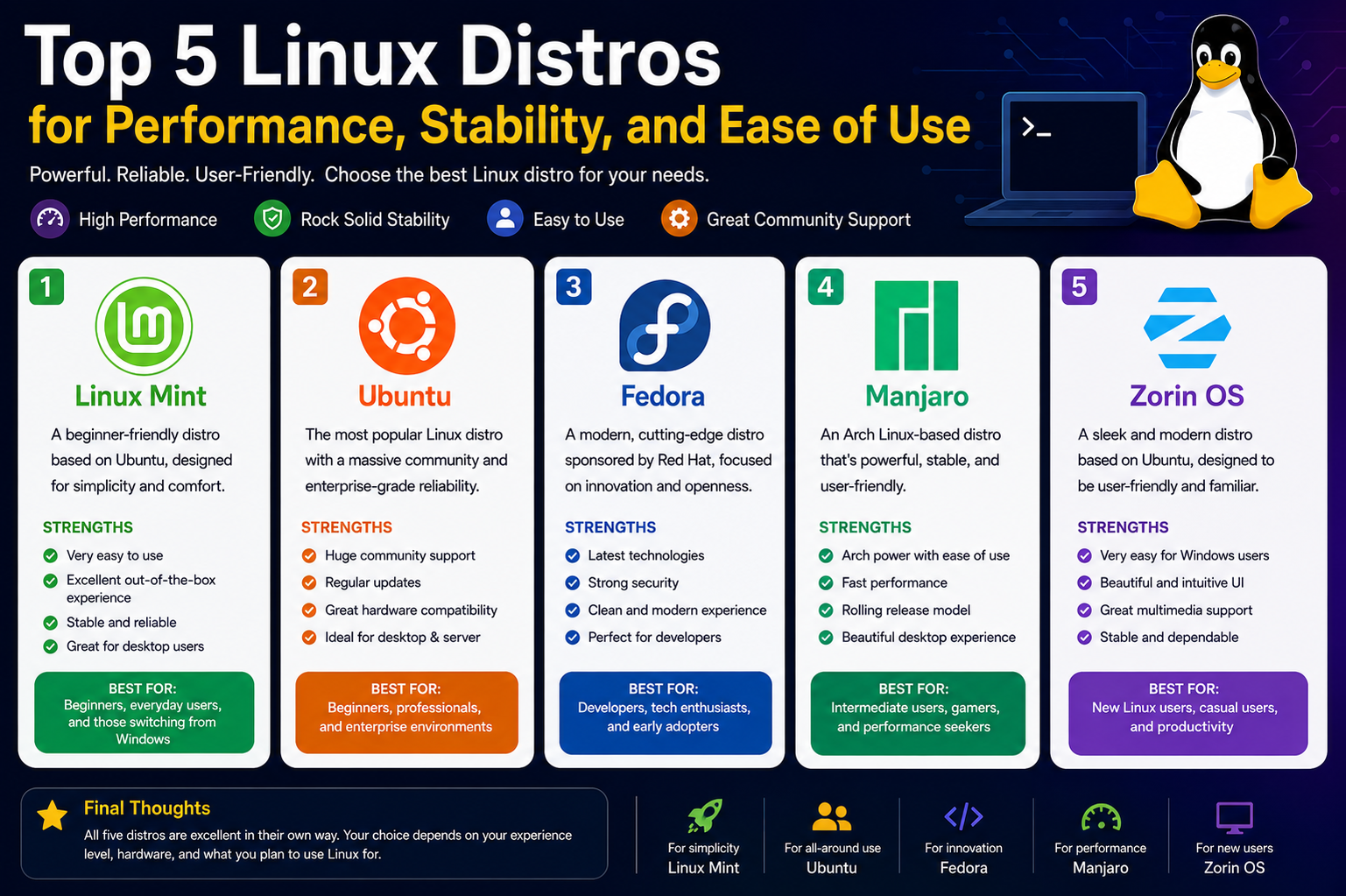
When people begin exploring Linux, one of the first questions they ask is which distribution is the best. It sounds simple, but the answer is more nuanced than most expect. Linux is not a single operating system; it is a vast ecosystem of distributions, each designed with a specific philosophy, purpose, and audience in mind. What makes Linux powerful is the freedom to choose how your system behaves, looks, and performs. However, that same flexibility can make the decision feel overwhelming.
Many users initially focus on appearance, especially the desktop environment. While visual appeal matters, it should never be the primary factor when choosing a Linux distribution. A well-designed interface can improve usability, but the real strength of a distribution lies in its stability, package management, compatibility, and overall philosophy. The best choice comes from aligning the distribution’s design goals with your personal or professional needs.
Linux distributions are built with different priorities. Some emphasize simplicity and ease of use, making them ideal for beginners. Others prioritize performance, customization, or cutting-edge software. There are also distributions tailored for specific tasks such as cybersecurity, software development, or server management. Understanding these differences helps you make an informed decision rather than relying on popularity or appearance alone.
Below is a deeper look into five of the best Linux distributions, each excelling in a different area. Instead of trying to crown a single winner, this approach highlights how each one serves a unique purpose.
Best Linux Distribution for Security and Penetration Testing
For cybersecurity professionals and ethical hackers, one distribution stands far above the rest. This system is specifically designed for penetration testing, digital forensics, and security auditing. It comes preloaded with a wide range of tools that would otherwise take hours or days to install and configure manually.
This distribution has a long history, evolving from earlier security-focused systems into a more refined and modern platform. Its transformation included a shift in its underlying architecture, which improved stability and access to a broader range of software packages. Today, it is widely recognized as the standard environment for security professionals.
One of its biggest strengths is the sheer number of included tools. These tools cover everything from network analysis and vulnerability scanning to password cracking and wireless testing. Instead of searching for and installing each utility individually, users can immediately begin testing and analyzing systems after installation.
Despite its power, this distribution is not ideal for everyday use. It is designed with a specific purpose in mind, and its tools can be overwhelming for beginners. It also requires a solid understanding of networking and security concepts to be used effectively. However, for professionals in cybersecurity, it remains unmatched.
Another important aspect is its lightweight nature. Even though it includes a vast number of tools, it is optimized to run efficiently on a wide range of hardware. This makes it suitable for both high-performance systems and portable setups used in fieldwork.
Best Linux Distribution for Compatibility and Productivity
For users transitioning from another operating system, ease of use and compatibility are critical. A distribution designed with these goals in mind provides a smooth introduction to Linux without sacrificing functionality. It focuses on delivering a polished experience while maintaining strong support for applications and workflows commonly used in development and creative work.
This distribution is particularly appealing to engineers, developers, and content creators. It comes with a variety of tools pre-installed, reducing the need for manual setup. From programming environments to media creation software, it aims to provide everything needed to start working immediately.
One of its standout features is compatibility with applications traditionally associated with other operating systems. Through advanced compatibility layers, users can run a wide range of software and games that would otherwise be unavailable. This makes it an excellent choice for those who rely on specific tools but want to switch to Linux.
Another strength lies in its package ecosystem. Being based on a well-established foundation, it benefits from access to a massive repository of software. This ensures that users can easily find and install applications for nearly any task, from development to entertainment.
The distribution also emphasizes performance and efficiency. It is optimized to make full use of system resources, providing a smooth and responsive experience even under heavy workloads. This balance of usability, compatibility, and performance makes it a strong choice for both beginners and experienced users.
Best Linux Distribution for Simplicity and Design
Some users prefer an operating system that feels clean, minimal, and intuitive. For them, simplicity is more important than extensive customization. A distribution built around this philosophy focuses on delivering a streamlined experience that reduces distractions and enhances productivity.
This system is known for its carefully crafted interface, which prioritizes clarity and ease of use. Every element is designed to feel cohesive, creating an environment that is both visually appealing and functional. The goal is to make computing as straightforward as possible, allowing users to focus on their tasks rather than configuring the system.
A key feature of this distribution is its custom desktop environment. Unlike traditional environments that offer countless options, this one is designed with a clear vision in mind. It minimizes complexity while still providing essential functionality, resulting in a smooth and predictable user experience.
This approach has both advantages and limitations. On one hand, it makes the system incredibly easy to use, especially for those who prefer a no-nonsense interface. On the other hand, it reduces the level of customization available. Users who enjoy tweaking every aspect of their system may find it restrictive.
Despite this, the distribution excels in delivering a consistent and reliable experience. It requires minimal setup after installation, making it ideal for those who want to start working immediately. Its design also adapts well to different screen sizes, from compact laptops to larger displays.
Best Linux Distribution for Server Environments
When it comes to servers, reliability and consistency are the most important factors. A distribution designed for this purpose focuses on stability, long-term support, and extensive documentation. It is widely used in both small-scale deployments and large enterprise environments.
One of the reasons this distribution stands out is its availability across various platforms. It is supported by major cloud providers, making it easy to deploy virtual machines and services. This widespread adoption ensures that users can rely on it regardless of where their infrastructure is hosted.
Another advantage is its consistency between desktop and server environments. Developers can use the same system for both development and deployment, reducing compatibility issues. This alignment helps prevent unexpected behavior when applications are moved from a local environment to a production server.
The distribution also follows a structured release cycle, ensuring that software versions remain stable throughout their lifecycle. This predictability is crucial for maintaining secure and reliable systems. Administrators can plan updates and upgrades without worrying about sudden changes breaking their setup.
Documentation and community support are equally important. With a vast number of tutorials and resources available, users can quickly find solutions to common problems. This makes it easier to manage and maintain servers, even for those who are relatively new to Linux.
Best Linux Distribution for Rolling Releases
Not all users want stability at the cost of outdated software. Some prefer having access to the latest features and updates as soon as they are available. A rolling release distribution caters to this need by continuously delivering updates instead of relying on fixed versions.
This approach ensures that users always have access to the newest software, including system components and applications. It is particularly appealing to enthusiasts and developers who want to stay on the cutting edge of technology.
However, rolling releases come with their own challenges. Frequent updates can sometimes introduce instability or compatibility issues. Managing such a system requires a certain level of experience and willingness to troubleshoot problems when they arise.
To address these challenges, some distributions offer a more user-friendly take on the rolling release model. They provide tools and features that simplify installation and maintenance, making the experience more accessible. These distributions aim to strike a balance between cutting-edge software and usability.
Another benefit is hardware support. Because updates are delivered continuously, support for new hardware is added more quickly compared to traditional distributions. This makes rolling release systems a good choice for users with newer devices.
While not the easiest option for beginners, these distributions offer a unique experience for those who value innovation and flexibility. They provide a glimpse into the future of Linux, where updates are seamless and continuous.
Understanding Your Priorities Before Choosing
Selecting the right Linux distribution is less about finding the “best” option and more about understanding your own needs. Each distribution reflects a different philosophy, whether it is security, simplicity, compatibility, stability, or innovation. By identifying what matters most to you, the decision becomes much clearer.
For some users, the priority is learning and experimentation. In this case, a distribution with extensive documentation and community support is invaluable. For others, the focus may be on performance or access to the latest software. In such situations, a rolling release system might be more suitable.
It is also important to consider your level of experience. Beginners may benefit from distributions that offer a guided and user-friendly experience. More advanced users, on the other hand, might prefer systems that provide greater control and customization.
Hardware compatibility is another key factor. Some distributions are optimized for specific types of hardware, while others aim to support a wide range of devices. Ensuring that your chosen system works well with your hardware can save time and frustration.
Ultimately, the beauty of Linux lies in its diversity. There is no single solution that fits everyone, and that is precisely what makes it so powerful. By exploring different distributions and understanding their strengths, you can find the one that best aligns with your goals and preferences.
Final Thoughts
Choosing the right Linux distribution ultimately comes down to understanding what you want from your system rather than chasing a universally “best” option. Each distribution reflects a distinct philosophy, whether it’s focused on security, simplicity, compatibility, stability, or constant innovation. What works perfectly for one user may feel limiting or overly complex to another, and that’s entirely normal within the Linux ecosystem.
Instead of being influenced by appearance or popularity, it’s more practical to evaluate how a distribution fits into your workflow. If your goal is cybersecurity and penetration testing, a specialized environment will save time and provide the tools you need out of the box. If you’re transitioning from another operating system, a distribution that prioritizes compatibility and ease of use will make the experience smoother. For users who value minimalism and clean design, a streamlined interface can improve focus and productivity without unnecessary distractions.
Server environments demand a completely different approach. Stability, long-term support, and reliability take priority over visual design or cutting-edge features. In contrast, users who enjoy experimenting with the latest technologies may find more value in a rolling release model, where updates are continuous and software remains current.
Another important factor is your level of experience. Beginners often benefit from distributions that provide strong community support, extensive documentation, and a straightforward setup process. More advanced users may prefer systems that offer deeper control and customization, even if that comes with a steeper learning curve. Neither approach is better than the other—it simply depends on how you prefer to work.
It’s also worth remembering that your choice isn’t permanent. One of the biggest advantages of Linux is the freedom to explore. You can try different distributions, switch environments, and refine your setup over time. This flexibility allows you to adapt your system as your needs evolve, whether you’re learning new skills, changing workflows, or upgrading hardware.
In the end, the best Linux distribution is the one that aligns with your goals, supports your tasks efficiently, and feels comfortable to use on a daily basis. By focusing on purpose rather than perception, you can make a choice that not only meets your current needs but also grows with you over time.