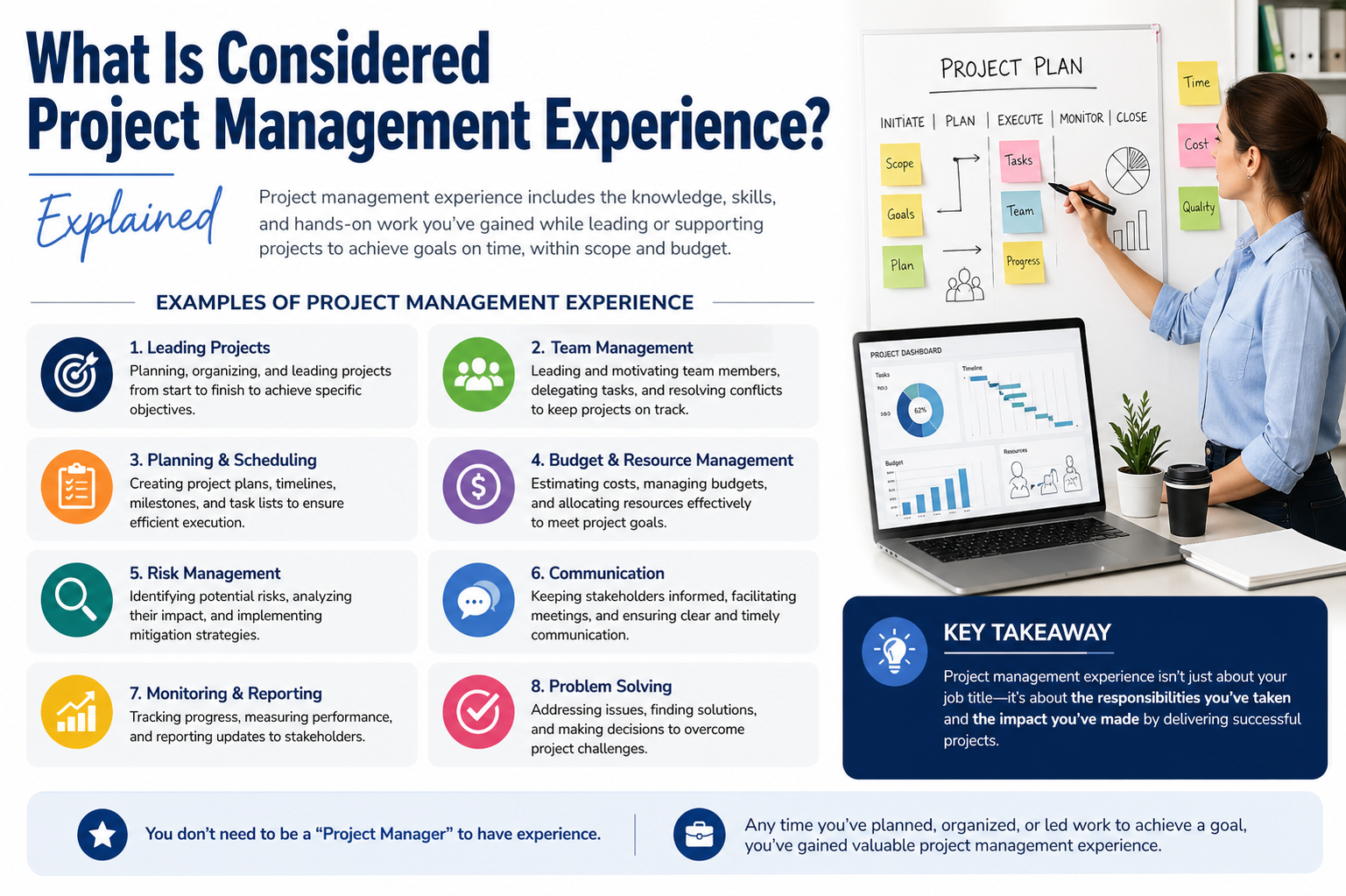
Project management experience is not limited to holding a formal title or managing large teams in a corporate environment. It is a broad concept that includes any involvement in structured work that follows defined stages of execution. At its core, project management experience refers to participation in activities aligned with five essential phases: initiation, planning, execution, monitoring and controlling, and closing. These phases represent the full lifecycle of a project, from the initial idea to the final delivery. Many individuals overlook the fact that they already possess relevant experience simply because their job title does not explicitly include “project manager.” In reality, contributing to any part of a project—whether organizing tasks, coordinating with team members, or ensuring deadlines are met—can qualify as valuable experience in this field. Understanding this definition is the first step toward recognizing the skills and knowledge you already have.
Breaking the Myth Around Formal Titles and Experience
A common misconception is that only individuals with the official designation of project manager can claim project management experience. This belief often discourages capable professionals from pursuing certifications or career advancement in this field. However, the reality is quite different. Experience is measured by responsibilities and contributions, not by job titles. For example, if you have ever coordinated a team effort, contributed to planning a task, or ensured that deliverables were completed on time, you have engaged in project-related activities. These contributions are valid and recognized as part of project management experience. The emphasis is on what you have done rather than what your role was called. This perspective removes unnecessary barriers and allows more people to see their work in a new light, recognizing its relevance to project management.
The Five Phases That Define Project Management Experience
To better understand what qualifies as project management experience, it is important to explore the five key phases that structure all projects. The initiation phase involves introducing the project and defining its purpose. This could include identifying a need, outlining objectives, or presenting an idea to stakeholders. The planning phase follows, where detailed strategies are developed to achieve the project’s goals. This includes setting timelines, allocating resources, and defining the scope of work. Execution is the stage where plans are put into action and tasks are carried out. Monitoring and controlling involve tracking progress, managing risks, and ensuring that the project stays on course. Finally, the closing phase marks the completion of the project, including final approvals and evaluations. Any involvement in these phases contributes to your overall experience, even if your participation was limited to just one or two stages.
Recognizing Hidden Experience in Everyday Work
Many professionals underestimate their project management experience because they fail to recognize it in their daily responsibilities. Tasks such as organizing events, coordinating team efforts, or managing deadlines often fall under project management activities. Even roles that seem purely technical or administrative can involve elements of planning, execution, and monitoring. For instance, a software developer who contributes to a product release participates in execution and possibly monitoring. Similarly, a team leader who helps define project goals is involved in initiation and planning. By analyzing your past work through the lens of these phases, you can uncover a wealth of experience that may not have been immediately obvious. This realization can be empowering and can help you confidently move forward in your career.
Understanding Certification Requirements and Their Purpose
Professional certifications in project management often require candidates to demonstrate a certain level of experience. These requirements are designed to ensure that individuals possess practical knowledge in addition to theoretical understanding. The experience criteria typically focus on involvement in the five process phases, emphasizing the ability to contribute to real-world projects. While these requirements may seem daunting at first, they are meant to validate your skills and prepare you for more advanced responsibilities. It is important to view these criteria not as obstacles but as guidelines that help you assess your readiness for certification. By aligning your past experiences with these requirements, you can better understand where you stand and what steps you need to take next.
Evolving Requirements and Their Impact on Candidates
Certification standards in project management have evolved over time to reflect changes in the industry. One significant shift has been the adjustment of experience requirements, making them more accessible to a broader range of professionals. Instead of focusing solely on the number of hours worked, newer criteria emphasize the duration and consistency of involvement in projects. This change recognizes that meaningful experience can be gained in various ways and does not always require extensive hours in a single role. For candidates, this means greater flexibility in demonstrating their qualifications. It also highlights the importance of documenting your work accurately, as consistent involvement over time becomes a key factor in meeting these requirements.
The Role of Education in Project Management Experience
In addition to practical experience, education plays an important role in building a strong foundation in project management. Training programs and courses provide essential knowledge about methodologies, tools, and best practices. These educational experiences complement your hands-on work, helping you understand the theoretical aspects of project management. Topics such as risk management, resource allocation, scheduling, and communication are critical for effective project execution. By combining education with practical experience, you develop a well-rounded skill set that prepares you for certification and professional growth. This dual approach ensures that you are not only capable of performing tasks but also understand the principles behind them.
Entry-Level Opportunities and Building Initial Experience
For those just starting out, gaining project management experience may seem challenging. However, there are many entry-level opportunities that allow you to build your skills gradually. Participating in team projects, assisting with planning activities, or supporting project leaders are all valuable ways to get involved. These roles provide exposure to different phases of a project and help you understand how various elements come together. Over time, as you gain confidence and competence, you can take on more responsibilities and move into leadership positions. The key is to start where you are and make the most of every opportunity to learn and contribute.
Understanding That Experience Can Be Non-Linear
Project management experience does not have to follow a linear path. You may have extensive experience in one phase and limited exposure in another, and that is perfectly acceptable. For example, some individuals may specialize in execution, while others focus more on planning or monitoring. This diversity of experience reflects the collaborative nature of projects, where different roles contribute to the overall success. Recognizing this non-linear progression allows you to appreciate your unique strengths and identify areas for improvement. It also helps you present your experience more effectively when pursuing certifications or career opportunities.
The Importance of Self-Assessment and Reflection
A crucial step in identifying your project management experience is self-assessment. This involves reflecting on your past work and analyzing how it aligns with the five phases of project management. By taking the time to evaluate your contributions, you gain a clearer understanding of your skills and capabilities. This process also helps you identify gaps in your experience and areas where you may need further development. Self-assessment is not just about meeting certification requirements; it is also a valuable tool for personal and professional growth. It enables you to set realistic goals and create a roadmap for advancing your career.
Building Confidence Through Awareness of Your Experience
One of the biggest benefits of understanding what counts as project management experience is the confidence it brings. When you realize that your past work is relevant and valuable, you are more likely to pursue new opportunities and challenges. This confidence can have a significant impact on your career, motivating you to seek certifications, apply for advanced roles, and take on leadership responsibilities. It also helps you communicate your skills more effectively, سواء in interviews or professional discussions. By recognizing the value of your experience, you position yourself as a capable and competent professional in the field of project management.
Expanding Your Understanding of Project Participation
Project management experience becomes clearer when you begin to look beyond traditional definitions of leadership and focus on participation. Being involved in a project does not always mean directing it from start to finish. In many cases, individuals contribute to specific components that are equally important to the project’s success. Participation can include collaborating with team members, handling assigned deliverables, or supporting decision-making processes. Each of these contributions aligns with one or more phases of project management. When you shift your perspective to include participation as valid experience, you start to see how your everyday responsibilities contribute to larger organizational goals. This broader understanding allows you to confidently identify your role within projects and recognize its importance.
Breaking Down Initiation Phase Contributions
The initiation phase is often seen as the starting point of a project, where ideas are transformed into actionable concepts. Experience in this phase can come from activities such as identifying problems, proposing solutions, or contributing to early discussions about project feasibility. Even if you were not the person presenting the idea, your involvement in brainstorming sessions or initial research counts as experience. For example, gathering requirements, analyzing potential risks, or helping define objectives are all valuable contributions. These tasks demonstrate your ability to think strategically and understand the purpose behind a project. Recognizing your role in initiation helps you appreciate the importance of setting a strong foundation for successful project outcomes.
Developing Skills Through Planning Activities
The planning phase is where projects begin to take shape in a structured and organized manner. Experience in this phase includes creating schedules, defining scopes, allocating resources, and outlining tasks. Many professionals gain planning experience without realizing it, especially when they organize workflows or coordinate team efforts. For instance, if you have ever created a timeline for completing a task or determined how resources should be used, you have participated in planning. This phase requires attention to detail and the ability to anticipate challenges before they arise. By engaging in planning activities, you develop critical thinking and organizational skills that are essential for effective project management.
Execution Phase as the Core of Practical Experience
Execution is often considered the most visible phase of a project, as it involves carrying out the planned activities. This is where ideas and strategies are put into action, making it a rich source of practical experience. Participation in execution can include completing assigned tasks, collaborating with team members, or ensuring that deliverables meet required standards. Many roles across different industries involve execution-related responsibilities, making this phase one of the most common areas where individuals gain experience. Whether you are developing a product, delivering a service, or supporting operational tasks, your involvement in execution demonstrates your ability to contribute to tangible outcomes. This hands-on experience is invaluable for building confidence and competence in project management.
Understanding Monitoring and Controlling Responsibilities
Monitoring and controlling is a critical phase that ensures projects stay on track and meet their objectives. Experience in this phase involves tracking progress, identifying issues, and making necessary adjustments. Activities such as reviewing performance metrics, managing risks, or ensuring quality standards are met all fall under this category. Even if you were not responsible for overseeing the entire project, your involvement in reporting progress or addressing challenges contributes to this phase. This type of experience highlights your ability to analyze situations, make informed decisions, and maintain control over project outcomes. It also demonstrates your commitment to achieving results and maintaining high standards.
Closing Phase and Its Often Overlooked Importance
The closing phase marks the completion of a project and involves finalizing all activities, obtaining approvals, and evaluating outcomes. Experience in this phase can include delivering final reports, participating in project reviews, or ensuring that all requirements have been met. Many professionals overlook their involvement in closing activities, but these contributions are essential for successful project completion. This phase provides an opportunity to reflect on what worked well and what could be improved in future projects. By participating in closing activities, you gain insights that enhance your overall understanding of project management and prepare you for future challenges.
Examples of Project Management Experience Across Roles
Project management experience can be found in a wide range of roles and industries. For example, a team lead who coordinates tasks and communicates with stakeholders is actively involved in multiple phases of a project. A technical professional who implements solutions contributes to execution and possibly monitoring. Similarly, someone working in quality assurance plays a key role in monitoring and controlling by ensuring that deliverables meet required standards. Even roles that seem unrelated to project management, such as administrative or support positions, can involve planning, coordination, and execution activities. These examples illustrate that project management experience is not confined to specific job titles but is embedded in various types of work.
Balancing Experience Across Different Phases
It is common for individuals to have more experience in certain phases of project management than others. This imbalance is natural and reflects the specific responsibilities of your role. For instance, someone in a technical position may have extensive experience in execution but limited exposure to initiation or closing. Rather than viewing this as a limitation, it should be seen as an opportunity to grow. By identifying areas where your experience is lacking, you can seek opportunities to expand your involvement in those phases. This balanced approach not only strengthens your overall skill set but also makes you a more versatile and effective project management professional.
The Value of Cross-Functional Collaboration
One of the key aspects of project management experience is working with individuals from different backgrounds and areas of expertise. Projects often require collaboration between teams, making communication and coordination essential skills. Experience in cross-functional collaboration involves understanding different perspectives, resolving conflicts, and ensuring that everyone is aligned with project goals. This type of experience is highly valuable क्योंकि it reflects your ability to work effectively in diverse environments. It also demonstrates your capacity to contribute to complex projects that require input from multiple stakeholders. Developing these skills enhances your ability to manage projects successfully and build strong professional relationships.
Recognizing Informal Leadership Opportunities
Leadership in project management is not always formal or hierarchical. Many individuals take on leadership roles informally by guiding team members, offering solutions, or taking initiative عندما challenges arise. These actions demonstrate leadership qualities and contribute to project success. Experience in informal leadership can include mentoring colleagues, facilitating discussions, or coordinating tasks within a team. Such contributions are often overlooked but are highly relevant when evaluating project management experience. Recognizing these opportunities helps you appreciate your ability to lead and influence others, even without an official title.
Building Experience Through Continuous Involvement
Project management experience is not gained overnight; it is built over time through consistent involvement in various activities. Each project you participate in adds to your understanding and enhances your skills. By actively seeking opportunities to contribute, you can steadily build your experience across different phases. This continuous involvement allows you to develop a deeper understanding of project dynamics and improve your ability to handle challenges. It also prepares you for more advanced roles, where you can take on greater responsibilities and lead projects more effectively.
The Importance of Documenting Your Contributions
As you gain experience, it is essential to keep track of your contributions بطريقة منظمة ودقيقة. Documenting your work helps you understand how your activities align with project management phases and makes it easier to present your experience when needed. This record can include details about the projects you worked on, your specific responsibilities, and the outcomes achieved. Accurate documentation is particularly important when applying for certifications or new roles, as it provides evidence of your skills and experience. By maintaining detailed records, you ensure that your efforts are recognized and valued.
Gaining Project Management Experience Through Workplace Opportunities
One of the most practical and accessible ways to build project management experience is through your current workplace. Many organizations run projects continuously, even if they are not always labeled as such. These projects can range from launching new products to improving internal processes or implementing new systems. By actively seeking involvement in these initiatives, you can gain valuable hands-on experience. You do not need to wait for a formal promotion or title change to participate. Volunteering to assist with coordination, planning tasks, or progress tracking can immediately place you within a project environment. Over time, these small contributions accumulate into meaningful experience that aligns with professional standards. The key is to stay proactive and demonstrate a willingness to take on responsibilities beyond your routine tasks.
Turning Everyday Tasks into Recognized Experience
Many professionals fail to realize that their daily responsibilities already include elements of project management. Tasks such as organizing meetings, setting deadlines, coordinating with colleagues, and ensuring deliverables are completed on time are all part of managing work in a structured way. When viewed through the lens of project management, these activities clearly align with different process phases. For example, scheduling tasks and defining priorities fall under planning, while ensuring completion aligns with execution and monitoring. By reframing your daily work in this way, you can begin to recognize its true value. This shift in perspective allows you to articulate your experience more effectively and positions you as someone who already understands the fundamentals of project management.
Leveraging Volunteer Work for Meaningful Experience
Volunteer work is another powerful avenue for gaining project management experience, especially for those who may not have access to formal opportunities in their workplace. Community organizations, non-profits, and local initiatives often require help with projects such as event planning, fundraising, or technology implementation. These environments provide an excellent platform to practice planning, execution, and leadership skills. For instance, organizing a community event involves defining objectives, coordinating resources, managing timelines, and ensuring successful completion—all key aspects of project management. While volunteer work may not always offer financial rewards, it provides valuable experience that can significantly enhance your professional profile. بالإضافة إلى ذلك، it demonstrates initiative and a commitment to contributing to meaningful causes.
Building Experience Through Side Projects and Freelancing
Side projects and freelance work offer another flexible way to gain project management experience. These opportunities allow you to take ownership of projects from start to finish, giving you exposure to all phases of the project lifecycle. Whether you are developing a website, managing a small business initiative, or working with clients on specific tasks, these projects require you to plan, execute, monitor, and deliver results. Freelancing, in particular, helps you develop independence and accountability, as you are often responsible for managing client expectations and ensuring successful outcomes. These experiences not only build your skills but also provide tangible examples that you can present when applying for certifications or advanced roles.
Networking as a Tool for Expanding Opportunities
Networking plays a crucial role in gaining project management experience. Building relationships with professionals in your field can open doors to new opportunities and collaborations. By connecting with colleagues, mentors, and industry peers, you increase your chances of being involved in projects that require additional support. Networking also allows you to learn from others who have more experience, giving you insights into best practices and strategies for success. Attending professional events, participating in online communities, or simply engaging in meaningful conversations can help you expand your network. These connections often lead to opportunities that may not be publicly advertised, giving you an advantage in building your experience.
Understanding the Importance of Tracking Your Hours and Roles
As you accumulate project management experience, it becomes essential to track your involvement accurately. This includes documenting the time you spend on different projects, the phases you contributed to, and the specific responsibilities you handled. Keeping detailed records ensures that you can provide accurate information when required, particularly for certification applications. It also helps you identify patterns in your experience, such as which phases you are most involved in and where you may need further development. Accurate tracking is not just about meeting requirements; it is about understanding your own growth and progress. By maintaining organized records, you create a clear picture of your journey in project management.
Preparing for Verification and Audits
When applying for professional certifications, there is often a possibility that your documented experience will be reviewed or audited. This means you may need to provide evidence or references to support your claims. Being prepared for this process is crucial to avoid complications. One effective approach is to maintain contact with project leaders or supervisors who can verify your involvement. Keeping records of communications, project details, and outcomes can also be helpful. By staying organized and proactive, you can ensure that your experience is easily verifiable. This preparation not only simplifies the certification process but also reflects your professionalism and attention to detail.
Overcoming the Challenge of Recalling Past Experience
One of the common difficulties professionals face is remembering the details of projects they worked on several years ago. This challenge highlights the importance of documenting your experience as you go rather than relying on memory. Trying to recall specific tasks, timelines, and contributions after a long period can be both stressful and inaccurate. By maintaining a habit of recording your work नियमित रूप से, you can avoid this issue and ensure that your information is precise. This practice also allows you to reflect on your progress over time, helping you see how your skills and responsibilities have evolved.
Aligning Your Experience with Professional Standards
To make the most of your project management experience, it is important to align it with recognized professional standards. This involves understanding how your activities fit within the established process phases and being able to describe them accordingly. For example, instead of simply stating that you “worked on a project,” you can specify that you contributed to planning by defining timelines or to monitoring by tracking progress. This level of detail demonstrates your understanding of project management principles and makes your experience more credible. It also helps you communicate your skills more effectively in professional settings, such as interviews or certification applications.
Developing a Habit of Continuous Learning
Experience alone is not enough to excel in project management; it must be complemented by continuous learning. As you gain experience, it is important to stay updated on new methodologies, tools, and industry trends. This can include learning about agile practices, improving your communication skills, or exploring new project management software. Continuous learning ensures that your skills remain relevant and that you are prepared to handle evolving challenges. It also enhances your ability to apply your experience in more effective ways, जिससे your overall performance improves. By combining practical experience with ongoing education, you create a strong foundation for long-term success.
Building Confidence to Take on Larger Responsibilities
As your experience grows, so does your confidence in handling more complex projects. Initially, you may start with small tasks or limited responsibilities, but over time, you will develop the skills needed to take on larger roles. This progression is a natural part of professional growth. By consistently applying what you have learned and seeking new challenges, you can gradually move into leadership positions. Confidence plays a crucial role in this process, as it allows you to step outside your comfort zone and embrace new opportunities. Each successful project adds to your experience and reinforces your ability to manage future challenges effectively.
Creating a Strong Foundation for Career Advancement
All the experience you gain through workplace involvement, volunteer work, side projects, and continuous learning contributes to a solid foundation for career advancement. Project management is a field that values practical knowledge and the ability to deliver results. By building a diverse range of experiences, you position yourself as a well-rounded professional capable of handling various aspects of project management. This foundation not only prepares you for certifications but also opens doors to new career opportunities. Employers value individuals who can demonstrate real-world experience and a clear understanding of project processes. By investing in your growth and development, you set yourself up for long-term success in this dynamic and rewarding field.
Strengthening Your Project Management Identity Through Experience
Project management experience ultimately shapes how you see yourself as a professional. It is not just a collection of tasks or hours logged in different roles, but a developing identity built through repeated involvement in structured work. As you participate in different projects, you begin to recognize patterns in how work is initiated, planned, executed, and completed. This awareness gradually builds your confidence and helps you understand your strengths in managing responsibilities, coordinating with others, and delivering outcomes. Over time, you stop viewing yourself as someone “trying to gain experience” and instead start seeing yourself as someone actively contributing to structured goals. This shift in mindset is important because it influences how you approach future opportunities and challenges.
Developing Maturity Through Repeated Project Exposure
With each project you participate in, your understanding of how projects function becomes deeper and more refined. Early experiences may feel fragmented, where you are only responsible for a small part of the work. However, repeated exposure allows you to connect these pieces into a complete picture of the project lifecycle. You begin to understand how decisions made in the planning stage affect execution, or how monitoring helps prevent issues during delivery. This maturity does not come instantly; it develops gradually through consistent involvement. As you gain exposure to different types of projects, industries, and teams, your ability to adapt and respond effectively also improves. This adaptability is a key indicator of strong project management experience.
Transitioning From Contributor to Coordinator Mindset
A significant milestone in building project management experience is the shift from being a task contributor to thinking like a coordinator. Contributors focus primarily on completing assigned responsibilities, while coordinators think about how different tasks connect and impact the overall project. This shift often happens naturally as you gain more exposure to project environments. You start anticipating dependencies, identifying risks, and understanding how delays or changes in one area affect others. Even if you are not formally assigned a leadership role, adopting this mindset strengthens your ability to manage work more effectively. It also prepares you for higher responsibilities in the future, where coordination becomes a central part of your role.
Recognizing the Value of Small Contributions in Large Projects
In large projects, success is rarely dependent on one individual’s efforts. Instead, it is the result of many small contributions working together. Even tasks that may seem minor—such as updating documentation, attending meetings, or sharing feedback—play an important role in ensuring smooth progress. These contributions often fall under different project management phases without being explicitly labeled as such. For example, providing updates contributes to monitoring, while assisting in task organization supports planning. Recognizing the value of these small contributions helps you appreciate your role within the bigger picture. It also reinforces the idea that project management experience is built through cumulative involvement rather than isolated achievements.
Building Strategic Thinking Through Experience
As your experience grows, you begin to develop strategic thinking skills that go beyond task completion. Strategic thinking involves understanding the broader objectives of a project and making decisions that align with long-term goals. Instead of focusing only on what needs to be done immediately, you start considering why it needs to be done and how it fits into the overall outcome. This ability develops naturally when you are consistently involved in planning discussions, progress reviews, and problem-solving activities. Strategic thinking is a key differentiator in project management because it allows you to contribute at a higher level and add more value to your work. It also enhances your ability to anticipate challenges and prepare solutions in advance.
Refining Communication as a Core Project Skill
Communication is one of the most critical aspects of project management experience. Throughout your involvement in projects, you learn how to share information clearly, listen effectively, and adapt your communication style to different audiences. Whether you are updating a team, reporting progress, or discussing issues, effective communication ensures that everyone remains aligned. Over time, you also learn the importance of documentation, clarity, and timing in communication. Miscommunication can lead to delays or misunderstandings, so developing strong communication habits becomes essential. As you gain experience, your ability to communicate complex ideas in a simple and structured manner improves significantly, making you a more effective contributor to any project.
Handling Challenges and Learning From Setbacks
No project is without challenges, and dealing with setbacks is an important part of gaining experience. Problems such as missed deadlines, resource limitations, or unexpected changes are common in project environments. How you respond to these challenges contributes significantly to your growth. Instead of viewing setbacks as failures, they should be seen as learning opportunities that help you improve your problem-solving abilities. Each challenge teaches you something new about planning, risk management, or coordination. Over time, you become better at anticipating potential issues and developing strategies to handle them. This resilience is a key component of professional maturity in project management.
Understanding the Importance of Adaptability in Projects
Projects rarely go exactly as planned, which makes adaptability a crucial skill in project management experience. Being adaptable means adjusting your approach when circumstances change, whether due to shifting priorities, new requirements, or unforeseen obstacles. This flexibility allows you to remain effective even in uncertain situations. Adaptability is developed through exposure to different project environments and working with diverse teams. As you gain experience, you learn that rigid approaches are often less effective than flexible ones. This understanding helps you navigate complex projects with greater ease and confidence, ensuring that you remain productive even when conditions change.
Connecting Experience to Professional Growth Goals
Your project management experience should not exist in isolation; it should be directly connected to your long-term career goals. As you gain experience, it is important to reflect on how each opportunity contributes to your professional development. Some experiences may help you improve technical skills, while others may strengthen leadership or communication abilities. By consciously linking your experience to your goals, you can make more informed decisions about which opportunities to pursue. This alignment ensures that your growth is intentional rather than accidental. It also helps you stay focused and motivated as you progress in your career.
Preparing for Advanced Responsibilities in Project Environments
As your experience increases, you naturally become better prepared for more advanced responsibilities. These may include leading small teams, managing larger portions of projects, or overseeing entire project phases. Preparation for these roles comes from consistent involvement in smaller tasks and gradually taking on more complex responsibilities. Each experience builds your confidence and equips you with the skills needed for higher-level roles. This progression is gradual but steady, and it reflects your growing capability as a project management professional. Being prepared for advanced responsibilities also means understanding expectations and being ready to handle greater accountability.
Creating Long-Term Value From Your Experience
Project management experience is not only valuable for immediate career opportunities but also for long-term professional success. The skills you develop—such as planning, communication, problem-solving, and coordination—remain relevant across industries and roles. This long-term value makes project management experience highly transferable and versatile. As you continue to build your experience, you create a strong foundation that supports future growth in various directions. Whether you choose to specialize in project management or apply your skills in other areas, the experience you gain will continue to benefit you throughout your career.
Final Reflection
Ultimately, project management experience is about consistent involvement, learning, and contribution across structured work environments. It is not defined by a single role, certification, or job title but by the accumulation of meaningful participation in project-related activities. Every task that contributes to planning, execution, monitoring, or completion adds to your experience. By recognizing this, you gain a clearer understanding of your professional value and potential. Project management experience is both practical and developmental, shaping not only what you can do but also how you think and approach work.