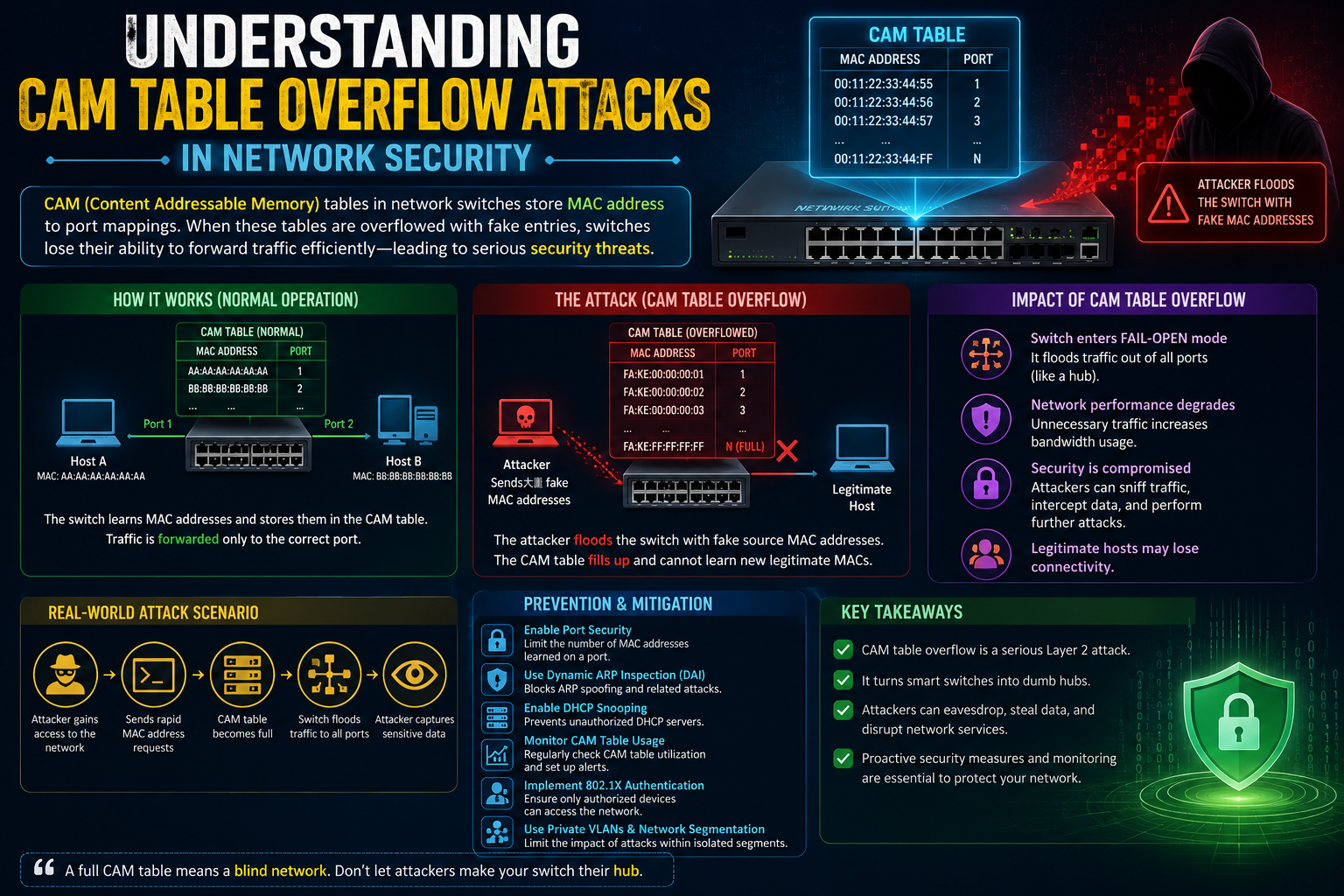
In any modern computer network, switches play a central role in ensuring that data reaches the correct destination efficiently. Their primary function is to receive incoming data frames from connected devices and forward them only to the appropriate recipient device. This behavior is what makes switched networks faster and more secure compared to older hub-based systems.
A switch operates intelligently by learning where devices are located within the network. Instead of sending data to every connected device, it builds an internal awareness of which device exists on which port. This allows communication to remain isolated between sender and receiver, reducing unnecessary traffic and improving overall performance.
This selective forwarding behavior also contributes significantly to network security. Since data is not broadcast to every device by default, unauthorized users on the same network segment find it more difficult to intercept communications. However, this efficiency depends heavily on the switch’s ability to correctly store and manage device information, which is where the concept of MAC addresses and CAM tables becomes essential.
MAC Address and Its Role in Device Identification
Every network-enabled device is assigned a unique identifier known as a MAC address, which stands for Media Access Control address. This address is permanently embedded into a device’s network interface card and serves as its physical identity on a local network.
Unlike IP addresses, which can change depending on the network configuration, MAC addresses remain constant and unique to each hardware interface. This makes them extremely useful for local network communication, where switches rely on them to distinguish between devices.
When a device sends data across a network, its MAC address is included in the frame as the source identifier. The receiving switch reads this information and uses it to determine where the device is located within its internal mapping system. Over time, this process allows the switch to build a detailed understanding of all connected devices.
MAC addresses, therefore, act as the foundation of switch-based communication. Without them, switches would have no reliable way of distinguishing one device from another within the same local environment.
Content-Addressable Memory and the CAM Table
To manage MAC addresses efficiently, switches use a specialized type of memory known as Content-Addressable Memory. This memory structure is designed to store data in a way that allows extremely fast searching based on content rather than memory location.
In networking switches, this memory is used to maintain what is called a CAM table. The CAM table is essentially a database that maps MAC addresses to specific switch ports. Each time a switch learns a new device, it records the MAC address along with the port number where that device was detected.
This mapping enables the switch to forward traffic directly to the correct destination without flooding the entire network. The CAM table is constantly updated as devices connect, disconnect, or move between ports.
However, CAM memory is not unlimited. It has a fixed capacity, meaning it can only store a certain number of MAC address entries. Once this limit is reached, the switch must decide how to handle new incoming information, which introduces potential vulnerabilities when the system is intentionally overwhelmed.
How the CAM Table Supports Efficient Data Forwarding
Under normal network conditions, the CAM table is constantly learning and optimizing traffic flow. When a device sends a frame into the network, the switch first examines the source MAC address and records it if it is not already present in the table. This ensures that future communication can be directed efficiently.
When the destination MAC address is already known, the switch forwards the frame only to the specific port associated with that device. This targeted delivery is what makes switched networks highly efficient and scalable.
If the destination MAC address is unknown, the switch temporarily broadcasts the frame to all ports within the same network segment. This allows the intended recipient to respond, after which the switch updates its CAM table with the new information.
This learning process is continuous and automatic. It allows switches to adapt dynamically to changes in the network without requiring manual configuration. However, this same mechanism can be manipulated when excessive or malicious data is introduced into the system.
Normal Traffic Flow Versus Abnormal Network Behavior
In a healthy network, traffic flows in a highly structured and predictable manner. Devices communicate through switches that already understand where most destinations are located. This reduces unnecessary broadcasting and keeps network traffic optimized.
However, when abnormal traffic patterns appear, the switch may struggle to maintain accurate records in its CAM table. If too many new or fake MAC addresses are introduced in a short period of time, the switch begins to operate under stress.
Instead of maintaining stable mappings, it is forced to constantly update and replace existing entries. This disrupts the normal learning process and can eventually lead to instability in forwarding decisions.
At this stage, the efficiency of the network begins to degrade, and the switch may start behaving in ways that are no longer optimal for security or performance.
How Attackers Exploit CAM Table Limitations
A CAM table overflow scenario occurs when an excessive number of MAC addresses are introduced into a switch within a short time frame. Attackers take advantage of this limitation by flooding the network with a large volume of artificially generated or randomized MAC addresses.
The goal is not to communicate legitimately but to overwhelm the switch’s ability to store valid entries. Since the CAM table has finite capacity, it eventually fills up completely.
Once this happens, the switch can no longer maintain accurate mappings between MAC addresses and ports. As a result, it loses the ability to forward traffic intelligently.
From an attacker’s perspective, this creates an opportunity to manipulate how the switch handles data. Instead of forwarding traffic to specific destinations, the switch may begin distributing frames more broadly across all ports.
This behavior can expose sensitive communication to unintended recipients on the same network segment.
CAM Table Overflow Mechanism Step by Step
When a CAM table overflow attack is initiated, the switch begins receiving a continuous stream of frames containing spoofed MAC addresses. Each frame appears legitimate at first glance, as it follows normal network formatting rules.
The switch processes each incoming frame by attempting to store the source MAC address in its CAM table. Since these addresses are constantly changing and artificially generated, the table fills up rapidly.
As the CAM table reaches its maximum capacity, the switch must start discarding older entries to make room for new ones. This disrupts the existing mapping between legitimate devices and their corresponding ports.
Eventually, the switch loses track of where real devices are located. When it receives traffic intended for a known device, it can no longer determine the correct port. Instead of dropping the packet, it may broadcast the frame across all ports in the same network segment.
This behavior change is critical, as it transforms the switch from a selective forwarding device into a broad distribution system, exposing traffic to multiple endpoints.
Impact on Network Traffic and Security
The consequences of a CAM table overflow condition extend beyond simple performance degradation. One of the most significant impacts is the loss of traffic isolation between devices.
When frames are broadcast instead of being forwarded selectively, any device connected to the same network segment may receive data that was not intended for it. This opens the door to unauthorized access and passive data interception.
In addition to security risks, network performance can also suffer. The sudden increase in broadcast traffic can lead to congestion, delays, and packet loss. Devices may experience difficulty communicating efficiently, resulting in slow or unstable connections.
In extreme cases, the switch itself may become overwhelmed by the volume of traffic and stop functioning properly. This can lead to partial or complete network outages, affecting all connected systems.
The combination of security exposure and operational disruption makes CAM table overflow a serious concern in network environments that rely heavily on shared switching infrastructure.
Early Warning Signs and Network Symptoms
Before a full CAM table overflow condition occurs, there are often subtle signs that indicate abnormal network behavior. One of the earliest indicators is an unusually high number of MAC address changes within a short period of time.
Network monitoring systems may also detect a rapid increase in unknown or unregistered MAC addresses appearing on switch ports. This can suggest that the CAM table is being populated at an abnormal rate.
Another symptom is an increase in broadcast traffic across the network. As the switch begins to struggle with maintaining accurate mappings, it may rely more heavily on broadcasting to deliver frames.
Users on the network may begin to notice slower performance, delayed responses, or intermittent connectivity issues. These symptoms often worsen as the CAM table becomes increasingly saturated.
In some cases, specific switch ports may become unstable or stop forwarding traffic correctly due to internal resource exhaustion.
Internal Switch Architecture and Why It Matters for CAM Table Stability
To understand CAM table overflow attacks at a deeper level, it is important to look inside how a switch actually processes data. Modern switches are not simple forwarding devices; they are built on specialized hardware architectures designed to process traffic at extremely high speed.
At the heart of most switches is a combination of ASICs (Application-Specific Integrated Circuits) and embedded memory systems. The ASIC is responsible for making forwarding decisions in real time, while the CAM table is stored in high-speed memory that the ASIC can access almost instantly.
This hardware-based design is what allows switches to operate at line speed, meaning they can process traffic without introducing noticeable delays. However, this efficiency also means that resources like CAM memory are finite and tightly controlled.
When the CAM table begins to fill, the ASIC must continuously update its forwarding logic. This is normally a lightweight process, but under abnormal conditions—such as a flood of new MAC addresses—the system becomes increasingly stressed.
Unlike software-based systems that can dynamically allocate memory, CAM tables are fixed in size. This rigidity is what makes them predictable but also vulnerable when deliberately overwhelmed.
How Switch ASICs Respond to High-Volume MAC Learning
When a switch receives a frame, the ASIC quickly inspects the source MAC address and checks whether it already exists in the CAM table. If it does not, a new entry is created, mapping that MAC address to the port where it was observed.
Under normal conditions, this process is extremely fast and efficient. However, when thousands or even millions of unique MAC addresses begin arriving rapidly, the ASIC must repeatedly perform write operations to the CAM table.
Each new entry consumes valuable space. As the table fills, the switch begins prioritizing newer entries while older ones are aged out or overwritten. This aging process is part of normal switch behavior, designed to remove stale or inactive devices.
In a controlled environment, aging helps maintain an accurate representation of active devices. In an attack scenario, however, this mechanism is exploited to force legitimate entries out of the table prematurely.
The result is a constantly shifting CAM database that no longer reflects the true structure of the network.
Traffic Flooding Behavior and MAC Address Spoofing Techniques
At the core of a CAM table overflow attack is the generation of large volumes of traffic containing randomized or spoofed MAC addresses. These addresses are not tied to real hardware but are artificially created to appear unique.
Attack tools typically automate this process by generating continuous streams of Ethernet frames. Each frame contains a different source MAC address, making it appear as though thousands of new devices are joining the network in real time.
Because switches are designed to trust incoming frames at Layer 2, they have no immediate way of distinguishing legitimate MAC addresses from spoofed ones. This allows the attacker’s traffic to be processed normally, at least initially.
As the volume increases, the switch’s learning mechanism is forced into overdrive. It continues attempting to store each new MAC address, rapidly exhausting available CAM entries.
This technique does not require advanced exploitation of vulnerabilities in the traditional sense. Instead, it abuses the normal learning behavior of switches, turning a fundamental feature into a weakness.
Effects on Network Segmentation and Broadcast Domains
In a well-designed network, switches help maintain segmentation by ensuring that traffic is only forwarded to relevant ports. Each VLAN acts as its own broadcast domain, limiting unnecessary propagation of frames.
However, when a CAM table becomes full or unstable, this segmentation begins to break down. The switch can no longer reliably associate MAC addresses with specific ports.
As a result, unknown unicast traffic frames destined for devices whose locations are no longer known begin to be flooded across the entire VLAN.
This behavior effectively expands the scope of visibility for an attacker. Instead of seeing only their own traffic, they may begin to observe communications between other devices on the same VLAN.
Importantly, this does not automatically affect all VLANs on the switch. Each VLAN maintains its own CAM table entries, but if the attack is widespread or targets multiple VLANs, the impact can extend across the network infrastructure.
The Role of Trunk Links in Propagating Attack Impact
In environments where multiple switches are interconnected, trunk links play a critical role in carrying traffic between different parts of the network. These trunk links typically carry traffic for multiple VLANs simultaneously.
When a CAM table overflow condition occurs on one switch, the effects can propagate across trunk links to neighboring switches. This happens because MAC address learning is shared between interconnected devices.
If one switch begins flooding traffic due to unknown destinations, that flood can travel across trunks and affect downstream switches as well. These switches may then begin experiencing similar CAM table pressure.
Over time, the attack can spread beyond its original point of entry, creating a cascading effect throughout the network. This is especially problematic in large enterprise environments where multiple switches are heavily interconnected.
The distributed nature of switching infrastructure means that a localized issue can quickly escalate into a broader network-wide problem if not contained.
CPU vs ASIC Processing During CAM Table Stress Conditions
Under normal circumstances, most forwarding decisions are handled entirely by hardware ASICs, leaving the CPU relatively free to handle management tasks.
However, when CAM tables become unstable or overwhelmed, some traffic may be punted to the switch CPU for processing. This happens when the ASIC cannot make a confident forwarding decision.
Once traffic begins reaching the CPU in large volumes, the performance impact becomes significantly more severe. Unlike ASICs, CPUs are not designed for high-speed packet forwarding.
This shift from hardware-based forwarding to software-based processing can lead to rapid degradation in performance. The CPU becomes overloaded, and the switch may begin dropping packets or delaying forwarding decisions.
In extreme cases, this CPU overload can cause the switch to become unresponsive, effectively resulting in a denial of service condition.
Recognizing Abnormal MAC Learning Patterns
One of the key indicators of a CAM table overflow attack is an unusually rapid increase in learned MAC addresses. Under normal network conditions, MAC address growth is gradual and predictable.
In contrast, an attack scenario produces sudden spikes in MAC address entries, often with no corresponding increase in legitimate network activity.
Another indicator is the presence of a large number of MAC addresses that do not remain stable. These entries may appear briefly and then disappear, replaced by new ones in rapid succession.
This instability is a direct result of continuous spoofing and entry overwriting within the CAM table.
Network administrators may also observe increased CPU utilization on switches, particularly if traffic is being processed outside of ASIC pathways.
Network Monitoring and Traffic Visibility Challenges
Detecting CAM table overflow attacks in real time can be challenging because the traffic involved often appears syntactically valid. Each frame conforms to the standard Ethernet structure, making it difficult to filter based on simple signature rules.
Instead, detection relies heavily on behavioral analysis. Monitoring tools must track patterns such as MAC address churn rate, port-level traffic anomalies, and unexpected broadcast increases.
Another challenge is distinguishing between legitimate high-density environments and malicious activity. For example, virtualized environments, data centers, or containerized systems may naturally generate large numbers of MAC addresses.
This makes context extremely important when analyzing network behavior. Without proper baselines, normal activity may be misinterpreted as malicious, or vice versa.
Effective monitoring, therefore, depends on understanding what “normal” looks like for a specific network over time.
Attack Persistence and Continuous Flooding Strategies
A CAM table overflow attack is not always a one-time event. In many cases, attackers maintain continuous traffic generation to keep the CAM table in a perpetually unstable state.
By sustaining a steady stream of spoofed MAC addresses, they ensure that the switch never has an opportunity to recover or rebuild an accurate table.
This persistent flooding strategy increases the likelihood of maintaining broadcast behavior across the network. As long as the attack continues, the switch remains unable to reliably map devices to ports.
Some attack scenarios may also involve intermittent bursts of traffic rather than constant flooding. This can make detection more difficult, as the attack may appear sporadic rather than sustained.
Both approaches aim to achieve the same outcome: destabilizing the CAM table enough to disrupt normal switching behavior.
Interaction with Network Redundancy and Failover Systems
Modern networks often include redundancy mechanisms designed to maintain availability in the event of hardware or link failures. These may include multiple switches, redundant paths, and failover configurations.
However, CAM table overflow conditions can indirectly interfere with these systems. When switches lose accurate MAC mappings, failover decisions may be impacted by incorrect traffic forwarding behavior.
Redundant links may begin carrying unexpected traffic loads due to increased broadcasting. This can place additional strain on backup paths that are not normally used for high-volume forwarding.
In some cases, redundancy systems may interpret the resulting instability as a failure condition and attempt to reroute traffic unnecessarily, further complicating the network state.
This interaction highlights how a single-layer attack can have multi-layer consequences across the broader infrastructure.
Behavioral Differences Between Small and Large Networks
The impact of CAM table overflow attacks can vary significantly depending on network size and design. In smaller networks, the number of connected devices is limited, which means CAM tables are less likely to be fully utilized under normal conditions.
As a result, attacks in small environments may be easier to detect due to sudden and obvious changes in MAC address behavior.
In larger enterprise networks, however, CAM tables are naturally more populated, and MAC address churn is more common. This can make abnormal patterns harder to distinguish from legitimate activity.
Large networks also tend to have more interconnected switches, increasing the potential for propagation effects across multiple devices.
This scalability factor makes CAM table overflow attacks particularly concerning in complex infrastructures where visibility and control are distributed.
Early Defensive Awareness Without Active Countermeasures
Even before formal mitigation techniques are applied, awareness of how CAM table exhaustion occurs is critical for maintaining network resilience.
Understanding that switches rely on finite memory for MAC address storage helps explain why abnormal traffic patterns can have such a disruptive effect.
It also highlights the importance of monitoring MAC address behavior over time rather than reacting only to performance issues after they occur.
Recognizing that switches prioritize learning and forwarding efficiency over strict authentication at Layer 2 provides insight into why these attacks are possible in the first place.
This foundational understanding is essential for interpreting network behavior under stress conditions and identifying when something deviates from expected patterns.
Defensive Architecture in Modern Switching Environments
As network threats evolve, modern switching infrastructure has shifted from simple forwarding logic toward more resilient, policy-driven architectures. CAM table overflow attacks exploit a very specific weakness in Layer 2 switching behavior, but contemporary networks are designed with multiple defensive layers that work together to reduce exposure.
At the core of these defenses is the idea that switches should not blindly trust every incoming MAC address. Instead, they should apply constraints, validation rules, and behavioral limits to ensure that learning processes remain stable even under abnormal traffic conditions.
This shift represents a broader change in network design philosophy. Rather than assuming that internal traffic is safe, modern networks increasingly operate under the assumption that any port could potentially be hostile or compromised.
Port Security as a Primary Mitigation Layer
One of the most effective and widely used defenses against CAM table overflow attacks is port security. This feature allows administrators to define how many MAC addresses a single switch port is allowed to learn.
By restricting MAC address learning at the port level, the switch prevents any single interface from overwhelming the CAM table. Even if an attacker attempts to flood the network with spoofed addresses, the port will only accept a limited number before taking protective action.
Port security typically operates in multiple modes. One mode simply limits MAC learning without further consequences, while more strict configurations can disable the port entirely when a violation occurs.
This enforcement mechanism is critical because it shifts control from reactive CAM table behavior to proactive port-level enforcement. Instead of allowing the table to fill and degrade, the switch stops abnormal behavior at the source.
Sticky MAC Learning and Controlled Address Binding
In addition to basic port security, many switches support a feature known as sticky MAC learning. This mechanism allows a switch to dynamically learn MAC addresses but then bind them permanently (or semi-permanently) to a specific port.
Once a MAC address is learned in sticky mode, it is retained across sessions and can even be written into the switch configuration. This reduces the risk of unauthorized MAC address injection because only known devices are allowed to persist in the CAM table.
Sticky MAC learning is particularly useful in environments where device changes are minimal, such as office workstations or controlled access areas. It ensures that once a device is recognized, its identity becomes part of the switch’s trusted baseline.
However, it is less suitable for highly dynamic environments where devices frequently connect and disconnect, as it requires careful management to avoid configuration overhead.
Storm Control and Broadcast Limiting Mechanisms
Another important defense against CAM table overflow effects is broadcast storm control. While CAM overflow attacks primarily target MAC address learning, the downstream impact often involves excessive broadcast traffic.
Storm control mechanisms monitor the rate of broadcast, multicast, and sometimes unknown unicast traffic on a port. When traffic exceeds a defined threshold, the switch can either throttle or block the excess traffic.
This helps prevent network saturation during abnormal conditions. Even if a CAM table becomes unstable, storm control ensures that broadcast propagation does not completely overwhelm the network.
By limiting traffic volume at the port level, storm control indirectly reduces the impact of CAM table exhaustion. It does not prevent the attack itself but significantly reduces its collateral damage.
Dynamic ARP Inspection and Layer 2 Validation
While CAM table overflow attacks operate at the MAC learning level, related Layer 2 attacks often involve ARP spoofing or poisoning. To address this broader threat landscape, modern networks use Dynamic ARP Inspection (DAI).
DAI works by validating ARP packets against a trusted database of IP-to-MAC bindings. This database is typically derived from DHCP snooping or manually configured entries.
When a switch receives an ARP packet, it checks whether the MAC address and IP address pairing is legitimate. If the combination is invalid or untrusted, the packet is dropped.
Although DAI does not directly prevent CAM table overflow, it complements MAC filtering defenses by ensuring that even if spoofed MAC addresses are introduced, they cannot easily be used for higher-level impersonation.
DHCP Snooping and Trusted Binding Tables
DHCP snooping plays an important role in building a foundation of trust within a switched network. It monitors DHCP traffic and records which IP addresses are assigned to which MAC addresses on which ports.
This information is stored in a binding table that can be used by other security features such as Dynamic ARP Inspection and IP Source Guard.
By establishing a verified relationship between devices and their network identities, DHCP snooping reduces the effectiveness of spoofing-based attacks.
In environments where CAM table overflow attacks are combined with other Layer 2 manipulation techniques, DHCP snooping provides a critical layer of validation that helps maintain consistency in device identity tracking.
VLAN Segmentation and Attack Containment Strategy
Virtual LANs (VLANs) are one of the most important structural tools for limiting the scope of network attacks. By dividing a physical switch into multiple logical networks, VLANs create isolated broadcast domains.
In the context of CAM table overflow attacks, VLAN segmentation plays a crucial role in containing the impact. Even if one VLAN experiences excessive MAC address flooding, other VLANs remain unaffected.
This segmentation ensures that CAM table instability does not necessarily propagate across the entire switch infrastructure. Each VLAN maintains its own MAC address table context, which helps limit exposure.
However, VLANs alone are not a complete defense. If an attacker gains access to multiple VLANs or targets trunk links, the effects can still spread across the network.
Role of Trunk Port Security in Multi-Switch Environments
Trunk links are responsible for carrying traffic between switches and often transport multiple VLANs simultaneously. Because of this, they represent a critical pathway for both legitimate traffic and potential attack propagation.
In environments where CAM table overflow attacks are a concern, securing trunk ports becomes essential. Unlike access ports, trunk ports must be carefully configured to restrict unnecessary MAC learning and prevent abuse.
Some switches allow administrators to apply MAC address filtering or limiting rules even on trunk interfaces. This helps ensure that only expected traffic patterns are allowed between switches.
Without proper trunk security, a single compromised switch can influence the CAM tables of multiple downstream devices, amplifying the impact of an attack.
Rate Limiting and Traffic Policing at Layer 2
Another important mitigation strategy involves rate limiting at the switch port level. Instead of focusing solely on MAC address counts, rate limiting controls how many frames a port can send or receive within a given time period.
This helps prevent sudden bursts of spoofed traffic from overwhelming the CAM learning process. Even if an attacker attempts to flood the switch with MAC addresses, rate limiting can slow down the ingestion rate.
Traffic policing mechanisms can either drop excess frames or mark them for lower-priority processing. This ensures that the switch maintains stability even under abnormal traffic conditions.
Rate limiting is particularly useful because it addresses the problem at a behavioral level rather than relying only on identity validation.
Hardware Limitations and CAM Table Size Constraints
Every switch has a finite CAM table size, and this limitation is determined by hardware design rather than software configuration. High-end enterprise switches may support hundreds of thousands of MAC entries, while smaller switches may support only a few thousand.
This hardware constraint is fundamental to understanding why CAM table overflow attacks are possible in the first place. No matter how advanced the switch is, it cannot store infinite MAC addresses.
Attackers exploit this limitation by artificially accelerating MAC address consumption. The speed of injection matters more than the total number of devices on the network.
Once the table reaches capacity, the switch must either overwrite existing entries or begin failing to learn new ones, both of which lead to instability.
Memory Management and Aging Timers in CAM Tables
CAM tables are not static structures; they rely on aging timers to remove inactive entries. When a device stops communicating, its MAC address entry eventually expires and is removed from the table.
This aging process is essential for maintaining accuracy in dynamic networks. Without it, the CAM table would quickly become filled with outdated or irrelevant entries.
However, aging timers can also be exploited in attack scenarios. By continuously injecting new MAC addresses, attackers force the switch to constantly refresh its table, preventing stable entries from persisting.
This creates a situation where the CAM table is always in flux, never reaching a stable state where legitimate devices are reliably tracked.
Indicators of Compromised CAM Stability in Real Networks
In operational environments, detecting CAM instability requires careful observation of multiple network metrics. One of the most important indicators is MAC address churn rate—the frequency at which new MAC addresses appear and disappear.
Another key indicator is inconsistent forwarding behavior, where devices experience intermittent connectivity issues despite no physical link problems.
Switch CPU spikes can also indicate that forwarding decisions are being handled inefficiently due to CAM lookup failures or table instability.
Additionally, unusually high levels of unknown unicast flooding can suggest that the switch is struggling to maintain accurate MAC-to-port mappings.
Behavioral Differences Between Attack and Misconfiguration
Not all CAM table issues are caused by malicious activity. Misconfigurations, virtualized environments, and network design flaws can also lead to unusual MAC behavior.
For example, improperly configured virtualization platforms may generate multiple MAC addresses per physical host, increasing CAM table load.
Similarly, network loops or misconfigured redundancy protocols can cause MAC address flapping, where entries rapidly move between ports.
Distinguishing between attack behavior and misconfiguration requires correlation across multiple data sources, including logs, traffic patterns, and topology analysis.
Understanding these differences is critical for avoiding false positives and ensuring appropriate response actions.
Evolution of Layer 2 Security Thinking
Historically, Layer 2 networks were considered inherently trusted environments. The assumption was that if a device was physically connected, it could be trusted.
However, modern threat landscapes have proven this assumption to be unsafe. CAM table overflow attacks are one example of how Layer 2 trust can be exploited without requiring high-level system compromise.
As a result, network design has evolved toward a zero-trust model even at the switching layer. Every port, frame, and MAC address is now treated as potentially untrusted until verified.
This shift has led to the development of layered defenses that combine hardware enforcement, software policies, and behavioral monitoring.
Integrating Multiple Defense Mechanisms for Resilience
No single mitigation technique is sufficient to fully eliminate the risk of CAM table overflow attacks. Instead, effective defense requires a combination of multiple overlapping controls.
Port security limits MAC learning at the interface level. VLANs restrict broadcast domains. Storm control manages traffic volume. DHCP snooping and ARP inspection validate identity relationships. Rate limiting controls traffic flow.
When combined, these mechanisms create a multi-layered defense system that significantly reduces the likelihood and impact of CAM table exhaustion.
This layered approach ensures that even if one control fails or is bypassed, others remain in place to maintain network stability.
Switch Resource Exhaustion Beyond CAM Tables
While CAM table overflow is one of the most well-known Layer 2 attack mechanisms, it is important to understand that it is part of a broader category of switch resource exhaustion problems. Switches rely on multiple internal tables and buffers, not just the CAM table, to function properly in real-time environments.
In addition to MAC address storage, switches maintain ARP caches, forwarding information bases (FIBs), QoS queues, and internal buffer memory for temporary packet storage. When any of these resources are stressed, overall switch performance can degrade significantly.
CAM table overflow is particularly impactful because it directly affects the switch’s ability to make forwarding decisions. However, in some cases, attackers may indirectly contribute to congestion in other areas of the switch, such as buffer exhaustion or CPU overload caused by excessive control-plane processing.
This broader perspective highlights that CAM table attacks are not isolated incidents but part of a wider set of resource-based threats that target switching infrastructure at multiple layers.
Control Plane vs Data Plane Impact During Attacks
A modern switch is typically divided into two major functional planes: the data plane and the control plane. The data plane is responsible for high-speed packet forwarding, while the control plane handles management tasks such as MAC learning, topology updates, and protocol processing.
CAM table operations primarily affect the data plane because they influence forwarding decisions. However, when the CAM table becomes unstable, the control plane may also become involved in resolving unknown or conflicting entries.
As MAC address churn increases, the control plane is forced to process more frequent updates, aging decisions, and exception handling events. This additional workload can lead to increased CPU utilization and delayed management responses.
In extreme cases, the control plane may become overwhelmed, resulting in slow or unresponsive switch management interfaces. This separation of responsibilities explains why some attacks appear to affect only traffic flow while others impact overall device operability.
Microbursts and Short-Term Traffic Spikes in CAM Stress Scenarios
One often overlooked aspect of CAM table instability is the role of microbursts—short, intense spikes in traffic that occur within milliseconds. These bursts can temporarily overwhelm switch resources even if average traffic levels appear normal.
In CAM stress scenarios, microbursts of spoofed MAC traffic can accelerate table exhaustion more quickly than sustained steady flooding. Each burst forces the switch to rapidly process a large number of new MAC entries in a short time window.
This sudden processing demand can cause temporary delays in forwarding decisions and increase the likelihood of packet loss. Even if the CAM table does not fully overflow, repeated microbursts can destabilize its contents and reduce its reliability.
Microburst behavior is particularly difficult to detect using traditional monitoring tools because it occurs faster than typical polling intervals.
Hardware Acceleration and Its Limitations in Modern Switches
Many enterprise-grade switches use hardware acceleration to improve performance and reduce reliance on software processing. Features such as ASIC-based forwarding and TCAM optimization are designed to handle large-scale traffic efficiently.
However, even hardware acceleration has limits. TCAM (Ternary Content Addressable Memory), which is often used for advanced filtering and routing decisions, is also finite in capacity.
When attackers generate excessive MAC entries, they may indirectly consume resources that affect both CAM and TCAM structures. This can lead to contention between different hardware lookup functions within the switch.
While hardware acceleration significantly improves resilience, it does not eliminate fundamental resource constraints. Attackers exploiting volume-based techniques can still push hardware systems beyond their intended operational thresholds.
Network Convergence Delays Triggered by MAC Instability
In environments using dynamic routing protocols or redundant switching topologies, network convergence is the process by which devices update their understanding of the network after a change.
Although CAM table overflow attacks operate at Layer 2, they can indirectly influence convergence behavior by creating inconsistent MAC visibility across switches.
When MAC addresses continuously change or disappear, switches may incorrectly interpret this as device movement or link instability. This can trigger unnecessary recalculations in forwarding paths or topology adjustments.
As a result, convergence processes may be repeatedly initiated, leading to instability in overall network behavior even if no physical topology changes have occurred.
This interaction demonstrates how Layer 2 disruptions can cascade into higher-level network functions.
Conclusion
CAM table overflow attacks highlight a critical weakness in how Layer 2 switching operates: its dependence on finite memory to track network identities through MAC addresses. Under normal conditions, this system is highly efficient, allowing switches to intelligently forward traffic only to intended recipients. However, when that learning mechanism is overwhelmed by a flood of spoofed or rapidly changing MAC addresses, the switch can no longer maintain accurate mappings. The result is a breakdown in selective forwarding, often leading to excessive broadcast traffic and reduced network security.
The impact of this type of attack goes beyond simple performance issues. It can expose sensitive communication to unintended recipients, disrupt normal traffic flow, and in severe cases, contribute to partial or complete network outages. What makes the CAM table overflow particularly significant is that it does not rely on complex exploits or software vulnerabilities. Instead, it abuses a fundamental and legitimate function of network switches—MAC learning.
Modern network environments mitigate these risks through layered defenses such as port security, VLAN segmentation, traffic rate limiting, and behavioral monitoring. These controls work together to limit MAC address abuse and maintain stability even under abnormal conditions. However, effective protection also depends on proper network design, continuous monitoring, and a clear understanding of baseline behavior.
Ultimately, CAM table overflow attacks serve as an important reminder that even well-established networking mechanisms require safeguards. As networks continue to grow in size and complexity, maintaining control over Layer 2 behavior remains essential for ensuring both performance and security.