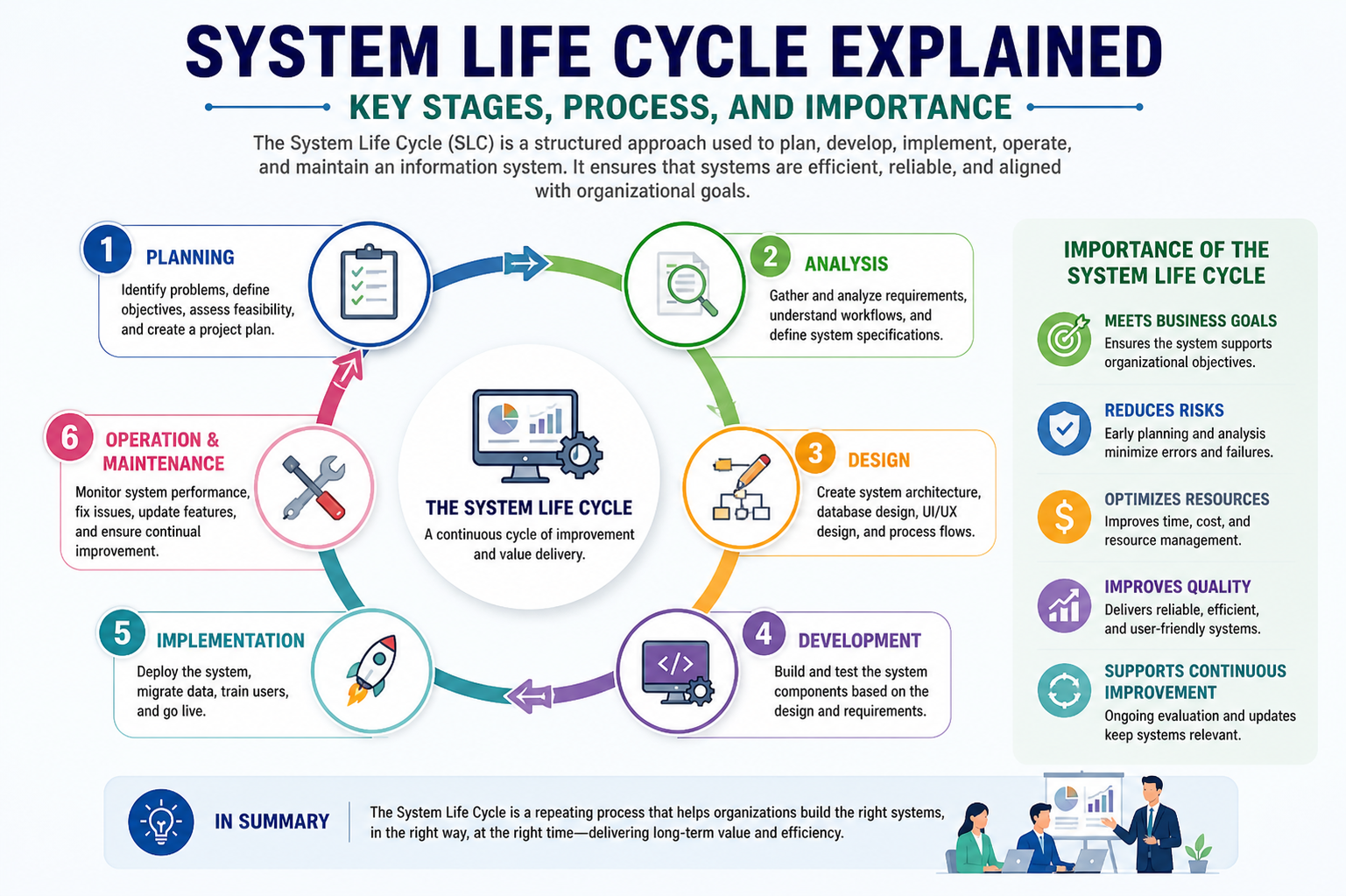
The System Life Cycle is a structured and disciplined approach used to manage information technology systems from their earliest concept to their eventual retirement. It provides a clear framework that helps organizations plan, design, build, operate, and eventually replace systems in a controlled and efficient manner. Rather than treating technology as a one-time investment, the life cycle approach recognizes that every system evolves over time and must be actively managed to remain useful, secure, and aligned with business goals. This method ensures that organizations can consistently deliver systems that meet both operational needs and financial expectations while reducing risks associated with poor planning or unmanaged growth.
The Importance of a Structured Approach
A well-defined life cycle brings order to what could otherwise be a chaotic process. Without a structured method, organizations often face issues such as budget overruns, missed deadlines, poor performance, and systems that fail to meet user expectations. By following a systematic approach, teams can break down complex projects into manageable phases, each with specific objectives and deliverables. This not only improves coordination among stakeholders but also ensures accountability at every step. A structured life cycle also makes it easier to identify potential risks early, allowing teams to take corrective actions before problems escalate.
Technology Environments and Their Evolution
Modern organizations operate in highly complex environments that include a combination of hardware, software, networks, and cloud-based services. Each of these components has its own life span and requires ongoing management. New technologies are constantly emerging, while older ones gradually become obsolete. The System Life Cycle provides a framework for managing this constant change by ensuring that systems are regularly evaluated, updated, and eventually replaced when necessary. This continuous evolution is essential for maintaining efficiency, security, and competitiveness in a rapidly changing technological landscape.
From Concept to Reality
Every system begins with an idea or a recognized need. This could be driven by business growth, operational inefficiencies, technological advancements, or regulatory requirements. The life cycle ensures that this initial idea is carefully evaluated before any significant resources are committed. By analyzing feasibility, risks, and potential benefits, organizations can determine whether a project is worth pursuing. This early evaluation helps prevent costly mistakes and ensures that only viable projects move forward into development.
Aligning Systems with Business Goals
One of the key strengths of the System Life Cycle is its focus on alignment between technology and business objectives. Systems are not built in isolation; they exist to support specific organizational goals. Throughout the life cycle, stakeholders are involved in defining requirements, reviewing progress, and validating outcomes. This ensures that the final system delivers real value rather than simply meeting technical specifications. By maintaining this alignment, organizations can maximize their return on investment and ensure that their technology supports long-term success.
Managing Risks Effectively
Risk management is a critical component of the System Life Cycle. Every phase introduces potential risks, whether they are related to technical challenges, budget constraints, security vulnerabilities, or user adoption. By following a structured approach, teams can identify and assess risks early in the process. This allows them to develop mitigation strategies and contingency plans, reducing the likelihood of project failure. Effective risk management not only protects resources but also builds confidence among stakeholders.
The Role of Stakeholders
Stakeholders play a vital role throughout the life cycle. These include business leaders, project managers, developers, system administrators, and end users. Each group brings a unique perspective and set of requirements to the project. By involving stakeholders at every stage, organizations can ensure that the system meets diverse needs and expectations. Regular communication and collaboration help prevent misunderstandings and ensure that everyone remains aligned with the project’s goals.
Planning as the Foundation
The planning stage serves as the foundation for the entire life cycle. It is during this phase that the project’s scope, objectives, and feasibility are defined. Teams conduct thorough analyses to understand the problem they are trying to solve and explore potential solutions. This includes evaluating existing systems, identifying gaps, and determining the resources required. A well-executed planning phase sets the stage for success by providing a clear roadmap for the project.
Defining Requirements Clearly
A critical aspect of the planning phase is the definition of requirements. These requirements outline what the system must achieve and how it should perform. They serve as a blueprint for the development process and provide a basis for evaluating the final product. Clear and well-documented requirements help prevent scope creep and ensure that all stakeholders have a shared understanding of the project’s objectives. This clarity is essential for maintaining focus and avoiding unnecessary complications.
Feasibility and Decision Making
Before moving forward, organizations must determine whether a proposed system is feasible. This involves analyzing technical capabilities, financial constraints, and operational impacts. A feasibility study provides valuable insights into whether the project can be successfully completed and whether it will deliver the expected benefits. Based on this analysis, decision-makers can choose to proceed, modify the proposal, or abandon the project altogether. This step ensures that resources are allocated wisely and that only viable projects are pursued.
Creating a Project Roadmap
Once a project is approved, a detailed plan is developed to guide its execution. This roadmap outlines key milestones, timelines, and resource requirements. It also identifies potential risks and establishes strategies for managing them. A well-defined roadmap provides a clear direction for the project team and helps ensure that all activities are coordinated effectively. It serves as a reference point throughout the life cycle, allowing teams to track progress and make adjustments as needed.
Transitioning into Development
After planning is complete, the project moves into the development phase. This is where ideas and requirements are transformed into a tangible system. Development involves designing the system’s architecture, creating detailed specifications, and building the necessary components. It is a highly collaborative process that requires input from various technical and business stakeholders. The goal is to create a system that not only meets functional requirements but also delivers a seamless user experience.
Designing System Architecture
System architecture defines the overall structure of the system, including its components, interfaces, and interactions. A well-designed architecture ensures that the system is scalable, reliable, and easy to maintain. It also provides a framework for integrating different technologies and ensuring that they work together effectively. During this stage, teams consider factors such as performance, security, and future growth to create a robust and flexible design.
Developing Functional Components
With the architecture in place, developers begin building the system’s functional components. This involves writing code, creating databases, and designing user interfaces. Each component is developed according to the specifications defined during the planning phase. Developers must ensure that their work is consistent with the overall design and meets the required standards. This stage requires careful attention to detail and rigorous testing to ensure that each component functions correctly.
Testing and Quality Assurance
Testing is an essential part of the development process. It ensures that the system performs as expected and meets all requirements. Various types of testing are conducted, including unit testing, integration testing, and system testing. These tests help identify and resolve issues before the system is deployed. Quality assurance processes also involve validating the system against user expectations and ensuring that it delivers a reliable and efficient experience.
User Involvement in Validation
User involvement is crucial during the testing phase. By allowing end users to interact with the system, organizations can gather valuable feedback and identify areas for improvement. This process, often referred to as user acceptance testing, ensures that the system meets real-world needs and expectations. It also helps build user confidence and facilitates a smoother transition during implementation.
Preparing for Deployment
As development progresses, teams begin preparing for the system’s deployment. This involves setting up the necessary infrastructure, configuring environments, and planning the transition from the old system to the new one. Preparation is key to ensuring a smooth implementation process and minimizing disruptions to business operations. By carefully planning this stage, organizations can reduce risks and ensure a successful rollout.
The Continuous Nature of the Life Cycle
One of the most important aspects of the System Life Cycle is that it is not a one-time process. Even after a system is deployed, it continues to evolve through updates, enhancements, and maintenance. This ongoing cycle ensures that systems remain relevant and effective in a changing environment. By adopting a life cycle approach, organizations can continuously improve their technology and adapt to new challenges and opportunities.
Building a Strong Foundation for Success
Ultimately, the System Life Cycle provides a comprehensive framework for managing technology investments. It ensures that systems are developed in a structured and disciplined manner, with a focus on quality, efficiency, and alignment with business goals. By following this approach, organizations can reduce risks, improve outcomes, and maximize the value of their technology. The foundation established in the early phases sets the stage for all subsequent activities, making it a critical factor in the overall success of any system.
Looking Ahead to the Next Stages
As the life cycle progresses beyond planning and development, the focus shifts toward implementation, operation, and eventual retirement. Each of these stages introduces new challenges and opportunities, requiring careful management and coordination. Understanding the early phases provides a strong foundation for navigating the rest of the life cycle effectively, ensuring that systems continue to deliver value throughout their entire lifespan.
Transitioning from Development to Implementation
After the system has been carefully designed, built, and validated, attention shifts toward bringing it into a real-world environment. This transition is a critical moment in the System Life Cycle because it determines how smoothly the system integrates into daily operations. Even a well-developed system can fail to deliver value if implementation is poorly managed. This stage requires coordination between technical teams, business stakeholders, and end users to ensure that everything is aligned and ready for deployment. The goal is to move from a controlled testing environment to a live production setting without causing disruption or confusion.
Understanding the Implementation Phase
The implementation phase represents the point where the system becomes operational and begins to deliver value to the organization. It involves more than simply turning on a new application or replacing an old one. Instead, it requires a carefully planned approach that considers timing, risk, user readiness, and system dependencies. Every organization must decide how to introduce the new system in a way that balances speed with stability. This decision-making process is influenced by the complexity of the system, the criticality of the operations it supports, and the organization’s tolerance for risk.
Deployment Strategies and Their Impact
There are multiple strategies for deploying a system, each with its own advantages and challenges. The simplest method is a direct switch, where the old system is turned off and the new one is activated immediately. While this approach is fast, it carries significant risk because any issues in the new system can directly impact operations. A more gradual method involves introducing the new system in stages, allowing teams to monitor performance and address issues before full deployment. This approach reduces risk but requires more time and coordination.
Another widely used strategy involves running both the old and new systems simultaneously. This parallel approach allows organizations to compare performance and ensure that the new system is functioning correctly before fully transitioning. Although this method provides a high level of assurance, it can be resource-intensive and may require additional infrastructure. Each strategy must be carefully evaluated to determine which one best fits the organization’s needs and capabilities.
Balancing Risk and Efficiency
Choosing the right deployment strategy is essentially a balancing act between risk and efficiency. Organizations that prioritize speed may opt for a direct transition, accepting the potential risks in exchange for faster results. On the other hand, organizations that prioritize stability may choose more conservative approaches that involve gradual or parallel deployment. The decision often depends on the nature of the system and the potential impact of failure. Critical systems that support essential operations typically require more cautious deployment strategies to ensure continuity and reliability.
Data Migration as a Critical Component
One of the most complex aspects of implementation is data migration. Data is often the most valuable asset within a system, and ensuring its accuracy and integrity during the transition is essential. Migration involves transferring data from the old system to the new one, which may include changes in format, structure, or storage location. This process must be carefully planned and executed to prevent data loss, corruption, or inconsistencies.
Data migration typically involves several steps, including extracting data from the source system, transforming it into the required format, and loading it into the new system. Each of these steps must be thoroughly tested to ensure that the data remains accurate and complete. Backup procedures are also critical, providing a safety net in case any issues arise during the migration process. By taking a structured approach to data migration, organizations can protect their information and ensure a smooth transition.
Preparing Users for Change
A successful implementation is not just about technology; it also involves people. Users must be prepared to adopt the new system and understand how it will impact their daily tasks. Training plays a crucial role in this process, helping users become familiar with new features, interfaces, and workflows. Without proper training, even the most advanced system can fail to deliver value because users may struggle to use it effectively.
Communication is equally important. Stakeholders need to be informed about the implementation timeline, potential changes, and any expected disruptions. Clear communication helps manage expectations and reduces resistance to change. By involving users early and providing ongoing support, organizations can facilitate a smoother transition and encourage adoption.
Ensuring System Readiness
Before deployment, it is essential to ensure that the system is fully ready for production. This involves verifying that all components are functioning correctly, that performance meets expectations, and that security measures are in place. Testing in a production-like environment can help identify potential issues that may not have been apparent during earlier stages. This final validation step provides confidence that the system is prepared to handle real-world demands.
Infrastructure readiness is another key consideration. Servers, networks, and other resources must be properly configured to support the new system. Any dependencies on external systems or services must also be addressed to prevent disruptions. By ensuring that all elements are in place, organizations can reduce the likelihood of issues during deployment.
Executing the Deployment Plan
Once everything is prepared, the deployment plan is executed. This involves following a predefined sequence of steps to transition the system into production. The process must be carefully monitored to identify and address any issues that arise. Having a dedicated team in place to oversee the deployment can help ensure that problems are resolved quickly and efficiently.
Contingency planning is also essential during this stage. In case of unexpected issues, organizations should have a rollback plan that allows them to revert to the previous system. This provides a safety net and ensures that operations can continue without significant disruption. By planning for potential challenges, organizations can navigate the deployment process with greater confidence.
Monitoring and Initial Support
After the system is deployed, the focus shifts to monitoring and support. The initial period following implementation is critical, as it is often when issues are most likely to occur. Continuous monitoring helps identify performance problems, errors, or unexpected behavior. This allows teams to take corrective action بسرعة and ensure that the system operates smoothly.
Support teams play a vital role during this phase, providing assistance to users and addressing any concerns. Quick response times and effective problem resolution are essential for maintaining user confidence and ensuring a positive experience. By providing strong support during the early stages, organizations can build trust and encourage adoption.
Adapting to Real-World Usage
Once the system is in use, it begins to encounter real-world conditions that may differ from those in testing environments. Users may interact with the system in unexpected ways, and new requirements may emerge. This phase provides valuable insights into how the system performs under actual conditions and highlights areas for improvement.
Feedback from users is particularly important during this stage. By listening to user experiences and addressing their concerns, organizations can refine the system and enhance its functionality. This iterative approach ensures that the system continues to evolve and meet changing needs.
The Beginning of Operational Life
Implementation marks the beginning of the system’s operational life. From this point onward, the system becomes an integral part of the organization’s اليومية operations. It supports business processes, enables decision-making, and contributes to overall efficiency. However, this is not the end of the life cycle; rather, it is the start of a new phase focused on maintenance and continuous improvement.
The transition from development to operation requires a shift in mindset. While development focuses on building the system, operation focuses on sustaining and optimizing it. This involves ongoing monitoring, regular updates, and proactive management to ensure that the system remains reliable and effective.
Maintaining Momentum After Deployment
A successful implementation does not mean that the work is complete. Instead, it sets the stage for ongoing activities that keep the system running smoothly. Organizations must maintain momentum by continuing to monitor performance, address issues, and implement improvements. This proactive approach helps prevent problems from escalating and ensures that the system continues to deliver value.
Regular reviews and assessments can help identify opportunities for optimization. By analyzing performance data and user feedback, organizations can make informed decisions about enhancements and updates. This continuous improvement process is essential for maintaining the system’s relevance and effectiveness over time.
Integration with Existing Systems
In many cases, a new system must integrate with existing systems and processes. This integration can be complex, requiring careful coordination and testing. Ensuring seamless communication between systems is essential for maintaining data consistency and operational efficiency. Any issues in integration can lead to disruptions or inaccuracies, making it a critical aspect of the implementation process.
By focusing on integration, organizations can create a cohesive technology environment where different systems work together effectively. This enhances overall performance and enables more efficient workflows.
Building Confidence in the New System
One of the key outcomes of a successful implementation is building confidence among users and stakeholders. When the system performs reliably and meets expectations, it reinforces trust in the organization’s technology investments. This confidence is essential for encouraging adoption and ensuring that the system is used to its full potential.
Building confidence requires consistent performance, effective support, and ongoing communication. By demonstrating the system’s value and reliability, organizations can create a positive perception and foster long-term success.
Preparing for the Next Phase
As the system becomes fully operational, attention gradually shifts toward maintenance and ongoing management. The experiences gained during implementation provide valuable insights that can be applied to future activities. By learning from this phase, organizations can improve their processes and enhance their ability to manage systems effectively.
The implementation phase serves as a bridge between development and operation, ensuring that the system transitions smoothly into its active life. With careful planning, execution, and support, organizations can successfully navigate this stage and set the foundation for continued success in the مراحل that follow.
Entering the Maintenance Phase
Once the system has been successfully deployed and integrated into daily operations, it enters the maintenance phase, which represents the longest and most continuous stage of the System Life Cycle. This phase is where the system proves its real value over time. Unlike earlier stages that focus on planning and building, maintenance is centered on sustaining performance, ensuring reliability, and adapting to evolving business needs. A system that is not properly maintained can quickly become inefficient, vulnerable, and outdated, regardless of how well it was initially designed.
The Nature of Ongoing Operations
During maintenance, the system becomes part of routine business activities. It is used daily by employees, supports critical workflows, and often interacts with other systems. This constant usage introduces new challenges, including performance bottlenecks, unexpected errors, and changing user requirements. The system must be continuously monitored to ensure that it operates as intended. This involves tracking system performance, identifying anomalies, and addressing issues before they impact users or business processes.
Role of System and Network Administrators
System and network administrators play a central role in maintaining the stability and efficiency of the system. They are responsible for monitoring system health, managing resources, and ensuring that all components function correctly. Their tasks include troubleshooting issues, applying updates, and optimizing performance. They must also ensure that the system remains secure by implementing appropriate safeguards and responding to potential threats. Their proactive approach helps prevent minor issues from escalating into major problems.
Handling Bugs and Errors
No system is completely free of defects, and issues often emerge once the system is exposed to real-world conditions. Identifying and resolving these bugs is a key part of maintenance. Developers work closely with support teams to analyze problems, determine their root causes, and implement fixes. These fixes are typically released as patches or updates, ensuring that the system continues to function smoothly. Effective bug management requires clear communication, efficient processes, and a commitment to continuous improvement.
Enhancements and Feature Updates
As business needs evolve, systems must adapt to remain relevant. This often involves adding new features or enhancing existing functionality. Enhancements may be driven by user feedback, changes in business processes, or new opportunities for efficiency. Unlike the initial development phase, these updates are usually incremental, allowing the system to evolve gradually without disrupting operations. By continuously improving the system, organizations can ensure that it continues to meet their needs and deliver value.
Performance Optimization
Over time, system performance can be affected by increased usage, data growth, and changing workloads. Performance optimization is essential to ensure that the system remains responsive and efficient. This may involve tuning databases, optimizing code, upgrading hardware, or adjusting configurations. Regular performance assessments help identify areas for improvement and ensure that the system can handle current and future demands. Maintaining optimal performance is critical for user satisfaction and overall productivity.
Security and Risk Management
Security is a constant concern during the maintenance phase. As new threats emerge, systems must be updated to protect against vulnerabilities. This includes applying security patches, monitoring for suspicious activity, and implementing best practices for data protection. Failure to address security risks can lead to serious consequences, including data breaches and loss of trust. By prioritizing security, organizations can safeguard their systems and maintain confidence among users and stakeholders.
Adapting to Technological Changes
Technology is constantly evolving, and systems must adapt to remain compatible and effective. This may involve updating software frameworks, integrating new tools, or migrating to different platforms. In some cases, underlying technologies such as hardware or cloud services may change, requiring adjustments to the system. Staying current with technological advancements ensures that the system remains efficient and capable of supporting modern requirements.
Scalability and Growth
As organizations grow, their systems must be able to scale accordingly. This means handling increased data volumes, supporting more users, and accommodating additional functionality. Scalability is a key consideration during maintenance, as it ensures that the system can continue to support business expansion. This may involve upgrading infrastructure, optimizing resource allocation, or redesigning certain components. By planning for growth, organizations can avoid performance issues and ensure a seamless user experience.
Compliance and Regulatory Requirements
Many systems must comply with regulatory and industry standards. These requirements may change over time, necessitating updates to the system. Compliance efforts may involve modifying processes, enhancing security measures, or maintaining detailed records. Ensuring compliance is essential for avoiding legal issues and maintaining credibility. The maintenance phase provides an opportunity to regularly review and update the system to meet these requirements.
Managing Dependencies and Integrations
Systems rarely operate in isolation; they are often connected to other systems and services. Managing these dependencies is a critical aspect of maintenance. Changes in one system can impact others, making coordination essential. Regular testing and monitoring help ensure that integrations continue to function correctly. By maintaining strong connections between systems, organizations can support efficient workflows and data consistency.
User Support and Experience
Providing ongoing support to users is a key component of maintenance. Users may encounter issues, require assistance, or request new features. Support teams must be responsive and effective in addressing these needs. A positive user experience is essential for ensuring that the system is used effectively and delivers value. By listening to user feedback and making necessary improvements, organizations can enhance satisfaction and productivity.
Documentation and Knowledge Management
Maintaining accurate documentation is crucial during this phase. Documentation provides a reference for system configurations, processes, and changes. It helps teams understand how the system works and supports efficient troubleshooting and updates. Knowledge management ensures that information is shared among team members, reducing dependency on individual expertise. This is particularly important as teams evolve and new members join.
Balancing Stability and Change
One of the key challenges in maintenance is balancing stability with the need for change. While updates and enhancements are necessary, they must be implemented carefully to avoid disrupting operations. Change management processes help ensure that updates are tested, approved, and deployed in a controlled manner. This approach minimizes risks and ensures that the system remains stable while continuing to evolve.
The Gradual Aging of Systems
Over time, systems naturally begin to age. They may become less efficient, more difficult to maintain, and increasingly incompatible with new technologies. This aging process is inevitable and must be managed carefully. Regular assessments can help determine when a system is approaching the end of its useful life. Recognizing these signs early allows organizations to plan for replacement and avoid sudden disruptions.
Cost Considerations Over Time
Maintenance also involves ongoing costs, including staffing, infrastructure, and updates. As systems age, these costs may increase, particularly if the system becomes complex or outdated. Organizations must evaluate whether it is more cost-effective to continue maintaining the system or to invest in a new one. This decision requires careful analysis of both financial and operational factors.
Preparing for Future Transition
Even during maintenance, it is important to look ahead to the eventual replacement of the system. Planning for this transition ensures that the organization is not caught unprepared when the time comes to retire the system. This may involve documenting current processes, identifying potential replacements, and evaluating new technologies. By planning ahead, organizations can ensure a smooth transition and minimize disruptions.
Continuous Improvement as a Core Principle
The maintenance phase is not just about keeping the system running; it is about continuous improvement. By regularly evaluating performance, addressing issues, and implementing enhancements, organizations can ensure that their systems remain effective and valuable. This proactive approach helps extend the system’s lifespan and maximizes its return on investment.
Maintaining Relevance in a Changing Environment
Ultimately, the goal of maintenance is to keep the system relevant in a constantly changing environment. Business needs evolve, technologies advance, and user expectations grow. A well-maintained system adapts to these changes and continues to deliver value. By embracing a culture of continuous improvement and proactive management, organizations can ensure that their systems remain a strong foundation for success as they move closer to the final stage of the life cycle.
Approaching the Final Stage of the System Life Cycle
As systems continue to operate over time, they inevitably reach a point where maintaining them is no longer practical or beneficial. This stage does not occur suddenly but develops gradually as technology becomes outdated, operational costs increase, and the system struggles to meet modern requirements. The final phase of the System Life Cycle focuses on decommissioning, which involves retiring the system in a structured and controlled manner. This stage is just as important as the earlier phases because improper retirement can lead to data loss, security risks, and operational disruptions.
Recognizing the Need for Decommissioning
Before a system is retired, organizations must first recognize the signs that it has reached the end of its useful life. These signs may include declining performance, increasing maintenance costs, compatibility issues with newer technologies, and difficulty in meeting evolving business needs. In some cases, external factors such as regulatory changes or security concerns may also drive the decision to retire a system. Identifying these indicators early allows organizations to plan the transition carefully rather than reacting to unexpected failures.
Planning the Decommissioning Process
Decommissioning requires careful planning to ensure that the transition is smooth and does not negatively impact operations. This planning phase involves identifying all components of the system, including hardware, software, data, and integrations with other systems. A detailed plan outlines the steps required to safely shut down the system, migrate or archive data, and remove dependencies. By taking a structured approach, organizations can minimize risks and ensure that nothing is overlooked during the process.
Coordinating with Replacement Systems
In most cases, decommissioning occurs after a new system has been implemented to replace the old one. Coordination between the old and new systems is essential to ensure continuity of operations. Data must be transferred accurately, and users must be fully transitioned to the new system before the old one is retired. This overlap period allows organizations to validate the new system and confirm that it meets all requirements. Proper coordination ensures that the transition is seamless and that business activities continue without interruption.
Data Management and Preservation
Data is one of the most critical aspects of decommissioning. Organizations must decide what data should be retained, archived, or deleted. Some data may need to be preserved for legal or regulatory reasons, while other data may no longer be necessary. The process of transferring data to a new system or archival storage must be handled with care to ensure accuracy and integrity. Proper data management ensures that valuable information is not lost and that compliance requirements are met.
Ensuring Secure Data Removal
Once data has been transferred or archived, it is essential to securely remove it from the old system. This step is crucial for protecting sensitive information and preventing unauthorized access. Simply deleting files is often not sufficient, as data can sometimes be recovered. Instead, organizations use secure data sanitization methods to ensure that all information is permanently removed. This process helps maintain security and protects the organization from potential risks.
Decommissioning Hardware and Infrastructure
The retirement of a system often involves the disposal or repurposing of physical equipment. This includes servers, storage devices, and networking components. Proper handling of hardware is important to ensure that it is disposed of in an environmentally responsible manner. In some cases, equipment may be reused for other purposes, while in others, it may need to be recycled or securely destroyed. Managing hardware effectively ensures that resources are used efficiently and that environmental standards are maintained.
Removing System Dependencies
Systems are often interconnected, and removing one system can impact others. During decommissioning, it is important to identify and address all dependencies. This includes updating configurations, removing references, and ensuring that other systems can function independently. Failure to manage dependencies can lead to unexpected issues and disruptions. A thorough approach ensures that the removal of the system does not negatively affect the broader technology environment.
Compliance and Regulatory Considerations
Many industries have strict requirements regarding data handling, storage, and disposal. During decommissioning, organizations must ensure that they comply with all relevant regulations. This may involve maintaining records of the decommissioning process, ensuring proper data retention, and conducting audits. Compliance is essential for avoiding legal issues and maintaining trust with stakeholders. By following established guidelines, organizations can ensure that the decommissioning process meets all आवश्यक standards.
Conducting Final Validation and Verification
Before fully retiring a system, it is important to verify that all necessary steps have been completed. This includes confirming that data has been successfully migrated or archived, that dependencies have been resolved, and that users are fully transitioned to the new system. Final validation provides assurance that the decommissioning process has been carried out correctly. It also helps identify any remaining issues that need to be addressed before the system is permanently shut down.
Documenting the Decommissioning Process
Documentation plays a key role in the final stage of the life cycle. Recording the steps taken during decommissioning provides a valuable reference for future projects. It helps organizations understand what worked well and what challenges were encountered. This information can be used to improve processes and guide future system retirements. Proper documentation ensures that knowledge is preserved and can be shared across teams.
Learning from Experience
One of the most valuable aspects of decommissioning is the opportunity to learn from the entire life cycle. By reviewing the system’s performance, challenges, and outcomes, organizations can gain insights that inform future projects. This “lessons learned” approach helps identify best practices and areas for improvement. Continuous learning ensures that each new system benefits from the experiences of previous ones, leading to more effective and efficient processes.
The End of One System and the Beginning of Another
While decommissioning marks the end of a system’s life, it also represents the beginning of a new cycle. The knowledge gained from the retiring system can be applied to the development and management of future systems. This continuous cycle of improvement ensures that organizations remain adaptable and capable of meeting changing demands. By viewing decommissioning as part of an ongoing process, organizations can maintain a forward-looking perspective.
The Role of Professionals Throughout the Life Cycle
System and network professionals are involved in every stage of the life cycle, from initial planning to final retirement. Their expertise is essential for ensuring that systems are designed, implemented, maintained, and decommissioned effectively. They must understand the entire life cycle to make informed decisions and manage systems successfully. Their role evolves over time, reflecting the changing needs of the system and the organization.
Why Understanding the System Life Cycle Matters
A clear understanding of the System Life Cycle is essential for anyone involved in technology management. It provides a framework for making informed decisions, managing risks, and delivering value. By following a structured approach, organizations can ensure that their systems are aligned with business goals and capable of adapting to change. This understanding also helps professionals anticipate challenges and respond effectively to evolving requirements.
Final Conclusion
Managing systems through their entire life cycle is essential for long-term success. It allows organizations to adapt to changing technologies, optimize performance, and make strategic decisions about their investments. By embracing this approach, businesses can ensure that their systems remain effective, secure, and aligned with their اهداف. The System Life Cycle is not just a technical process; it is a strategic framework that enables organizations to navigate the complexities of modern technology with confidence and clarity.