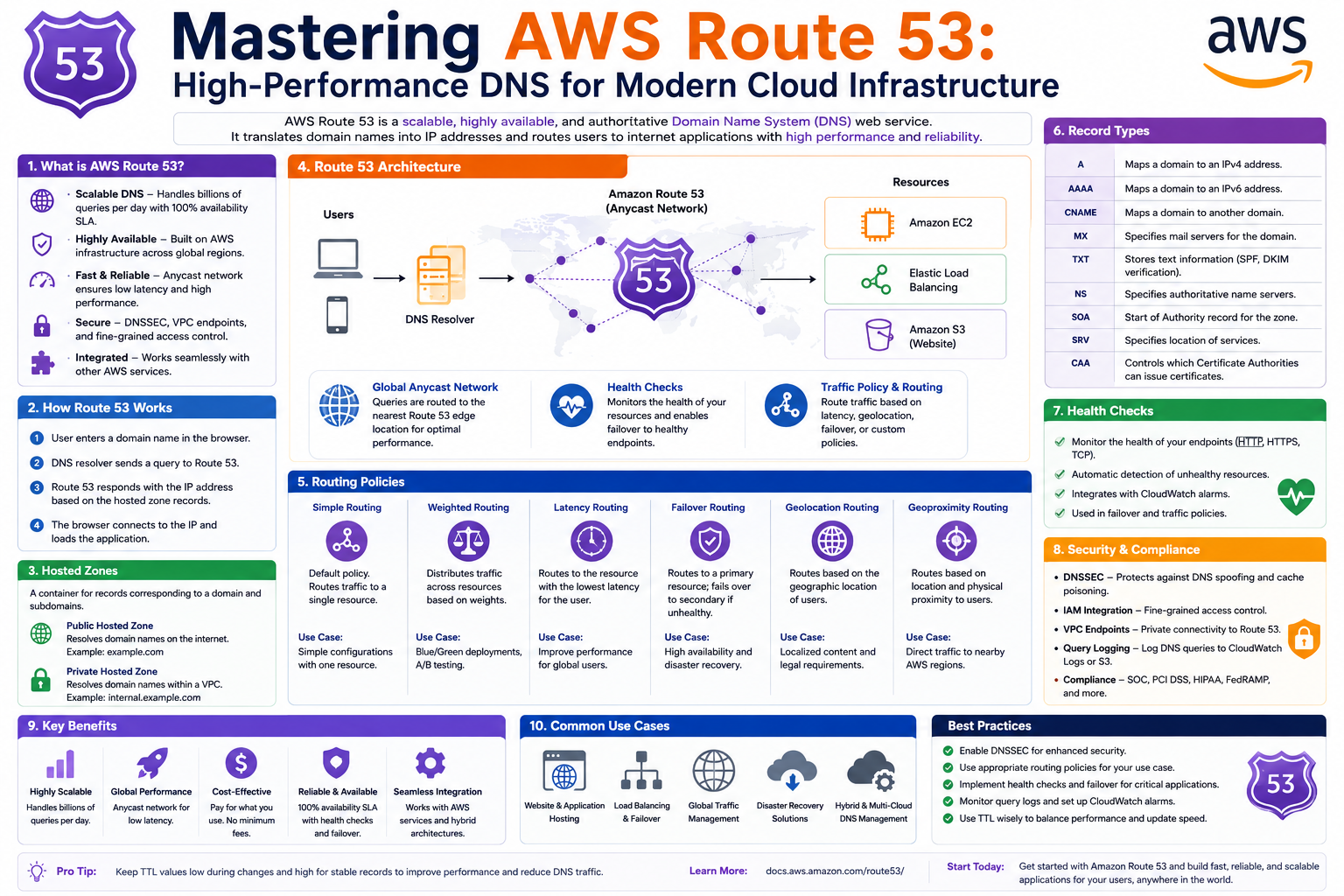
Every time a user types a website address into a browser, a complex background process begins within seconds. That process is driven by the Domain Name System (DNS), which acts as the Internet’s naming mechanism. Instead of forcing users to remember long numerical IP addresses, DNS translates human-readable domain names into machine-readable IP addresses that computers use to locate each other on a network.
This translation process is not just a convenience feature; it is a core requirement for how the internet functions. Without DNS, users would need to memorize strings of numbers for every website they want to access, which would make modern digital interaction nearly impossible at scale. DNS ensures that the internet remains accessible, organized, and efficient.
At its core, DNS operates like a distributed directory system. When a request is made, it travels through multiple layers of servers until the correct IP address is found. This hierarchical structure is what allows billions of devices worldwide to communicate seamlessly.
However, traditional DNS systems were designed in a simpler era of the Internet. As digital infrastructure has grown more complex, businesses have needed more intelligent, scalable, and resilient DNS solutions. This is where Amazon Web Services (AWS) Route 53 becomes significant.
What Amazon Route 53 Represents in Cloud Networking
Amazon Route 53 is a cloud-based DNS service designed to connect user requests to internet applications reliably and efficiently. Unlike basic DNS services that only translate domain names into IP addresses, Route 53 is built as a highly scalable and programmable system that integrates deeply with cloud infrastructure.
It is designed to handle both simple and advanced routing needs. This includes directing traffic based on performance, geographic location, system health, and load-balancing requirements. It is not limited to domain resolution alone; instead, it becomes part of a broader traffic management system.
One of the key strengths of Route 53 is its ability to operate at a global scale while maintaining high availability. It is engineered to respond to DNS queries quickly, even under heavy traffic conditions, making it suitable for enterprise-grade applications, global websites, and distributed cloud architectures.
Unlike traditional DNS services that often function independently from application infrastructure, Route 53 is tightly integrated with cloud resources. This allows organizations to build dynamic routing strategies that respond automatically to changing system conditions.
Why It Is Called Route 53
The name “Route 53” comes from the standard port number used by the DNS protocol. DNS queries primarily use port 53 for both TCP and UDP communication. AWS adopted this naming convention to reflect the service’s core function while aligning it with networking standards.
Port 53 is essential because it represents the communication channel through which DNS requests are transmitted and received. Every time a domain lookup occurs, the request typically passes through this port before reaching its destination server.
By naming the service Route 53, AWS emphasizes its role in directing internet traffic efficiently while remaining rooted in the foundational protocol that powers DNS communication globally.
Authoritative DNS vs Recursive DNS in Simple Terms
To understand Route 53 properly, it is important to distinguish between two major types of DNS systems: authoritative DNS and recursive DNS. These two components work together but serve very different purposes.
An authoritative DNS server holds the actual DNS records for a domain. It is the final source of truth for mapping domain names to IP addresses. When a query reaches an authoritative server, it responds with the correct and updated information for that domain.
Route 53 functions as an authoritative DNS system. This means it stores and manages the official DNS records for domains configured within it. It ensures that users are always directed to accurate and up-to-date destination addresses.
On the other hand, recursive DNS servers act as intermediaries. They do not store domain records permanently. Instead, they retrieve information from multiple sources on behalf of the user. When a user requests a domain, a recursive resolver searches through DNS hierarchies until it finds the correct authoritative source.
In simple terms, recursive DNS is like an investigator searching for information, while authoritative DNS is the official record keeper that provides the final answer.
Route 53’s role as an authoritative system gives it a higher level of control, accuracy, and reliability compared to standard DNS resolvers.
The Architecture Behind Route 53
Route 53 is built on a globally distributed infrastructure. This means DNS queries are handled by multiple servers located in different regions around the world. The goal of this architecture is to minimize latency and maximize availability.
When a user sends a DNS request, Route 53 automatically routes it to the nearest available edge location. This reduces response time and ensures that users receive fast and reliable resolution regardless of their geographic location.
The system is designed for redundancy. If one server or region becomes unavailable, another automatically takes over without disrupting service. This fault-tolerant design is essential for maintaining uninterrupted access to applications and services.
Additionally, Route 53 is highly scalable. It can handle sudden spikes in DNS queries without performance degradation. This makes it suitable for websites and applications that experience unpredictable or high traffic volumes.
Public Hosted Zones and Their Role in Internet Traffic
One of the primary features of Route 53 is the concept of hosted zones. A hosted zone is a container for DNS records that define how traffic is routed for a specific domain.
A public hosted zone is used when a domain needs to be accessible over the internet. It contains DNS records that direct global traffic to public-facing resources such as websites, APIs, or cloud applications.
When a user enters a domain name into a browser, Route 53 uses the records in the public hosted zone to determine where that request should be directed. This ensures that users are always routed to the correct endpoint.
Public hosted zones are essential for businesses that operate online services, as they form the foundation of how users access their digital platforms.
Private Hosted Zones and Internal Network Management
In contrast to public hosted zones, private hosted zones are used for internal network communication. These zones are associated with virtual private cloud (VPC) environments and are not accessible from the public internet.
Private hosted zones allow organizations to manage DNS resolution within their internal infrastructure. For example, internal applications, databases, and services can communicate using domain names instead of IP addresses.
This improves security and simplifies network management. Instead of exposing internal IP addresses publicly, organizations can rely on private DNS names that are only resolvable within their secure cloud environment.
Private hosted zones are particularly useful in complex architectures where multiple services need to interact without exposing internal communication to external networks.
How Route 53 Resolver Enhances DNS Functionality
Route 53 includes a feature known as the Resolver, which extends its DNS capabilities beyond standard domain resolution. The Resolver enables DNS queries to be processed both within cloud environments and across hybrid networks that include on-premise infrastructure.
The Resolver works using inbound and outbound endpoints. Inbound endpoints allow external networks to send DNS queries into the cloud environment. Outbound endpoints allow cloud resources to resolve DNS queries from external systems.
This bidirectional capability makes Route 53 a powerful tool for hybrid cloud architectures where systems are distributed across both local data centers and cloud environments.
The Resolver ensures consistent DNS behavior across all connected systems, reducing complexity in network configuration and improving communication reliability.
DNS Traffic Flow and Query Resolution in Route 53
When a DNS query is initiated, it goes through a structured resolution process. First, the system checks local caches to see if the IP address is already known. If not, the request is forwarded to a recursive resolver, which continues the search.
Eventually, the query reaches the authoritative DNS system, where Route 53 responds with the correct IP address. This response is then sent back through the chain until it reaches the user’s device.
What makes Route 53 different is how efficiently it handles this process. Because it operates at a global scale with distributed infrastructure, it reduces the number of steps required for resolution and speeds up response time.
Additionally, Route 53 can dynamically adjust responses based on configured routing rules, ensuring that users are directed to the most appropriate resource rather than just a static IP address.
The Importance of DNS Reliability in Modern Systems
Modern applications depend heavily on continuous availability. Even short periods of downtime can lead to data loss, user dissatisfaction, and financial impact.
Traditional DNS systems can become single points of failure if not properly configured with redundancy. Route 53 addresses this challenge by distributing DNS services across multiple regions and incorporating automated failover mechanisms.
If a resource becomes unavailable, Route 53 can automatically redirect traffic to a healthy endpoint. This ensures continuity of service without manual intervention.
This level of reliability is critical for businesses operating globally, where users expect uninterrupted access regardless of location or network conditions.
Intelligent Traffic Routing as a Core Capability
Beyond simple DNS resolution, Route 53 introduces intelligent traffic routing capabilities that allow organizations to control how users are directed to different resources.
Instead of sending all users to a single server, Route 53 can distribute traffic based on multiple conditions. These conditions may include geographic location, system performance, latency, or resource availability.
This intelligent routing ensures that users receive the best possible experience based on their context. It also improves system efficiency by balancing load across multiple resources.
By combining DNS resolution with routing intelligence, Route 53 transforms DNS from a passive lookup system into an active traffic management layer within cloud architecture.
Understanding the Relationship Between DNS and IP Addressing
At the foundation of all DNS operations is the relationship between domain names and IP addresses. IP addresses represent the actual location of a device on a network, while domain names provide a human-friendly way to access those locations.
DNS acts as the translator between these two systems. Without it, every interaction on the internet would require direct knowledge of IP addresses, which would be impractical given their complexity and frequency of change.
Route 53 strengthens this relationship by ensuring that domain-to-IP mappings remain accurate, fast, and adaptable to infrastructure changes. This flexibility is essential in cloud environments where resources are frequently scaled or relocated.
The Evolution of DNS Toward Cloud Integration
As cloud computing has evolved, DNS has also transformed from a simple lookup mechanism into a critical component of distributed systems. Modern applications require DNS systems that can adapt in real time to infrastructure changes and user demand.
Route 53 represents this evolution by integrating DNS with cloud-native services. It is not just a standalone service but part of a larger ecosystem that includes compute resources, storage systems, and networking components.
This integration allows organizations to build highly dynamic applications where DNS plays an active role in traffic management and system optimization.
Early Foundations of Route 53 in Cloud Networking
When cloud infrastructure began scaling globally, traditional DNS systems struggled to keep up with the demand for flexibility and performance. Route 53 was designed to address these limitations by providing a DNS system that could operate seamlessly across distributed environments.
Its design focuses on scalability, automation, and integration, allowing it to support modern application architectures without requiring manual DNS configuration for every change in infrastructure.
By combining traditional DNS functionality with cloud intelligence, Route 53 became a foundational component in building resilient and responsive internet systems.
Moving Beyond Simple DNS Resolution
Traditional DNS systems operate on a very basic principle: map a domain name to a single IP address. This works well for static environments, but modern applications rarely remain static. Servers scale up and down, applications shift across regions, and user demand fluctuates constantly.
Amazon Route 53 introduces a more adaptive approach by allowing DNS to become a decision-making layer rather than a static directory. Instead of returning a single fixed answer, it can evaluate conditions and return different responses based on predefined logic.
This shift transforms DNS from a passive lookup service into an active traffic controller that influences how users experience applications.
Routing Policies as the Core of Intelligent Traffic Control
One of the most powerful aspects of Route 53 is its routing policy system. Routing policies determine how DNS queries are answered and where users are directed.
Rather than relying on a single method of resolution, Route 53 offers multiple routing strategies that can be applied based on application needs. Each policy serves a different purpose and addresses a specific type of network or business requirement.
These routing mechanisms allow organizations to design traffic flows that are resilient, efficient, and aligned with real-world infrastructure behavior.
Simple Routing for Direct Resource Mapping
Simple routing represents the most basic form of DNS resolution within Route 53. It connects a domain directly to a single resource without applying any advanced logic.
This approach is typically used when an application runs on a single server or when multiple records are not required for distribution. Even though it appears straightforward, it still benefits from Route 53’s global infrastructure and reliability improvements.
Simple routing acts as a foundation upon which more complex routing strategies can be built.
Weighted Routing for Controlled Traffic Distribution
Weighted routing introduces the ability to distribute traffic across multiple resources in specific proportions. Instead of sending all users to one endpoint, traffic can be divided based on assigned weights.
For example, one server may receive a larger percentage of traffic while another receives less. This is particularly useful when testing new deployments or gradually shifting users from one version of an application to another.
Weighted routing also helps manage resource utilization more effectively by balancing load across multiple systems without requiring external load balancers.
Latency-Based Routing for Performance Optimization
User experience is heavily influenced by network latency. Even a small delay in response time can affect application performance and user satisfaction.
Latency-based routing addresses this challenge by directing users to the resource that provides the lowest network delay. Route 53 continuously evaluates latency between users and available endpoints, then selects the most efficient path.
This ensures that users are consistently connected to the fastest possible version of an application, regardless of their geographic location.
Latency-based routing is especially important for global applications where users are distributed across continents.
Geolocation Routing for Region-Aware Traffic Control
Geolocation routing allows DNS responses to be based on the physical location of the user making the request. Instead of treating all users equally, Route 53 can tailor responses based on country or region.
This capability is useful for applications that need to comply with regional regulations, deliver localized content, or optimize services for specific markets.
For example, users in one region may be directed to a localized version of a website, while users in another region access a different infrastructure entirely.
Geolocation routing brings DNS closer to application-level decision making by incorporating geographic awareness into traffic distribution.
Geoproximity Routing and Distance-Based Adjustments
Geoproximity routing expands on geographic logic by introducing distance-based decision making. Instead of simply assigning users to a fixed region, it calculates proximity between users and resources.
This model can also include bias adjustments, allowing traffic to be shifted closer or farther from certain endpoints based on business needs.
For example, traffic can be intentionally shifted away from a congested region or toward a newly launched infrastructure to balance load dynamically.
Geoproximity routing provides more flexibility than strict geolocation rules and allows for fine-tuned control over traffic distribution.
Failover Routing for System Resilience
System failures are inevitable in distributed environments. Hardware issues, network disruptions, or software failures can temporarily make a resource unavailable.
Failover routing is designed to handle these situations automatically. It allows Route 53 to monitor primary resources and redirect traffic to secondary backups when necessary.
This active-passive model ensures that users are not affected by downtime. When the primary system becomes unavailable, DNS responses are instantly switched to a healthy endpoint.
Failover routing is a critical component of high-availability architecture, ensuring continuous service even during unexpected failures.
Multivalue Answer Routing for Flexible Response Handling
Multivalue answer routing provides a way to return multiple healthy endpoints in response to a single DNS query. Instead of directing traffic to one fixed destination, Route 53 can return several options.
Clients can then choose one of the available endpoints, often based on internal logic or random selection.
This approach improves fault tolerance because if one endpoint becomes unavailable, others are still accessible. It also helps distribute traffic without relying on external load balancing systems.
Multivalue routing combines simplicity with resilience, making it useful for lightweight distributed systems.
Health Checks as the Foundation of Intelligent Routing
Routing decisions are only effective if they are based on accurate system status. Route 53 uses health checks to continuously monitor the availability and performance of resources.
These health checks simulate real user requests to determine whether a system is functioning correctly. If a resource fails a health check, it is automatically removed from routing decisions.
This prevents users from being directed to unhealthy or non-responsive endpoints.
Health checks can monitor various aspects of a system, including response time, connection status, and endpoint availability.
Automated Failover Triggered by Health Monitoring
Health checks and failover routing work together to create an automated recovery system. When a monitored endpoint becomes unhealthy, Route 53 immediately updates DNS responses to exclude it.
Traffic is then redirected to healthy resources without requiring manual intervention.
This automation is essential for maintaining uptime in large-scale systems where manual response would be too slow to prevent service disruption.
By combining monitoring and routing logic, Route 53 ensures that system health directly influences traffic behavior in real time.
DNS Query Flow in a Distributed Environment
When a user initiates a DNS request, it travels through multiple layers of infrastructure before reaching Route 53. The request may pass through local caches, recursive resolvers, and intermediate servers.
Once it reaches Route 53, routing policies and health checks determine the most appropriate response.
The system then returns a DNS record that reflects current infrastructure conditions rather than static configuration.
This dynamic response model allows DNS to adapt continuously to changing system states.
Route 53 Resolver in Hybrid Network Architectures
Modern organizations often operate across both cloud and on-premise environments. This hybrid model introduces complexity in DNS resolution because systems exist in different network domains.
Route 53 Resolver bridges this gap by enabling DNS queries to flow between cloud-based and on-premise systems.
Inbound endpoints allow external systems to query cloud DNS records. Outbound endpoints allow cloud resources to resolve DNS queries originating from external networks.
This two-way communication ensures consistent name resolution across all environments.
Integration with Cloud-Based Infrastructure Services
Route 53 does not operate in isolation. It is deeply integrated with other cloud infrastructure components, allowing it to interact seamlessly with compute and networking services.
When applications scale or shift across different resources, Route 53 can automatically adjust DNS responses to reflect these changes.
This integration eliminates the need for manual DNS updates whenever infrastructure changes occur.
It also ensures that DNS remains aligned with the current state of application deployment.
Supporting Elastic and Distributed Application Models
Cloud applications are rarely static. They scale based on demand, move across regions, and adjust resource allocation dynamically.
Route 53 supports this elasticity by allowing DNS records to respond to infrastructure changes in real time.
When new instances are created, they can be automatically included in routing decisions. When instances are removed, DNS entries are updated without delay.
This dynamic behavior ensures that DNS remains synchronized with application architecture at all times.
Traffic Flow Management Through Visual Policy Design
Route 53 provides a structured approach to designing traffic flow policies. Instead of manually configuring complex routing logic across multiple systems, users can define rules that determine how traffic behaves under different conditions.
These rules can be combined to create advanced routing scenarios that respond to performance, geography, and system health simultaneously.
This flexibility allows organizations to build sophisticated traffic management strategies without modifying application code.
Domain Registration and Lifecycle Management
Beyond traffic routing, Route 53 also supports domain registration and management. Organizations can acquire domain names and manage their lifecycle within the same system that handles DNS resolution.
This integration simplifies domain administration by centralizing configuration and control.
It also ensures that domain records are directly connected to routing policies, reducing the risk of misconfiguration.
Scalability of DNS Infrastructure at the Global Level
One of the defining characteristics of Route 53 is its ability to scale globally without performance degradation.
DNS queries are handled by a distributed network of edge locations that respond quickly regardless of user location.
This architecture ensures that even sudden spikes in traffic do not affect resolution speed or reliability.
Scalability is built into the system rather than added as an external layer.
Latency Reduction Through Edge-Based Resolution
Route 53 reduces latency by processing DNS queries at edge locations closer to users.
Instead of routing every request to a central server, queries are handled at the nearest available node.
This reduces travel distance for DNS requests and improves overall response time.
Lower latency directly translates into faster application access and improved user experience.
Caching Behavior and Time-to-Live Optimization
DNS caching plays an important role in reducing repeated queries. When a DNS response is cached, subsequent requests can be resolved more quickly without reaching the authoritative server again.
Route 53 allows control over how long DNS responses are cached through Time-to-Live settings.
Shorter caching periods allow faster updates to propagate, while longer caching improves performance by reducing query volume.
Balancing these settings is essential for maintaining both responsiveness and stability.
High Availability Through Redundant Infrastructure Design
Route 53 is designed with redundancy at every level. DNS queries are not dependent on a single server or region.
Instead, multiple geographically distributed systems work together to ensure continuous availability.
If one system fails, others immediately take over without disrupting service.
This redundancy ensures that DNS resolution remains reliable even in adverse conditions.
Operational Flexibility in Dynamic Environments
Modern infrastructure changes frequently, and DNS systems must adapt quickly to these changes.
Route 53 provides operational flexibility by allowing DNS records and routing policies to be updated dynamically.
This means infrastructure changes can be reflected in DNS almost instantly.
As a result, applications remain synchronized with the underlying system architecture without manual intervention.
Supporting Large-Scale Distributed Applications
Large-scale applications often span multiple regions and rely on a distributed architecture to maintain performance and reliability.
Route 53 supports these environments by enabling intelligent traffic distribution across multiple endpoints.
This ensures that users are always connected to the most appropriate resource based on current conditions.
Distributed applications benefit from improved performance, resilience, and scalability as a result.
Real-Time Adaptation to Infrastructure Changes
One of the most powerful capabilities of Route 53 is its ability to adapt in real time.
As infrastructure scales up or down, DNS responses adjust automatically to reflect these changes.
This ensures that users are always directed to active and healthy resources.
Real-time adaptation eliminates the need for manual DNS updates in dynamic environments.
The Shift From Static DNS to Adaptive Network Intelligence
As modern applications evolved into distributed systems, DNS stopped being a simple lookup mechanism and became part of the infrastructure decision layer. In earlier internet models, DNS merely answered one question: where is this domain located? That model worked when applications were hosted on a single server or a small cluster in one region.
Today, applications are spread across continents, replicated in multiple availability zones, and continuously scaled based on demand. In this environment, DNS must do more than translate names. It must participate in routing decisions, resilience planning, and performance optimization.
Amazon Route 53 is built around this shift. It treats DNS not as a static registry, but as a dynamic control plane for traffic distribution. This change is fundamental because it moves DNS closer to application intelligence rather than leaving it as a background utility.
DNS as a Critical Layer in Cloud-Native Systems
In cloud-native architecture, every component is designed to be loosely coupled, scalable, and replaceable. Services communicate through APIs, load balancers, and service discovery systems. DNS plays a foundational role in connecting these components.
Route 53 becomes a bridge between human-readable domain names and complex infrastructure environments that change constantly. When services scale, fail, or move, DNS must reflect those changes immediately.
Unlike traditional DNS systems that rely on manual updates, Route 53 integrates directly with cloud infrastructure changes. This allows DNS records to remain aligned with real-time system states.
In distributed systems, even a small delay in DNS propagation can lead to routing inconsistencies. Route 53 minimizes this risk through fast propagation and intelligent routing updates.
Building Resilient Architectures With Multi-Region Design
Modern applications rarely rely on a single geographic location. Instead, they are deployed across multiple regions to improve performance and ensure availability during failures.
Route 53 plays a key role in managing traffic across these regions. It ensures that users are directed to the most appropriate location based on routing rules and system conditions.
When combined with multi-region architecture, DNS becomes a critical failover mechanism. If one region becomes unavailable, Route 53 can instantly redirect users to another operational region without requiring changes at the application level.
This design pattern is widely used in global applications where uptime is essential, and downtime is not acceptable.
Failover Architecture and Business Continuity
System failures are unavoidable in large-scale infrastructure. Hardware can fail, networks can degrade, or entire regions can experience outages. The question is not whether failure will occur, but how quickly systems can recover.
Route 53 provides a structured approach to failover architecture. Instead of relying on manual intervention, it uses automated health checks and routing rules to detect failures and respond immediately.
When a primary endpoint becomes unavailable, traffic is automatically redirected to a secondary endpoint. This process happens at the DNS level, meaning users are rerouted before they even attempt to connect to the failed system.
This approach significantly reduces downtime and improves business continuity.
Active-Passive vs Active-Active Failover Models
In failover design, there are two primary models: active-passive and active-active.
In an active-passive setup, one system handles all traffic while the backup remains idle until needed. Route 53 monitors the primary system and activates the backup only when a failure is detected.
In an active-active setup, multiple systems handle traffic simultaneously. Route 53 distributes users across all healthy endpoints and dynamically adjusts routing based on health and performance.
Both models are supported by Route 53, allowing organizations to choose based on their resilience requirements and cost considerations.
Active-passive models prioritize simplicity, while active-active models prioritize performance and redundancy.
The Role of Health Checks in Real-Time Decision Making
Health checks are the foundation of intelligent routing in Route 53. Without accurate health data, routing decisions would be unreliable.
Route 53 continuously monitors endpoints using automated checks that simulate real user interactions. These checks evaluate whether a system is reachable, responsive, and functioning correctly.
If an endpoint fails health checks repeatedly, it is marked as unhealthy and removed from routing decisions.
This ensures that users are never directed to systems that are experiencing downtime or degraded performance.
Health checks operate at a global scale and can monitor endpoints from multiple regions simultaneously, providing a comprehensive view of system health.
Designing Hybrid Cloud DNS Architectures
Many organizations operate in hybrid environments where part of their infrastructure runs in the cloud and part remains on-premises. This creates challenges in DNS resolution because systems exist across different network boundaries.
Route 53 Resolver addresses this challenge by enabling DNS queries to flow between cloud and on-premise environments.
Inbound endpoints allow external systems to query cloud-based DNS records. Outbound endpoints allow cloud systems to resolve internal DNS queries from private networks.
This creates a unified DNS system across hybrid environments, ensuring consistent name resolution regardless of where resources are located.
A hybrid DNS architecture is especially important for enterprises undergoing a gradual cloud migration.
DNS in Multi-VPC and Multi-Account Environments
Large organizations often use multiple virtual private clouds (VPCs) and multiple cloud accounts to isolate workloads. This separation improves security but introduces complexity in DNS resolution.
Route 53 Resolver simplifies this by enabling cross-VPC DNS communication. Services in one VPC can resolve DNS names in another without requiring complex network configurations.
This allows organizations to maintain isolation while still enabling controlled communication between environments.
Multi-account DNS integration is particularly useful in enterprise setups where different teams manage separate infrastructure segments.
Traffic Engineering and Application Performance Optimization
DNS is no longer just about connectivity. It plays a direct role in application performance.
Route 53 enables traffic engineering, where DNS responses are optimized based on latency, geographic distance, and system load.
Instead of sending users to a random or static endpoint, Route 53 evaluates multiple factors to determine the best possible destination.
This improves application response times and ensures that users experience consistent performance regardless of location.
Traffic engineering is especially important for latency-sensitive applications such as streaming platforms, gaming services, and real-time communication systems.
Latency Optimization Across Global Networks
Latency is one of the most important factors affecting user experience. Even small delays can impact perceived performance.
Route 53 reduces latency by directing users to the nearest or fastest available endpoint.
It continuously measures network performance between users and infrastructure and adjusts routing decisions accordingly.
This ensures that users are always connected to the most efficient route, reducing load times and improving responsiveness.
Latency optimization is not static; it changes dynamically based on real-time network conditions.
Geographic Traffic Control for Global Applications
Global applications often require region-specific behavior. Users in different countries may need different content, services, or compliance handling.
Route 53 supports geographic routing, allowing traffic to be directed based on user location.
This enables organizations to deliver localized experiences while maintaining a unified global infrastructure.
Geographic routing also helps with regulatory compliance, ensuring that data is processed within required jurisdictions when necessary.
This capability is essential for applications that operate across multiple legal and regulatory environments.
Disaster Recovery Planning With DNS Failover
Disaster recovery is a critical part of system design. It ensures that applications remain available even when major infrastructure failures occur.
Route 53 plays a key role in disaster recovery strategies by enabling DNS-based failover between primary and backup systems.
When a disaster occurs in one region, DNS responses can be switched to a secondary region within seconds.
This approach eliminates the need for manual intervention and significantly reduces recovery time.
DNS-based disaster recovery is one of the fastest ways to restore application availability.
Redundancy Strategies in DNS Design
Redundancy ensures that no single point of failure can disrupt service. Route 53 achieves redundancy through its distributed global infrastructure.
DNS queries are handled by multiple servers across different regions, ensuring that failure in one location does not affect overall availability.
This redundancy extends to routing logic as well. Multiple endpoints can be configured for each domain, providing backup options in case of failure.
Redundancy is not just about availability; it also improves performance by distributing load across multiple systems.
Load Distribution Without Traditional Load Balancers
While load balancers are commonly used to distribute traffic, Route 53 can also perform load distribution at the DNS level.
By using weighted and multivalue routing policies, traffic can be distributed across multiple endpoints without requiring a dedicated load-balancing layer.
This reduces infrastructure complexity and allows for simpler scaling strategies.
DNS-level load distribution is especially useful for applications that need lightweight traffic balancing without additional network components.
Integration With Elastic Infrastructure Systems
Cloud infrastructure is inherently elastic, meaning resources are created and removed based on demand.
Route 53 integrates with this elasticity by automatically reflecting infrastructure changes in DNS records.
When new instances are launched, they can be added to DNS routing pools automatically. When instances are terminated, they are removed without manual updates.
This ensures that DNS always reflects the current state of the system.
Elastic integration is essential for modern applications that scale dynamically.
Reducing Operational Complexity in Large Systems
Managing DNS in large systems can become complex due to the number of services, regions, and endpoints involved.
Route 53 reduces this complexity by centralizing DNS management in a single system.
Instead of managing multiple DNS providers or manual configurations, organizations can define routing logic in one place.
This simplifies operations and reduces the risk of configuration errors.
Centralized DNS management also improves visibility into traffic patterns and system behavior.
Observability and DNS Behavior Monitoring
Understanding how traffic flows through DNS is essential for optimizing performance and identifying issues.
Route 53 provides insights into DNS query patterns, response behavior, and routing decisions.
This visibility helps organizations understand how users are accessing their systems and where improvements can be made.
Observability is a key component of modern infrastructure design, and DNS plays an important role in that ecosystem.
Scaling DNS for High-Traffic Applications
High-traffic applications require DNS systems that can handle massive volumes of queries without degradation.
Route 53 is designed for this level of scale. Its distributed architecture allows it to process large numbers of requests simultaneously.
This makes it suitable for global platforms, media services, and large enterprise systems.
Scalability ensures that DNS remains responsive even during peak traffic events.
Security Considerations in DNS Design
DNS is a critical part of infrastructure, and securing it is essential to prevent attacks or misrouting.
Route 53 incorporates security mechanisms that protect against common DNS threats and ensure reliable resolution.
Integrating with cloud security systems, it helps maintain integrity across DNS queries and routing decisions.
Secure DNS design is essential for maintaining trust and reliability in distributed systems.
DNS as a Foundation for Modern Cloud Architecture
In modern cloud environments, DNS is no longer a background service. It is a foundational component of system architecture.
Route 53 transforms DNS into an intelligent routing layer that connects users to applications efficiently and reliably.
It supports failover, scaling, latency optimization, and hybrid connectivity, making it a central part of distributed system design.
As cloud systems continue to evolve, DNS will remain a critical layer that influences performance, availability, and user experience.
Conclusion
Amazon Route 53 represents a significant shift in how DNS is used within modern cloud environments. Instead of functioning as a simple system for translating domain names into IP addresses, it evolves into a fully integrated traffic management layer that supports performance optimization, resilience, and global scalability. This transformation reflects how internet infrastructure itself has changed, moving from static hosting models to highly distributed and dynamic cloud systems.
At its core, Route 53 enhances reliability by ensuring that DNS queries are resolved through a globally distributed network designed for high availability. This reduces the risk of downtime and ensures that users are consistently directed to healthy and responsive endpoints. Through features like health checks and automated failover, it helps organizations maintain continuity even during unexpected failures or infrastructure disruptions.
Beyond reliability, Route 53 introduces intelligent routing mechanisms that allow traffic to be directed based on latency, geography, system health, and load distribution. These capabilities enable organizations to design user experiences that are faster, more efficient, and more adaptive to real-world conditions. Instead of relying on a single static endpoint, applications can dynamically respond to changes in demand and network performance.
Route 53 also plays an important role in hybrid and multi-region architectures. It connects cloud environments with on-premise systems and ensures consistent name resolution across complex infrastructures. This flexibility is essential for enterprises that operate across multiple environments and require seamless communication between distributed systems.
Ultimately, Route 53 is more than a DNS service—it is a foundational component of modern cloud architecture. It bridges the gap between user requests and backend systems while adding intelligence to traffic flow decisions. By combining scalability, resilience, and routing intelligence, it supports the needs of applications that operate at a global scale.
As digital systems continue to grow in complexity, services like Route 53 will remain essential in ensuring that connectivity remains fast, reliable, and adaptive to ever-changing infrastructure demands.