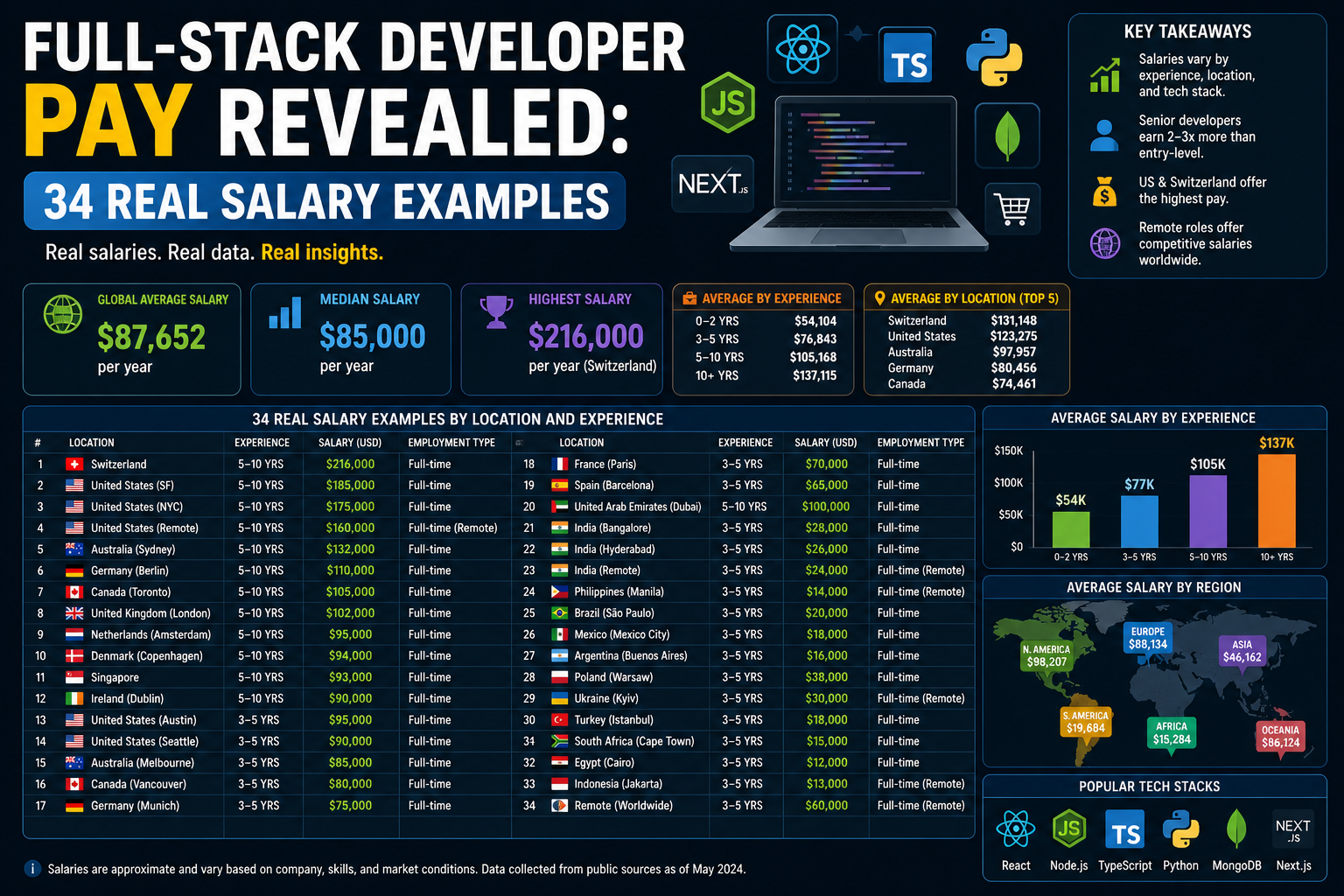
In the world of software development, most people are familiar with specialists who focus only on the visual side of applications or those who work behind the scenes handling servers and databases. However, full-stack developers bring a different kind of value because they operate across both areas. They are capable of building user interfaces while also managing the logic, data flow, and infrastructure that power those interfaces. This ability to handle multiple layers of development makes them highly versatile professionals in modern tech environments.
A full-stack developer essentially connects the front-end and back-end of an application. Instead of relying on separate teams for each layer, they can independently design, build, and maintain complete systems. This flexibility becomes especially useful in smaller teams or startups, where resources are limited and developers are expected to take on broader responsibilities. Their work often involves switching between different technologies and tools throughout the day, requiring both adaptability and a strong foundational understanding of how systems interact.
Because of this wide-ranging skill set, full-stack developers are often viewed as problem-solvers who can see the bigger picture. They do not just focus on isolated components but understand how each part contributes to the overall functionality of an application. This holistic approach allows them to identify inefficiencies, improve performance, and ensure that both the user experience and server-side processes are aligned.
Core Responsibilities Across the Stack
The daily tasks of a full-stack developer can vary depending on the organization, but their responsibilities typically span multiple areas of development. On the client side, they work on creating responsive and interactive interfaces that users engage with directly. This involves writing clean and efficient code, ensuring compatibility across devices, and maintaining a visually appealing design.
On the server side, they handle the logic that processes user requests, communicates with databases, and ensures that data is delivered accurately and securely. This includes writing APIs, managing authentication systems, and optimizing performance to handle large volumes of traffic. In many cases, they are also responsible for debugging issues that may arise anywhere within the application, making their role both challenging and dynamic.
Another important aspect of their work involves database management. Full-stack developers design and interact with databases to store and retrieve information efficiently. They need to understand how to structure data, write optimized queries, and maintain data integrity. This knowledge is essential for building scalable applications that can grow without performance issues.
Additionally, many full-stack developers are involved in deployment and infrastructure tasks. They may set up servers, configure cloud environments, and ensure that applications run smoothly in production. This level of involvement gives them greater control over the entire development lifecycle, from initial concept to final deployment.
Technical Skills That Define Expertise
To perform effectively in this role, full-stack developers must be comfortable working with a variety of technologies. On the front end, they typically use languages like JavaScript along with styling tools to create engaging user interfaces. Frameworks and libraries help streamline development and allow for more efficient code management.
On the back end, they work with server-side languages and frameworks that handle application logic and data processing. These tools enable them to build robust systems capable of supporting complex features and high levels of user activity. Understanding how to integrate front-end and back-end components is crucial, as it ensures seamless communication between different parts of the application.
Version control systems are another essential part of a full-stack developer’s toolkit. These systems allow developers to track changes, collaborate with team members, and maintain organized codebases. Effective use of version control improves productivity and reduces the risk of errors during development.
In addition to coding skills, full-stack developers often need to understand cloud platforms and deployment processes. Being able to launch and maintain applications in a live environment is a valuable skill that sets them apart from more specialized developers. This knowledge also allows them to troubleshoot issues that may arise after deployment, ensuring a smoother user experience.
Why Full-Stack Developers Command Higher Salaries
One of the reasons full-stack developers tend to earn higher salaries is their ability to handle multiple roles within a single position. Instead of hiring separate specialists for front-end and back-end development, companies can rely on one individual who can manage both. This not only reduces costs but also improves efficiency, as there is less need for coordination between different teams.
Their broad skill set also makes them more adaptable to changing project requirements. As technology evolves, full-stack developers can quickly learn new tools and frameworks, allowing them to stay relevant in a competitive job market. This adaptability is highly valued by employers, who are willing to offer higher compensation to retain such talent.
Another factor influencing salary is the level of responsibility associated with the role. Full-stack developers often take ownership of entire projects, making decisions that impact both the technical and business aspects of an application. This level of involvement requires strong problem-solving skills and the ability to think strategically, which further increases their value.
How Location Influences Salary Levels
While skills and experience play a major role in determining salary, location also has a significant impact. In major tech hubs, salaries tend to be higher due to increased demand for skilled developers and the presence of large technology companies. However, these higher salaries are often offset by a higher cost of living, which can reduce the overall financial benefit.
In contrast, smaller cities or regions with lower living costs may offer slightly lower salaries, but the difference in expenses can make these positions equally attractive. With the rise of remote work, developers now have more flexibility in choosing where they live, allowing them to balance income and lifestyle more effectively.
The demand for full-stack developers remains strong across various regions, which means that even in less competitive markets, salaries are still relatively high compared to many other professions. This widespread demand highlights the importance of full-stack skills in today’s digital landscape.
Salary Ranges Across Different Experience Levels
Experience is one of the most important factors influencing how much a full-stack developer earns. Those who are just starting their careers typically earn less, as they are still building their skills and gaining practical experience. Entry-level developers often focus on smaller tasks and gradually take on more complex responsibilities as they grow.
As developers gain more experience, their earning potential increases significantly. Mid-level professionals are expected to handle complete features, manage both front-end and back-end tasks, and contribute to project planning. Their ability to work independently and deliver high-quality results makes them more valuable to employers.
Senior developers, on the other hand, command the highest salaries due to their extensive experience and expertise. They often lead projects, mentor junior team members, and make critical technical decisions. Their deep understanding of systems and ability to solve complex problems set them apart from less experienced developers.
Industry Demand and Market Trends
The demand for full-stack developers continues to grow as more businesses rely on digital platforms to operate and expand. Companies across various industries, including finance, healthcare, and e-commerce, require skilled developers to build and maintain their applications. This widespread demand ensures a steady flow of job opportunities and competitive salaries.
In addition to traditional roles, many full-stack developers are exploring freelance and remote work opportunities. This shift allows them to work with clients from different parts of the world, often leading to higher earnings and greater flexibility. The ability to work remotely has also made it easier for developers to access global job markets, further increasing their earning potential.
Technology trends also play a role in shaping the demand for full-stack developers. As new tools and frameworks emerge, developers who stay updated with the latest advancements are more likely to secure higher-paying positions. Continuous learning and skill development are essential for maintaining a competitive edge in this field.
Balancing Skills and Career Growth
Building a successful career as a full-stack developer requires more than just technical knowledge. Soft skills such as communication, teamwork, and time management are equally important. Developers often work in collaborative environments where they need to coordinate with designers, product managers, and other team members. Effective communication ensures that projects run smoothly and meet business objectives.
Career growth also depends on the ability to adapt and take on new challenges. Developers who actively seek opportunities to learn and improve their skills are more likely to advance in their careers. This may involve experimenting with new technologies, contributing to open-source projects, or pursuing additional training.
Ultimately, the combination of technical expertise, practical experience, and continuous learning determines how far a full-stack developer can go in their career. Those who invest in their growth and stay committed to improving their skills are well-positioned to achieve long-term success and higher earnings.
Comparing Salaries Across Different Cities
When evaluating how much full-stack developers earn, one of the most noticeable differences comes from geographic location. Salaries can vary widely depending on the city, reflecting differences in demand, competition, and the overall cost of living. In larger metropolitan areas where technology companies are concentrated, compensation packages are often significantly higher. These cities attract top talent and host major organizations, which leads to increased competition among employers and better pay for developers.
In contrast, smaller cities and emerging tech markets may offer slightly lower salaries, but they often come with reduced living expenses. This balance can make them attractive options for developers who prioritize affordability and quality of life. In many cases, the difference in salary is offset by lower housing costs, transportation expenses, and general day-to-day spending. As a result, developers in these regions can still maintain a comfortable lifestyle while working in the same field.
Another important factor to consider is the maturity of the local tech ecosystem. Cities with established technology sectors tend to have a wider range of opportunities, from startups to large enterprises. This diversity allows developers to choose roles that align with their skills and career goals, often leading to better compensation. Meanwhile, regions that are still developing their tech presence may have fewer opportunities but can offer unique chances for growth and leadership.
Understanding Salary Distribution and Ranges
Salary data for full-stack developers typically falls into three broad categories: entry-level, mid-level, and senior-level compensation. Each category reflects not only experience but also the complexity of the work being performed. Entry-level salaries are usually associated with developers who are still learning and gaining hands-on experience, while mid-level salaries represent those who can handle projects independently. Senior-level salaries, on the other hand, are reserved for highly experienced professionals who take on leadership roles and manage complex systems.
In many cities, the gap between these salary levels can be quite large. This is especially true in major tech hubs, where senior developers with specialized skills can command significantly higher pay. The wide range in salaries also reflects differences in company size and industry. For example, a startup may offer lower base pay but include equity or other incentives, while a large corporation might provide higher salaries along with comprehensive benefits.
It is also worth noting that salary ranges are influenced by market demand. When certain skills or technologies are in high demand, developers who possess them can negotiate higher pay. This dynamic nature of the market means that salaries are not fixed and can change over time based on industry trends and technological advancements.
Impact of Cost of Living on Real Income
While high salaries in major cities may seem appealing, it is important to consider the cost of living when evaluating overall compensation. Expenses such as housing, transportation, and utilities can significantly reduce the purchasing power of a developer’s income. In some cases, a slightly lower salary in a more affordable city can provide a better standard of living than a higher salary in an expensive urban area.
For example, rent and property prices in large tech hubs are often much higher than in smaller المدن. This means that a significant portion of a developer’s income may go toward housing, leaving less for savings or discretionary spending. On the other hand, developers working in regions with lower living costs can allocate more of their income toward personal goals, investments, or leisure activities.
Remote work has further changed the way developers think about location and income. Many companies now offer remote positions that allow developers to earn competitive salaries while living in more affordable المناطق. This flexibility has opened up new opportunities for professionals to optimize their earnings and lifestyle without being tied to a specific location.
Key Trends Observed in Salary Data
Several trends emerge when analyzing salary data for full-stack developers across different regions. One of the most notable is the widening gap between entry-level and senior-level salaries in larger cities. This reflects the increasing value placed on experience and specialized knowledge, as companies are willing to pay a premium for developers who can handle complex المشاريع.
Another trend is the steady growth of salaries in mid-sized cities. As more companies expand their operations beyond traditional tech hubs, these المناطق are becoming attractive destinations for developers. They offer a balance between competitive salaries and manageable living costs, making them appealing to both employers and employees.
Additionally, the demand for full-stack developers remains consistently high across مختلف المناطق. Even in areas with lower salary ranges, compensation levels are still competitive مقارنة بالمهن الأخرى. This widespread demand highlights the importance of full-stack skills and their relevance in today’s technology-driven world.
Role of Industry in Salary Variation
The industry in which a full-stack developer works can also have a significant impact on their salary. Certain sectors, such as finance, التكنولوجيا المالية, and enterprise software, tend to offer higher compensation بسبب طبيعة المشاريع وتعقيدها. These industries often deal with sensitive data and require robust, scalable systems, which increases the value of skilled developers.
In contrast, industries مثل التعليم أو المنظمات غير الربحية قد تقدم رواتب أقل نسبيًا. While these roles can still be rewarding and provide valuable experience, they may not offer the same level of financial compensation as more commercial sectors. Developers should consider their priorities when choosing an industry, balancing factors such as salary, job satisfaction, and career growth opportunities.
Startups also present a unique case when it comes to salary. While they may not always offer the highest base pay، they often provide additional incentives مثل الأسهم أو المكافآت. This can lead to significant financial gains إذا نجحت الشركة، but it also comes with a higher level of risk مقارنة بالشركات الكبرى.
How Skills Influence Salary Growth
Beyond location and industry, a developer’s skill set plays a crucial role in determining their earning potential. Employers are willing to pay more for individuals who demonstrate expertise across multiple areas of development. This includes proficiency in both front-end and back-end technologies, as well as the ability to integrate these components effectively.
Developers who invest time in learning new frameworks and tools are more likely to see an increase in their salaries. Staying updated with industry trends ensures that their skills remain relevant and in demand. Additionally، those who can العمل عبر تقنيات متعددة often have an advantage in the job market, as they can adapt to different project requirements بسهولة.
Another important aspect is problem-solving ability. Employers value developers who can identify issues quickly and provide effective solutions. This skill not only improves productivity but also reduces the likelihood of costly errors, making such developers more valuable to organizations.
The Growing Importance of Remote Opportunities
Remote work has become a major factor influencing salaries and job opportunities for full-stack developers. Many companies now offer fully remote positions, allowing developers to work from anywhere while earning competitive salaries. This shift has made it easier for professionals to access opportunities that were previously limited to specific locations.
For developers, remote work provides greater flexibility and the ability to choose a living environment that suits their preferences. It also allows them to work with companies from different regions, potentially increasing their earning potential. However، remote roles may also come with challenges مثل اختلاف التوقيت والتواصل مع فرق موزعة.
Despite these challenges، the benefits of remote work often outweigh the drawbacks. It has opened up new possibilities for career growth and has made the field of full-stack development more accessible to a global workforce. As this trend continues، it is likely to play an even greater role in shaping salary expectations and employment patterns.
Balancing Opportunities and Financial Goals
Choosing the right job as a full-stack developer involves more than just comparing salaries. Factors such as work environment، company culture، and opportunities for growth are equally important. Developers should consider how a role aligns with their long-term goals and whether it provides opportunities to learn and advance.
Financial goals also play a key role in decision-making. Some developers may prioritize higher salaries and seek positions in top-paying cities or industries. Others may focus on achieving a better work-life balance or gaining experience in a specific المجال. Understanding these priorities can help developers make informed decisions about their careers.
Ultimately، the best approach is to find a balance between compensation and personal satisfaction. A well-paying job that also offers growth opportunities and a positive work environment can lead to long-term success and fulfillment in the field of full-stack development.
Key Factors That Influence Full-Stack Developer Salaries
Beyond location and experience, several underlying factors shape how much a full-stack developer can earn. One of the most important is the depth of technical knowledge across the entire stack. Developers who are not just familiar with tools but truly understand how systems interact tend to stand out. Employers value individuals who can move seamlessly between layers of development without needing constant guidance. This level of independence reduces friction in projects and makes such developers highly desirable.
Another critical factor is adaptability. Technology evolves quickly, and developers who consistently update their skills are more likely to command higher salaries. Being comfortable with learning new frameworks, programming languages, and tools ensures long-term relevance in the field. Companies prefer developers who can grow with their systems rather than those who rely only on outdated knowledge.
Problem-solving ability also plays a major role. Developers who can quickly identify issues and implement efficient solutions contribute directly to productivity and cost savings. This capability often leads to higher compensation because it demonstrates real value beyond basic coding skills.
Importance of a Strong Tech Stack
A well-rounded tech stack is essential for maximizing earning potential. Full-stack developers are expected to work across both front-end and back-end technologies, and the more proficient they are, the more opportunities they can access. On the front end, the ability to create responsive and user-friendly interfaces is crucial. This includes understanding design principles, performance optimization, and cross-browser compatibility.
On the back end, developers need to build reliable systems that handle data processing, authentication, and business logic. Mastery of server-side frameworks and database management ensures that applications run smoothly and scale effectively. Employers are particularly interested in developers who can integrate these components efficiently, creating seamless user experiences.
In addition to core technologies, familiarity with modern development practices can significantly boost a developer’s value. This includes writing clean, maintainable code, following best practices, and using testing frameworks to ensure reliability. Developers who prioritize quality and efficiency often stand out during hiring and salary negotiations.
The Role of Cloud and Infrastructure Knowledge
Cloud computing has become a fundamental part of modern software development, and full-stack developers who understand it have a clear advantage. Being able to deploy applications, manage servers, and handle cloud-based services adds another layer of expertise. Companies increasingly look for developers who can take ownership of the entire lifecycle of an application, from development to deployment.
Knowledge of infrastructure also helps developers optimize performance and reduce costs. Understanding how to scale applications, manage resources, and ensure uptime is critical for businesses that rely on digital platforms. Developers with these skills are often seen as more valuable because they can contribute to both technical and operational aspects of a project.
This combination of development and infrastructure knowledge bridges the gap between traditional software engineering and DevOps practices. As a result, developers who possess these skills often receive higher compensation and more advanced roles within organizations.
Framework Experience and Its Market Value
Experience with popular frameworks can significantly impact salary levels. Frameworks simplify development by providing pre-built components and standardized structures, allowing developers to build applications more efficiently. Employers prefer candidates who are already familiar with these tools because it reduces onboarding time and increases productivity.
Developers who specialize in widely used frameworks often have access to better job opportunities. Their expertise allows them to contribute immediately to projects, making them valuable assets to teams. Additionally, staying updated with emerging frameworks can provide a competitive edge, as companies are always looking for ways to improve performance and streamline development processes.
However, it is not just about knowing multiple frameworks. The ability to choose the right tool for a specific project is equally important. Developers who understand the strengths and limitations of different frameworks can make better technical decisions, which adds to their overall value.
Building a Portfolio That Demonstrates Real Skills
A strong portfolio is one of the most effective ways to increase earning potential. Employers often look for tangible proof of a developer’s abilities, and a well-crafted portfolio provides exactly that. It showcases real-world projects, demonstrating the ability to build complete applications from start to finish.
Projects that highlight both front-end and back-end skills are particularly valuable. They show that a developer can handle all aspects of development, from designing user interfaces to managing data and deploying applications. Including a variety of projects, such as web applications, APIs, and interactive tools, can further strengthen a portfolio.
Open-source contributions also add credibility. مشاركات في مشاريع عامة تظهر القدرة على التعاون مع مطورين آخرين والعمل ضمن فرق. This experience is highly valued by employers, as it reflects real-world development practices.
Certifications and Their Impact on Career Growth
While practical experience is often more important, certifications can still play a role in increasing salary potential. They provide formal recognition of a developer’s skills and can help validate knowledge in specific areas. For individuals who are self-taught or transitioning into development, certifications can be particularly useful.
Cloud certifications are among the most valuable, as they demonstrate the ability to work with modern infrastructure. These credentials show that a developer understands how to build and manage scalable applications, which is a key requirement for many organizations. Similarly, certifications in programming languages or frameworks can reinforce a developer’s expertise.
However, certifications alone are not enough. They are most effective when combined with practical experience and a strong portfolio. Employers are more likely to value candidates who can demonstrate both theoretical knowledge and real-world application.
Strategies to Increase Earning Potential
Improving salary as a full-stack developer requires a combination of technical growth and strategic career decisions. One effective approach is to continuously expand your skill set. Learning new technologies and staying updated with industry trends ensures that your skills remain in demand. This can lead to better job offers and higher compensation.
Another strategy is to take on more responsibility within your current role. Developers who contribute to decision-making, lead projects, or mentor others often receive higher salaries. These responsibilities demonstrate leadership and a deeper understanding of development processes, making such individuals more valuable to their organizations.
Networking also plays a significant role in career growth. Building connections within the industry can lead to new opportunities and insights into salary trends. Engaging with professional communities, attending events, and participating in discussions can help developers stay informed and connected.
Negotiation skills are equally important. Many developers underestimate their value and accept initial offers without negotiation. Understanding market rates and confidently discussing compensation can lead to better salary outcomes. Employers often expect some level of negotiation, and being prepared can make a significant difference.
Transitioning Into Advanced Roles
As full-stack developers gain experience, they often move into more advanced roles that come with higher salaries. These roles may include positions such as technical lead, software architect, or solutions engineer. Each of these positions involves greater responsibility and a broader scope of work.
Technical leads focus on guiding development teams, ensuring that projects are completed efficiently and meet quality standards. They often act as a bridge between developers and management, making communication skills essential. Software architects, on the other hand, design the overall structure of applications, making high-level decisions about technology and system design.
Solutions engineers work closely with clients to understand their needs and develop tailored solutions. This role requires both technical expertise and strong interpersonal skills. Moving into these positions can significantly increase earning potential while also providing new challenges and opportunities for growth.
Long-Term Career Development and Stability
Full-stack development offers strong long-term career prospects due to its versatility. Developers with a broad skill set are less likely to be affected by changes in specific technologies, as they can adapt to new tools and frameworks بسهولة. This adaptability provides a level of job security that is highly valued in the tech industry.
Continuous learning remains essential for maintaining this stability. Developers who invest in their education and stay curious about new trends are more likely to succeed over time. This may involve taking courses, experimenting with new tools, or working on personal projects.
Ultimately, the combination of technical expertise, practical experience, and strategic career planning determines success in this field. Full-stack developers who focus on growth and adaptability are well-positioned to achieve both financial success and professional satisfaction.
Essential Tools Every Full-Stack Developer Should Master
To succeed as a full-stack developer, having the right set of tools is just as important as understanding programming concepts. These tools help streamline development, improve collaboration, and ensure that applications are built efficiently from start to finish. A well-equipped developer can move faster, reduce errors, and deliver higher-quality products.
At the core, full-stack developers rely on a combination of front-end and back-end technologies. On the front end, tools that enable dynamic and responsive interfaces are essential. These allow developers to create smooth user experiences that work across different devices and browsers. On the back end, tools are focused on handling server logic, managing requests, and ensuring that data flows correctly between systems.
In addition to these, developers also need tools for testing and debugging. Identifying and fixing issues quickly is critical in maintaining application performance. Efficient debugging tools help pinpoint problems within both the client-side and server-side code, saving time and improving reliability.
Version Control and Team Collaboration
Modern software development is rarely a solo effort. Full-stack developers often work in teams, making collaboration tools a necessity. Version control systems allow developers to track changes in their code, revert to previous versions if needed, and collaborate without overwriting each other’s work. This ensures that projects remain organized and manageable նույնիսկ as they grow in complexity.
Collaboration platforms also help teams stay aligned on tasks and progress. Developers can track bugs, manage feature requests, and document their work in a structured way. This level of organization is especially important in larger teams where multiple developers are working on different parts of the same application.
Effective communication within teams is another key factor. Developers who can clearly explain their ideas and understand feedback from others contribute to smoother workflows and better project outcomes. This combination of technical and communication skills enhances both productivity and job satisfaction.
Understanding Databases and Data Management
Data is at the heart of most applications, making database knowledge a critical skill for full-stack developers. Developers need to understand how to store, retrieve, and manage data efficiently. This involves working with different types of databases, each suited for specific use cases.
Relational databases are commonly used for structured data and require developers to write optimized queries to ensure fast performance. On the other hand, non-relational databases offer flexibility for handling unstructured or rapidly changing data. Knowing when to use each type is an important part of building scalable applications.
Data modeling is another important aspect. Developers must design database structures that support the needs of the application while maintaining efficiency and scalability. Poor database design can lead to performance issues and limit the ability of an application to grow.
DevOps Practices and Continuous Integration
As development processes become more advanced, full-stack developers are increasingly expected to understand DevOps practices. These practices focus on automating workflows, improving collaboration between development and operations teams, and ensuring that applications are delivered بسرعة وكفاءة.
Continuous integration and continuous deployment play a major role in this process. They allow developers to automatically test and deploy code changes, reducing the risk of errors and speeding up development cycles. This approach ensures that applications remain stable even as new features are added.
Developers who are familiar with these practices can contribute to more efficient development pipelines. This not only improves productivity but also makes them more valuable to employers who prioritize speed and reliability in their المشاريع.
The Role of Cloud Platforms in Modern Development
Cloud computing has transformed the way applications are built and deployed. Full-stack developers often use cloud platforms to host applications, manage databases, and store assets. This eliminates the need for physical infrastructure and allows for greater flexibility and scalability.
Understanding how to work with cloud services is a major advantage. Developers can quickly deploy applications, scale resources based on demand, and manage services efficiently. This capability is especially important for businesses that need to handle large volumes of users or data.
Cloud platforms also provide tools for monitoring and maintaining applications. Developers can track performance, identify issues, and make improvements in real time. This level of control ensures that applications remain reliable and responsive.
Certifications That Strengthen Professional Credibility
Certifications can play a supportive role in a developer’s career by validating their skills and knowledge. While they are not always required, they can help demonstrate expertise in specific areas. This is particularly useful for developers who are entering the field or transitioning from another career.
Cloud-related certifications are among the most valuable, as they highlight a developer’s ability to work with modern infrastructure. These credentials show that the developer understands how to build and manage scalable applications in real-world environments.
Other certifications may focus on programming languages or development practices. These can reinforce a developer’s understanding of key concepts and provide additional credibility during job applications. However, certifications are most effective when combined with practical experience and a strong portfolio.
Practical Ways to Boost Your Salary
Increasing your salary as a full-stack developer involves more than just improving technical skills. One of the most effective strategies is to build and showcase a strong portfolio. Real-world projects demonstrate your ability to apply your knowledge and solve practical problems. Employers often value this more than theoretical knowledge alone.
Specializing in certain areas can also lead to higher earnings. Developers who focus on scalable architecture, performance optimization, or security often command higher salaries due to the complexity of these المجالات. This specialization makes them indispensable in projects that require advanced expertise.
Learning modern tools and frameworks is another important step. التكنولوجيا تتغير باستمرار، and staying updated ensures that your skills remain relevant. Developers who are familiar with the latest tools are more likely to attract better job opportunities and higher pay.
Taking on leadership roles within a team can further increase earning potential. Mentoring junior developers, leading projects, and contributing to strategic decisions demonstrate a higher level of responsibility. Employers often reward these contributions with better compensation and career advancement opportunities.
Moving Toward Higher-Level Positions
As developers gain experience, they often transition into roles that involve greater responsibility and strategic decision-making. These positions require not only technical expertise but also strong leadership and communication skills. Moving into such roles can significantly increase earning potential.
Higher-level positions may involve overseeing entire projects, designing system architectures, or working closely with stakeholders to define requirements. These roles require a deep understanding of both technical and business aspects, making them more challenging but also more rewarding.
Developers who aim for these positions should focus on building a well-rounded skill set. This includes not only advanced technical knowledge but also the ability to manage teams and communicate effectively. Continuous learning and professional growth are essential for reaching this stage of a career.
Final Thoughts
Full-stack development remains one of the most versatile and rewarding career paths in the technology industry. The ability to work across multiple layers of development provides a unique advantage, allowing developers to take on diverse roles and responsibilities. This versatility is reflected in the strong demand and competitive salaries associated with the profession.
Earning potential is influenced by a combination of factors, including skills, experience, location, and industry. Developers who invest in continuous learning and stay updated with modern technologies are more likely to achieve higher salaries and long-term success. بناء مهارات قوية والعمل على مشاريع حقيقية يفتحان أبوابًا واسعة للنمو المهني.
Ultimately, success in this field comes from a balance of technical expertise, practical experience, and strategic career decisions. Developers who focus on improving their skills, building meaningful projects, and adapting to industry changes will continue to thrive and achieve their financial and professional goals.