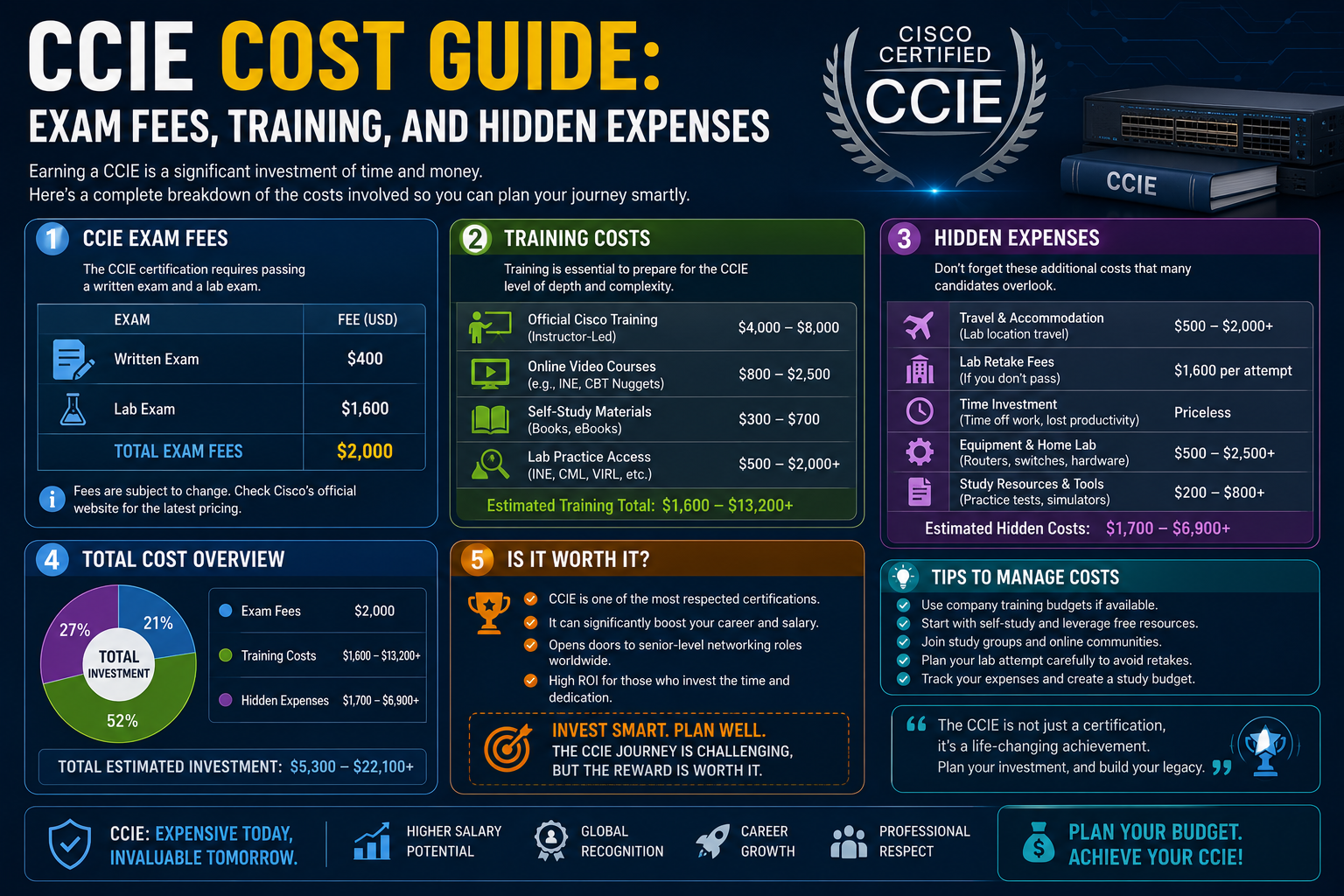
Earning the CCIE is widely recognized as one of the most challenging achievements in the networking field. It represents a level of expertise that goes far beyond foundational or intermediate certifications, and with that prestige comes a significant investment. This investment is not limited to money alone but also includes time, effort, and long-term commitment. Before pursuing this certification, it is essential to understand the full scope of expenses involved so you can make a well-informed decision about whether it aligns with your professional goals.
The CCIE Journey Does Not Start at the Beginning
The CCIE is not an entry-level certification, even though there are technically no formal prerequisites to attempt it. In reality, candidates are expected to have a deep understanding of networking concepts and substantial hands-on experience before even considering the exam. Most professionals spend several years building this knowledge through real-world work or by earning earlier certifications. The commonly recommended experience level is between three to five years working with complex networking environments.
For many candidates, the journey begins with foundational certifications that help build essential skills. These certifications serve as stepping stones, gradually preparing individuals for the advanced challenges of the CCIE. If you are starting from scratch, it is important to factor in the cost and time required to progress through these earlier stages, as they are a critical part of the overall investment.
Certification Pathway Costs Before Reaching CCIE
Before reaching the CCIE level, most candidates pursue associate-level and professional-level certifications. These exams come with their own fees, and while each individual cost may seem manageable, they quickly add up over time. The combined expense of these prerequisite certifications forms the first layer of financial commitment in your journey.
These earlier certifications not only build your technical foundation but also prepare you for the intensity of the CCIE exams. Skipping this progression is rarely successful, as the CCIE assumes a mastery of concepts that are introduced and refined at these lower levels. Therefore, when calculating the total cost of earning a CCIE, it is important to include the investment made in reaching that level of readiness.
The Structure of the CCIE Exam
The CCIE certification process consists of two main components: a written exam and a lab exam. Both are designed to test your knowledge and practical skills at an expert level. The written exam is typically the first step and serves as a gateway to the lab exam. It evaluates your theoretical understanding of networking concepts through a timed assessment.
After passing the written exam, candidates are eligible to attempt the lab exam. This second phase is significantly more demanding and focuses on real-world problem-solving skills. The lab exam requires you to configure, troubleshoot, and optimize complex network scenarios within a strict time limit. The difficulty of this exam is one of the main reasons why the overall cost of earning the CCIE can escalate quickly.
Written Exam Expenses and Considerations
The written exam has a fixed fee for each attempt, and candidates must pass it before moving on to the lab portion. While some individuals succeed on their first try, others may require multiple attempts. Each additional attempt increases the overall cost, making preparation crucial.
Another important factor is the validity period of the written exam. Once passed, it remains valid for a limited time, during which you must attempt the lab exam. This timeframe adds pressure and can influence how candidates plan their study schedules and exam attempts. Failing to pass the lab within this window may require retaking the written exam, adding further expense.
Lab Exam Costs and the Reality of Multiple Attempts
The lab exam is widely regarded as the most challenging part of the CCIE certification. It carries a higher fee than the written exam, and many candidates do not pass on their first attempt. In fact, it is common for individuals to attempt the lab multiple times before achieving success.
Each attempt comes with the same cost, which means expenses can quickly accumulate. When combined with travel and preparation costs, the total investment for the lab exam alone can become substantial. However, once the written exam is passed, candidates can attempt the lab multiple times without retaking the written portion, as long as it remains valid.
Investment in Study Materials and Training
Preparation is one of the most significant cost factors in earning the CCIE. High-quality study materials are essential for success, and these resources come in various forms, including books, online courses, practice exams, and intensive training programs. The cost of these materials can vary widely depending on the depth and quality of the content.
Some candidates choose structured training programs that provide comprehensive guidance and hands-on practice. Others prefer self-study using a combination of books and online resources. While it is possible to minimize costs by selecting fewer resources, investing in quality study materials often increases the chances of passing the exams on the first attempt, ultimately saving money in the long run.
Hands-On Practice and Lab Environment Costs
Practical experience is a critical component of CCIE preparation. Candidates must spend extensive time working with network configurations and troubleshooting scenarios to build the skills required for the lab exam. This hands-on practice typically involves setting up a lab environment.
There are different approaches to creating a lab environment, each with its own cost implications. Some candidates invest in physical equipment, which can be expensive but provides a realistic experience. Others opt for virtual labs or rented environments, which are generally more cost-effective and flexible. The choice depends on your budget and preferred learning style, but regardless of the method, this aspect represents a significant portion of the overall investment.
Travel and Accommodation Expenses
One often overlooked cost of earning the CCIE is travel. The lab exam is conducted at specific testing centers, which may not be located near your place of residence. As a result, candidates often need to travel to another city or country to take the exam.
Travel expenses can include airfare, accommodation, local transportation, and meals. Since the lab exam is lengthy and physically demanding, many candidates choose to arrive a day early to rest and prepare. This means additional nights in a hotel and higher overall costs. If multiple attempts are required, these travel expenses are repeated, further increasing the total investment.
Estimating the Total Cost of Earning the CCIE
The total cost of earning the CCIE can vary greatly depending on several factors, including the number of exam attempts, the type of study materials used, and the cost of travel. In an ideal scenario where a candidate passes both exams on the first attempt and minimizes additional expenses, the cost can be relatively moderate.
However, most candidates fall somewhere in the middle, investing in training resources, lab environments, and multiple exam attempts. In more intensive scenarios, where extensive preparation and repeated lab attempts are required, the total cost can reach a significantly higher range. This variability makes it important to plan your budget carefully and prepare for different possibilities.
The Hidden Cost of Time Commitment
Beyond financial considerations, time is one of the most significant investments required to earn the CCIE. Preparing for this certification often requires months of dedicated study, and in many cases, it can feel like taking on a second full-time job. Candidates must balance their professional responsibilities with intensive study schedules, which can impact their personal lives.
This time commitment is often underestimated, but it plays a crucial role in determining success. Consistent practice, deep understanding of concepts, and the ability to troubleshoot under pressure are all skills that require sustained effort to develop. While time does not have a direct monetary value, it represents an opportunity cost that should not be ignored.
Strategies to Manage and Reduce Costs
Although the CCIE is inherently expensive, there are ways to manage and potentially reduce the overall cost. One of the most effective strategies is thorough preparation to minimize the number of exam attempts. Passing the exams on the first try significantly reduces expenses and shortens the overall timeline.
Choosing the right study resources is another important factor. Instead of purchasing every available resource, focus on high-quality materials that align with your learning style. Additionally, leveraging virtual lab environments can help reduce the cost of hands-on practice without compromising the quality of your preparation.
Planning your travel carefully can also make a difference. Booking flights and accommodations in advance, selecting cost-effective options, and scheduling your exam strategically can help keep expenses under control.
Evaluating the Return on Investment
Despite the high cost, many professionals view the CCIE as a worthwhile investment. The certification is highly respected in the industry and often leads to better career opportunities, higher salaries, and increased professional recognition. It demonstrates a level of expertise that sets you apart from others in the field.
However, the decision to pursue the CCIE should be based on your career goals and readiness to commit to the process. It is not a certification to pursue lightly, and the investment required should be carefully weighed against the potential benefits.
Final Thoughts
The journey to earning the CCIE is both challenging and rewarding. It requires a significant investment of money, time, and effort, but it also offers substantial returns for those who succeed. Understanding the full scope of costs involved allows you to plan effectively and approach the certification with realistic expectations.
By preparing thoroughly, making informed decisions about study resources, and managing your expenses strategically, you can navigate the financial challenges of this journey. Ultimately, the CCIE is more than just a certification—it is a testament to your dedication, expertise, and commitment to excellence in the field of networking.