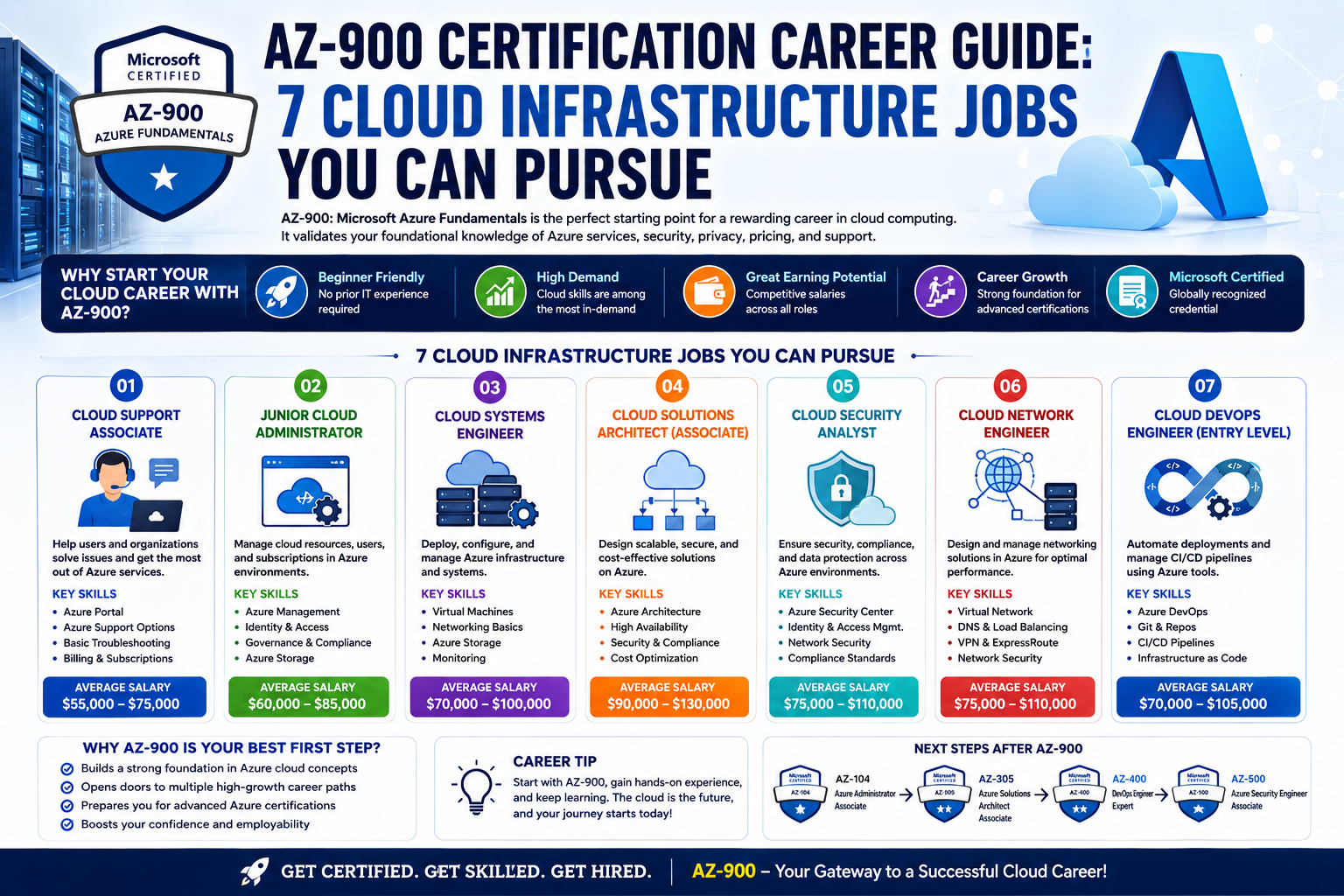
Cloud computing has become one of the most important foundations of modern technology, shaping how businesses store data, run applications, and deliver services to users around the world. Instead of relying on traditional physical servers and in-house infrastructure, organizations now use cloud platforms to access computing resources over the internet. This shift has changed not only how companies operate but also what skills are required to build a successful career in IT.
At its core, cloud computing allows organizations to rent computing power, storage, and software services as needed. This flexibility removes the need for large upfront investments in hardware and reduces the complexity of maintaining physical systems. Companies can scale their operations up or down based on demand, which makes cloud environments especially valuable in fast-changing industries such as e-commerce, finance, healthcare, and software development.
One of the key reasons cloud computing has become so widespread is efficiency. Businesses no longer need to worry about managing physical data centers or replacing outdated equipment. Instead, cloud providers handle infrastructure maintenance, security updates, and system reliability. This allows organizations to focus more on innovation and less on operational overhead.
Another important factor driving cloud adoption is global accessibility. With cloud services, employees can access systems and data from anywhere in the world, as long as they have an internet connection. This has made remote work and distributed teams more practical than ever before, especially in industries that rely on digital collaboration.
Cloud computing also introduces new opportunities for automation and advanced technologies. Artificial intelligence, machine learning, big data analytics, and Internet of Things solutions all depend heavily on cloud infrastructure. Without scalable computing resources, these technologies would be far more difficult and expensive to implement.
As organizations continue to adopt cloud-based solutions, the demand for professionals who understand cloud fundamentals continues to grow. This is where entry-level certifications and foundational knowledge become extremely valuable. Before diving into advanced technical roles, it is essential to understand how cloud systems operate, how resources are structured, and how services interact with one another.
This foundational understanding is exactly what introductory cloud learning paths are designed to provide. They prepare learners for more advanced roles by building confidence in core concepts such as virtualization, service models, security basics, and cloud architecture principles. These concepts form the backbone of nearly every cloud-related job role.
For anyone entering the IT field today, cloud knowledge is no longer optional. It has become a core requirement for many positions, even those that are not purely technical. Roles in support, administration, development, cybersecurity, and project management increasingly expect a basic understanding of cloud environments. This is why starting with a structured introduction to cloud computing can significantly influence long-term career growth.
The Role of AZ-900 (Introduction to Cloud Infrastructure)
The AZ-900 certification, now commonly referred to as Introduction to Cloud Infrastructure, serves as one of the most widely recognized entry points into cloud computing. It is designed for individuals who are new to cloud technology and want to build a strong conceptual foundation before moving into more specialized roles.
Unlike advanced technical certifications that focus on hands-on configuration and system design, this foundational certification emphasizes understanding rather than implementation. It helps learners become familiar with how cloud systems work at a high level, without requiring prior experience in IT infrastructure or software engineering.
The primary goal of this introduction is to remove confusion around cloud terminology and concepts. Many beginners find cloud computing overwhelming because it includes unfamiliar terms such as virtualization, identity management, scalability, redundancy, and distributed architecture. This certification breaks those concepts down into simple, understandable ideas.
It is also designed to be accessible to a wide audience. Whether someone comes from a technical background or a completely non-technical field, the material is structured in a way that builds understanding step by step. This makes it particularly useful for students, career changers, business professionals, and support staff who interact with cloud systems but may not directly build them.
Another important role of this certification is career direction. Many people enter IT without a clear understanding of which specialization they want to pursue. Cloud computing includes many different paths, such as administration, development, security, and architecture. By introducing all of these areas at a conceptual level, the certification helps learners identify which direction aligns with their interests.
It also reflects real-world industry expectations. Modern organizations expect employees to understand how cloud platforms like Microsoft Azure function, even if they are not directly managing infrastructure. This includes understanding how services are deployed, how resources are organized, and how security and governance are applied in cloud environments.
In addition, the introduction to cloud infrastructure serves as a stepping stone to more advanced certifications. It prepares learners for deeper technical study by building familiarity with essential concepts. Without this foundation, advanced topics can feel overwhelming and difficult to grasp.
Overall, the role of AZ-900 is not to create experts, but to create informed professionals. It ensures that learners understand the language of cloud computing and can confidently engage in discussions, projects, and learning paths that involve cloud technologies.
What the AZ-900 Exam Really Measures
The AZ-900 exam evaluates a candidate’s understanding of fundamental cloud concepts rather than their ability to perform technical tasks. It focuses on knowledge, comprehension, and recognition of key principles that underpin cloud computing environments.
One of the main things the exam measures is conceptual clarity. Candidates are expected to understand what cloud computing is, why organizations use it, and how it differs from traditional on-premises infrastructure. This includes recognizing the benefits of scalability, reliability, cost efficiency, and global reach.
Another important area of assessment is familiarity with cloud service models. These include infrastructure-based services, platform-based services, and software-based services. The exam ensures that learners can distinguish between these models and understand when each type is used in real-world scenarios.
The exam also evaluates understanding of cloud deployment models. Candidates must know the differences between public, private, and hybrid cloud environments. Each model has its own advantages and limitations, and understanding these distinctions is essential for making informed decisions in IT environments.
Security awareness is another key component. While the exam does not require deep technical expertise in cybersecurity, it does expect learners to understand basic principles such as identity protection, access control, and shared responsibility. This helps ensure that candidates are aware of how security is managed in cloud systems.
In addition to security, the exam assesses knowledge of governance and compliance concepts. This includes understanding how organizations manage cloud resources, enforce policies, control costs, and maintain regulatory compliance. These are critical aspects of cloud management in professional environments.
The exam also includes questions related to cloud pricing and support models. Candidates are expected to understand how cloud services are billed, what factors influence cost, and how organizations optimize their cloud spending. This reflects the real-world importance of financial planning in cloud adoption.
Another area of focus is understanding core Azure services at a high level. While the exam does not require hands-on configuration, it does expect learners to recognize the purpose of services related to computing, storage, networking, and identity management.
Overall, the exam measures a candidate’s ability to think about cloud computing in a structured and informed way. It is not about memorizing technical steps, but about understanding how cloud systems function as a whole.
Core Cloud Concepts You Must Understand
Before moving into any cloud-related career path, it is essential to understand the core concepts that define cloud computing. These concepts form the foundation for everything else in the cloud ecosystem and are central to introductory learning.
One of the most important ideas is virtualization. Virtualization allows physical hardware to be divided into multiple virtual environments, enabling more efficient use of computing resources. Instead of running a single operating system on a physical machine, multiple virtual machines can run independently on the same hardware. This concept is fundamental to cloud computing because it enables scalability and resource optimization.
Another key concept is elasticity. Cloud systems are designed to automatically adjust resources based on demand. When usage increases, additional resources are allocated. When demand decreases, resources are reduced. This dynamic scaling ensures performance efficiency while minimizing costs.
Closely related to elasticity is scalability. Scalability refers to the ability of a system to handle increased workload by adding resources. Cloud environments make scaling much easier compared to traditional infrastructure, where adding new hardware can be time-consuming and expensive.
The concept of shared responsibility is also critical. In cloud environments, security and operational responsibilities are divided between the cloud provider and the customer. Understanding which responsibilities belong to each party is essential for maintaining secure and efficient systems.
Another foundational concept is pay-as-you-go pricing. Instead of purchasing infrastructure upfront, organizations only pay for the resources they use. This model allows businesses to control costs more effectively and avoid unnecessary expenses.
High availability is another important principle. Cloud systems are designed to remain operational even when individual components fail. This is achieved through redundancy and distributed infrastructure, ensuring that services remain accessible to users.
Disaster recovery is closely related to availability. It refers to the ability to restore systems and data after unexpected failures or disruptions. Cloud platforms provide tools and strategies to ensure business continuity in the event of outages.
Understanding these core concepts is essential because they appear throughout all areas of cloud computing. Whether someone is working in development, administration, or security, these principles remain relevant and influential.
Azure Architecture Fundamentals
Azure architecture refers to how cloud resources are organized and structured within the Microsoft cloud ecosystem. Understanding this architecture is essential for anyone learning cloud computing because it explains how different components interact with each other.
At the highest level, Azure is built around a global network of data centers. These data centers are grouped into regions, which are geographic locations that host cloud resources. Each region is designed to provide low-latency access and high availability to users in nearby areas.
Within regions, there are availability zones, which are physically separate locations designed to protect against data center failures. By distributing resources across multiple zones, organizations can ensure that their applications remain available even if one zone experiences issues.
Another important architectural concept is the subscription model. Subscriptions act as containers for cloud resources and help organize billing, access control, and resource management. Organizations can create multiple subscriptions to separate environments such as development, testing, and production.
Resource groups are also a key part of Azure architecture. They provide a way to organize related resources such as virtual machines, storage accounts, and networks. This makes it easier to manage and monitor cloud environments efficiently.
Identity management plays a major role in architecture as well. Systems like Microsoft Entra ID help control who can access resources and what actions they are allowed to perform. This ensures that only authorized users can interact with sensitive systems.
Networking is another fundamental component. Cloud networks are designed to connect resources securely and efficiently. Virtual networks allow organizations to create isolated environments within the cloud, providing control over communication between systems.
Storage architecture is equally important. Cloud storage systems are designed to be scalable, durable, and accessible. They allow organizations to store large amounts of data without worrying about physical limitations.
Together, these architectural components form the backbone of cloud environments. Understanding how they work together helps learners build a strong foundation for future technical roles.
Azure Management and Governance Basics
Cloud environments require proper management and governance to ensure they remain secure, efficient, and cost-effective. These responsibilities become even more important as organizations scale their cloud usage.
One of the key aspects of management is monitoring. Cloud platforms provide tools that allow administrators to track performance, detect issues, and analyze system behavior. Monitoring ensures that systems remain healthy and responsive.
Cost management is another critical area. Since cloud services operate on a usage-based model, it is important to track spending and optimize resource usage. Organizations often use budgeting tools and alerts to avoid unexpected costs.
Governance involves setting rules and policies that control how resources are used. These policies ensure that cloud environments remain consistent, secure, and compliant with organizational standards. For example, policies may restrict the types of resources that can be created or enforce naming conventions.
Access control is also a key part of governance. It ensures that users only have access to the resources they need to perform their jobs. This reduces the risk of unauthorized actions and improves overall security.
Automation plays an increasingly important role in cloud management. Many tasks can be automated using templates and scripts, reducing manual effort and improving consistency across environments.
Resource lifecycle management is another important concept. It involves tracking resources from creation to deletion, ensuring that unused or outdated resources are removed to optimize efficiency.
By understanding these management and governance principles, learners gain insight into how real-world cloud environments are maintained and controlled. This knowledge is essential for anyone planning to work in cloud-related roles.
How the AZ-900 Builds a Career Foundation
The value of learning cloud fundamentals extends far beyond passing an exam. It provides a structured entry point into one of the fastest-growing areas in technology. By understanding the basics of cloud computing, learners gain the ability to explore multiple career directions with confidence.
This foundational knowledge helps individuals understand how different IT roles connect within cloud environments. Whether working in support, development, security, or administration, cloud concepts remain relevant across all areas. This makes early cloud education highly versatile.
It also improves problem-solving skills by encouraging learners to think about systems in terms of scalability, reliability, and efficiency. These are critical skills in modern IT environments where systems must handle large amounts of data and traffic.
Additionally, cloud fundamentals help bridge the gap between technical and non-technical roles. Many organizations rely on professionals who may not directly manage infrastructure but still need to understand how cloud systems operate. This includes project managers, analysts, and business professionals.
As learners progress beyond foundational knowledge, they are better prepared to specialize in specific areas of cloud computing. This may include infrastructure management, application development, cybersecurity, or solution architecture. The foundational understanding gained early on makes advanced learning more accessible and meaningful.
Ultimately, starting with cloud fundamentals provides clarity, direction, and confidence for anyone entering the technology field.
Transitioning from Cloud Fundamentals to Real-World Roles
Once the foundational concepts of cloud computing are understood, the next logical step is exploring how that knowledge translates into actual job roles. Many learners assume that an entry-level certification immediately leads to a job title, but in reality, it functions more as a bridge between theory and applied skills.
The transition from learning cloud concepts to working in cloud environments involves developing context. Instead of simply knowing what cloud services are, professionals begin to understand how those services are used in real organizations. This includes recognizing how infrastructure supports applications, how users interact with systems, and how business needs shape technical decisions.
At this stage, learners begin to notice that cloud computing is not a single career path but a broad ecosystem of interconnected roles. Each role focuses on a different layer of responsibility, such as infrastructure, development, operations, security, or architecture. Understanding this structure is essential for choosing a direction that aligns with personal strengths and interests.
For example, someone who enjoys solving technical problems and maintaining systems may gravitate toward administrative or support roles. Someone who prefers designing systems and thinking at a high level may find architecture more appealing. Meanwhile, individuals interested in coding and application development may choose a development-focused path.
The important shift that happens after foundational learning is moving from recognition to application. Instead of just identifying what a cloud service does, learners begin to understand when and why it is used. This change in perspective is what allows entry-level knowledge to evolve into professional capability.
This stage also introduces the importance of continuous learning. Cloud environments evolve rapidly, with new services and updates released frequently. Professionals must be comfortable adapting and expanding their knowledge over time. Foundational understanding provides stability, but growth depends on ongoing exploration.
Azure Administrator Career Path and Responsibilities
One of the most common entry points into cloud careers is the role of a cloud administrator. This position focuses on managing and maintaining cloud infrastructure to ensure systems run smoothly and efficiently.
Administrators are responsible for overseeing cloud resources such as virtual machines, storage systems, networking components, and identity configurations. Their work ensures that applications remain available and perform optimally for users.
A key aspect of this role is resource management. Administrators monitor cloud environments to ensure that resources are being used effectively. This includes identifying unused or underutilized resources, optimizing configurations, and ensuring that systems are properly scaled based on demand.
Another major responsibility is system monitoring. Cloud administrators regularly check system health, performance metrics, and alerts to detect potential issues before they become serious problems. This proactive approach helps maintain system reliability and reduces downtime.
Identity and access management also play a critical role in this position. Administrators ensure that users have appropriate access to systems based on their roles within an organization. This helps maintain security while enabling productivity.
Networking is another important area of responsibility. Administrators configure and manage virtual networks, control traffic flow, and ensure secure communication between resources. Understanding how cloud networking works is essential for maintaining system integrity.
Backup and recovery planning is also part of the role. Administrators must ensure that data is protected and can be restored in the event of failures or disruptions. This involves setting up backup policies and testing recovery procedures.
While the entry-level cloud foundation introduces these concepts at a high level, the administrator role requires deeper practical knowledge. This includes understanding how to implement solutions, troubleshoot issues, and optimize system performance.
As experience grows, cloud administrators often move into more advanced roles such as senior administration, infrastructure engineering, or cloud operations management. This path provides strong career stability because nearly every organization using cloud services requires administrative support.
Cloud Support Roles and Technical Assistance Functions
Cloud support roles serve as a critical link between users and cloud infrastructure. These professionals are responsible for helping organizations resolve technical issues, maintain system functionality, and ensure smooth daily operations.
Unlike administrative roles that focus on system management, support roles focus on problem-solving and user assistance. They often act as the first point of contact when technical issues arise in cloud environments.
One of the key responsibilities in this role is troubleshooting. Support professionals analyze issues reported by users, identify root causes, and implement solutions. This requires strong analytical thinking and familiarity with cloud systems.
Another important function is incident management. When systems experience outages or performance issues, support teams work to resolve them quickly and minimize disruption. They also document incidents to help prevent future occurrences.
Monitoring systems and alerts are another part of the role. Support professionals often use monitoring tools to track system performance and respond to warnings before they escalate into major problems.
Communication is also essential in this career path. Support professionals must explain technical issues in a clear and understandable way to users who may not have a technical background. This helps bridge the gap between complex systems and everyday business needs.
Cloud support roles also involve collaboration with other technical teams. When issues require deeper investigation or system changes, support professionals escalate problems to administrators, engineers, or developers.
This role is often considered a stepping stone into more advanced technical positions. It provides hands-on exposure to cloud environments and helps build practical experience in troubleshooting and system management.
Over time, professionals in support roles may transition into infrastructure management, engineering, or specialized technical positions based on their interests and skills.
Cloud Developer Path and Application Building
The cloud developer path focuses on building applications that run on cloud infrastructure. These professionals design, develop, and deploy software solutions that take advantage of cloud capabilities.
Unlike traditional software development, cloud development involves working with distributed systems, scalable architecture, and managed services. Applications are designed to operate in environments that can dynamically adjust to demand.
One of the key responsibilities of cloud developers is writing code that integrates with cloud services. This includes working with APIs, databases, authentication systems, and storage solutions provided by cloud platforms.
Scalability is a major consideration in cloud development. Applications must be able to handle varying levels of user demand without performance degradation. Developers design systems that can automatically scale resources based on usage.
Another important aspect is reliability. Cloud applications must be designed to remain available even when parts of the system fail. This involves implementing redundancy, failover mechanisms, and distributed architecture principles.
Security is also a key concern. Developers must ensure that applications are protected against unauthorized access, data breaches, and other vulnerabilities. This includes implementing secure authentication and encryption methods.
Cloud developers often work with continuous integration and deployment pipelines. These systems allow code to be tested and deployed automatically, improving efficiency and reducing the risk of errors.
Collaboration is also important in this role. Developers often work closely with administrators, architects, and security professionals to ensure that applications meet organizational requirements.
As developers gain experience, they may specialize in areas such as backend systems, frontend development, mobile applications, or cloud-native architecture. This flexibility makes the cloud developer path highly versatile.
Cloud Solutions Architect Path and System Design Thinking
Cloud solutions architecture is one of the most advanced and strategic roles in cloud computing. It focuses on designing complete systems that meet business and technical requirements.
Unlike roles that focus on implementation, architects work at a higher level, planning how different components of a system will interact. This includes selecting services, defining architecture patterns, and ensuring scalability and security.
One of the primary responsibilities of a cloud architect is system design. This involves creating blueprints for cloud environments that support business applications. Architects must consider performance, cost, reliability, and security when making design decisions.
Another important aspect is evaluating technology choices. Cloud platforms offer a wide range of services, and architects must determine which services are best suited for specific requirements. This requires a deep understanding of cloud capabilities and limitations.
Cost optimization is also a key responsibility. Architects must design systems that meet performance requirements while minimizing unnecessary expenses. This involves selecting efficient architectures and avoiding over-provisioning.
Security design is another critical area. Architects define how systems will protect data, control access, and comply with regulatory standards. Security must be integrated into the design from the beginning rather than added later.
Communication plays a major role in this career path. Architects must work with stakeholders, developers, and administrators to ensure that designs are practical and aligned with business goals.
Cloud architects also need strong problem-solving skills. They must anticipate potential challenges and design systems that can adapt to changing requirements over time.
This role typically requires experience in multiple areas of cloud computing, including administration, development, and security. It represents a progression from hands-on technical work to strategic planning.
Cloud Security Engineer Path and Protection Strategies
Cloud security engineering focuses on protecting cloud systems from threats, vulnerabilities, and unauthorized access. As organizations increasingly rely on cloud infrastructure, security has become one of the most critical areas in IT.
Security engineers are responsible for designing and implementing protections that safeguard data, applications, and infrastructure. This includes identity management, encryption, threat detection, and access control.
One of the key responsibilities is monitoring for security threats. Security engineers use tools to detect unusual activity, potential breaches, and vulnerabilities in cloud environments.
Another important function is identity and access management. Ensuring that only authorized users can access specific resources is a fundamental aspect of cloud security. This involves configuring roles, permissions, and authentication systems.
Encryption is also a major focus. Security engineers ensure that data is protected both when stored and when transmitted across networks. This helps prevent unauthorized access even if data is intercepted.
Compliance management is another critical responsibility. Many industries have strict regulatory requirements, and security engineers must ensure that cloud systems meet these standards.
Incident response is also part of the role. When security breaches or threats are detected, engineers must act quickly to contain and resolve issues while minimizing damage.
Security engineers often work closely with architects and administrators to integrate security into system design and operations. This collaborative approach ensures that protection is built into every layer of the system.
As cloud environments grow more complex, the demand for security expertise continues to increase, making this one of the most important career paths in cloud computing.
Cloud Operations and Hybrid Infrastructure Roles
Cloud operations professionals focus on maintaining the day-to-day functionality of cloud environments. Their work ensures that systems remain stable, efficient, and available to users.
These roles often involve monitoring system performance, managing infrastructure, and responding to operational issues. They play a key role in keeping cloud services running smoothly.
Hybrid infrastructure roles involve managing environments that combine cloud and on-premises systems. Many organizations use a mix of both, requiring professionals who understand how they interact.
One of the key responsibilities in operations is system monitoring. Professionals track performance metrics and ensure that systems are operating within expected parameters.
Resource optimization is also important. Operations teams work to ensure that systems are not overusing or underusing resources, helping to control costs and improve efficiency.
Backup and maintenance tasks are also part of the role. This includes ensuring that systems are updated, patched, and protected against failures.
In hybrid environments, professionals must manage connectivity between cloud and local systems. This requires understanding networking, integration, and data flow between different environments.
Operational roles often serve as a foundation for more advanced positions in cloud engineering, architecture, or administration. They provide valuable hands-on experience with real-world systems.
Building a Long-Term Cloud Career Direction
Cloud computing offers a wide range of career opportunities, but long-term success depends on continuous learning and skill development. Foundational knowledge provides the starting point, but specialization is what shapes career growth.
Professionals often begin with general exposure to cloud concepts before narrowing their focus to specific areas such as administration, development, security, or architecture. Each path offers different challenges and opportunities.
As experience grows, many professionals expand their skills across multiple domains. This cross-functional knowledge becomes highly valuable in advanced roles where understanding multiple systems is required.
Adaptability is one of the most important traits in cloud careers. Since technology evolves rapidly, professionals must be willing to learn new tools, services, and methodologies throughout their careers.
Practical experience is also essential. Working with real systems helps reinforce theoretical knowledge and builds confidence in handling complex environments.
Over time, cloud professionals often move from technical execution to strategic decision-making roles. This progression reflects increasing responsibility and a deeper understanding of how cloud systems support business goals.
Cloud Career Growth: Moving from Entry-Level Knowledge to Specialization
After building a strong foundation in cloud computing concepts and exploring early job roles, the next stage in a cloud career is specialization. This is where professionals begin refining their skills toward a specific domain, such as infrastructure management, development, security, or solution design. Unlike entry-level learning, specialization requires deeper technical understanding and more practical exposure to real systems.
At this stage, cloud computing becomes less about general awareness and more about applied expertise. Professionals start working with complex environments where multiple services interact, and decisions have long-term effects on performance, security, and cost. The transition into specialization is often gradual, shaped by hands-on experience, problem-solving exposure, and evolving career interests.
One of the most important aspects of this stage is recognizing that cloud careers are not linear. There is no single “correct” path. Instead, professionals move between roles based on skills, opportunities, and organizational needs. For example, a cloud administrator may develop an interest in automation and transition into cloud engineering, or a support professional may specialize in security operations.
This flexibility is one of the strengths of cloud computing careers. The knowledge gained from foundational learning continues to remain relevant, even as individuals move into more advanced roles. Understanding how cloud systems work at a basic level provides a strong anchor for exploring more complex topics.
Deepening Technical Skills in Cloud Environments
As professionals advance beyond entry-level roles, technical depth becomes increasingly important. This includes understanding how cloud services are configured, optimized, and integrated into larger systems. While foundational learning focuses on “what” cloud computing is, specialization focuses on “how” it is implemented.
One of the key areas of technical growth is automation. In modern cloud environments, manual processes are often replaced with automated workflows to improve efficiency and reduce human error. Professionals learn how to automate infrastructure deployment, monitoring, scaling, and maintenance tasks.
Another important area is infrastructure design. At a deeper level, cloud professionals must understand how different components of a system interact under real-world conditions. This includes networking design, storage optimization, load balancing, and redundancy planning.
Performance tuning is also a critical skill. Cloud systems must handle varying workloads efficiently, and professionals are responsible for identifying bottlenecks and improving system responsiveness. This requires analyzing metrics, understanding system behavior, and making informed adjustments.
Security also becomes more technical at this stage. Instead of just understanding basic principles, professionals begin implementing advanced security configurations such as multi-layer authentication, encryption strategies, threat detection systems, and compliance frameworks.
These technical skills are often developed through hands-on practice, experimentation, and real-world exposure. Cloud environments provide a unique advantage in this area because they allow professionals to test configurations and see immediate results.
Evolving Role of Cloud Administrators into Engineers
Many cloud professionals begin their careers in administrative roles and later transition into engineering-focused positions. This shift represents a move from maintaining systems to designing and building them.
Cloud engineers take on more responsibility for how systems are constructed and optimized. Instead of simply managing existing infrastructure, they actively design solutions that improve efficiency, scalability, and reliability.
One of the key differences between administrators and engineers is the focus on automation and scripting. Engineers often use tools and scripts to automate repetitive tasks, enabling faster deployment and consistent system configurations.
They also work closely with development teams to ensure that applications are designed in a way that aligns with cloud architecture best practices. This includes designing systems that are resilient, scalable, and cost-efficient.
Another important aspect of this role is troubleshooting complex issues. While administrators may focus on operational issues, engineers often investigate deeper system-level problems that require architectural understanding.
This transition is a natural progression for many professionals because it builds on existing knowledge while expanding responsibilities. It also opens the door to higher-level roles such as cloud architecture and DevOps engineering.
The Expanding Importance of Cloud Security Specialization
As organizations continue to migrate critical systems to the cloud, security has become one of the most important areas of specialization. Cloud security professionals are responsible for protecting systems, data, and applications from increasingly sophisticated threats.
This role goes far beyond basic access control. Security specialists design comprehensive protection strategies that include identity management, encryption, monitoring, compliance, and incident response.
One of the key challenges in cloud security is managing complexity. Cloud environments are highly distributed, with many interconnected services. Security professionals must ensure that protection is consistent across all components.
They also need to stay updated on emerging threats. Cybersecurity is a constantly evolving field, and cloud environments are frequent targets for attacks such as data breaches, unauthorized access, and service disruptions.
Another important responsibility is compliance management. Many industries require strict adherence to regulatory standards, and security professionals must ensure that cloud systems meet these requirements.
Security automation is also becoming increasingly important. Professionals use tools to automatically detect and respond to threats, reducing response times and improving overall protection.
This specialization is highly in demand because organizations cannot operate without strong security foundations. As cloud adoption grows, so does the need for skilled security professionals who can protect digital infrastructure.
Cloud Architecture as a Strategic Career Path
Cloud architecture represents one of the most advanced and strategic roles in cloud computing. Professionals in this field are responsible for designing entire systems that support business operations and long-term goals.
Unlike technical roles that focus on implementation, architects work at a high level, making decisions about system structure, service selection, and integration strategies. Their work has a direct impact on performance, scalability, and cost efficiency.
One of the key responsibilities of cloud architects is designing scalable systems. They must ensure that applications can handle growth without performance degradation. This involves selecting appropriate services and designing systems that can expand dynamically.
Another important responsibility is cost optimization. Architects must balance performance requirements with budget constraints, ensuring that systems are efficient without being over-engineered.
They also play a major role in aligning technology with business goals. This requires understanding organizational needs and translating them into technical solutions that support long-term objectives.
Communication is essential in this role. Architects work closely with stakeholders, developers, administrators, and security teams to ensure that designs are practical and aligned with requirements.
Problem-solving at this level is often complex and requires both technical knowledge and strategic thinking. Architects must anticipate challenges and design systems that are resilient to change.
This role typically requires experience across multiple areas of cloud computing, making it a natural progression for professionals who have worked in administration, development, or engineering.
The Role of DevOps in Cloud Career Progression
DevOps has become a key component of modern cloud environments. It combines development and operations practices to improve collaboration, automation, and delivery speed.
In cloud careers, DevOps professionals focus on streamlining the software development lifecycle. This includes continuous integration, continuous deployment, and infrastructure automation.
One of the key goals of DevOps is to reduce the time it takes to deliver software updates. By automating testing and deployment processes, teams can release updates more frequently and with fewer errors.
Infrastructure as code is a core concept in DevOps. Instead of manually configuring systems, professionals define infrastructure using code, allowing environments to be created and managed automatically.
Monitoring and feedback loops are also important. DevOps teams continuously monitor applications and systems to identify issues and improve performance.
Collaboration is a central principle of DevOps. It breaks down traditional barriers between development and operations teams, encouraging shared responsibility for system performance.
As cloud environments become more complex, DevOps practices continue to play a critical role in ensuring efficiency and reliability.
Long-Term Career Progression in Cloud Computing
Cloud computing offers a wide range of long-term career opportunities, with multiple paths for growth and specialization. Unlike traditional IT roles, cloud careers are highly dynamic and adaptable.
Professionals often begin with foundational knowledge and gradually move into more specialized roles based on experience and interest. Over time, they may transition between different areas such as administration, engineering, security, or architecture.
One of the most important aspects of long-term success is continuous learning. Cloud technologies evolve rapidly, and professionals must stay updated with new services, tools, and best practices.
Experience also plays a major role in career progression. Real-world exposure to cloud environments helps professionals develop problem-solving skills and practical understanding that cannot be gained through theory alone.
As careers advance, professionals often move from hands-on technical work to strategic decision-making roles. This shift reflects increased responsibility and a deeper understanding of how cloud systems support business objectives.
Ultimately, cloud computing provides a flexible and scalable career path that can adapt to changing interests and industry demands.
Conclusion
Cloud computing has become a defining force in modern technology, reshaping how organizations build, deploy, and manage digital systems. Starting with foundational knowledge like the AZ-900 Introduction to Cloud Infrastructure provides an accessible entry point for anyone looking to enter the IT field, regardless of prior experience. It introduces essential concepts such as cloud models, core services, security principles, and governance practices that form the backbone of today’s digital environments.
As learners progress beyond the basics, they discover a wide range of career opportunities, including roles in administration, support, development, architecture, security, and operations. Each path offers unique responsibilities, but all are connected through a shared understanding of cloud fundamentals. This makes early learning especially valuable, as it supports long-term flexibility and career growth.
What makes cloud computing particularly powerful as a career field is its continuous evolution. Professionals are not limited to a single static role; instead, they grow, adapt, and specialize as technologies advance. With strong foundational knowledge and ongoing learning, individuals can transition into highly skilled positions that shape the future of digital infrastructure.
Ultimately, the AZ-900 serves as more than an exam—it is a starting point for building a meaningful and future-ready career in cloud computing.