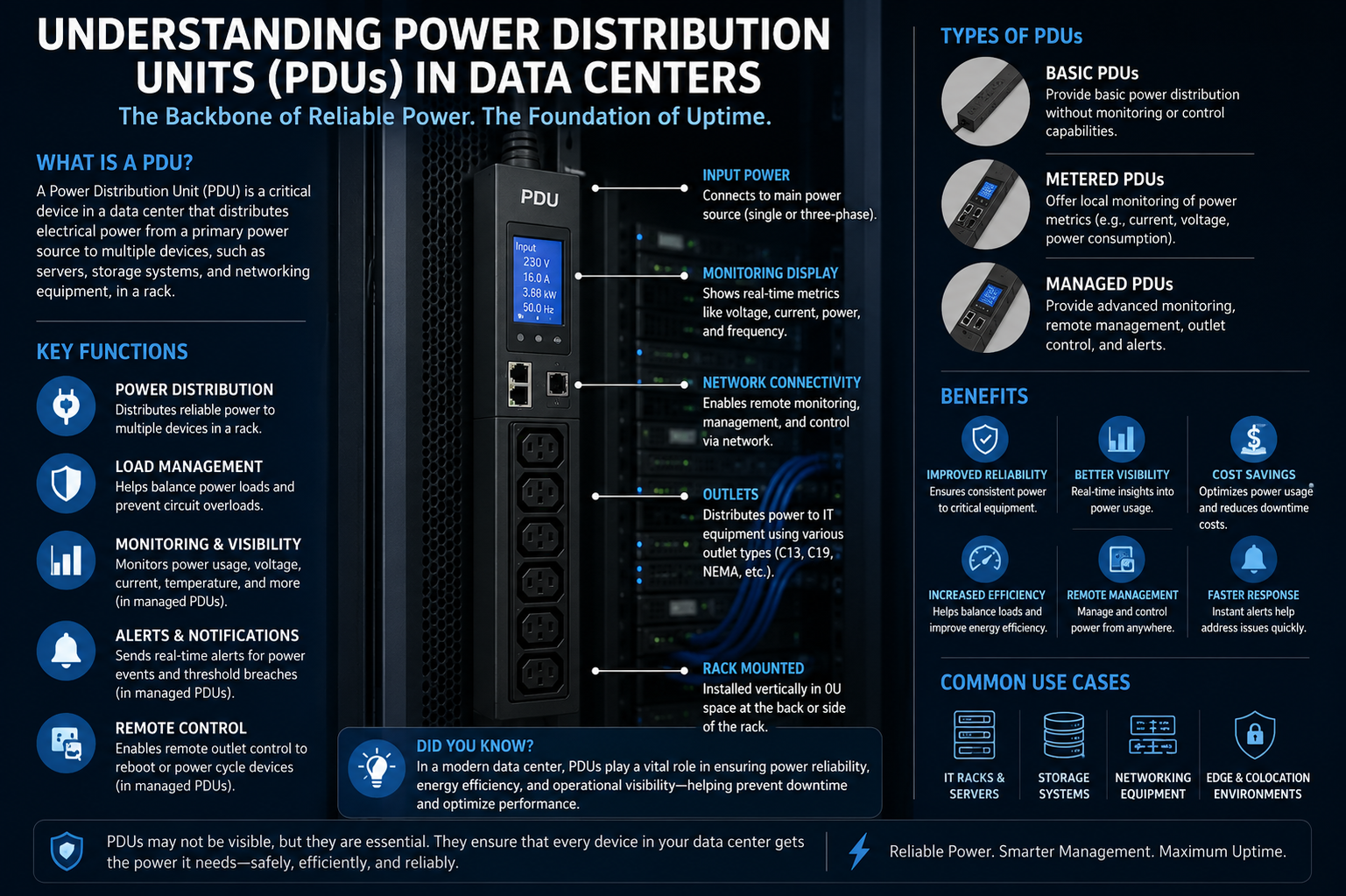
Power Distribution Units are specialized electrical devices designed to distribute power efficiently across multiple pieces of equipment inside a server rack. In simple terms, they function like advanced power strips, but their capabilities go far beyond basic electricity distribution. They are built to support demanding IT environments where reliability, monitoring, and control are essential for continuous operations. In data centers, enterprise server rooms, and network closets, PDUs ensure that every connected device receives stable and properly managed electrical power without interruptions.
The Fundamental Role of Power Distribution Units in Server Racks
At the core, a Power Distribution Unit acts as a centralized hub for delivering electricity to servers, networking equipment, and storage devices within a rack. Instead of relying on multiple wall sockets or disorganized power strips, a PDU consolidates power delivery into a structured system. This allows technicians and administrators to maintain cleaner installations and significantly reduce cable clutter. More importantly, it improves reliability by ensuring consistent power flow to all connected hardware.
How Power Distribution Units Integrate into IT Infrastructure
Power Distribution Units are not standalone devices; they are deeply integrated into broader IT infrastructure systems. Typically, they receive electricity from a main source such as a utility line, generator, or uninterruptible power supply. From there, they distribute power evenly across multiple outlets within a rack. This structured distribution ensures that each server or device receives the correct voltage and amperage required for stable operation, preventing overload or uneven power usage that could damage equipment.
Advanced Functionality Beyond Basic Power Delivery
Modern Power Distribution Units are far more advanced than traditional electrical strips. They include features such as power monitoring, remote outlet control, and environmental sensing. These enhancements allow IT administrators to track energy usage in real time and make informed decisions about load balancing. Some PDUs also support remote rebooting of devices, eliminating the need for physical access when troubleshooting hardware issues. This level of control is essential in large-scale environments where downtime must be minimized.
Vertical and Horizontal PDU Form Factors in Server Racks
Power Distribution Units come in different physical configurations depending on rack design and space availability. Vertical PDUs are typically mounted along the rear or side of a rack and can span the entire height, offering a large number of outlets. Horizontal PDUs, on the other hand, occupy standard rack units and are ideal for smaller setups. The choice between these configurations depends on rack density, cable management preferences, and overall infrastructure design requirements.
Power Capacity Considerations in PDU Deployment
One of the most critical aspects of using Power Distribution Units is understanding power capacity. These devices are designed to handle significant electrical loads, often much higher than standard household circuits. Data center environments typically require high-voltage power inputs to support multiple servers and networking devices. Proper planning is essential to ensure that the PDU does not become overloaded, which could lead to system failures or downtime. Electrical planning must always account for future expansion as well.
Basic Power Distribution Units and Their Simplicity
Basic Power Distribution Units are the simplest form available and primarily focus on delivering power without additional monitoring or control features. They are reliable, cost-effective, and commonly used in environments where advanced functionality is not required. While they may lack intelligence features, they still play an important role in organizing power distribution within racks and reducing cable clutter, making installations more manageable and structured.
Metered Power Distribution Units for Power Monitoring
Metered Power Distribution Units introduce visibility into energy consumption by displaying real-time power usage data. This allows administrators to monitor how much electricity is being consumed by connected devices, either at the overall rack level or per outlet group. Such insights are valuable for capacity planning, energy optimization, and preventing overload situations. In environments like data centers, this information can also assist in billing and resource allocation.
Managed Power Distribution Units and Remote Control Capabilities
Managed Power Distribution Units provide a higher level of intelligence and control compared to basic and metered versions. These devices allow remote management of individual outlets, enabling administrators to turn equipment on or off without physical intervention. They also support automated power sequencing, which ensures that devices power up or shut down in a controlled order. This prevents sudden power surges and helps maintain system stability during maintenance or recovery operations.
Environmental Monitoring Features in Advanced PDUs
In addition to power management, many advanced Power Distribution Units include environmental monitoring capabilities. These features allow the system to detect changes in temperature, humidity, and other environmental conditions within the rack. If abnormal conditions are detected, alerts can be sent to administrators immediately. This helps prevent equipment damage caused by overheating or moisture buildup and contributes to overall system reliability and safety.
Automatic Power Transfer and Redundancy in Power Systems
Some Power Distribution Units support automatic power transfer functionality, which allows them to switch between multiple power sources. If the primary power source fails, the system automatically switches to a backup source without interrupting operations. This redundancy is crucial in mission-critical environments where even a brief power loss can cause significant disruption. It also allows maintenance on power equipment without shutting down connected systems.
Importance of Cable Management and Rack Organization
One of the often-overlooked advantages of Power Distribution Units is improved cable management. By consolidating power delivery into a structured system, PDUs significantly reduce cable clutter inside server racks. Cleaner cable layouts improve airflow, reduce overheating risks, and make maintenance tasks easier for technicians. Organized racks also enhance troubleshooting efficiency since technicians can quickly identify and access specific connections without confusion.
Power Efficiency and Load Balancing Across Systems
Effective use of Power Distribution Units contributes to better power efficiency and load balancing. By distributing electrical load evenly across multiple circuits and racks, administrators can avoid overloading specific power sources. This balanced distribution helps extend the lifespan of electrical infrastructure and improves overall system stability. Monitoring tools built into advanced PDUs further assist in identifying inefficiencies and optimizing power usage across environments.
Remote Management and Operational Efficiency Benefits
Remote management capabilities in modern Power Distribution Units significantly improve operational efficiency. IT teams can perform power cycling, diagnostics, and device management without physically accessing the equipment. This is especially valuable in large data centers or remote installations where physical access is time-consuming or costly. Remote functionality reduces downtime and allows faster response to technical issues, improving overall service reliability.
Best Practices for Deploying Power Distribution Units
Proper deployment of Power Distribution Units requires careful planning. Factors such as rack size, power load, airflow, and accessibility must be considered during installation. It is important to ensure that PDUs are securely mounted and positioned in a way that does not obstruct airflow or maintenance access. Power capacity should always include a safety margin to accommodate future expansion and prevent overload conditions. Regular monitoring and maintenance further ensure long-term reliability.
Long-Term Maintenance and Monitoring of PDUs
Although Power Distribution Units are generally low-maintenance devices, regular checks are still essential. Administrators should periodically inspect connections, verify alert systems, and ensure that failover mechanisms are functioning correctly. Monitoring power usage trends can also help identify inefficiencies or potential issues before they escalate. Consistent maintenance practices contribute to improved uptime and extend the operational lifespan of the entire power distribution system.
Fault Detection and Early Warning Systems in Power Distribution Units
Modern Power Distribution Units are designed with intelligent fault detection systems that continuously analyze electrical behavior within the rack. These systems can identify irregular voltage fluctuations, overloaded circuits, or unstable power draw patterns before they escalate into serious failures. Early warning notifications allow administrators to take corrective action quickly, reducing the risk of sudden shutdowns or hardware damage. This proactive approach significantly improves system reliability and ensures uninterrupted operation in critical IT environments.
Scalability and Adaptability of Power Distribution Units in Growing Infrastructure
As IT infrastructure expands, Power Distribution Units must adapt to increasing power demands and more complex configurations. Scalable PDUs allow organizations to integrate additional equipment without redesigning their entire power system. This flexibility is essential for businesses experiencing rapid growth or frequent hardware upgrades. By supporting modular expansion and higher power capacities, PDUs ensure that infrastructure can evolve smoothly without disruptions or costly redesigns.
Integration of Power Distribution Units with Centralized Management Systems
In advanced data environments, Power Distribution Units are often integrated into centralized infrastructure management platforms. This integration allows administrators to monitor multiple racks, track power usage trends, and control devices from a single interface. By combining power data with network and hardware monitoring tools, organizations gain a complete overview of their IT environment. This unified visibility improves decision-making, enhances operational efficiency, and strengthens overall infrastructure control.
Conclusion
Power Distribution Units are a foundational component of modern IT infrastructure, playing a critical role in ensuring stable and efficient power delivery to essential systems. They go far beyond simple power strips by offering advanced monitoring, remote control, redundancy, and environmental awareness. Their ability to organize power distribution, enhance reliability, and improve operational efficiency makes them indispensable in server rooms and data centers. Choosing the right type of PDU and deploying it correctly can significantly improve system performance, reduce downtime, and support long-term infrastructure growth.