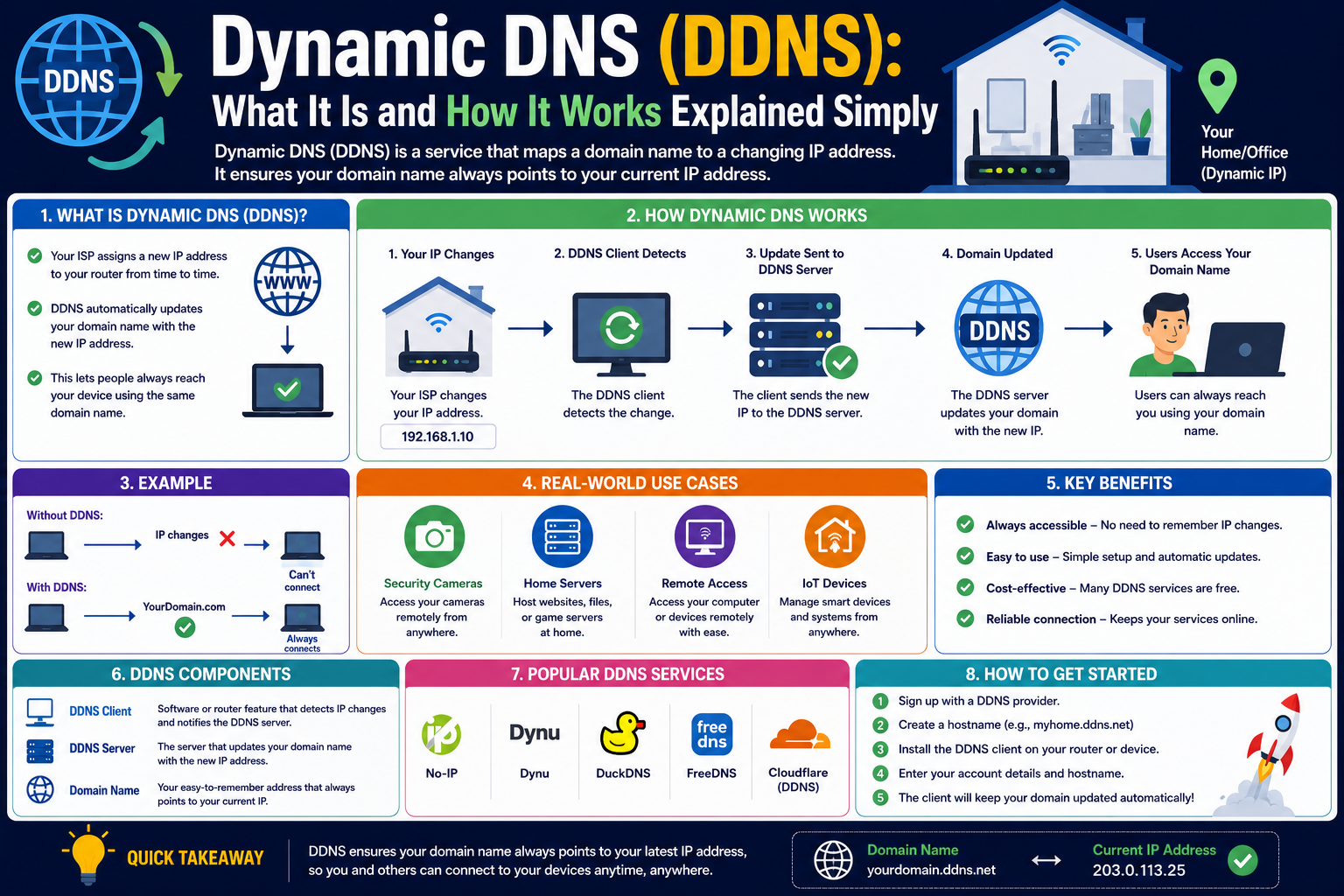
Dynamic Domain Name System is a method used to connect a changing internet address to a fixed and easy-to-remember name. In normal internet systems, devices are reached through numeric addresses that can change frequently, especially in home internet connections. DDNS solves this problem by keeping a constant name linked to those changing numbers so users do not need to track or memorize new values every time they shift. It creates a stable connection point for devices that are otherwise difficult to locate when their network identity keeps updating. This makes remote access and online connectivity far more practical for everyday users and small networks.
Why Internet Addresses Keep Changing in Many Networks
In many home and small business networks, internet service providers assign temporary addresses instead of permanent ones. These temporary addresses can change whenever the router reconnects to the network or after a certain time period. This behavior reduces cost and simplifies management for providers but creates a challenge for users who want to access their devices from outside their local network. Without a stable reference point, each change breaks the ability to reliably connect from remote locations. This is where a dynamic naming system becomes essential, as it keeps tracking these changes automatically in the background.
The Core Idea Behind Name to Address Mapping
The internet relies on a system that translates human-friendly names into machine-readable network addresses. In a standard setup, this mapping is stable and does not change often. However, in dynamic environments, the address behind a name can change regularly. The system behind dynamic naming continuously updates this mapping so that the name always points to the correct and current address. This ensures that even if the underlying network information changes, the user still connects using the same consistent name without interruption or confusion.
How DDNS Keeps Track of Changing Network Information
Dynamic naming works through a continuous update process. A small program or router feature monitors the current external network address assigned to a connection. Whenever it detects a change, it automatically sends the updated information to a remote service responsible for maintaining name mappings. This service then updates the record so that the chosen name always reflects the latest address. This entire process happens in the background without requiring manual updates from the user. As a result, the connection remains stable even though the underlying network identity is constantly changing.
Role of Routers and Client Devices in the Process
Routers often play a major role in managing dynamic naming systems because they are the first point of contact between a local network and the internet. Many routers include built-in features that automatically send updated address information whenever a change occurs. In other cases, a software client installed on a computer performs this task instead. Both methods achieve the same goal of keeping the external address synchronized with the registered name. This ensures that the network remains reachable even if individual devices inside the network are turned off or restarted.
Why DDNS Is Important for Remote Access
One of the most common uses of dynamic naming is remote access. People often want to reach their home computers, security systems, or private servers from different locations. Without a stable reference name, this becomes difficult because the network address may change unexpectedly. A dynamic naming system ensures that remote connections can always be made using the same identifier. This eliminates the need to constantly check or update connection details and makes remote work and monitoring much more reliable and convenient for users.
Understanding the Connection Between IP Changes and Stability
The stability of remote connections depends heavily on how often network addresses change. In dynamic environments, even small interruptions like restarting a router can result in a new address being assigned. Without a system to track these changes, every modification would break existing connections. A dynamic naming system solves this by instantly linking the new address to the same consistent name. This means users experience uninterrupted access even though the technical details behind the connection are constantly shifting in the background.
How the Update Process Works Behind the Scenes
Whenever a network change occurs, the system responsible for dynamic naming performs a quick check of the current external address. It then compares this value with the previously stored one. If a difference is detected, it sends an update request to the remote service managing the name records. The service then replaces the old information with the new one. This entire cycle is designed to happen quickly so that users experience minimal delay. The goal is to maintain seamless connectivity without requiring manual intervention at any stage.
Why a Fixed Name Is Easier Than Changing Numbers
Human memory works better with words than with long numeric strings. A dynamic naming system takes advantage of this by allowing users to remember a simple and consistent name instead of a changing set of numbers. This becomes especially important when managing multiple devices or services. Instead of tracking updates every time a network changes, users only need to remember one stable identifier. This significantly reduces complexity and makes remote access far more user-friendly, especially for non-technical users managing home networks.
Use in Home Devices and Smart Systems
Many modern home devices rely on remote connectivity to function properly. Security cameras, smart controllers, and home automation systems often need to be accessed from outside the local network. Dynamic naming makes this possible by providing a stable access point even when network details change. Without this system, users would frequently lose access or need to constantly reconfigure their devices. By maintaining a consistent name, these systems ensure smooth communication between home devices and remote users at all times.
How Web Hosting Benefits from Dynamic Naming Systems
Small-scale web hosting often relies on internet connections that do not provide fixed addresses. This creates challenges when trying to keep websites consistently reachable. A dynamic naming system allows these websites to remain accessible even when the underlying network information changes. Visitors use a stable name to reach the site, while the system automatically adjusts to changes behind the scenes. This makes it possible to host services from flexible environments without requiring expensive fixed network setups or complex configurations.
Security Advantages of Stable Network Naming
Security systems also benefit from consistent naming because it simplifies secure connections. When users connect to private networks through encrypted channels, having a stable identifier reduces the chances of misconfiguration. It also makes it easier to manage access rules and authentication settings. Instead of updating security configurations every time a network changes, administrators can rely on a constant reference point. This improves reliability and reduces the risk of connection errors that could potentially weaken security systems or disrupt access control.
Challenges That Can Occur During Operation
Although dynamic naming systems are designed to work automatically, issues can still occur. Sometimes updates may not be sent correctly, or network changes may not be detected immediately. In other cases, configuration errors in the router or client software can prevent proper synchronization. These problems may lead to temporary connection failures or incorrect address mapping. However, most of these issues are usually resolved through basic checks such as restarting devices, verifying settings, or ensuring that the update service is active.
Importance of Proper Network Configuration
Correct configuration plays a critical role in ensuring that dynamic naming works smoothly. If the system is not set up properly, updates may not reach the remote service, causing outdated information to persist. This can lead to failed connection attempts or delays in accessing remote devices. Ensuring that routers or client software are correctly configured helps maintain consistent communication between the local network and the external service. Proper setup reduces the chance of errors and improves overall reliability of remote access.
Real-World Impact of Dynamic Naming Systems
Dynamic naming systems have become an important part of modern networking because they bridge the gap between changing network environments and the need for stable access. They allow users to operate home systems, manage remote devices, and host small services without requiring advanced infrastructure. By automatically handling address changes in the background, they reduce technical complexity and make network management more accessible. This practical approach supports a wide range of everyday digital activities where consistent connectivity is essential.
Conclusion
Dynamic Domain Name System plays a crucial role in making modern internet connections more flexible and accessible. It removes the limitations caused by frequently changing network addresses by linking them to a consistent and easy-to-use name. This simple idea solves a real-world problem that affects home users, small businesses, and anyone who relies on remote access to devices or services. Instead of struggling with constantly changing numeric addresses, users can rely on a stable identity that always points to the correct destination.
What makes this system especially valuable is its ability to work automatically in the background. Once properly set up, it continuously updates network changes without requiring manual intervention. This ensures that access to devices, services, and applications remains uninterrupted even when the underlying internet connection changes. The result is a smoother and more reliable experience for remote work, home automation, and personal hosting setups.
It also brings convenience by simplifying how people interact with networks. A single name becomes enough to reach complex systems, reducing confusion and making connectivity easier for non-technical users. At the same time, it supports more advanced use cases where stable remote access is essential. Whether it is monitoring devices, managing systems, or accessing private resources, the system ensures that everything remains reachable through one consistent entry point.
Overall, dynamic naming systems represent an important bridge between changing network environments and the need for stable access. They make internet-based communication more practical, efficient, and user-friendly. As digital connectivity continues to grow, such systems remain a key part of ensuring that users can stay connected to their resources anytime and from anywhere without unnecessary complexity.