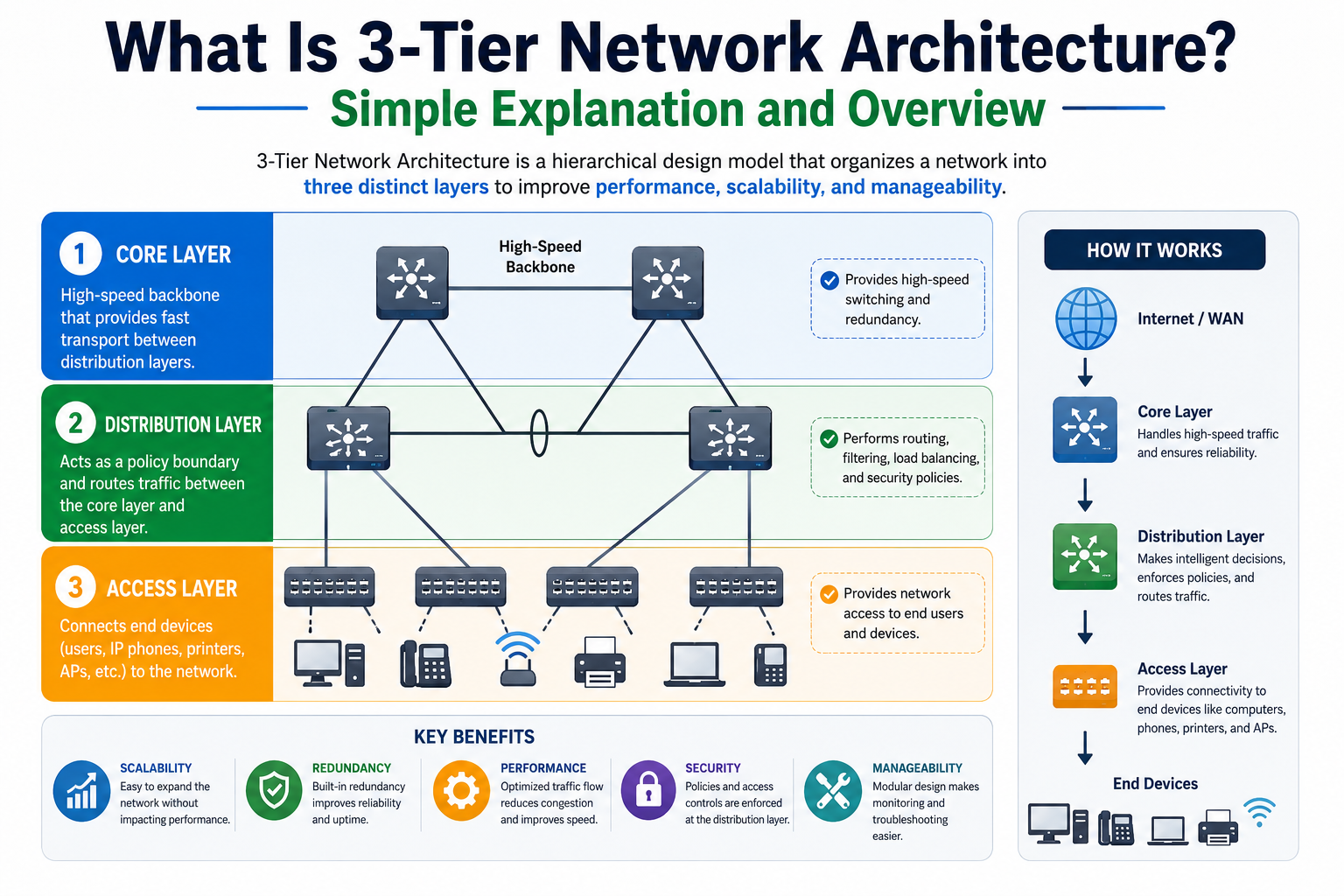
The 3-tier network architecture is a structured way of designing modern applications and network systems by dividing functionality into separate layers. Each layer has a distinct responsibility, which helps improve performance, maintainability, and security. Instead of building a single system where everything is tightly connected, this approach splits the environment into independent parts that communicate with each other in a controlled manner. This separation allows organizations to manage complex applications more efficiently, especially when dealing with large-scale web services, enterprise platforms, and cloud-based systems.
In everyday internet usage, users often interact with websites and applications without realizing the layered structure working behind the scenes. Whether logging into an account, browsing a page, or submitting data, multiple systems are working together in coordination. The 3-tier model ensures that these interactions remain smooth, secure, and scalable, even when millions of users are accessing the same platform simultaneously.
Meaning and Core Concept of 3-Tier Architecture
At its core, the 3-tier architecture is a design model that divides a system into three logical layers: the client layer, the application layer, and the database layer. Each layer is responsible for handling specific tasks, and they communicate with each other through well-defined processes. The main idea behind this structure is separation of concerns, which means each layer focuses only on its own function without being dependent on internal workings of the other layers.
This model is widely used in web applications, enterprise software, and cloud-based environments because it simplifies development and improves system reliability. Developers can modify or upgrade one layer without disrupting the entire system, which makes maintenance easier and reduces downtime risks. It also allows teams to work independently on different layers, improving productivity and reducing complexity in large projects.
Why Modern Networks Use Layered Architecture
Modern digital systems are highly complex, with millions of requests processed every second in large applications. A layered architecture is essential because it organizes these operations into manageable parts. Without separation, systems would become difficult to scale, troubleshoot, or secure effectively.
By dividing responsibilities into tiers, organizations gain better control over system performance and resource allocation. Each layer can be optimized individually based on demand. For example, if user traffic increases, only the client or application layer may need scaling, rather than rebuilding the entire system. This flexibility is one of the primary reasons the 3-tier structure is widely adopted in enterprise environments.
Additionally, layered design improves fault isolation. If one tier experiences an issue, it does not necessarily bring down the entire system. This ensures better availability and reliability, which are critical in modern online services.
Client Tier (Presentation Layer) Explained
The client tier, also known as the presentation layer, is the first point of interaction between users and the system. This layer is responsible for displaying information to users and capturing their inputs. It operates through interfaces such as web browsers, mobile apps, or desktop applications. Technologies like HTML, CSS, and JavaScript are commonly used to build this layer.
The primary function of the client tier is to provide a user-friendly experience. It does not handle complex processing or data storage but instead focuses on how information is presented. When a user clicks a button, fills out a form, or navigates through a page, these actions are captured by the client layer and sent to the application layer for processing.
This separation ensures that the user interface remains responsive and lightweight. It also allows designers and developers to improve the look and feel of applications without affecting backend logic or database systems.
Application Tier (Logic Layer) Explained
The application tier acts as the brain of the system. It receives requests from the client tier, processes them, applies business rules, and decides how to respond. This layer is responsible for executing the core functionality of an application. It acts as an intermediary between the user interface and the data storage system.
This layer is typically built using programming languages such as Python, Java, or similar backend technologies. It handles authentication, authorization, calculations, data validation, and decision-making processes. For example, when a user logs in, the application layer checks whether the provided credentials are valid before allowing access.
One of the key strengths of the application tier is its flexibility. Developers can modify business logic or add new features without affecting the user interface or database structure. This modular approach helps in faster development cycles and easier system upgrades.
Database Tier (Data Layer) Explained
The database tier is responsible for storing, managing, and retrieving data. It serves as the foundation of the entire architecture because all critical information resides here. This includes user data, application records, transactions, and system logs. Database systems such as SQL-based or NoSQL-based platforms are commonly used in this layer.
When the application tier needs information, it sends queries to the database tier, which processes them and returns the required results. This interaction ensures that data remains organized, secure, and easily accessible when needed.
The database layer is designed to handle large volumes of data efficiently while maintaining consistency and integrity. It also supports backup and recovery mechanisms to prevent data loss in case of system failures. Proper indexing and optimization techniques are used to ensure fast query performance.
How the Three Tiers Work Together
The strength of the 3-tier architecture lies in the interaction between its layers. Each tier communicates with the next in a structured flow. When a user performs an action, the request starts at the client tier. It is then passed to the application tier, which processes it and communicates with the database tier if data retrieval or storage is required.
Once the database responds, the information flows back through the application tier to the client tier, where it is displayed to the user. This controlled communication ensures that each layer performs its role efficiently without unnecessary overlap.
This structured flow also improves debugging and system monitoring. If an issue occurs, developers can quickly identify which layer is responsible, making troubleshooting faster and more accurate.
Real World Web Request Flow Example
In a practical scenario, consider a user visiting a website and attempting to log into an account. The process begins when the user enters credentials in the login form displayed by the client tier. These details are then sent to the application tier for verification.
The application tier receives the request and forwards it to the database tier, where stored user credentials are checked. If the information matches, the database responds positively. The application tier then processes this response and sends a success message back to the client tier.
Finally, the client tier updates the interface to show that the user has successfully logged in. This entire process happens in seconds, even though multiple systems are working together in the background.
Key Technical Components and Technologies
The 3-tier architecture relies on different technologies depending on the layer. The client tier uses web technologies like HTML, CSS, and JavaScript to create interactive interfaces. The application tier uses backend programming languages and frameworks that handle logic and processing tasks. The database tier relies on database management systems that store and retrieve structured or unstructured data.
Communication between these tiers is often handled using APIs, which define how different systems exchange information. These APIs ensure that data flows smoothly and securely between layers without exposing internal system complexity.
Each tier may also run on separate servers or cloud environments, which helps distribute workload and improve performance across the entire system.
Scalability Advantages Overview
One of the biggest advantages of the 3-tier architecture is scalability. Since each layer operates independently, organizations can scale specific tiers based on demand. For example, if user traffic increases significantly, additional resources can be added to the client or application tier without affecting the database tier.
This flexibility allows systems to handle growth efficiently without requiring a complete redesign. It also helps optimize resource usage, as only the necessary layers are expanded instead of scaling the entire system.
Scalability is especially important for modern applications that experience unpredictable traffic patterns, such as e-commerce platforms, streaming services, and online learning systems.
Security Advantages Overview
Security is another major benefit of the 3-tier structure. Since users only interact directly with the client tier, internal systems such as the application and database tiers are hidden from direct access. This reduces the risk of unauthorized access and cyber threats.
Sensitive data is stored in the database tier, which is protected behind multiple layers of security controls. The application tier acts as a gatekeeper, ensuring that only valid and authorized requests reach the database.
This layered security model helps minimize exposure and strengthens overall system protection against attacks such as data breaches or unauthorized access attempts.
Basic Implementation Approach in Enterprises
In enterprise environments, implementing a 3-tier architecture begins with designing each layer separately. The client tier is developed to ensure a smooth user experience across devices. The application tier is structured to handle business logic and process requests efficiently. The database tier is designed for secure and optimized data storage.
Each layer is typically deployed on separate servers or virtual environments. Load balancing mechanisms are often used at the client tier to distribute traffic evenly. The application tier may include autoscaling features to handle fluctuations in demand, while the database tier is optimized for reliability and performance.
Security policies are applied across all layers, ensuring controlled access and monitoring of system activities. This structured implementation ensures that the entire system remains stable, scalable, and secure under varying workloads.
Conclusion
The 3-tier network architecture is a foundational design approach that brings structure, efficiency, and scalability to modern application systems. By separating the system into the client tier, application tier, and database tier, it creates a clear division of responsibilities that improves both performance and manageability. Each layer operates independently while still working in coordination with the others, ensuring smooth communication and reliable system behavior.
One of the most important strengths of this architecture is its ability to scale individual components without affecting the entire system. This makes it highly suitable for environments where traffic and workloads change frequently. It also enhances security by limiting direct access to sensitive backend systems, reducing exposure to potential threats and unauthorized access.
From user interaction to data processing and storage, every step is efficiently organized within its own layer. This separation not only simplifies development and maintenance but also makes troubleshooting and upgrades more manageable. As a result, organizations can innovate faster while maintaining system stability.
Overall, the 3-tier architecture remains a widely adopted model in modern computing because it balances performance, security, and flexibility in a structured and reliable way.