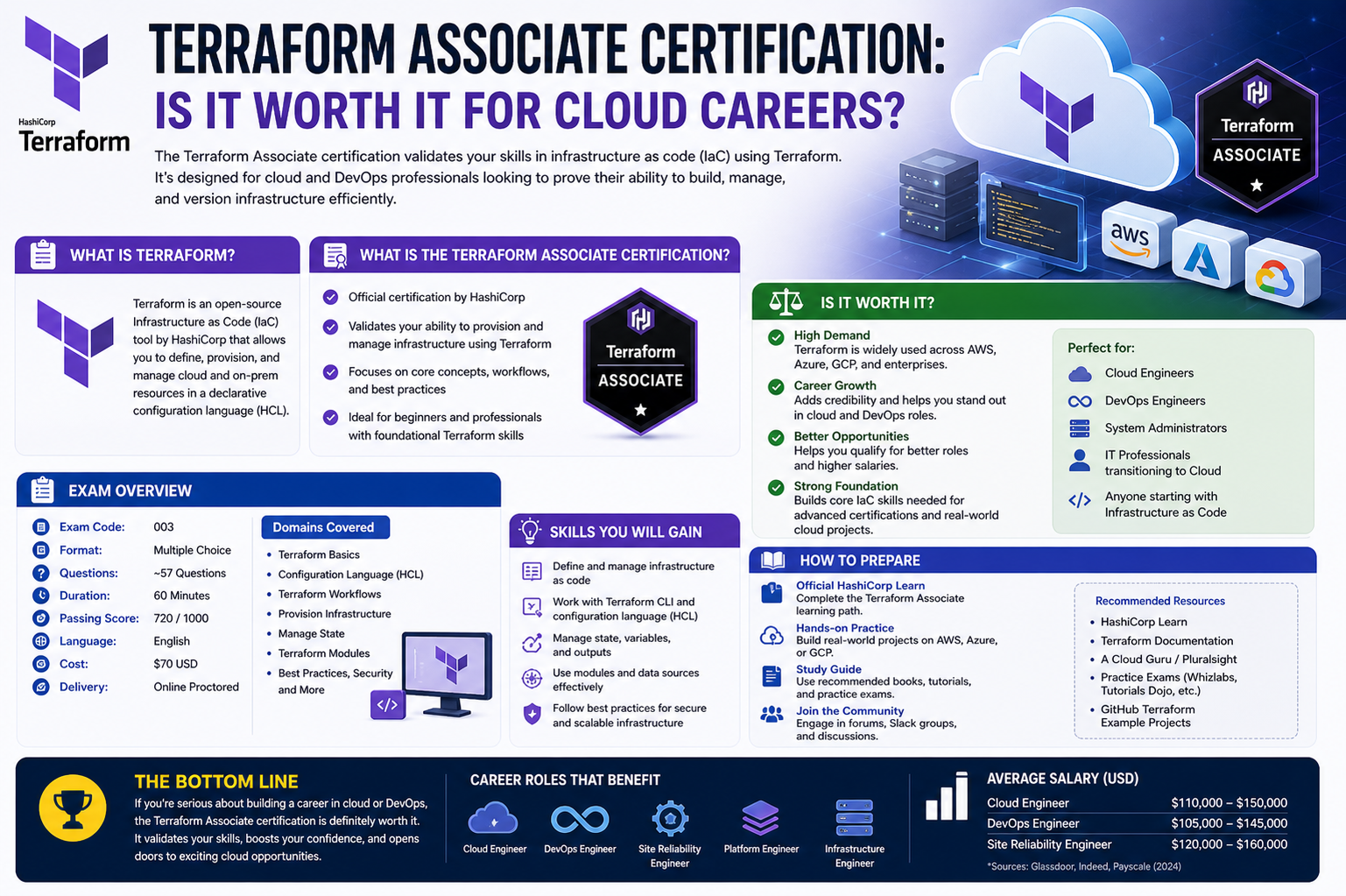
Terraform is widely recognized as a leading Infrastructure as Code tool that allows organizations to define, manage, and automate their IT infrastructure using readable configuration files instead of manual processes. This approach has transformed how systems are built and maintained in modern cloud environments. Rather than relying on repetitive manual setup, teams can describe their infrastructure in code and let automation handle provisioning, updates, and scaling. This shift has made infrastructure management more consistent, repeatable, and less prone to human error. As organizations continue to adopt cloud computing at scale, tools like Terraform have become essential for maintaining order in increasingly complex environments where multiple services, platforms, and resources must work together seamlessly.
Why Terraform Has Become a Core DevOps Tool
In the DevOps ecosystem, efficiency and automation are key priorities, and Terraform plays a major role in achieving both. It enables teams to define infrastructure in a declarative way, meaning users describe what they want the system to look like rather than how to build it step by step. This simplifies collaboration between development and operations teams, allowing infrastructure to evolve alongside application code. Its compatibility with multiple cloud providers also adds to its popularity, as organizations are no longer limited to a single vendor. Instead, they can manage hybrid or multi-cloud environments using a single workflow, which significantly reduces complexity and operational overhead.
Key Capabilities That Make Terraform Stand Out
One of the reasons Terraform is so widely adopted is its ability to manage infrastructure across different platforms using a unified system. It supports version control for infrastructure, making it possible to track changes over time and roll back configurations when needed. This creates a safer environment for experimentation and deployment. Another important feature is its modular structure, which allows infrastructure components to be reused and shared across projects. This not only speeds up development but also ensures consistency across environments. Additionally, Terraform’s state management system keeps track of deployed resources, helping teams understand the current status of their infrastructure at any given moment.
Understanding the Purpose of the Terraform Associate Certification
The Terraform Associate certification is designed as an entry-level credential that validates a person’s understanding of foundational Terraform concepts and practical usage. It is intended for individuals who work with cloud infrastructure or are transitioning into DevOps-related roles. The certification focuses on ensuring that candidates understand how Infrastructure as Code works, how Terraform manages resources, and how configurations are structured and applied in real-world scenarios. Rather than being highly advanced, it is meant to confirm that someone has a solid grasp of the core principles needed to effectively use Terraform in professional environments.
Who Typically Pursues This Certification and Why It Matters
This certification is commonly pursued by individuals working in cloud engineering, system administration, DevOps, and application development roles. These professionals often deal with infrastructure deployment and management, making Terraform knowledge highly valuable in their daily tasks. Even those in networking or database roles may benefit from understanding how infrastructure automation works, as it increasingly intersects with traditional IT responsibilities. The certification helps individuals demonstrate that they can work effectively in modern infrastructure environments where automation and scalability are essential expectations rather than optional skills.
How Terraform Fits Into Cloud and Multi-Cloud Environments
Modern organizations rarely rely on a single cloud provider, and this is where Terraform becomes especially useful. It is designed to be cloud-agnostic, meaning it can interact with multiple cloud platforms through a unified configuration approach. This allows teams to manage resources across different providers without needing to learn separate tools or workflows for each one. As a result, infrastructure becomes more flexible and easier to scale. It also reduces dependency on a single vendor, giving organizations more control over cost, performance, and availability decisions.
Why Infrastructure as Code Skills Are Increasingly Valuable
Infrastructure as Code has become a foundational concept in modern IT operations because it replaces manual configuration with automated, repeatable processes. This shift improves consistency across environments and reduces the likelihood of configuration drift, where systems gradually become misaligned over time. By treating infrastructure as code, teams can apply the same practices used in software development, such as version control, code review, and automated testing. This leads to more reliable deployments and faster recovery in case of failures. As cloud environments grow more complex, these skills become increasingly important for maintaining stability and efficiency.
What Makes This Certification Relevant for Beginners and Professionals
One of the strengths of the Terraform Associate certification is its accessibility. It does not require deep prior experience with advanced infrastructure concepts, making it suitable for beginners entering the DevOps field. At the same time, it remains valuable for experienced professionals because it reinforces best practices and formalizes existing knowledge. This balance makes it a practical starting point for anyone looking to build a career in cloud engineering or infrastructure automation. It also helps standardize understanding across teams, ensuring that everyone follows similar principles when working with Terraform.
The Role of Automation in Modern Infrastructure Management
Automation has become a central element in managing modern IT systems due to the scale and complexity of cloud environments. Terraform supports this shift by enabling users to define infrastructure in a way that can be automatically deployed, modified, and destroyed when needed. This reduces the need for manual intervention and helps prevent errors caused by repetitive tasks. Automated workflows also make it easier to respond to changing business requirements, such as scaling resources during peak demand or rolling out updates across multiple environments simultaneously. This level of control and efficiency is a major reason why Terraform continues to gain adoption.
How Terraform Simplifies Complex Infrastructure Operations
Managing infrastructure manually can quickly become overwhelming, especially when dealing with large-scale systems that involve multiple services and dependencies. Terraform simplifies this complexity by providing a structured approach to defining and managing resources. Instead of handling each component separately, users can describe entire systems in configuration files that Terraform interprets and executes. This abstraction makes infrastructure easier to understand, maintain, and modify over time. It also reduces operational risks by ensuring that changes are planned, reviewed, and applied consistently across environments.
Core Concepts Behind Terraform Infrastructure Management
Understanding how Terraform works begins with grasping its core philosophy of Infrastructure as Code. Instead of manually provisioning servers, networks, or databases, Terraform allows infrastructure to be described in configuration files that represent the desired end state. This means the focus shifts from performing step-by-step setup tasks to simply defining what the infrastructure should look like. Terraform then takes responsibility for figuring out how to create, update, or destroy resources to match that desired state. This approach significantly reduces human error and ensures that infrastructure remains consistent across different environments such as development, testing, and production.
How Terraform Interprets and Applies Configurations
Terraform operates by reading configuration files and comparing them with the current state of infrastructure. It then determines the changes required to align the actual environment with the desired configuration. This process involves creating an execution plan before any changes are applied, allowing users to review modifications in advance. Once approved, Terraform executes the plan and updates resources accordingly. This predictable workflow ensures that infrastructure changes are not random or unexpected, but instead follow a controlled and transparent process that can be audited and reviewed at any time.
Understanding the Role of Providers in Terraform
Providers are a fundamental part of Terraform’s architecture, as they act as the bridge between Terraform and external platforms such as cloud services, APIs, or SaaS tools. Each provider contains the necessary logic to interact with a specific system, enabling Terraform to manage resources across different environments. This plugin-based approach gives Terraform its flexibility, as new providers can be added without changing the core system. It also allows users to work with multiple platforms using a consistent configuration style, making multi-cloud management significantly more practical and efficient.
Terraform State and Its Importance in Infrastructure Tracking
State management is one of the most critical concepts in Terraform. The state file acts as a record of all resources managed by Terraform and their current status. This allows Terraform to understand what already exists and what needs to be changed during updates. Without state, Terraform would not be able to reliably manage infrastructure changes. The state file also helps detect drift, which occurs when infrastructure is modified outside of Terraform. By comparing the real-world infrastructure with the recorded state, Terraform can identify inconsistencies and correct them when necessary.
How State Locking Prevents Conflicts and Errors
In environments where multiple users may run Terraform operations simultaneously, state locking becomes essential. It prevents conflicts by ensuring that only one operation can modify the state at a time. This avoids situations where overlapping changes could corrupt the state file or cause unpredictable infrastructure behavior. State locking is especially important in team environments where collaboration is frequent and infrastructure updates are continuous. By controlling access to the state during operations, Terraform maintains consistency and reliability across all changes.
Working with Modules for Reusable Infrastructure
Modules are reusable building blocks in Terraform that allow infrastructure components to be organized and shared efficiently. Instead of writing repetitive configuration code for similar resources, modules enable teams to define a standardized structure once and reuse it across multiple projects. This not only saves time but also improves consistency and reduces the likelihood of configuration errors. Modules can be customized using variables, making them flexible enough to adapt to different environments while still maintaining a consistent underlying structure.
Benefits of Modular Infrastructure Design
Using modules encourages a cleaner and more organized infrastructure design. It breaks down complex systems into smaller, manageable components that can be independently maintained and updated. This modular approach also improves collaboration among teams, as different groups can work on separate modules without interfering with each other’s configurations. Over time, this leads to more scalable and maintainable infrastructure systems that are easier to expand or modify as organizational needs change.
Understanding the Terraform Workflow in Practice
The standard Terraform workflow follows a structured process that includes initialization, planning, application, and management of infrastructure. First, Terraform initializes the working directory and downloads necessary providers. Then it creates an execution plan that shows what changes will occur. After reviewing the plan, users apply it to execute the changes in the real environment. Finally, Terraform continues to manage and track the infrastructure through its state system. This predictable workflow ensures clarity at every stage of infrastructure management.
Importance of Planning Before Making Infrastructure Changes
The planning phase is one of the most valuable aspects of Terraform’s workflow. It allows users to preview changes before they are applied, reducing the risk of unintended modifications. This step is particularly useful in production environments where even small mistakes can have significant consequences. By reviewing the plan, teams can verify that changes align with expectations and business requirements. This level of transparency helps build confidence in infrastructure updates and supports safer deployment practices.
Configuration Writing and Infrastructure Definition
Writing Terraform configurations involves defining resources, variables, and relationships in a structured format. These configurations describe how infrastructure should be built and managed. They can include details such as compute instances, storage systems, networking rules, and security settings. The declarative nature of these configurations makes them easier to read and maintain compared to traditional scripting methods. Over time, these files become a source of truth for infrastructure, ensuring that all environments follow the same defined structure.
Managing Dependencies Between Infrastructure Components
In real-world infrastructure, resources often depend on one another. For example, a virtual machine may depend on a network or storage system. Terraform automatically manages these dependencies by analyzing configuration relationships. It ensures that resources are created, updated, or destroyed in the correct order. This eliminates the need for manual coordination and reduces the risk of deployment failures. Dependency management is a key reason why Terraform is effective at handling complex infrastructure systems in a reliable and predictable way.
Understanding Terraform State Management in Depth
Terraform state is one of the most important concepts for working effectively with Infrastructure as Code, as it acts as the central source of truth for everything Terraform manages. It records the mapping between real-world infrastructure resources and their configuration definitions. Without this state tracking system, Terraform would not know whether a resource already exists, needs updating, or should be destroyed and recreated. This makes state essential for ensuring consistency across infrastructure deployments and updates, especially in environments where systems evolve frequently and scale dynamically.
How State Enables Reliable Infrastructure Tracking
The state file allows Terraform to compare the desired configuration with the actual infrastructure in place. When changes are made to configuration files, Terraform checks the state file to understand what already exists before determining what needs to be changed. This comparison process ensures that only necessary updates are applied, reducing unnecessary modifications and minimizing downtime risks. It also helps maintain synchronization between code and infrastructure, which is critical in modern automated environments where manual tracking would be inefficient and error-prone.
State Locking and Safe Collaboration in Teams
In team-based environments, multiple engineers may attempt to modify infrastructure simultaneously. Without proper control, this can lead to conflicts and inconsistencies in the state file. State locking solves this issue by ensuring that only one operation can modify the state at a time. When a process is running, the state becomes temporarily locked, preventing other operations from interfering. This mechanism protects infrastructure integrity and ensures that updates are applied in a controlled and sequential manner, which is essential for maintaining stability in production systems.
Handling Remote State for Scalable Infrastructure
As infrastructure grows, managing state locally becomes impractical. Remote state storage provides a centralized way to store and manage state files securely and consistently across teams. This enables collaboration by allowing multiple users to access and work with the same infrastructure state without conflicts. Remote state also improves reliability, as it reduces the risk of losing state files due to local system failures. It ensures that infrastructure history is preserved and accessible, which is important for auditing and troubleshooting purposes.
Understanding Configuration Structures and Variables
Terraform configurations are designed to be flexible and reusable through the use of variables and structured definitions. Variables allow users to customize infrastructure without modifying core configuration files, making deployments more adaptable to different environments. This separation between logic and values improves maintainability and reduces duplication. It also allows teams to standardize infrastructure templates while still supporting environment-specific configurations such as development, testing, and production setups.
How Collections and Data Structures Improve Configuration Design
Terraform supports complex data structures such as lists, maps, and objects, which help organize configuration data more efficiently. These structures allow users to define multiple related values in a single configuration block, making code cleaner and easier to manage. By using structured data, teams can reduce redundancy and improve readability, which is especially important in large-scale infrastructure projects where configurations can become extensive and complex over time.
Secret Management and Secure Configuration Practices
Security is a critical consideration when managing infrastructure, and Terraform provides mechanisms for handling sensitive information safely. Instead of hardcoding secrets directly into configuration files, best practices involve using external secret management tools or secure variables. This reduces the risk of exposing sensitive data such as passwords, API keys, or access tokens. Proper secret management ensures that infrastructure remains secure while still being fully automated and scalable.
Dependency Management in Complex Infrastructure Systems
Infrastructure components often rely on one another to function correctly. Terraform automatically identifies and manages these dependencies by analyzing configuration relationships. This ensures that resources are created in the correct order, preventing failures caused by missing dependencies. For example, a database must exist before an application attempts to connect to it. Terraform handles this sequencing automatically, removing the need for manual orchestration and reducing the risk of deployment errors in complex environments.
Terraform Import and Managing Existing Infrastructure
In many cases, organizations already have existing infrastructure that was not created using Terraform. The import feature allows these resources to be brought under Terraform management without recreating them. This process involves mapping existing infrastructure to Terraform configurations so that it can be tracked and managed moving forward. Importing resources is especially useful for organizations transitioning to Infrastructure as Code without disrupting their current systems.
Verbose Logging and Debugging Infrastructure Issues
Terraform provides detailed logging capabilities that help users diagnose issues during execution. Verbose logs contain in-depth information about operations, API interactions, and internal processes. These logs are particularly useful when troubleshooting failed deployments or unexpected behavior. By analyzing logs, engineers can identify the root cause of issues and adjust configurations or workflows accordingly. This level of visibility is important for maintaining reliable infrastructure systems.
Understanding Plugin-Based Architecture in Terraform
Terraform’s plugin-based architecture allows it to remain highly flexible and extensible. Each provider operates as a plugin that enables communication with external systems. This design makes it possible to integrate Terraform with a wide range of platforms without modifying its core functionality. It also allows the ecosystem to evolve independently, as new providers can be developed and added over time to support emerging technologies and services.
Version Control and Infrastructure Lifecycle Management
Version control plays a significant role in managing infrastructure effectively. Terraform configurations can be stored in version control systems, allowing teams to track changes, collaborate efficiently, and roll back updates when necessary. This approach brings software development practices into infrastructure management, improving reliability and accountability. It also ensures that every change is documented and traceable, which is essential for maintaining long-term system stability.
Terraform’s Role in Multi-Cloud Environments
Modern organizations often operate across multiple cloud providers, and Terraform is designed to handle this complexity seamlessly. By using a single configuration language, teams can manage resources across different platforms without switching tools or workflows. This reduces operational complexity and improves efficiency. It also allows organizations to avoid vendor lock-in by maintaining flexibility in how and where infrastructure is deployed.
Core Workflow Consistency Across Infrastructure Operations
Terraform follows a consistent workflow that includes initialization, planning, application, and ongoing management of infrastructure. This structured approach ensures that every change goes through a predictable process, reducing uncertainty and improving control. By maintaining this consistency, teams can better coordinate infrastructure changes and reduce the likelihood of unexpected disruptions in production systems.
Understanding Terraform Cloud Capabilities and Managed Infrastructure
Terraform is not limited to local execution, as it also offers managed cloud capabilities that enhance collaboration and scalability in larger teams. These cloud-based features provide a centralized environment where infrastructure changes can be planned, reviewed, and applied with greater control. Instead of relying solely on individual machines, teams can coordinate infrastructure workflows in a shared space, which improves visibility and reduces the risk of conflicting changes. This becomes especially useful in enterprise environments where multiple engineers work on the same infrastructure simultaneously and require structured governance.
How Managed Workspaces Improve Team Collaboration
Workspaces in a managed Terraform environment allow teams to separate infrastructure configurations for different environments such as development, staging, and production. Each workspace maintains its own state, ensuring that changes in one environment do not affect others. This separation improves safety and organization, making it easier to test updates before deploying them to production systems. It also enhances collaboration by allowing multiple teams to work independently while still following a unified infrastructure strategy.
Role-Based Access and Governance in Infrastructure Control
As infrastructure becomes more critical to business operations, controlling who can make changes becomes essential. Role-based access systems help enforce permissions by defining what each user or team is allowed to do within the infrastructure environment. This ensures that only authorized personnel can modify sensitive resources or apply critical changes. Governance features also help organizations maintain compliance by tracking changes, enforcing policies, and ensuring that infrastructure follows predefined standards and best practices.
Policy Enforcement and Infrastructure Standards
Maintaining consistency across infrastructure is important in large-scale systems, and policy enforcement helps achieve this goal. Policies define rules that infrastructure configurations must follow, such as security requirements, naming conventions, or resource limits. When changes are proposed, these policies are evaluated before execution, ensuring that only compliant configurations are applied. This reduces the risk of misconfigurations and strengthens overall system reliability by enforcing organizational standards automatically.
Collaboration Features for Infrastructure Teams
Modern infrastructure management requires strong collaboration between different roles, including developers, system administrators, and DevOps engineers. Terraform’s collaborative features allow teams to review changes, approve modifications, and track infrastructure history in a structured way. This creates a transparent workflow where every change is visible and accountable. It also improves communication between teams, reducing misunderstandings and ensuring that infrastructure evolves in a controlled and predictable manner.
Benefits of Remote Execution in Terraform Workflows
Remote execution allows infrastructure operations to run in a centralized environment rather than on individual local machines. This improves consistency because all operations follow the same environment setup, reducing discrepancies caused by different local configurations. It also enhances security by limiting direct access to infrastructure credentials and sensitive systems. Remote execution ensures that all changes are logged and traceable, making auditing and troubleshooting easier for organizations.
Version Control Integration and Infrastructure History Tracking
Integrating Terraform with version control systems allows teams to track every change made to infrastructure configurations. This creates a complete history of infrastructure evolution, making it easier to understand why changes were made and who made them. If an issue occurs, teams can roll back to previous configurations quickly and safely. This approach brings the same discipline used in software development to infrastructure management, improving reliability and reducing operational risk over time.
Why Understanding Terraform Workflow is Critical for Certification
A strong understanding of Terraform’s workflow is essential for anyone preparing for the certification because it forms the foundation of how infrastructure is managed. The workflow includes initialization, planning, applying changes, and maintaining state. Each step plays a specific role in ensuring that infrastructure changes are predictable and controlled. Candidates are expected to understand not just how these steps work individually, but how they interact to create a complete infrastructure lifecycle management process.
Evaluating the Practical Value of the Certification
The Terraform Associate certification provides practical value by validating essential skills that are widely used in real-world cloud environments. It demonstrates that an individual understands core concepts such as Infrastructure as Code, state management, and configuration design. These skills are directly applicable to daily tasks in DevOps and cloud engineering roles. Because Terraform is widely adopted across industries, the certification helps professionals prove their ability to work with modern infrastructure tools effectively.
Career Opportunities Supported by Terraform Skills
Knowledge of Terraform opens up opportunities in several IT domains, including cloud engineering, DevOps, systems administration, and infrastructure automation. Organizations increasingly rely on automated infrastructure management, making Terraform skills highly relevant in the job market. Professionals who understand how to design, deploy, and maintain infrastructure using Terraform are often better positioned for roles that involve cloud architecture and system scalability. This makes the certification a valuable addition for career growth in technical fields.
Industry Relevance and Real-World Application
Terraform is used by organizations of all sizes to manage cloud infrastructure efficiently. Its ability to handle complex deployments across multiple environments makes it a practical solution for real-world challenges. The concepts covered in the certification reflect actual tasks performed in professional settings, such as provisioning resources, managing configurations, and maintaining system stability. This alignment between certification content and industry practice increases its relevance and usefulness for professionals working in cloud-based environments.
Learning Curve and Skill Development Benefits
While Terraform is designed to simplify infrastructure management, it still requires a structured understanding of its concepts and workflows. The certification process helps learners build this foundation in a systematic way. It encourages hands-on practice with configuration files, state management, and resource provisioning. This practical exposure helps individuals develop confidence in managing infrastructure and prepares them for more advanced topics in cloud automation and DevOps engineering.
Long-Term Value of Terraform Knowledge
Even as cloud technologies evolve, the principles behind Infrastructure as Code remain highly relevant. Learning Terraform provides long-term value because it teaches fundamental concepts such as automation, scalability, and declarative infrastructure design. These skills are transferable across different platforms and tools, making them useful beyond a single technology. As organizations continue to adopt cloud-native architectures, professionals with Terraform expertise will continue to play a key role in infrastructure management and automation strategies.
Final Perspective on Terraform in Modern Cloud Careers
Terraform has established itself as a foundational tool in cloud infrastructure management, and its importance continues to grow as organizations shift toward automation and scalable systems. It is no longer just an optional skill but a core part of how modern IT environments are designed and maintained. Understanding Terraform gives professionals the ability to work in environments where infrastructure is treated as code, allowing systems to be built, modified, and scaled with consistency and precision. This shift has changed expectations in DevOps and cloud engineering roles, making Terraform knowledge highly relevant across the industry.
How the Certification Reflects Real-World Skills
The Terraform Associate certification is designed to reflect practical, job-ready skills rather than purely theoretical knowledge. It focuses on essential concepts such as infrastructure provisioning, configuration management, state handling, and workflow execution. These are the same skills used in real-world cloud operations, where engineers are responsible for deploying and maintaining complex systems. By covering these areas, the certification ensures that learners are not only familiar with Terraform concepts but also capable of applying them in practical environments where reliability and automation are critical.
Practical Understanding of Infrastructure Automation
One of the strongest advantages of learning Terraform is gaining a deep understanding of infrastructure automation. Instead of manually configuring servers or cloud resources, professionals learn how to define infrastructure using structured configuration files. This approach reduces human error, improves consistency, and allows infrastructure to be reproduced across multiple environments. Automation also makes it easier to scale systems quickly, which is essential in modern applications that must handle varying levels of traffic and demand without disruption.
Value of Standardized Infrastructure Practices
Terraform promotes standardized infrastructure practices, which are essential in team-based environments. When multiple engineers work on the same systems, consistency becomes critical. Terraform’s structured approach ensures that everyone follows the same patterns when defining and managing infrastructure. This reduces confusion, improves collaboration, and ensures that systems behave predictably across different stages of deployment. Standardization also makes onboarding new team members easier, as they can quickly understand how infrastructure is organized and managed.
Relevance in DevOps and Cloud Engineering Roles
In DevOps and cloud engineering roles, automation and infrastructure reliability are key responsibilities. Terraform directly supports these requirements by providing a tool that bridges development and operations through code-based infrastructure management. Professionals who understand Terraform are better equipped to handle tasks such as cloud provisioning, environment replication, and system scaling. This makes the certification particularly relevant for individuals aiming to build or advance careers in these fields.
Importance of Hands-On Experience Alongside Certification
While the certification validates theoretical understanding, real value comes from combining it with hands-on experience. Working directly with Terraform in real or simulated environments helps reinforce concepts such as state management, module usage, and resource provisioning. Practical experience also helps professionals understand how infrastructure behaves under real conditions, including how changes impact systems and how to troubleshoot issues when they arise. This combination of knowledge and practice creates a stronger overall skill set.
How Terraform Supports Career Growth in IT Infrastructure
Terraform skills can significantly enhance career opportunities in IT infrastructure and cloud-related roles. Organizations increasingly rely on automation tools to manage large-scale environments, and professionals who understand these tools are in high demand. Knowledge of Terraform can open doors to roles that involve cloud architecture, infrastructure automation, system design, and DevOps engineering. It also provides a strong foundation for learning other advanced cloud technologies and tools.
Long-Term Relevance of Infrastructure as Code Skills
The principles behind Infrastructure as Code are expected to remain relevant for the long term, even as specific tools evolve. Terraform teaches core concepts such as declarative configuration, automation, and scalable infrastructure design. These principles apply across different platforms and technologies, making the knowledge transferable. As cloud systems continue to grow in complexity, the ability to manage infrastructure efficiently will remain an essential skill in the IT industry.
Balance Between Effort and Career Benefit
When evaluating whether the certification is worth it, it is important to consider the balance between effort and long-term benefit. The learning curve is manageable for beginners, especially those already familiar with basic cloud or IT concepts. At the same time, the knowledge gained provides immediate practical value in professional environments. This balance makes the certification a strong entry point into cloud infrastructure and DevOps-related career paths without requiring advanced prior expertise.
Industry Demand for Infrastructure Automation Skills
The demand for professionals who understand infrastructure automation continues to increase as organizations move toward cloud-native architectures. Manual infrastructure management is no longer efficient at scale, which is why tools like Terraform have become essential. Companies across different industries use automation to improve efficiency, reduce costs, and increase reliability. As a result, professionals with Terraform skills are often seen as valuable assets in modern IT teams.
Final Conclusion
Overall, the Terraform Associate certification holds strong value for individuals looking to enter or grow in cloud and DevOps careers. It provides a structured introduction to Infrastructure as Code and validates essential skills that are widely used in professional environments. While it is not an advanced certification, it serves as an important stepping stone toward more complex cloud engineering roles. Its practical focus, industry relevance, and alignment with real-world workflows make it a worthwhile investment for those serious about building expertise in modern infrastructure management.