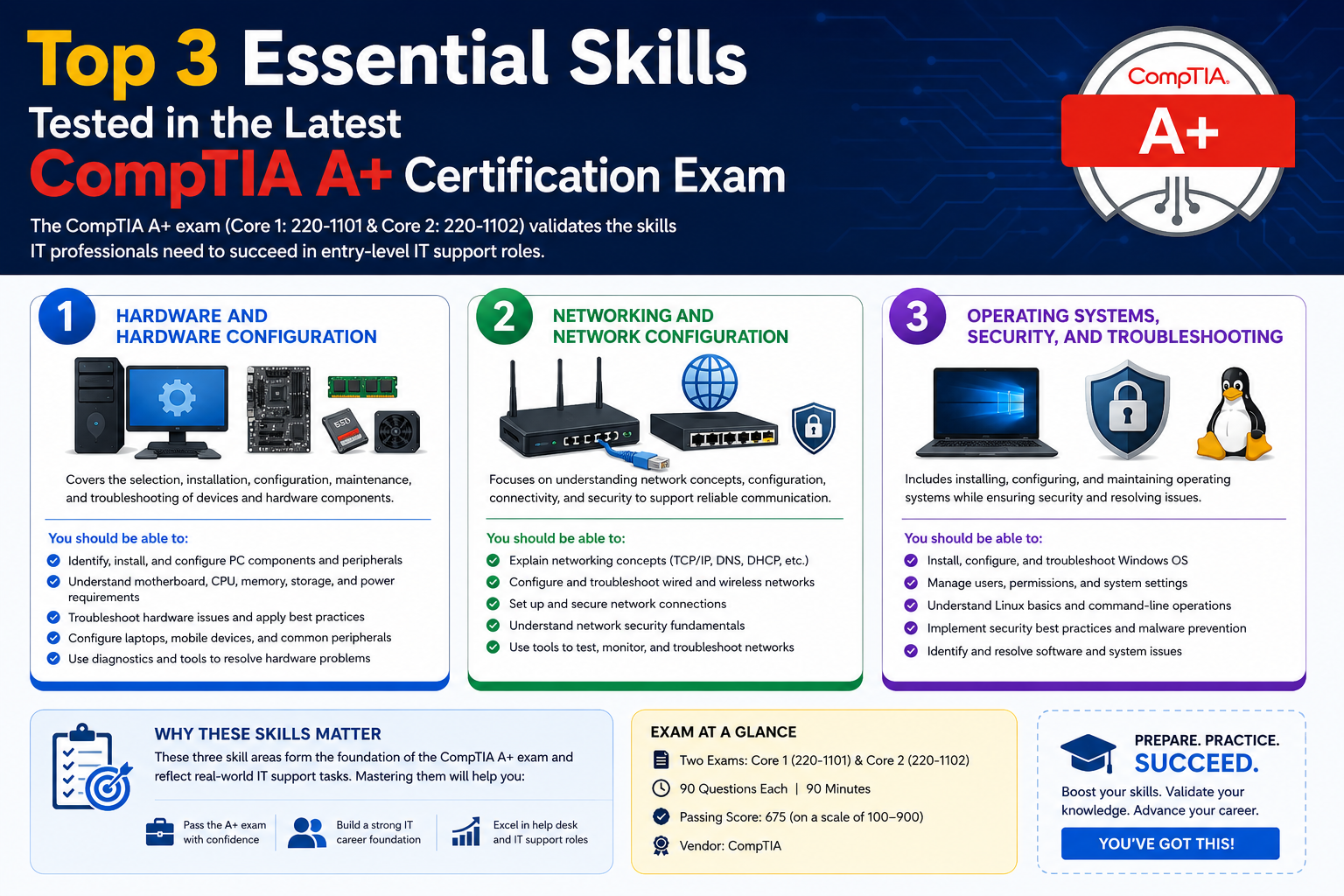
In today’s technology-driven workplaces, technical knowledge alone is no longer enough to stand out. Employers increasingly look for individuals who can interpret problems, adapt to changing systems, and make thoughtful decisions under pressure. While tools and platforms may vary from one organization to another, the underlying abilities required to support them remain consistent. This is where foundational IT certifications such as CompTIA A+ play a significant role.
The CompTIA A+ certification has long been recognized as an entry point into the IT industry, but its relevance has grown even more in recent years. Rather than focusing on a single vendor’s technology, it emphasizes a broad set of skills that can be applied across different environments. This flexibility is especially important in modern IT ecosystems where organizations often rely on a combination of cloud services, on-premises systems, and hybrid infrastructures.
At its core, the certification is designed to reflect what entry-level IT professionals actually encounter in real workplace situations. Instead of memorizing isolated facts, candidates are expected to understand how systems interact, how issues arise, and how to resolve them efficiently. This shift toward practical understanding makes the certification more aligned with real-world expectations than purely theoretical learning paths.
What makes A+ particularly valuable is that it does not just validate technical knowledge. It also highlights behavioral and cognitive skills that are often overlooked but essential for success in IT roles. These include communication, structured thinking, and the ability to follow systematic processes when diagnosing issues. In many cases, these abilities are what separate an average technician from an effective one.
Why Vendor-Neutral Knowledge Matters in IT Environments
One of the defining characteristics of CompTIA certifications is their vendor-neutral approach. This means the knowledge tested is not tied to a specific company’s tools or technologies. Instead, it focuses on principles and concepts that remain consistent regardless of the platform being used.
This approach reflects the reality of modern IT environments. Very few organizations rely on a single technology provider for all their infrastructure needs. A business might use one operating system for desktop support, another for servers, and multiple cloud platforms for storage, applications, and security services. In such environments, limiting knowledge to one vendor’s ecosystem can restrict an IT professional’s ability to adapt.
Vendor-neutral learning encourages flexibility. Instead of teaching someone how to operate a specific tool, it teaches them how systems work in general. For example, understanding how networks function at a conceptual level allows a technician to troubleshoot connectivity issues, whether they are working with Cisco hardware, a cloud-based virtual network, or a mixed environment.
This type of knowledge also supports long-term career growth. Technologies evolve quickly, and tools that are widely used today may be replaced or significantly updated in a few years. Professionals who understand the underlying principles are better equipped to adjust when those changes occur. They are not dependent on memorizing interfaces or commands tied to a single platform.
Another advantage of this approach is that it helps reduce the learning curve when transitioning between roles or industries. An IT professional trained in vendor-neutral concepts can more easily shift between different organizational setups because the core logic of systems remains familiar.
Ultimately, this type of knowledge creates adaptability, which is one of the most valuable traits in the IT workforce today.
Understanding the Structure of Modern A+ Certification
The CompTIA A+ certification is structured around a broad range of domains that collectively represent the essential responsibilities of an entry-level IT professional. Rather than focusing narrowly on one area, it spreads its coverage across hardware, networking, software, security, and operational practices.
The certification is divided into two core exams, each focusing on different aspects of IT support. Together, they provide a comprehensive foundation of knowledge that reflects real-world job requirements.
One exam emphasizes physical and infrastructure-related skills. This includes understanding how devices operate, how networks connect systems, and how cloud technologies are increasingly integrated into daily IT operations. The other exam focuses more on software environments, security principles, troubleshooting methods, and workplace procedures.
This division is intentional. IT support roles often require professionals to switch between hardware and software tasks depending on the situation. A technician might start their day diagnosing a laptop hardware issue, then move on to resolving an operating system error, and later assist with a security configuration problem. The certification mirrors this variety by ensuring candidates are exposed to multiple domains.
Each domain is weighted differently, reflecting its importance in practical environments. For example, troubleshooting and problem-solving consistently form a significant portion of the content because they represent the core of IT support work. Similarly, operating systems and networking remain essential due to their widespread use in nearly every organization.
The structure of the certification ensures that candidates do not just learn isolated facts but develop a connected understanding of how IT systems function as a whole.
The Shift Toward Security and Cloud Awareness
Modern IT environments are heavily influenced by two major trends: increased reliance on cloud computing and a growing emphasis on cybersecurity. These shifts have reshaped the expectations placed on entry-level professionals.
Security is no longer a specialized function reserved for advanced roles. Instead, it has become a fundamental responsibility for anyone working in IT. Even basic support tasks now require awareness of security principles such as access control, authentication, and safe handling of sensitive data.
The updated A+ framework reflects this reality by incorporating more security-focused concepts. This includes recognizing potential threats, understanding secure configuration practices, and being able to identify vulnerabilities in everyday systems. The goal is not to turn entry-level technicians into security experts but to ensure they are capable of maintaining safe operational practices from the beginning of their careers.
Cloud computing has also become a central component of IT infrastructure. Organizations increasingly rely on cloud-based services for storage, software delivery, and system management. As a result, IT professionals must understand how these services function and how they differ from traditional on-premises systems.
This includes familiarity with different service models, such as infrastructure-based services, platform-based services, and software-based services. Each model has its own responsibilities and limitations, and understanding these differences is essential for effective troubleshooting and system management.
By incorporating these areas into foundational training, the certification ensures that new IT professionals are better prepared for the environments they will encounter in the workplace.
Critical Thinking as a Core IT Skill
Among all the skills emphasized in entry-level IT roles, critical thinking stands out as one of the most important. It is the ability to analyze a situation, evaluate possible causes, and determine the most effective course of action.
In IT environments, problems are rarely straightforward. A single issue, such as a network slowdown, may have multiple potential causes. It could be related to hardware failure, software misconfiguration, external network congestion, or even user behavior. Without structured thinking, it becomes difficult to isolate the actual cause.
Critical thinking provides a framework for approaching such problems logically. Instead of guessing or applying random fixes, IT professionals learn to follow a structured process. They gather information, eliminate unlikely causes, test hypotheses, and gradually narrow down the issue.
This skill becomes especially important in time-sensitive situations where systems are affecting business operations. Making the wrong assumption can lead to wasted time and further complications. A methodical approach reduces the risk of unnecessary changes and increases the likelihood of resolving issues efficiently.
In addition to troubleshooting, critical thinking also supports decision-making in planning and implementation tasks. IT professionals often need to evaluate different solutions and choose the one that best fits the organization’s needs. This requires not only technical understanding but also the ability to weigh trade-offs such as cost, performance, and long-term sustainability.
The development of critical thinking is therefore central to IT training because it influences every aspect of professional performance.
Troubleshooting as a Practical Problem-Solving Process
Troubleshooting is one of the most visible and frequently used skills in IT support roles. It involves identifying, diagnosing, and resolving technical issues that affect systems, devices, or networks.
At first glance, troubleshooting may seem like a reactive task. However, it is actually a structured process that requires careful analysis and logical reasoning. Effective troubleshooting follows a sequence of steps that help ensure problems are addressed correctly rather than temporarily masked.
The process typically begins with identifying the symptoms of the issue. This involves gathering information from users, system logs, and observable behavior. Once the symptoms are understood, the next step is to form possible explanations for the problem.
From there, IT professionals test each hypothesis systematically. This might involve checking configurations, reviewing system settings, or isolating components to determine where the issue originates. Each step helps eliminate possibilities until the root cause is identified.
Once the cause is found, the solution is implemented carefully, followed by testing to confirm that the problem has been resolved. Finally, documentation is created to record what happened and how it was fixed, which can help prevent similar issues in the future.
What makes troubleshooting particularly important in entry-level IT roles is its direct impact on users. Many technical problems affect productivity, communication, or access to essential systems. Being able to resolve these issues efficiently is a key expectation in support environments.
Troubleshooting also reinforces other skills such as communication and technical understanding. IT professionals must often explain issues in simple terms to non-technical users while also understanding complex system interactions themselves. This dual requirement makes troubleshooting both a technical and an interpersonal skill.
Operational Procedures and Professional Discipline in IT Work
Beyond technical abilities, IT professionals are expected to follow structured operational procedures that ensure consistency, safety, and accountability. These procedures are an essential part of maintaining stable and secure environments.
Operational discipline includes practices such as documentation, change management, and incident handling. Each of these plays a role in ensuring that IT systems are managed in an organized and predictable way.
Documentation is particularly important because it creates a record of actions taken within a system. This helps teams understand what changes have been made, how issues were resolved, and what configurations are currently in place. Without proper documentation, troubleshooting becomes significantly more difficult, and knowledge can be lost when team members change.
Change management refers to the process of controlling modifications to systems. Even small changes can have unintended consequences, so structured procedures help ensure that updates are reviewed, tested, and approved before implementation. This reduces the risk of system failures and maintains stability across environments.
Incident handling focuses on responding to unexpected issues in a controlled manner. It includes identifying the severity of a problem, escalating it when necessary, and ensuring that resolution steps are properly followed. This structured response helps organizations minimize downtime and maintain service quality.
These operational practices may not seem as technical as hardware or networking skills, but they are equally important. They ensure that technical knowledge is applied in a responsible and repeatable way, which is essential in professional IT environments.
Performance-Based Questions and Real-World Thinking in IT Assessment
One of the most significant shifts in modern IT certification design is the increasing emphasis on performance-based evaluation. Instead of relying solely on memorized information or theoretical knowledge, candidates are now expected to demonstrate how they would respond in realistic technical situations. This reflects a broader industry expectation: IT professionals must be capable of acting effectively under real operational conditions, not just in structured test environments.
Performance-based scenarios simulate tasks that resemble actual workplace challenges. These might include diagnosing a malfunctioning system, identifying misconfigured settings, or determining the correct sequence of steps needed to restore functionality. Unlike traditional questions that focus on selecting an answer from a list, these tasks require active problem-solving and decision-making.
What makes this approach particularly important is that it mirrors the uncertainty found in real IT environments. In practice, problems rarely appear in clearly labeled formats. Symptoms may be incomplete, user descriptions may be vague, and multiple issues may occur simultaneously. A technician must interpret incomplete information and still arrive at a functional solution.
This type of evaluation rewards structured thinking over memorization. Candidates must understand not just what to do, but why they are doing it. For example, if a network connection is unstable, the solution is not simply to restart a device but to consider potential causes such as IP conflicts, signal interference, or authentication failures.
Developing this mindset requires practice in breaking problems down into smaller components. Instead of treating a situation as a single issue, it becomes necessary to analyze individual layers, such as hardware, software, configuration, and user behavior. Each layer may contribute to the overall problem, and identifying the correct one is essential for resolution.
This approach is central to how IT professionals operate in real environments. It reduces guesswork and encourages logical progression from symptom identification to root cause analysis.
Understanding Device Ecosystems in Modern Workplaces
Modern IT environments are no longer limited to desktop computers and traditional servers. Instead, they include a wide range of devices that must work together seamlessly. These include laptops, smartphones, tablets, printers, IoT devices, and cloud-connected systems. Each category introduces its own set of requirements and challenges.
Mobile devices, for example, have become essential tools in most organizations. They require secure configuration, regular updates, and proper synchronization with organizational systems. Unlike stationary devices, they are frequently used outside controlled environments, which introduces additional security considerations.
Managing these devices involves understanding operating system differences, application compatibility, and connectivity options. A technician must be able to troubleshoot issues such as synchronization failures, battery performance problems, or network switching between cellular and Wi-Fi connections.
Desktop and laptop systems, while more traditional, also continue to evolve. Modern operating systems integrate cloud services, security features, and virtualization capabilities that were not present in earlier computing environments. Understanding how these features interact is essential for maintaining system stability.
Peripheral devices such as printers and external storage also play a role in workplace productivity. These devices often rely on drivers and network configurations that must be correctly set up to function properly. When issues occur, they can disrupt workflows significantly, making troubleshooting skills essential.
The growing diversity of devices means that IT professionals must be adaptable. They are expected to work across multiple platforms and understand how different systems communicate with one another. This interconnected environment requires a broader perspective than traditional single-device troubleshooting.
The Role of Networking Fundamentals in Everyday IT Tasks
Networking is one of the most essential components of modern IT infrastructure. Nearly every system relies on network connectivity to function properly, whether it is accessing cloud applications, sharing files, or communicating between devices.
At a foundational level, networking involves understanding how data moves between systems. This includes concepts such as addressing, routing, switching, and connectivity protocols. While these concepts may seem technical, they are directly relevant to everyday IT support tasks.
For example, when a user cannot access a shared resource, the issue may be related to incorrect addressing, firewall restrictions, or routing problems. Identifying the correct cause requires an understanding of how data flows through a network.
Wireless connectivity has also become a critical area of focus. Many organizations rely heavily on Wi-Fi networks, which introduces additional variables such as signal strength, interference, and authentication methods. Troubleshooting wireless issues often requires both technical knowledge and environmental awareness.
Another important aspect of networking is understanding how devices communicate within local and external networks. This includes recognizing the difference between internal system communication and internet-based communication. Each type follows different rules and may be affected by different types of issues.
Networking fundamentals also play a role in security. Unauthorized access attempts, misconfigured permissions, and unsecured connections can all lead to vulnerabilities. IT professionals must therefore understand how network configurations impact both functionality and protection.
Because networking underpins nearly all IT operations, it remains one of the most critical areas of knowledge for entry-level professionals.
Operating Systems as the Core of IT Environments
Operating systems serve as the foundation for all computing activities. They manage hardware resources, support applications, and provide interfaces for users and administrators. Understanding how operating systems function is essential for anyone working in IT support or administration.
Modern workplaces often use multiple operating systems simultaneously. Windows, Linux, and macOS are commonly found across different departments and devices. Each system has its own structure, tools, and configuration methods, but they all share similar underlying principles.
One of the key responsibilities of IT professionals is managing system settings and ensuring that operating systems function efficiently. This includes configuring user accounts, managing permissions, installing updates, and monitoring system performance.
Operating systems also provide diagnostic tools that help identify issues. These tools allow technicians to view system processes, monitor resource usage, and analyze error logs. Interpreting this information is an important skill, as it often reveals the root cause of performance or stability problems.
Command-line interfaces are another important aspect of system management, particularly in Linux environments. While graphical interfaces are widely used, command-line tools offer greater control and flexibility for advanced tasks. Understanding basic command-line operations is, therefore, a valuable skill in many IT roles.
System configuration also extends to security settings. Operating systems include built-in security features such as user authentication, encryption, and access controls. Proper configuration of these features is essential for protecting organizational data.
Because operating systems are central to all computing activities, they represent a core area of knowledge for IT professionals at all levels.
Virtualization and Its Impact on IT Infrastructure
Virtualization has become a fundamental part of modern IT infrastructure. It allows multiple virtual systems to run on a single physical machine, improving efficiency and resource utilization. This technology is widely used in data centers, cloud environments, and development platforms.
At a basic level, virtualization involves creating virtual instances of hardware resources. These instances behave like independent systems but share underlying physical components. This allows organizations to run multiple environments without requiring separate physical machines for each one.
One of the main benefits of virtualization is flexibility. Virtual machines can be created, modified, and removed quickly, allowing organizations to adapt to changing needs. This is particularly useful in development and testing environments where systems need to be frequently adjusted.
Virtualization also improves resource efficiency. Instead of dedicating hardware to a single task, multiple workloads can run on the same system. This reduces costs and improves overall utilization.
From a support perspective, virtualization introduces new troubleshooting considerations. Issues may arise from resource allocation, configuration conflicts, or network segmentation between virtual systems. Understanding how virtual environments interact with physical infrastructure is essential for resolving these problems.
Cloud computing is closely related to virtualization. Many cloud services rely on virtual infrastructure to deliver scalable and flexible solutions. Understanding virtualization, therefore, also supports understanding of modern cloud environments.
As organizations continue to adopt cloud-based systems, virtualization skills have become increasingly important for IT professionals.
Security Awareness as a Daily Responsibility
Security is no longer a specialized function limited to dedicated teams. Instead, it has become a shared responsibility across all IT roles. Even entry-level technicians are expected to understand basic security principles and apply them in their daily tasks.
One of the most important aspects of security awareness is understanding potential threats. These can include unauthorized access attempts, malware infections, phishing attempts, and misconfigured systems. Recognizing these risks is the first step toward preventing them.
Access control is another critical area. IT professionals must ensure that users have appropriate permissions based on their roles. Granting excessive access can lead to security vulnerabilities, while restricting access too heavily can impact productivity.
Data protection is also essential. This includes understanding how sensitive information is stored, transmitted, and secured. Techniques such as encryption and secure authentication play a key role in protecting data from unauthorized access.
Security awareness also extends to physical devices. Losing a device or leaving systems unattended can create opportunities for security breaches. Proper handling and procedural discipline help reduce these risks.
Another important aspect is recognizing suspicious activity. This includes unusual system behavior, unexpected network traffic, or unauthorized configuration changes. Identifying these signs early can prevent larger security incidents.
Security is not just about technology; it is also about behavior. Human error remains one of the most common causes of security breaches. As a result, awareness and consistent application of security practices are essential components of IT work.
Communication Skills in Technical Environments
While technical knowledge is essential in IT roles, communication skills are equally important. IT professionals frequently interact with users who do not have technical backgrounds, making it necessary to explain complex issues in simple terms.
Effective communication involves more than just speaking clearly. It requires the ability to translate technical concepts into language that others can understand. For example, instead of using technical jargon, an IT professional might explain a network issue in terms of connectivity or access delays.
Listening is also a critical part of communication. Users often provide valuable information about symptoms or behaviors that can help identify problems. Understanding these descriptions accurately can significantly improve troubleshooting efficiency.
Written communication is equally important. Documentation, incident reports, and system notes must be clear and precise so that other team members can understand what actions were taken. Poor documentation can lead to repeated issues or confusion during future troubleshooting efforts.
Communication also plays a role in teamwork. IT environments often require collaboration between multiple specialists. Clear communication ensures that tasks are coordinated effectively and that responsibilities are understood.
In high-pressure situations, such as system outages, communication becomes even more critical. Teams must share information quickly and accurately to resolve issues as efficiently as possible.
Strong communication skills, therefore, complement technical abilities and contribute significantly to overall effectiveness in IT roles.
Analytical Thinking in System Diagnostics
Analytical thinking is closely related to troubleshooting but focuses more on evaluating systems as a whole rather than addressing individual issues. It involves breaking down complex systems into smaller components to understand how they interact.
In IT environments, problems often arise from interactions between multiple systems. A single issue may involve hardware, software, network configuration, and user behavior simultaneously. Analytical thinking helps identify how these components influence each other.
This skill is particularly useful when dealing with performance issues. For example, slow system performance may not be caused by a single factor but by a combination of high resource usage, background processes, and network delays.
Analytical thinking also supports preventative maintenance. By understanding how systems behave under different conditions, IT professionals can identify potential issues before they become serious problems.
This approach encourages a deeper understanding of systems rather than surface-level problem-solving. It helps professionals move beyond reactive support and toward proactive system management.
Cloud-Driven IT Environments and the Expanding Scope of Entry-Level Skills
Modern IT environments are increasingly shaped by cloud technologies, and this shift has fundamentally changed what is expected from entry-level professionals. Where traditional IT roles once focused heavily on physical hardware and on-premises systems, today’s workplaces demand familiarity with distributed services, remote infrastructure, and hybrid environments that combine multiple platforms.
Cloud computing is not a single technology but a broad ecosystem of services that allow organizations to store data, run applications, and manage systems over the internet. This shift has reduced the dependency on physical infrastructure while increasing the importance of configuration, monitoring, and service management skills.
For entry-level IT professionals, this means that understanding cloud concepts is no longer optional. Even basic support roles now require awareness of how cloud systems interact with local devices. For example, a user’s inability to access a file may no longer be caused by a local storage issue but instead by cloud synchronization errors or permission misconfigurations.
The CompTIA A+ framework reflects this evolution by incorporating cloud-related knowledge into its core expectations. Rather than focusing on advanced cloud architecture, it introduces foundational concepts such as service models, deployment types, and basic cloud troubleshooting principles. These concepts help new professionals understand how cloud systems fit into broader IT ecosystems.
One of the most important aspects of cloud awareness is understanding shared responsibility. In cloud environments, responsibility for system maintenance is divided between service providers and organizations. IT professionals must understand which responsibilities belong to which side to troubleshoot issues correctly and avoid unnecessary changes.
This shared responsibility model also affects security practices. While cloud providers manage infrastructure security, organizations remain responsible for user access, data protection, and configuration settings. Entry-level professionals must therefore understand how their actions impact overall system security.
Cloud technologies also introduce new challenges related to connectivity and dependency. Since cloud services rely on internet access, network issues can directly affect application availability. This makes networking knowledge even more critical in cloud-driven environments.
As organizations continue to migrate services to the cloud, entry-level IT roles are becoming more interconnected with remote systems, requiring broader awareness and adaptability.
Modern Security Challenges in Entry-Level IT Roles
Security has become one of the most critical aspects of IT operations, and even entry-level professionals are expected to contribute to maintaining secure environments. Unlike in the past, where security responsibilities were concentrated in specialized teams, today’s IT landscape requires security awareness at every level.
One of the most common challenges in modern environments is the increasing sophistication of cyber threats. Attacks are no longer limited to simple viruses or unauthorized access attempts. Instead, they often involve complex strategies such as phishing campaigns, social engineering, ransomware, and credential theft.
Entry-level IT professionals must be able to recognize these threats and respond appropriately. While they may not be responsible for designing security systems, they play a key role in identifying suspicious activity and following established protocols.
Another important aspect of security is endpoint protection. Devices such as laptops, desktops, and mobile phones are often the first point of entry for attackers. Ensuring these devices are properly configured, updated, and monitored is essential for maintaining overall system security.
User behavior also plays a significant role in security. Many breaches occur not because of technical failures but due to human error. Clicking on malicious links, using weak passwords, or mishandling sensitive information can all create vulnerabilities.
As a result, IT professionals must not only understand technical safeguards but also promote safe practices among users. This includes educating users about risks, enforcing security policies, and ensuring compliance with organizational standards.
Security awareness also extends to physical environments. Unauthorized access to devices, improper disposal of hardware, and lack of physical safeguards can all lead to data breaches. Entry-level professionals must therefore understand both digital and physical aspects of security.
In modern IT roles, security is not a separate task but an ongoing responsibility integrated into every action.
Advanced Troubleshooting in Multi-Layered Systems
As IT environments become more complex, troubleshooting has evolved into a multi-layered process that requires understanding how different systems interact. Problems rarely exist in isolation; instead, they often span multiple components such as hardware, software, networks, and user configurations.
In a multi-layered system, identifying the root cause of a problem requires analyzing each layer individually. For example, a connectivity issue may originate from physical cabling, network configuration, firewall rules, or even application-level restrictions.
Effective troubleshooting begins with isolating the layer where the problem exists. This structured approach prevents unnecessary changes and ensures that solutions are targeted and efficient. Without this method, technicians risk applying fixes that do not address the actual cause.
Another important aspect of advanced troubleshooting is recognizing patterns. Many system issues are not random but follow predictable behaviors. For example, performance degradation may occur during peak usage times, indicating resource limitations rather than system failures.
Log analysis also plays a critical role in troubleshooting. System logs provide detailed records of events, errors, and system behavior. Interpreting these logs requires attention to detail and the ability to connect seemingly unrelated events.
In addition, troubleshooting often involves collaboration. Complex issues may require input from multiple teams, including network specialists, system administrators, and security analysts. Clear communication ensures that all perspectives are considered.
Advanced troubleshooting is not just about fixing problems but about understanding systems deeply enough to prevent recurring issues.
Operating System Management in Hybrid Environments
Operating systems remain central to IT infrastructure, but their role has expanded significantly in modern hybrid environments. Today, IT professionals must manage operating systems across physical devices, virtual machines, and cloud-based platforms.
This diversity requires a strong understanding of how operating systems behave in different contexts. While the core functions remain similar, the way they are deployed and managed can vary significantly.
In hybrid environments, operating systems often interact with cloud services for updates, storage, and application delivery. This integration introduces new dependencies that must be managed carefully. A misconfiguration in one system can affect multiple connected services.
System updates are another critical area. Keeping operating systems updated is essential for security and performance, but updates must be managed carefully to avoid compatibility issues. In some cases, updates may need to be tested before deployment to ensure stability.
User management is also an important responsibility. Operating systems provide tools for controlling access, managing permissions, and configuring user environments. Proper configuration ensures that users can access necessary resources without compromising security.
Performance monitoring is another key aspect of operating system management. IT professionals must be able to identify when systems are under strain and take appropriate action, such as adjusting resource allocation or optimizing processes.
As environments become more complex, operating system management requires both technical knowledge and strategic thinking.
Networking in Cloud and Remote Work Environments
Networking has undergone a significant transformation with the rise of cloud computing and remote work. Traditional network models focused on localized systems within a single physical location. Today, networks extend across global infrastructures, connecting users, devices, and services from multiple locations.
This shift has introduced new challenges for IT professionals. Connectivity issues are no longer limited to internal networks but can involve internet service providers, cloud platforms, and remote access systems.
One of the key concepts in modern networking is latency. Since data may travel across long distances, delays can impact application performance. Understanding how latency affects user experience is essential for troubleshooting performance issues.
Another important factor is bandwidth management. As more applications rely on cloud services, network usage has increased significantly. IT professionals must understand how to manage bandwidth effectively to prevent congestion and ensure smooth performance.
Remote access technologies have also become essential. Employees working from different locations rely on secure connections to access organizational systems. Configuring and maintaining these connections requires knowledge of secure communication protocols and authentication methods.
Wireless networks remain a critical component of modern environments. However, they introduce additional complexity due to environmental factors such as interference and signal strength variations. Troubleshooting wireless issues often requires both technical and physical analysis.
Networking in modern environments is no longer confined to internal systems but extends across distributed, cloud-connected infrastructures.
Virtualization as a Foundation for Modern Infrastructure
Virtualization continues to play a central role in modern IT infrastructure. It allows organizations to maximize resource efficiency by running multiple virtual systems on a single physical machine.
In addition to improving efficiency, virtualization supports flexibility. Systems can be quickly created, modified, or removed based on organizational needs. This makes it particularly valuable in environments where workloads change frequently.
Virtual machines also provide isolation. Each virtual environment operates independently, reducing the risk of conflicts between systems. This isolation is useful for testing, development, and production environments.
From a troubleshooting perspective, virtualization introduces new layers of complexity. Issues may arise from resource allocation, virtual network configuration, or compatibility between host and guest systems.
Understanding how virtual environments interact with physical infrastructure is essential for effective system management. IT professionals must be able to identify whether a problem originates at the virtual or physical level.
Virtualization also plays a key role in disaster recovery. Virtual systems can be backed up, replicated, and restored more easily than physical systems, making recovery processes faster and more efficient.
As organizations continue to adopt cloud-based solutions, virtualization remains a foundational technology that supports scalability and resilience.
Professional Communication in Technical Support Roles
Communication is a critical skill in IT environments, especially in support roles where professionals interact with users from non-technical backgrounds. The ability to explain technical concepts clearly can significantly improve user experience and problem resolution.
One of the main challenges in communication is simplifying complex information. IT professionals must translate technical details into language that users can understand without losing accuracy.
Active listening is equally important. Users often provide incomplete or non-technical descriptions of problems, and it is the responsibility of the IT professional to interpret this information correctly.
Written communication also plays a major role in IT operations. Documentation, incident reports, and system notes must be clear, structured, and easy to follow. Poor documentation can lead to repeated issues and inefficiencies in troubleshooting.
In team environments, communication ensures coordination between different specialists. Clear and timely communication helps prevent misunderstandings and ensures that tasks are completed efficiently.
During system outages or critical incidents, communication becomes even more important. Teams must share updates quickly and accurately to minimize downtime and restore services.
Effective communication supports both technical accuracy and operational efficiency.
Analytical Problem Solving in Complex IT Scenarios
Analytical problem solving involves evaluating systems in a structured and logical manner to identify underlying issues. Unlike simple troubleshooting, which focuses on immediate problems, analytical thinking considers broader system interactions.
In complex IT environments, issues often have multiple contributing factors. Analytical thinking helps break down these factors and understand how they interact.
For example, system slowdowns may not be caused by a single issue but by a combination of resource limitations, background processes, and network delays. Identifying these relationships requires careful analysis.
Analytical skills also support decision-making. IT professionals often need to choose between multiple solutions, each with its own advantages and disadvantages. Evaluating these options requires a structured approach.
This type of thinking also helps in planning and optimization. By analyzing system behavior over time, IT professionals can identify trends and anticipate future issues.
Analytical problem solving encourages a deeper understanding of systems and improves long-term operational effectiveness.
Conclusion
The CompTIA A+ certification continues to hold a unique position in the IT industry because it represents more than just an entry-level credential. It reflects a structured approach to understanding how modern technology environments operate and how professionals are expected to respond within them. As workplaces become increasingly complex, the demand for individuals who can think critically, adapt quickly, and apply consistent problem-solving methods has grown significantly.
What makes the A+ especially relevant today is its focus on foundational skills that extend beyond specific tools or platforms. Instead of preparing candidates for a single vendor’s ecosystem, it builds an understanding of core IT principles that remain stable even as technologies evolve. This includes areas such as networking fundamentals, operating system management, security awareness, virtualization concepts, and cloud-based infrastructure understanding. These areas form the backbone of nearly every modern IT environment, regardless of industry or organization size.
Equally important is the emphasis on real-world application. The certification does not simply test memorization of technical facts; it encourages structured thinking through troubleshooting, scenario-based reasoning, and performance-oriented tasks. This approach mirrors the actual responsibilities of IT professionals, where problems rarely come with clear instructions or predictable outcomes. Instead, technicians must analyze symptoms, evaluate possibilities, and implement solutions under varying conditions.
Another key strength of the A+ framework is its integration of professional and operational skills. Communication, documentation, and procedural discipline are treated as essential components of technical work. This reflects the reality that IT roles are not isolated technical functions but collaborative positions that require interaction with users, teams, and organizational systems. Being able to explain technical issues clearly and document processes accurately is just as important as resolving the issue itself.
In addition, the certification acknowledges the evolving nature of IT environments. With the rapid growth of cloud services, remote work, and cybersecurity challenges, entry-level professionals are expected to understand more than just traditional desktop support. They must also be aware of distributed systems, secure practices, and hybrid infrastructures that define modern computing.
Ultimately, the value of the CompTIA A+ lies in its ability to bridge the gap between theoretical knowledge and practical workplace readiness. It helps individuals develop a mindset focused on adaptability, structured thinking, and continuous learning. In a field where technologies change rapidly, these qualities remain consistently valuable.
For anyone beginning a career in IT, the A+ represents not just a certification, but a foundation for long-term professional growth in an industry built on constant evolution.