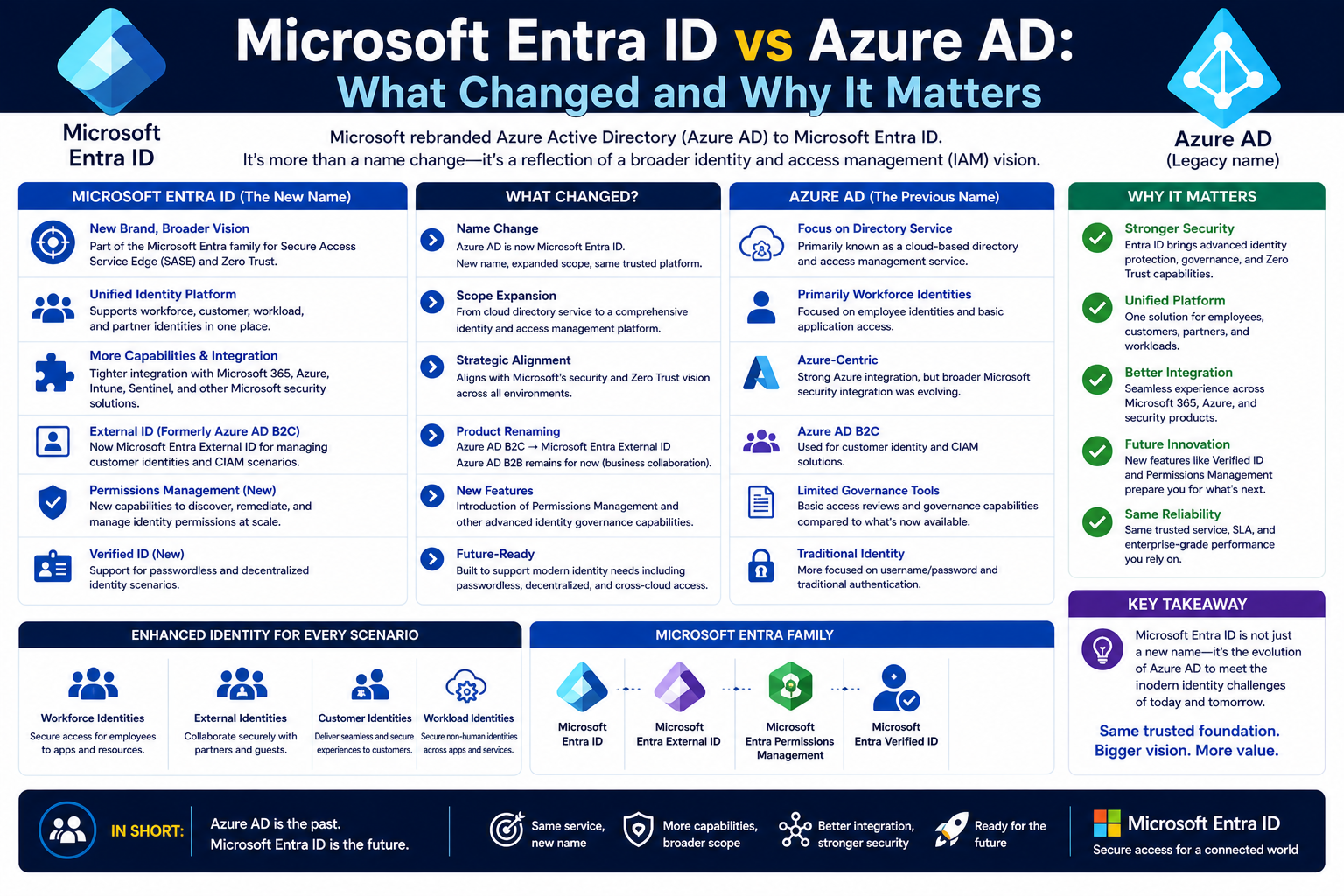
Azure Active Directory, widely known as Azure AD, has long been a foundational tool in modern IT environments for managing identities and controlling access to digital resources. It played a central role in helping organizations verify users, secure applications, and streamline access to systems across cloud environments. With the introduction of Microsoft Entra ID, many users found themselves wondering whether this was a completely new product or simply a continuation of Azure AD under a different name. The reality is both straightforward and significant: Microsoft Entra ID represents the evolution of Azure AD, aligning identity management with a broader and more unified vision for secure access in a cloud-driven world. This shift is not just about renaming a product but about redefining how identity services fit into a larger ecosystem designed for modern digital infrastructure.
The Role of Azure Active Directory in Modern IT Environments
Azure Active Directory was designed to meet the growing demands of cloud computing and remote access. Unlike traditional directory services that operated within physical office environments, Azure AD extended identity management into the cloud, enabling users to access applications and services from virtually anywhere. It became an essential component for organizations adopting cloud platforms, offering features such as single sign-on, identity verification, and conditional access. By allowing users to log in once and gain access to multiple systems, Azure AD simplified workflows while maintaining strong security protocols. It ensured that only authorized individuals could access sensitive data, reducing the risk of unauthorized entry and potential breaches.
Identity Management as the Core Functionality
At its core, Azure Active Directory focused on identity management. Every time a user attempted to log in to an application or service, Azure AD verified their identity and determined what level of access they should have. This process involved authentication, which confirms who the user is, and authorization, which defines what the user is allowed to do. These mechanisms worked together to create a secure and efficient access system. Organizations relied heavily on these capabilities to maintain control over their digital environments, especially as the number of users and applications continued to grow. Azure AD became a central hub where identities were managed, monitored, and protected.
Transitioning from Traditional Directory Services to Cloud-Based Identity
Before cloud-based solutions like Azure AD, organizations primarily used on-premises directory services to manage users and devices. These systems were effective within local networks but struggled to adapt to the increasing need for remote access and cloud integration. Azure AD addressed these limitations by moving identity management into the cloud. This transition allowed businesses to scale their operations more efficiently and support a workforce that was no longer confined to a single location. Employees could access company resources from home, on the road, or from different offices without compromising security. This flexibility became increasingly important as organizations embraced digital transformation and remote work models.
The Emergence of Microsoft Entra ID
Microsoft Entra ID emerged as the next step in the evolution of identity and access management. While it retains the core functionality of Azure AD, it is positioned as part of a broader suite of identity solutions under the Microsoft Entra umbrella. This shift reflects a strategic move to unify various identity-related tools into a cohesive platform. Instead of viewing identity management as a standalone function, Microsoft now presents it as part of an integrated system designed to address complex security challenges across multiple environments. Entra ID continues to handle authentication, authorization, and user management, but it does so within a framework that emphasizes scalability, adaptability, and comprehensive security.
Understanding the Rebranding Strategy
The transition from Azure Active Directory to Microsoft Entra ID is primarily a rebranding effort, but it carries deeper implications. The new name removes the direct association with the broader Azure platform, highlighting that identity management extends beyond a single cloud ecosystem. This distinction is important because modern organizations often operate in hybrid and multi-cloud environments. By adopting the Entra branding, Microsoft emphasizes that its identity solutions are designed to work across various platforms and services. This approach aligns with the needs of businesses that rely on multiple technologies and require a unified method for managing access and identities.
Maintaining Continuity in Features and Functionality
Despite the name change, the underlying features and capabilities remain consistent. Organizations that previously used Azure AD can continue their operations without disruption. The same tools, interfaces, and configurations are still in place, ensuring a seamless transition. This continuity is crucial for IT teams, as it eliminates the need for retraining or system overhauls. Users can continue to manage identities, configure access policies, and monitor security activities just as they did before. The rebranding does not introduce new complexities but instead provides a clearer framework for understanding how identity services fit into a larger ecosystem.
Security as a Central Focus
Security has always been a primary concern in identity management, and this remains true with Microsoft Entra ID. The platform incorporates multiple layers of protection to safeguard user accounts and organizational data. Features such as multi-factor authentication add an extra level of verification, ensuring that even if a password is compromised, unauthorized access is prevented. Conditional access policies allow organizations to define specific requirements for accessing resources, such as location-based restrictions or device compliance checks. These measures work together to create a robust security environment that adapts to evolving threats.
Supporting Modern Work Environments
One of the key advantages of Entra ID is its ability to support modern work environments. As remote and hybrid work models become more common, organizations need reliable systems that enable secure access from various locations and devices. Entra ID addresses this need by providing a cloud-based solution that is accessible from anywhere. Employees can log in to their applications using a single set of credentials, regardless of their location. This convenience not only improves productivity but also reduces the complexity of managing multiple accounts and passwords. The platform ensures that security is maintained without compromising user experience.
Integration with Applications and Services
Entra ID integrates seamlessly with a wide range of applications and services, making it a versatile tool for organizations of all sizes. It supports both cloud-based and on-premises applications, allowing businesses to maintain a hybrid environment if needed. This flexibility is essential for organizations that are gradually transitioning to the cloud or that rely on legacy systems. By providing a unified identity platform, Entra ID simplifies the process of managing access across different systems. IT administrators can control permissions, monitor usage, and enforce security policies from a single interface.
Simplifying User Access and Administration
Managing user access can be a complex task, especially in large organizations with numerous employees and applications. Entra ID simplifies this process by centralizing identity management. Administrators can easily add or remove users, assign roles, and configure access permissions. This centralized approach reduces the risk of errors and ensures that access is granted consistently across the organization. It also streamlines onboarding and offboarding processes, allowing new employees to quickly gain access to the tools they need while ensuring that departing employees no longer have access to sensitive information.
Enhancing Visibility and Control
Visibility is a critical aspect of identity management, and Entra ID provides comprehensive tools for monitoring and analyzing user activity. Administrators can track login attempts, identify unusual behavior, and respond to potential security threats in real time. This level of insight helps organizations maintain control over their environments and quickly address any issues that arise. By providing detailed reports and analytics, Entra ID enables informed decision-making and proactive security management.
Adapting to Evolving Technology Landscapes
The technology landscape is constantly evolving, with new challenges and opportunities emerging regularly. Entra ID is designed to adapt to these changes, offering a scalable and flexible solution for identity management. Whether an organization is expanding its operations, adopting new technologies, or responding to changing security requirements, Entra ID provides the tools needed to navigate these transitions. Its cloud-based nature ensures that updates and improvements can be implemented without disrupting existing operations.
Aligning Identity Management with Business Goals
Identity management is not just a technical requirement; it is also a critical component of business strategy. Entra ID aligns with organizational goals by enabling secure and efficient access to resources. It supports productivity by reducing barriers to access while maintaining strong security measures. This balance is essential for organizations that want to remain competitive in a digital world. By integrating identity management into a broader framework, Entra ID helps businesses achieve their objectives while protecting their assets.
The Importance of a Unified Identity Platform
As organizations continue to adopt diverse technologies and platforms, the need for a unified identity solution becomes increasingly important. Entra ID addresses this need by providing a single platform for managing identities across مختلف environments. This unification simplifies administration, enhances security, and improves user experience. It ensures that all aspects of identity management are handled consistently, reducing the complexity of maintaining multiple systems.
Preparing for the Future of Identity and Access Management
The introduction of Entra ID represents a forward-looking approach to identity management. It reflects a recognition that traditional methods are no longer sufficient in a world where digital interactions are constantly expanding. By focusing on scalability, integration, and security, Entra ID prepares organizations for المستقبل challenges. It provides a foundation for building secure and efficient systems that can adapt to changing requirements.
Evolving Beyond a Single Product Perspective
The shift to Entra ID also signals a move away from viewing identity management as a single product. Instead, it is part of a broader ecosystem that includes various tools and services designed to work together. This holistic approach allows organizations to address complex challenges more effectively. It ensures that identity management is integrated with other aspects of security and access control, creating a comprehensive solution that meets the needs of modern enterprises.
Expanding the Microsoft Entra Ecosystem Beyond Identity Basics
As organizations continue to adopt cloud-first strategies, identity management is no longer limited to simply verifying users and granting access. Microsoft Entra ID represents a broader vision where identity becomes the foundation of security across all digital interactions. This expanded approach introduces a full ecosystem of tools designed to address the complexities of modern IT environments. Instead of treating identity as a single function, the Entra framework integrates multiple services that work together to provide visibility, control, and protection across applications, users, and infrastructures. This shift reflects the growing importance of identity as a central pillar in cybersecurity strategies.
Bringing Multiple Identity Solutions Under One Unified Framework
One of the key motivations behind the transition to Entra ID is the need to unify various identity-related solutions into a cohesive platform. Over time, organizations have adopted multiple tools to manage permissions, monitor access, and secure identities across different environments. This fragmentation often leads to inefficiencies and increased security risks. By bringing these capabilities تحت one unified framework, Entra simplifies management and improves consistency. Administrators can now work within a single ecosystem where identity, permissions, and access policies are interconnected, reducing complexity and enhancing operational efficiency.
Strengthening Identity Governance and Lifecycle Management
Managing the lifecycle of user identities is a critical aspect of maintaining security. Entra ID introduces enhanced governance capabilities that allow organizations to automate and control how identities are created, managed, and removed. From onboarding new employees to revoking access when someone leaves the organization, every stage of the identity lifecycle can be managed systematically. This automation reduces the risk of human error and ensures that access rights are always aligned with current roles and responsibilities. By maintaining accurate and up-to-date identity records, organizations can minimize vulnerabilities and maintain compliance with security policies.
Improving Visibility Across Multi-Cloud Environments
Modern organizations often operate across multiple cloud platforms, making it challenging to maintain consistent visibility and control. Entra ID addresses this challenge by providing tools that offer insights into permissions and access across مختلف environments. Administrators can monitor who has access to what resources, identify potential risks, and take corrective actions when necessary. This level of visibility is essential for maintaining security in complex infrastructures where users and applications interact across different platforms. By centralizing this information, Entra ID enables organizations to maintain a clear understanding of their security posture.
Enhancing Access Control with Advanced Policies
Access control is a fundamental component of identity management, and Entra ID enhances this capability with advanced policy frameworks. Organizations can define specific conditions تحت which users are granted access to resources. These conditions may include factors such as device compliance, user location, or risk level. By implementing these policies, organizations can ensure that access is granted only when certain criteria are met. This approach not only strengthens security but also allows for greater flexibility in managing accessطلبات. It ensures that users can work efficiently while maintaining strict security standards.
Securing Identities Beyond Human Users
In today’s digital landscape, identities are not limited to human users. Applications, services, and devices also require secure access to resources. Entra ID extends identity management to include these non-human entities, often referred to as workload identities. By securing these identities, organizations can prevent unauthorized access and ensure that applications operate within defined parameters. This capability is particularly important in automated environments where systems interact without direct human involvement. By managing all types of identities within a single framework, Entra ID provides comprehensive security coverage.
Supporting Decentralized Identity Models
The concept of decentralized identity is gaining traction as organizations seek more secure and user-controlled methods of identity verification. Entra ID incorporates capabilities that support this model, allowing organizations to issue and verify digital credentials in a secure and flexible manner. These credentials can be used to confirm identity without relying on traditional centralized systems. This approach enhances privacy and reduces the risk of data breaches by limiting the amount of sensitive information stored in a single location. It represents a forward-thinking approach to identity management that aligns with emerging trends in digital security.
Streamlining Permissions Management Across Platforms
Permissions management can become پیچیدہ in environments where multiple platforms and services are used. Entra ID simplifies this process by providing tools that offer a clear view of permissions across مختلف systems. Administrators can identify excessive or unnecessary permissions and adjust them accordingly. This proactive approach helps prevent security issues that may arise from over-privileged accounts. By maintaining strict control over permissions, organizations can reduce their attack surface and ensure that access rights are granted appropriately.
Facilitating Secure Internet and Application Access
Access to the internet and cloud applications introduces additional security challenges. Entra ID addresses these challenges by providing mechanisms to secure connections to external resources. Organizations can implement controls that monitor and regulate how users access online services. This includes حماية against unauthorized access and ensuring that data is transmitted securely. By integrating these capabilities into the identity platform, Entra ID extends its protection beyond internal systems to include external interactions.
Bridging the Gap Between Private and Public Resources
Organizations often تحتاج to manage access to both private and public resources. Entra ID provides solutions that bridge this gap, allowing secure connections to internal applications as well as external services. This capability is essential for maintaining a consistent security approach across different types of resources. By using a unified identity platform, organizations can ensure that access policies are applied consistently, regardless of where the resources are located. This consistency simplifies management and enhances overall security.
Adapting to Hybrid IT Environments
Hybrid IT environments, where organizations use a combination of on-premises and cloud-based systems, present unique challenges. Entra ID is designed to operate seamlessly in such environments, providing a unified approach to identity management. It allows organizations to integrate their existing systems with cloud-based services, ensuring that identities are managed consistently across all platforms. This integration enables a smooth transition to the cloud while maintaining compatibility with legacy systems. It also ensures that security policies are enforced uniformly, reducing the risk of vulnerabilities.
Empowering IT Teams with Centralized Control
Centralized control is a key advantage of the Entra ecosystem. IT teams can manage identities, access policies, and security settings from a single interface. This centralization reduces the complexity of managing multiple systems and أدوات. It also enables faster response to security incidents, as administrators can quickly identify and address issues. By providing a comprehensive view of the entire identity landscape, Entra ID empowers IT teams to maintain control and ensure that security measures are effectively implemented.
Reducing Operational Complexity Through Integration
Integration is a core principle of the Entra ecosystem. By bringing together مختلف identity and access management functions, Entra ID reduces operational complexity. Organizations no longer need to rely on multiple disconnected tools to manage their identities and permissions. Instead, they can use a single platform that integrates all necessary capabilities. This streamlined approach improves efficiency and reduces the likelihood of errors. It also makes it easier for organizations to scale their operations as they grow.
Aligning Security with User Experience
Balancing security and user experience is a constant challenge for organizations. Entra ID addresses this challenge by providing features that enhance both aspects. Users benefit from simplified access through single sign-on and consistent authentication processes, while organizations maintain strong security measures. This balance ensures that security does not become a barrier to productivity. By aligning these اهداف, Entra ID supports a more efficient and secure working environment.
Preparing Organizations for Advanced Security Challenges
As cyber threats continue to evolve, organizations must be prepared to مواجهة new challenges. Entra ID provides the tools and capabilities needed to address these threats effectively. Its advanced security features, combined with comprehensive identity management, create a मजबूत دفاع against potential attacks. By continuously adapting to emerging risks, Entra ID helps organizations stay ahead of threats and protect their digital assets.
Building a Foundation for Future Innovation
The Entra ecosystem is designed not only to address current needs but also to support future innovation. As new technologies and practices emerge, Entra ID provides a flexible foundation that can adapt to changing requirements. This adaptability ensures that organizations can continue to evolve without compromising security. By investing in a unified and scalable identity platform, organizations position themselves for long-term success in an increasingly digital world.
Comparing Microsoft Entra ID with Traditional Active Directory Environments
To fully understand the importance of Microsoft Entra ID, it is essential to compare it with traditional directory systems that organizations have relied on for decades. Traditional Active Directory environments were designed for on-premises infrastructure, where users, devices, and resources were all located within a controlled network. These systems worked exceptionally well for organizations operating within physical office spaces, but they were not built to handle the demands of modern cloud-based environments. Entra ID represents a shift away from these limitations, offering a cloud-native approach that supports distributed workforces and global access պահանջ. This comparison highlights how identity management has evolved from localized control to a more flexible and scalable model.
Understanding the Limitations of On-Premises Directory Systems
On-premises directory systems rely heavily on physical servers and infrastructure that must be maintained internally. This setup requires significant investment in hardware, maintenance, and IT expertise. While these systems provide strong control over local resources, they often struggle to accommodate remote access and cloud integration. As organizations expand and adopt new technologies, these limitations become more apparent. Entra ID eliminates many of these challenges by moving identity management to the cloud, جہاں infrastructure is managed externally, reducing the burden on internal IT teams and allowing organizations to focus on strategic initiatives rather than maintenance tasks.
The Rise of Cloud-Native Identity Management
Cloud-native identity management is at the heart of Entra ID’s design. Unlike traditional systems that were adapted for cloud use, Entra ID is built specifically for cloud environments. This design enables seamless integration with cloud applications and services, providing a consistent user experience regardless of location. Employees can access their accounts and resources from any device with an internet connection, without the need for complex configurations. This flexibility is particularly important in today’s العمل landscape, where remote work and global collaboration are becoming the norm. Entra ID ensures that access remains secure while supporting the dynamic nature of modern work.
Hybrid Identity Models and Their Importance
Many organizations are not able to fully transition to the cloud due to legacy systems and operational requirements. For these organizations, hybrid identity models provide a practical solution. Entra ID supports hybrid environments by allowing integration with existing on-premises directory systems. This integration ensures that identities are synchronized across both environments, enabling consistent access management. Hybrid models allow organizations to постепенно adopt cloud technologies while maintaining their existing infrastructure. This approach reduces risk and provides a smoother transition path, ensuring that operations continue without disruption.
Managing Devices and Endpoints in a Distributed Environment
In traditional environments, managing devices was relatively straightforward because most devices were located within the same network. However, with the rise of remote work, devices are now distributed across multiple locations and networks. Entra ID addresses this challenge by providing tools for managing and securing devices regardless of their location. Administrators can enforce policies that ensure devices meet security requirements before granting access to resources. This capability is essential for maintaining security in environments where users may access systems from personal devices or unsecured networks.
Authentication Methods and Their Evolution
Authentication methods have evolved significantly over time, and Entra ID reflects these advancements. Traditional systems often relied on simple username and password combinations, which are vulnerable to various types of attacks. Entra ID introduces more advanced authentication methods, including multi-factor authentication and risk-based access controls. These methods provide additional layers of security by requiring users to verify their identity through multiple channels. This evolution in authentication ensures that even if one factor is compromised, unauthorized access is still prevented.
Authorization and Role-Based Access Control
Authorization determines what users can do once they have been authenticated. Entra ID enhances this process through role-based access control, allowing administrators to assign permissions based on user roles. This approach simplifies access management by grouping permissions into roles that can be easily assigned or modified. It ensures that users have access only to the resources they need to perform their وظایف, reducing the risk of unauthorized actions. By implementing structured authorization policies, organizations can maintain better control over their systems and data.
Supporting Collaboration Across Organizations
Modern businesses often collaborate with external partners, contractors, and clients. Entra ID facilitates this collaboration by enabling secure access for external users. Organizations can grant limited access to specific resources without exposing their entire network. This capability is essential for maintaining security while supporting التعاون across organizational boundaries. By managing external identities within the same platform, Entra ID ensures that all users are subject to the same security policies and monitoring mechanisms.
Monitoring and Responding to Security Threats
Security threats are constantly evolving, and organizations must be able to detect and respond to them quickly. Entra ID provides advanced monitoring tools that track user activity and identify suspicious behavior. These tools يستخدم analytics to detect anomalies, such as unusual login patterns or access attempts from unexpected locations. When a potential threat is identified, administrators can take immediate action to mitigate the risk. This proactive approach to security helps prevent breaches and ensures that organizations can respond effectively to emerging threats.
Automating Identity and Access Processes
Automation is a key feature of modern identity management systems, and Entra ID leverages automation to improve efficiency and accuracy. Routine tasks such as user provisioning, access assignments, and policy enforcement can be automated, reducing the workload on IT teams. Automation also minimizes the risk of human error, ensuring that processes are executed consistently. By automating these tasks, organizations can focus on more strategic initiatives while maintaining a high مستوى of security and compliance.
Ensuring Compliance with Security Standards
Compliance with industry regulations and security standards is a critical requirement for many organizations. Entra ID يساعد organizations meet these requirements by providing tools for auditing, reporting, and policy enforcement. Administrators can generate reports that demonstrate compliance with various standards, making it easier to meet regulatory obligations. By maintaining detailed records of user activity and access controls, Entra ID supports transparency and accountability within the organization.
Scalability and Performance in Growing Organizations
As organizations grow, their identity management needs become more complex. Entra ID is designed to scale with the organization, supporting a growing number of users, devices, and applications. Its cloud-based architecture ensures that performance remains consistent even as demand increases. This scalability is essential for organizations that are expanding their operations or adopting new technologies. By providing a flexible and scalable solution, Entra ID ensures that identity management can keep pace with organizational growth.
Reducing Dependency on Physical Infrastructure
One of the most significant advantages of Entra ID is its ability to reduce dependency on physical infrastructure. Traditional directory systems require servers, storage, and networking equipment that must be maintained and upgraded regularly. Entra ID eliminates much of this الحاجة by providing a cloud-based solution that is managed externally. This shift reduces costs and simplifies operations, allowing organizations to allocate resources more effectively.
Improving User Experience Through Simplified Access
User experience is an important consideration in identity management, and Entra ID focuses on making access as seamless as possible. Features such as single sign-on and consistent authentication processes reduce the complexity of accessing multiple systems. Users no longer need to remember multiple passwords or navigate پیچیدہ login procedures. This simplicity improves productivity and reduces frustration, making it easier for employees to perform their tasks efficiently.
Adapting to Emerging Technologies and Trends
The technology landscape is constantly changing, with new trends and innovations shaping the way organizations operate. Entra ID is designed to adapt to these changes, providing a flexible platform that can دعم new technologies and practices. Whether it is integrating with advanced security tools or supporting new authentication methods, Entra ID ensures that organizations remain up to date with the latest developments. This adaptability is essential for maintaining a competitive edge in a rapidly evolving environment.
Building a Secure and Flexible Identity Framework
Ultimately, Entra ID provides a secure and flexible framework for managing identities in modern organizations. It combines the strengths of traditional directory systems with the advantages of cloud-based التكنولوجيا, creating a solution that meets the needs of today’s دیجیتال landscape. By addressing the challenges of scalability, security, and user experience, Entra ID enables organizations to build a मजबूत foundation for their identity management strategies.
The Impact of Microsoft Entra ID on IT Operations and Daily Workflows
The transition to Microsoft Entra ID has a noticeable impact on how IT teams manage daily operations. Even though the core functionality remains familiar, the broader ecosystem and unified approach introduce new efficiencies. IT administrators benefit from having a centralized platform where identity, access, and security policies are managed together. This reduces the need to switch between multiple tools and interfaces, saving time and minimizing operational friction. اليومية tasks such as user provisioning, password resets, and access reviews become more streamlined, allowing teams to focus on higher-value responsibilities مثل improving security posture and optimizing system performance.
Adapting Internal Processes to the New Naming and Structure
While the transition from Azure Active Directory to Entra ID does not require technical reconfiguration, organizations still need to update their internal processes. Documentation, training materials, and communication guidelines must reflect the new terminology to avoid confusion among team members. This adjustment is especially important for organizations with large IT departments or structured workflows. Clear communication ensures that everyone understands that Entra ID is not a new or unfamiliar system but rather the continuation of an existing one تحت a different name. This clarity helps maintain consistency in operations and prevents misunderstandings during implementation or support activities.
Training and Skill Development for IT Professionals
Although the underlying technology remains the same, the broader Entra ecosystem encourages IT professionals to expand their skill sets. Understanding how Entra ID fits into the larger identity and access management framework is essential for staying relevant in the field. Professionals who previously focused only on Azure AD can now explore additional capabilities within the Entra family, gaining a deeper understanding of identity governance, permissions management, and secure access strategies. This continuous learning process helps IT teams stay aligned with modern practices and prepares them to handle more complex environments.
Maintaining Compatibility with Existing Integrations
One of the key advantages of the transition is that existing integrations continue to function without disruption. Applications, APIs, and الخدمات that were previously connected to Azure AD remain operational under Entra ID. This compatibility ensures that organizations do not need to rebuild their systems or reconfigure their environments. It also provides reassurance that the transition will not introduce unexpected challenges. By maintaining continuity, Entra ID allows organizations to adopt the new branding and ecosystem at their own pace while preserving their existing infrastructure.
Aligning Identity Management with Broader Security Strategies
Identity management is increasingly becoming a central component of overall security strategies. Entra ID aligns with this trend by integrating identity services with broader security frameworks. Instead of treating identity as a separate function, organizations can incorporate it into their overall approach to protecting systems and data. This integration allows for more coordinated security measures, where identity signals can be used to detect and respond to potential threats. By aligning identity management with security strategies, organizations can ایجاد a more cohesive and effective الدفاع against cyber risks.
Improving Incident Response and Risk Mitigation
Effective incident response is critical for minimizing the impact of security breaches. Entra ID enhances this capability by providing detailed insights into user activity and access patterns. When unusual behavior is detected, administrators can بسرعة investigate and take appropriate action. This may include blocking access, requiring additional authentication, or adjusting security policies. The ability to respond quickly and accurately reduces the potential damage caused by security incidents. It also helps organizations maintain trust and protect their sensitive information.
Supporting Business Continuity and Resilience
Business continuity is a major concern for organizations, especially in environments where downtime can have significant consequences. Entra ID supports continuity by providing a reliable and scalable identity platform. Its cloud-based nature ensures that services remain available even in the event of local disruptions. Employees can continue to access critical applications and resources from alternative locations, ensuring that operations remain uninterrupted. This resilience is essential for maintaining productivity and minimizing the impact of unforeseen events.
Enhancing Collaboration Between IT and Other Departments
Identity management is not limited to IT teams; it also involves collaboration with other departments such as human resources and security teams. Entra ID facilitates this collaboration by providing tools that can be used across مختلف roles. For example, HR teams can play a role in managing user lifecycles, while security teams can monitor access and enforce policies. By enabling cross-functional collaboration, Entra ID ensures that identity management is handled in a comprehensive and coordinated manner. This التعاون improves efficiency and strengthens overall organizational security.
Simplifying Compliance and Audit Processes
Compliance and auditing are essential aspects of managing modern IT environments. Entra ID simplifies these processes by providing built-in tools for tracking and reporting user activity. Administrators can generate detailed reports that demonstrate adherence to security policies and regulatory requirements. This transparency makes it easier to prepare for audits and respond to compliance inquiries. By maintaining accurate and accessible records, organizations can reduce the complexity of meeting regulatory obligations and ensure that they remain compliant with industry standards.
Optimizing Resource Management and Cost Efficiency
Managing IT resources efficiently is a priority for organizations of all sizes. Entra ID contributes to cost efficiency by reducing the need for physical infrastructure and simplifying administrative tasks. By moving identity management to the cloud, organizations can eliminate expenses related to hardware maintenance and upgrades. Additionally, the streamlined الإدارة of identities and access reduces the time and effort required to manage systems. This efficiency يسمح organizations to allocate resources more effectively and invest in other areas of growth and innovation.
Encouraging a Security-First Mindset Across the Organization
The adoption of Entra ID encourages organizations to adopt a security-first mindset. By placing identity at the center of security strategies, organizations can ensure that every access request is evaluated and verified. This approach reduces the likelihood of unauthorized access and reinforces the importance of security at every level. Employees become more aware of security practices, such as using strong authentication methods and following access policies. This cultural shift is essential for maintaining a secure environment in an increasingly complex digital landscape.
Preparing for Future Developments in Identity Technology
The introduction of Entra ID is not the final step in the evolution of identity management. It represents a مرحلة in an ongoing process of innovation and improvement. As new technologies emerge, Entra ID provides a flexible platform that can adapt to changing requirements. Organizations that adopt this platform are better positioned to take advantage of future developments, whether they يتعلق advanced authentication methods, نئے security frameworks, or emerging digital ecosystems. This forward-looking approach ensures that organizations remain prepared for the challenges and opportunities ahead.
Bridging the Gap Between Simplicity and Advanced Capability
One of the strengths of Entra ID is its ability to balance simplicity with advanced functionality. While it offers powerful tools for managing identities and securing access, it also maintains an intuitive interface that is easy to use. This balance ensures that both experienced IT professionals and نئے users can effectively navigate the platform. By combining ease of use with robust capabilities, Entra ID makes it possible to implement sophisticated identity management strategies without overwhelming administrators.
Driving Digital Transformation Through Identity Innovation
Digital transformation is a key goal for many organizations, and identity management plays a crucial role in achieving it. Entra ID supports transformation by enabling secure access to digital resources and facilitating the adoption of new technologies. Whether organizations are moving to the cloud, внедряя new applications, or expanding their operations, Entra ID provides the foundation needed to support these changes. Its ability to integrate with various systems and adapt to different environments makes it a valuable tool for driving innovation and growth.
Final Thoughts
The transition from Azure Active Directory to Microsoft Entra ID reflects a broader shift in how identity and access management are approached. It is not merely a change in name but a خطوة toward a more integrated and comprehensive solution. By unifying identity services under a single framework, Entra ID addresses the complexities of modern IT environments and provides organizations with the tools they need to succeed. As businesses continue to evolve and embrace new technologies, Entra ID will remain a central component of their strategies, enabling secure, efficient, and scalable access to digital resources.