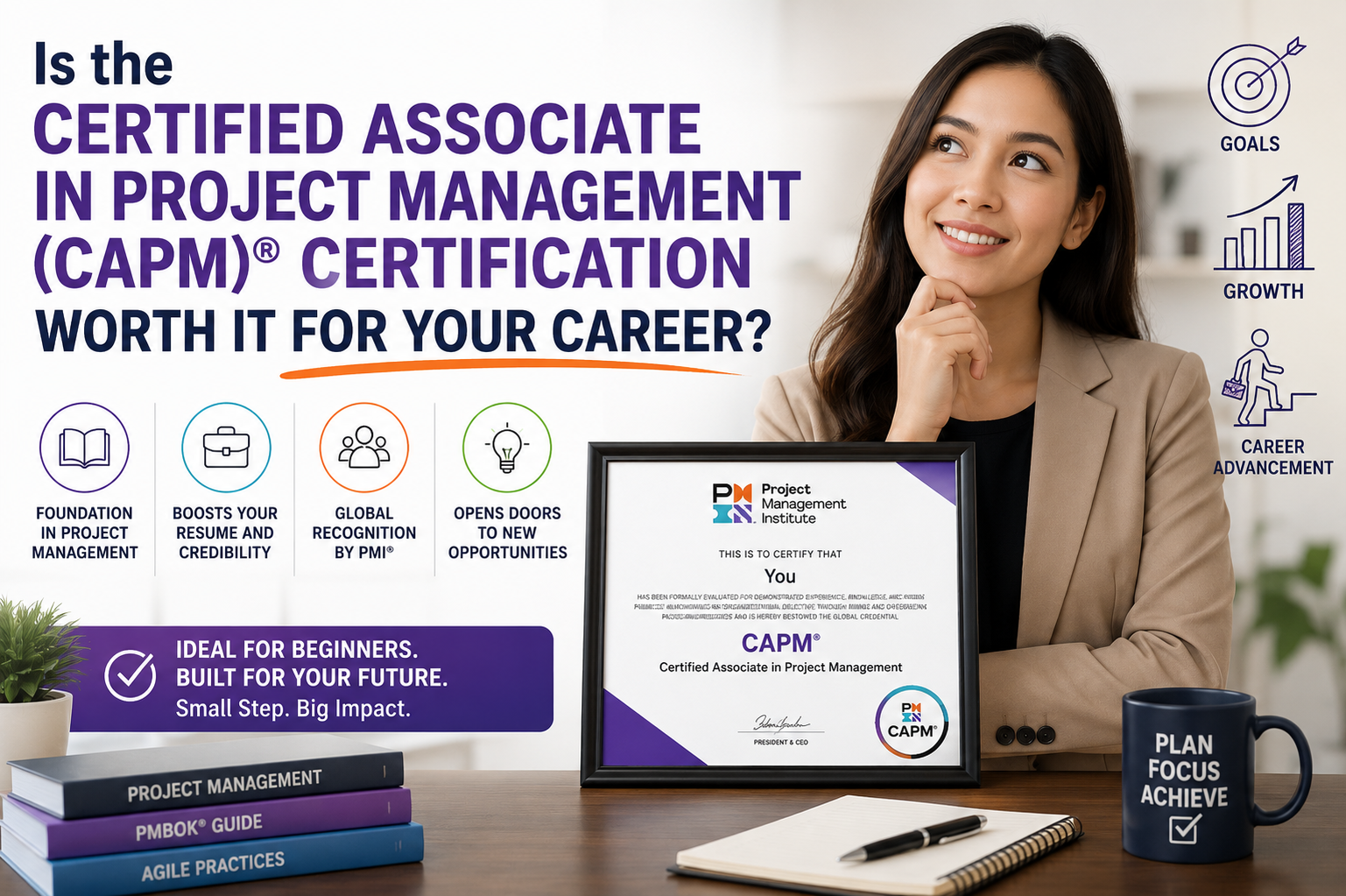
The Certified Associate in Project Management (CAPM) is widely recognized as an entry-level credential designed for individuals who are beginning their journey in project management. It serves as a structured introduction to the discipline, offering a clear framework for understanding how projects are planned, executed, monitored, and completed. For those who are new to the field, this certification provides a way to build credibility without requiring years of hands-on experience. It helps individuals demonstrate that they possess a standardized understanding of project management principles, which can be especially valuable in competitive job markets. Rather than relying solely on informal knowledge or limited exposure, CAPM holders can showcase a verified level of competence that aligns with globally accepted practices.
Why CAPM Appeals to Early-Career Professionals
One of the strongest advantages of the CAPM certification is its accessibility. Unlike advanced certifications that demand extensive project leadership experience, CAPM focuses on foundational knowledge. This makes it an ideal choice for students, recent graduates, or professionals transitioning from other fields. It acts as a stepping stone, allowing candidates to enter the project management domain with confidence. The certification not only validates theoretical understanding but also introduces candidates to the language and structure used in professional environments. As a result, individuals are better prepared to collaborate with experienced project managers and contribute meaningfully to project teams from the outset.
The Role of Structured Knowledge in Career Growth
Project management is a discipline that thrives on structure, consistency, and repeatable processes. CAPM emphasizes these elements by aligning its content with established frameworks and methodologies. This structured approach helps learners move beyond guesswork and develop a systematic way of handling tasks, timelines, and resources. By mastering these fundamentals, individuals can improve their efficiency and decision-making abilities. Over time, this foundation becomes critical as responsibilities grow and projects become more complex. The certification essentially equips candidates with a mental model that can be applied across industries, making it a versatile and transferable skill set.
Exploring the Core Concepts Covered in CAPM
The CAPM certification focuses on essential project management concepts such as project lifecycle, scope management, time management, cost control, risk assessment, and stakeholder communication. These areas form the backbone of successful project execution. Candidates learn how to define project objectives, create realistic schedules, allocate resources effectively, and monitor progress against predefined goals. Additionally, the certification emphasizes the importance of communication and collaboration, ensuring that all stakeholders remain aligned throughout the project. By covering these topics in depth, CAPM prepares individuals to handle real-world scenarios with greater confidence and clarity.
The Importance of Standardized Terminology
A significant benefit of earning the CAPM certification is gaining familiarity with standardized project management terminology. In professional environments, clear communication is essential, and misunderstandings can lead to costly errors. CAPM ensures that candidates understand and use consistent language when discussing project elements such as deliverables, milestones, risks, and dependencies. This shared vocabulary enhances collaboration within teams and improves overall efficiency. It also allows individuals to integrate seamlessly into organizations that follow structured project management methodologies, reducing the learning curve and increasing productivity from day one.
Eligibility Requirements and Learning Commitment
To pursue the CAPM certification, candidates must meet specific educational requirements, including a secondary degree and a defined number of hours dedicated to project management education. This requirement ensures that all candidates have a baseline level of preparation before attempting the exam. While the prerequisites are not overly demanding, they do require commitment and discipline. Completing the required training hours involves studying core concepts, engaging with learning materials, and practicing application-based scenarios. This process not only prepares candidates for the exam but also reinforces their understanding of key principles, making the certification more meaningful and impactful.
Preparing for the CAPM Examination
The CAPM exam is designed to assess a candidate’s understanding of project management fundamentals through a series of multiple-choice questions. Preparation for the exam requires a combination of theoretical study and practical application. Candidates often rely on study guides, practice exams, and structured learning resources to build confidence. Time management plays a crucial role during preparation, as the breadth of topics can be extensive. Developing a study plan, setting realistic goals, and नियमित revision are essential strategies for success. By approaching preparation systematically, candidates can improve their chances of passing the exam and gaining the certification.
What the Exam Experience Looks Like
The examination itself is structured to test both knowledge and comprehension. Candidates are required to answer a significant number of questions within a fixed time frame, which adds an element of pressure. The questions are designed to evaluate not only recall but also the ability to apply concepts in practical scenarios. This ensures that certified individuals are not just memorizing information but truly understanding how to use it. The availability of online testing options adds flexibility, allowing candidates to take the exam in a comfortable environment. However, the challenge remains substantial, and thorough preparation is essential to النجاح.
Career Opportunities After CAPM Certification
Earning the CAPM certification can open doors to a variety of entry-level roles in project management. Common positions include project coordinator, assistant project manager, and team member roles that support project execution. These roles provide valuable hands-on experience and allow individuals to apply their knowledge in real-world settings. Over time, this experience can lead to more advanced positions with greater responsibility. The certification acts as a catalyst, helping individuals transition from theoretical learning to practical application. It also signals to employers that the candidate is serious about building a career in project management.
The Impact on Professional Confidence
Beyond career opportunities, CAPM has a significant impact on personal confidence. For many individuals, entering a new field can be intimidating, especially when competing with experienced professionals. The certification provides reassurance that they possess the necessary knowledge to contribute effectively. This confidence translates into better performance during interviews, stronger communication within teams, and a willingness to take on new challenges. As individuals begin to see the practical results of their learning, their confidence continues to grow, creating a positive cycle of improvement and achievement.
Comparing CAPM to Other Certifications
While CAPM is an excellent starting point, it is important to understand how it compares to other certifications in the project management landscape. Advanced certifications typically require significant project experience and focus on leadership and strategic decision-making. CAPM, on the other hand, is centered on foundational knowledge and entry-level skills. This distinction makes it an ideal first step but not the अंतिम goal for most professionals. By starting with CAPM, individuals can build a strong base before pursuing more advanced credentials that align with their career aspirations.
Financial Considerations and Return on Investment
Investing in a certification involves both time and financial resources. Candidates must consider exam fees, study materials, and the time required for preparation. However, the potential return on investment can be substantial. Even at an entry level, project management roles often offer competitive salaries and opportunities for growth. As individuals gain experience and advance in their careers, the initial investment in CAPM can yield long-term benefits. It is important to view the certification not as a खर्च but as an investment in professional development and future earning potential.
The Role of Continuous Learning in Project Management
Project management is a dynamic field that लगातार evolves with changes in technology, methodologies, and industry practices. CAPM introduces candidates to the concept of continuous learning, emphasizing the importance of staying updated with new developments. Certification holders are encouraged to engage in ongoing education to maintain their credentials and enhance their skills. This commitment to learning ensures that professionals remain relevant and capable of adapting to new challenges. It also fosters a mindset of growth, which is essential for long-term success in any career.
Building a Strong Professional Network
Another advantage of pursuing CAPM is the opportunity to connect with a broader community of project management professionals. Engaging with peers, mentors, and industry experts can provide valuable insights and support. Networking can lead to new opportunities, collaborations, and knowledge sharing. For individuals who are just starting their careers, building a professional network is especially important. It helps them gain exposure to different perspectives and learn from the experiences of others. Over time, these connections can play a crucial role in career advancement and personal development.
Evaluating Whether CAPM Aligns with Your Goals
Deciding whether CAPM is worth pursuing ultimately depends on individual goals and circumstances. For those who are committed to a career in project management, the certification offers a clear and structured starting point. It provides the knowledge, confidence, and recognition needed to enter the field and begin building experience. However, individuals should also consider factors such as their available time, financial resources, and long-term career plans. By carefully evaluating these aspects, they can determine whether CAPM aligns with their objectives and whether it is the right خطوة for their professional journey.
Conclusion
The Certified Associate in Project Management (CAPM) stands as a practical and accessible entry point for anyone looking to establish a career in project management. It offers a structured way to understand core concepts, build essential skills, and gain recognition in a competitive job market without requiring prior experience. By focusing on standardized processes and terminology, it helps individuals integrate smoothly into professional environments and contribute effectively from the beginning of their careers.
While the certification requires commitment in terms of time, effort, and cost, the long-term benefits often outweigh these initial investments. It can enhance employability, boost confidence, and create a pathway toward more advanced certifications and roles. However, its true value depends on how well it aligns with your personal career goals. For those serious about growing in project management, CAPM is not just worth it—it is a strong foundation that can support continuous learning, career progression, and long-term success.