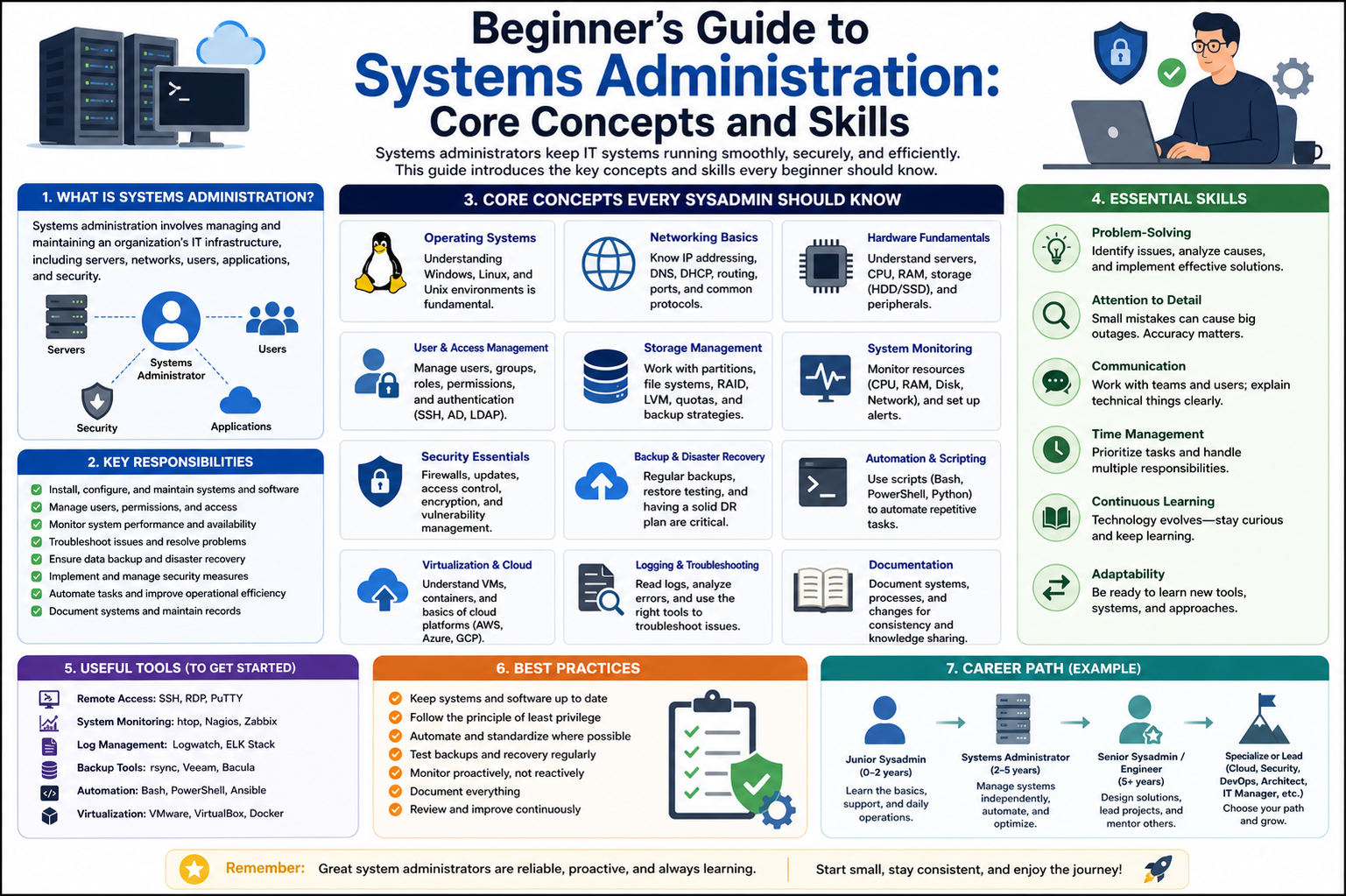
Systems administration stands at the core of modern IT environments, acting as the invisible force that keeps digital infrastructure stable, secure, and efficient. Every organization that relies on computers, networks, or cloud services depends heavily on professionals who ensure everything runs smoothly behind the scenes. This field is not limited to a single type of technology or responsibility; instead, it blends multiple disciplines into one dynamic role. From managing servers and maintaining networks to resolving unexpected technical issues, systems administration forms the backbone of operational continuity.
The role is often misunderstood as purely technical, but it extends far beyond that. It involves strategic thinking, proactive maintenance, and the ability to anticipate problems before they impact users. Systems administrators are responsible for ensuring that systems are not only functional but also optimized for performance and reliability. Their work supports productivity across entire organizations, making them indispensable in both small businesses and large enterprises.
Defining the Role of a Systems Administrator
A systems administrator, commonly referred to as a SysAdmin, is an IT professional responsible for managing and maintaining an organization’s technological environment. This includes computers, servers, operating systems, applications, and network components. Unlike specialists who focus on a single domain, SysAdmins are generalists with a broad understanding of multiple technologies. Their versatility allows them to handle a wide range of tasks, from configuring new systems to troubleshooting complex technical issues.
One of the defining traits of a SysAdmin is adaptability. Technology environments are constantly evolving, and systems administrators must be ready to respond to new challenges at any moment. Whether it’s a sudden server failure, a network outage, or a security concern, they are often the first to respond and take corrective action. This makes them the frontline defenders of an organization’s IT infrastructure.
Their responsibilities also extend to maintaining system integrity and ensuring that all components work together seamlessly. This includes monitoring system performance, applying updates, and ensuring compatibility between hardware and software. In many ways, SysAdmins act as the glue that holds an organization’s digital ecosystem together.
The Importance of Versatility in Systems Administration
One of the most valuable qualities of a systems administrator is their broad skill set. Unlike roles that require deep expertise in a single area, systems administration demands a working knowledge of many technologies. This includes operating systems, networking concepts, server management, and security practices.
This versatility allows SysAdmins to interact with nearly every aspect of an organization’s IT environment. They may configure user accounts in the morning, troubleshoot a network issue in the afternoon, and apply security patches in the evening. Their ability to switch between tasks and adapt to different challenges is what makes them so effective.
Because they are exposed to a wide range of technologies, systems administrators often develop a strong foundation that can lead to specialized roles in the future. Whether someone chooses to focus on cybersecurity, cloud computing, or network engineering, the experience gained in systems administration provides a solid starting point.
Systems Administration as the First Line of Defense
When technology fails, systems administrators are usually the first to respond. Their role as first responders means they must quickly identify the root cause of problems and implement solutions to minimize downtime. This requires not only technical knowledge but also critical thinking and problem-solving skills.
Being the first line of defense also means that SysAdmins play a key role in maintaining business continuity. Even minor disruptions can have significant consequences, especially in environments where uptime is critical. By proactively monitoring systems and addressing potential issues before they escalate, systems administrators help prevent costly outages.
In addition to reactive troubleshooting, they also engage in preventive maintenance. This includes regular system updates, performance tuning, and security checks. By staying ahead of potential problems, they ensure that systems remain stable and reliable over time.
The Scope of Systems Administration Responsibilities
Systems administration encompasses a wide range of responsibilities that go beyond basic technical tasks. One of the primary duties is setting up and configuring hardware and software. This involves installing operating systems, configuring network settings, and ensuring that all components are properly integrated.
User management is another critical aspect of the role. Systems administrators are responsible for creating user accounts, assigning permissions, and managing access to resources. This ensures that users can perform their tasks while maintaining security and control over sensitive information.
Network maintenance also falls under the scope of systems administration. While specialized network engineers may handle complex configurations, SysAdmins are responsible for ensuring overall network stability and performance. This includes monitoring traffic, troubleshooting connectivity issues, and maintaining network security.
Server management is equally important. Systems administrators are often responsible for maintaining servers that host applications, databases, and other critical services. This includes performing updates, monitoring performance, and ensuring that servers remain operational at all times.
Security and Stability in Systems Administration
Security is a fundamental responsibility for systems administrators. As cyber threats continue to evolve, maintaining a secure IT environment has become more important than ever. SysAdmins implement security measures such as firewalls, access controls, and software updates to protect systems from vulnerabilities.
They also play a key role in ensuring compliance with organizational policies and industry standards. This involves configuring systems according to security guidelines and regularly auditing them to identify potential risks. By maintaining a secure environment, systems administrators help protect sensitive data and maintain user trust.
Stability is closely tied to security. A stable system is less likely to experience failures or disruptions, which in turn reduces the risk of security breaches. Systems administrators work continuously to maintain this stability through monitoring, maintenance, and optimization.
The Role of Troubleshooting in Daily Operations
Troubleshooting is one of the most recognizable aspects of systems administration. When something goes wrong, it is the SysAdmin’s responsibility to diagnose and fix the issue as quickly as possible. This requires a systematic approach to problem-solving, as well as a deep understanding of how different systems interact.
Effective troubleshooting involves identifying symptoms, analyzing potential causes, and implementing solutions. It may also require collaboration with other IT professionals or vendors to resolve complex issues. The ability to remain calm under pressure and think logically is essential in these situations.
Over time, systems administrators develop a strong intuition for identifying problems and finding solutions. This experience becomes invaluable, allowing them to handle even the most challenging scenarios with confidence.
Career Path and Growth Opportunities
Systems administration is often considered an entry point into the IT field, but it offers significant opportunities for growth and advancement. Many professionals start as junior systems administrators or help desk technicians before moving into more specialized roles.
As they gain experience, SysAdmins can take on more complex responsibilities, such as designing IT infrastructure, managing large-scale deployments, or leading teams. Some may choose to specialize in areas like cloud computing, cybersecurity, or virtualization.
The skills acquired in systems administration are highly transferable, making it easier to transition into other IT roles. This flexibility makes it an attractive career choice for individuals who are still exploring their interests within the technology field.
The Learning Curve in Systems Administration
Becoming a systems administrator requires a combination of theoretical knowledge and practical experience. While formal education can provide a foundation, hands-on practice is essential for developing the skills needed to succeed.
Learning systems administration involves understanding how different technologies work together. This includes operating systems, networking concepts, and server management. It also requires familiarity with tools and technologies used in real-world environments.
Because the field is constantly evolving, continuous learning is a necessity. Systems administrators must stay up to date with new technologies, security threats, and best practices. This commitment to learning ensures that they remain effective in their roles and can adapt to changing demands.
Practical Skills and Real-World Application
The practical nature of systems administration sets it apart from many other fields. It is not enough to simply understand concepts; SysAdmins must be able to apply their knowledge in real-world scenarios. This includes configuring systems, managing resources, and resolving issues as they arise.
Hands-on experience can be gained through labs, simulations, or real-world projects. These experiences help bridge the gap between theory and practice, allowing aspiring systems administrators to build confidence in their abilities.
In addition to technical skills, communication and teamwork are also important. Systems administrators often interact with users, developers, and other IT professionals. Being able to explain technical concepts clearly and work collaboratively is essential for success in this role.
Expanding the Scope of Systems Administration
As organizations continue to rely on increasingly complex digital environments, the scope of systems administration naturally expands to accommodate new technologies and operational demands. Systems administrators are no longer confined to maintaining on-premises infrastructure; they are now deeply involved in hybrid environments that blend physical systems with cloud-based platforms. This shift requires a broader understanding of how different systems interact across multiple layers, from local networks to distributed cloud services.
The expanding scope also introduces new responsibilities, such as integrating third-party applications, managing remote access solutions, and ensuring seamless communication between different systems. SysAdmins must understand how data flows through these environments and how to maintain efficiency without compromising security. Their role evolves alongside technology, making adaptability one of the most critical traits for long-term success in this field.
Systems Setup and Configuration in Practice
One of the foundational responsibilities of systems administration is setting up and configuring systems to meet organizational needs. This process begins with selecting appropriate hardware and software, followed by installation and configuration. While some setups may appear straightforward, many require careful planning and precise execution to ensure compatibility and optimal performance.
Configuration involves more than simply installing an operating system or application. It includes defining system settings, establishing network connections, and customizing environments to align with specific requirements. Systems administrators must also consider scalability, ensuring that systems can handle future growth without requiring complete reconfiguration.
Attention to detail is crucial during this phase. A single misconfiguration can lead to performance issues, security vulnerabilities, or system failures. By carefully planning and executing setups, SysAdmins create stable foundations that support ongoing operations.
Managing Users and Access Control
User management is a central component of systems administration, directly impacting both security and usability. Systems administrators are responsible for creating user accounts, assigning roles, and managing permissions across various systems and applications. This ensures that individuals have access to the resources they need while preventing unauthorized access.
Access control requires a balance between convenience and security. Granting excessive permissions can expose sensitive data, while overly restrictive access can hinder productivity. Systems administrators must carefully evaluate each user’s role and assign permissions accordingly.
In addition to initial setup, user management involves ongoing maintenance. This includes updating permissions, disabling inactive accounts, and resolving access-related issues. Effective user management helps maintain system integrity and supports a secure working environment.
Network Stability and Maintenance
Maintaining network stability is another critical responsibility for systems administrators. While specialized network engineers may handle complex configurations, SysAdmins ensure that networks operate smoothly on a day-to-day basis. This includes monitoring performance, identifying bottlenecks, and addressing connectivity issues.
Network maintenance involves routine tasks such as updating firmware, configuring network devices, and ensuring proper communication between systems. Systems administrators must also be familiar with basic networking concepts, such as IP addressing, routing, and protocols.
A stable network is essential for organizational productivity. Even minor disruptions can affect communication, data transfer, and access to critical applications. By proactively maintaining network health, systems administrators help prevent disruptions and ensure consistent performance.
Server Administration and Operational Continuity
Servers play a vital role in hosting applications, storing data, and supporting various services. Systems administrators are responsible for ensuring that these servers remain operational and perform efficiently. This includes installing server operating systems, configuring services, and monitoring performance metrics.
Server administration also involves routine maintenance tasks, such as applying updates, managing storage, and optimizing performance. Systems administrators must ensure that servers can handle workloads without experiencing slowdowns or failures.
Operational continuity depends heavily on reliable server performance. Any disruption to server operations can impact multiple systems and users. By maintaining servers effectively, SysAdmins help ensure that critical services remain available at all times.
Implementing Security Measures and Best Practices
Security is an ongoing concern in systems administration, requiring constant vigilance and proactive measures. Systems administrators implement security controls to protect systems from threats, including malware, unauthorized access, and data breaches.
This involves configuring firewalls, applying security patches, and monitoring system activity for suspicious behavior. Systems administrators must stay informed about emerging threats and adapt their strategies accordingly.
Security is not a one-time task but a continuous process. Regular updates, audits, and assessments are necessary to maintain a secure environment. By prioritizing security, SysAdmins play a crucial role in protecting organizational assets and maintaining trust.
Backup Strategies and Disaster Recovery Planning
Data loss can have serious consequences, making backup and disaster recovery essential components of systems administration. Systems administrators are responsible for implementing backup strategies that ensure data can be restored in the event of a failure.
This includes scheduling regular backups, verifying their integrity, and testing recovery procedures. Effective backup strategies consider factors such as data importance, storage capacity, and recovery time objectives.
Disaster recovery planning goes beyond backups. It involves preparing for scenarios such as hardware failures, cyberattacks, or natural disasters. Systems administrators must develop and maintain plans that enable rapid recovery and minimize downtime.
By ensuring that data and systems can be restored quickly, SysAdmins help organizations maintain continuity even in challenging situations.
Documentation and Knowledge Management
Documentation is often overlooked but is a critical aspect of systems administration. Systems administrators are responsible for maintaining records of system configurations, procedures, and maintenance activities.
Accurate documentation helps ensure consistency and provides a reference for troubleshooting and future planning. It also facilitates collaboration, allowing team members to understand system setups and processes.
Good documentation practices include keeping records up to date, organizing information clearly, and ensuring accessibility. This not only improves efficiency but also reduces the risk of errors during system changes or upgrades.
The Art of Troubleshooting Complex Systems
Troubleshooting remains one of the most demanding aspects of systems administration. As systems become more complex, identifying the root cause of issues requires a structured and methodical approach.
Systems administrators must analyze symptoms, gather relevant data, and test potential solutions. This process often involves working across multiple systems and technologies, requiring a broad understanding of how they interact.
Effective troubleshooting also requires patience and persistence. Some issues may not have obvious solutions, requiring SysAdmins to explore multiple possibilities before resolving the problem.
Over time, experience plays a significant role in improving troubleshooting skills. Familiarity with common issues and patterns allows systems administrators to resolve problems more efficiently.
Bridging the Gap Between Technology and Users
Systems administrators serve as a bridge between technical systems and the people who use them. They must ensure that systems are not only functional but also accessible and user-friendly.
This involves assisting users with technical issues, providing guidance, and ensuring that systems meet their needs. Strong communication skills are essential, as SysAdmins must explain complex concepts in a way that is easy to understand.
By supporting users and maintaining reliable systems, systems administrators contribute to overall productivity and satisfaction. Their role extends beyond technical tasks, encompassing both problem-solving and user support.
Adapting to Technological Change
Technology evolves rapidly, and systems administrators must keep pace with these changes. New tools, platforms, and methodologies are constantly emerging, requiring continuous learning and adaptation.
This includes staying informed about advancements in cloud computing, automation, and security practices. Systems administrators must evaluate new technologies and determine how they can be integrated into existing environments.
Adaptability is key to long-term success in systems administration. Those who embrace change and continue to develop their skills are better equipped to handle the challenges of modern IT environments.
Understanding Training Requirements for Systems Administration
Building a career in systems administration requires structured learning combined with consistent hands-on practice. The role demands a wide-ranging understanding of multiple technologies, so training must be comprehensive rather than narrowly focused. Unlike roles that rely heavily on theory, systems administration emphasizes applied knowledge, where individuals must demonstrate their ability to configure, maintain, and troubleshoot real systems.
Training typically begins with foundational concepts and gradually progresses into more complex topics. This progression allows learners to build confidence while developing the technical depth required to manage real-world environments. A strong training path ensures that aspiring systems administrators are prepared to handle both routine tasks and unexpected challenges in professional settings.
Core Operating System Knowledge
A systems administrator must be comfortable working with multiple operating systems, as organizations often use a mix of platforms to meet different needs. Understanding how operating systems function is essential for managing system resources, configuring environments, and resolving issues.
This includes installing operating systems, managing updates, and configuring system settings. It also involves understanding file systems, user permissions, and process management. Each operating system has its own unique features and tools, so familiarity with a variety of platforms enhances a SysAdmin’s versatility.
Beyond basic operation, administrators must also understand how to optimize performance and ensure stability. This includes monitoring system health, managing resource allocation, and identifying potential bottlenecks. Mastery of operating systems forms the foundation for many other aspects of systems administration.
Fundamentals of Network Administration
Networking knowledge is essential for systems administrators, as nearly all systems rely on network connectivity to function effectively. While deep specialization in networking is not always required, a solid understanding of core concepts is necessary.
This includes knowledge of IP addressing, subnetting, routing, and common network protocols. Systems administrators must understand how devices communicate and how data moves across networks. This knowledge enables them to diagnose connectivity issues and ensure reliable communication between systems.
In addition to theoretical understanding, practical skills are equally important. Configuring routers, switches, and network interfaces are common tasks that require hands-on experience. By developing these skills, systems administrators can maintain network stability and address issues efficiently.
Server Management and Virtualization Concepts
Servers are at the heart of most IT environments, providing essential services such as data storage, application hosting, and communication platforms. Systems administrators must understand how to install, configure, and maintain these servers to ensure consistent performance.
Server management includes tasks such as configuring services, managing storage, and monitoring system performance. Administrators must also ensure that servers are secure and capable of handling workload demands.
Virtualization has become a key component of modern server environments. It allows multiple virtual machines to run on a single physical server, improving resource utilization and flexibility. Systems administrators must understand how virtualization works and how to manage virtual environments effectively.
By mastering server and virtualization concepts, SysAdmins can support scalable and efficient IT infrastructures.
The Role of Scripting and Automation
Automation plays a significant role in modern systems administration, helping to reduce manual effort and improve efficiency. Scripting allows administrators to automate repetitive tasks, such as system updates, user management, and configuration changes.
While advanced programming skills are not always required, a basic understanding of scripting languages can greatly enhance productivity. Scripts can be used to perform tasks consistently and quickly, reducing the risk of human error.
Automation also supports scalability. As systems grow in size and complexity, manual management becomes less practical. By leveraging automation tools, systems administrators can manage larger environments with greater efficiency and accuracy.
Cloud Computing and Hybrid Environments
Cloud computing has transformed the way organizations manage their IT infrastructure. Systems administrators must understand how cloud platforms operate and how they integrate with traditional on-premises systems.
This includes configuring cloud-based resources, managing virtual machines, and ensuring secure access to cloud services. Administrators must also understand how to monitor and optimize cloud performance to control costs and maintain efficiency.
Hybrid environments, which combine on-premises infrastructure with cloud services, are increasingly common. Managing these environments requires a clear understanding of how different systems interact and how to maintain consistency across platforms.
By developing cloud computing skills, systems administrators can remain relevant in an evolving technological landscape.
Developing Essential Soft Skills
Technical expertise alone is not enough to succeed in systems administration. Soft skills play a crucial role in ensuring effective communication, collaboration, and problem-solving. Systems administrators often interact with users, team members, and stakeholders, making clear communication essential.
This includes the ability to explain technical concepts in a way that non-technical users can understand. It also involves active listening, which helps administrators identify issues more accurately and provide appropriate solutions.
Time management and organization are equally important. Systems administrators often handle multiple tasks simultaneously, requiring them to prioritize effectively and manage their workload efficiently.
By developing strong soft skills, SysAdmins can enhance their effectiveness and contribute more meaningfully to their organizations.
Exploring Training Methods and Learning Approaches
There are many ways to learn systems administration, each offering unique advantages. Online training has become one of the most popular methods, providing flexibility and access to up-to-date content. Learners can study at their own pace and revisit topics as needed.
Hands-on labs and simulations are particularly valuable, as they allow learners to practice real-world scenarios in a controlled environment. These experiences help bridge the gap between theory and practice, making it easier to apply knowledge in professional settings.
Self-study is another effective approach, especially for individuals who prefer independent learning. This may involve reading documentation, experimenting with systems, and exploring new technologies.
Combining multiple learning methods often produces the best results, as it provides both theoretical understanding and practical experience.
Overcoming the Experience Barrier
One of the biggest challenges for aspiring systems administrators is gaining practical experience. Many entry-level positions require experience, creating a barrier for newcomers. However, there are ways to overcome this challenge through proactive learning and practice.
Setting up personal labs is one effective strategy. By creating a small network environment at home or using virtual machines, learners can experiment with system configurations, networking, and troubleshooting. This hands-on experience is invaluable for building confidence and developing practical skills.
Volunteering or contributing to small projects can also provide real-world experience. These opportunities allow learners to apply their knowledge in meaningful ways while building a portfolio of work.
By actively seeking out opportunities to practice and learn, aspiring systems administrators can overcome the experience barrier and prepare themselves for professional roles.
Choosing the Right Learning Path
Selecting the right learning path is essential for building a successful career in systems administration. With so many resources available, it can be challenging to determine where to start.
A good learning path should cover fundamental topics while also providing opportunities for hands-on practice. It should be structured in a way that allows learners to progress from basic concepts to more advanced skills.
It is also important to align learning goals with career objectives. For example, someone interested in cloud computing may focus more on cloud platforms, while someone interested in networking may prioritize network-related topics.
By choosing a learning path that aligns with personal interests and career goals, individuals can stay motivated and achieve better results.
The Value of Consistent Practice and Growth
Consistency is key when learning systems administration. Regular practice helps reinforce knowledge and build confidence in applying skills. Even small, daily efforts can lead to significant progress over time.
Growth in this field is continuous, as new technologies and challenges emerge regularly. Systems administrators must remain curious and committed to learning throughout their careers.
By maintaining a growth mindset and embracing continuous improvement, individuals can build a strong foundation and achieve long-term success in systems administration.
Understanding Career Progression in Systems Administration
Systems administration is often seen as an entry point into the IT world, but it is far from a static role. It is a dynamic career path that offers continuous growth and opportunities for specialization. As professionals gain experience, they often move from generalist responsibilities into more focused areas of expertise such as cloud engineering, cybersecurity, infrastructure architecture, or network engineering.
Early in their careers, systems administrators typically focus on maintaining systems, resolving issues, and supporting day-to-day operations. Over time, they begin to take on more complex responsibilities that involve planning, designing, and optimizing IT environments. This gradual progression allows individuals to build both technical depth and strategic thinking skills.
Career advancement in this field is closely tied to hands-on experience. The more exposure a systems administrator gains to different systems, environments, and challenges, the more capable they become of handling advanced roles. This natural progression makes systems administration a strong foundation for long-term IT careers.
Transitioning from Generalist to Specialist Roles
One of the defining characteristics of systems administration is its role as a gateway to specialization. Because SysAdmins work across multiple technologies, they gain exposure to a wide range of IT domains. This exposure often helps them identify areas of interest where they may choose to specialize later.
For example, a systems administrator who frequently works with cloud platforms may transition into cloud engineering or cloud architecture. Similarly, someone who focuses heavily on security tasks may move into cybersecurity roles. Those with a strong interest in networking may pursue careers in network engineering or infrastructure design.
This transition is natural because systems administration builds a broad base of knowledge. Rather than limiting professionals to one area, it provides the flexibility to explore different paths before committing to a specialization.
The Importance of Real-World Experience in Growth
Experience plays a crucial role in shaping a systems administrator’s career. While theoretical knowledge provides the foundation, real-world exposure is what truly develops expertise. Every system failure, configuration change, or troubleshooting scenario contributes to a deeper understanding of how IT environments function.
Over time, experienced SysAdmins develop intuition for diagnosing problems and anticipating issues before they occur. This ability comes only from repeated exposure to diverse environments and challenges. It is this accumulated experience that allows senior professionals to handle complex systems with confidence.
Real-world experience also improves decision-making skills. Systems administrators learn to evaluate trade-offs, prioritize tasks, and choose solutions that balance performance, cost, and security. These skills are essential for advancing into higher-level roles.
Evolving Responsibilities in Advanced Roles
As systems administrators progress in their careers, their responsibilities begin to shift from operational tasks to strategic planning. Instead of focusing solely on fixing issues, they become involved in designing systems, planning infrastructure upgrades, and optimizing IT environments for long-term efficiency.
Advanced roles often require collaboration with multiple teams, including developers, security professionals, and business stakeholders. This means that systems administrators must not only understand technology but also how it supports organizational goals.
In senior positions, responsibilities may include managing teams, overseeing large-scale deployments, and making architectural decisions that impact entire organizations. This shift reflects the growing importance of systems administration in shaping business success.
The Role of Leadership in Systems Administration
Leadership becomes an important aspect of systems administration as professionals advance in their careers. Senior SysAdmins are often responsible for guiding teams, mentoring junior staff, and ensuring that best practices are followed across the organization.
Effective leadership in this field requires both technical expertise and interpersonal skills. Leaders must be able to communicate clearly, delegate tasks effectively, and provide support when challenges arise. They also play a key role in decision-making, ensuring that technical solutions align with business objectives.
Mentorship is another important responsibility. Experienced systems administrators help newer professionals develop their skills, share knowledge, and build confidence. This transfer of knowledge strengthens the entire IT team and ensures continuity within the organization.
The Growing Importance of Automation and Efficiency
As IT environments become more complex, automation continues to play an increasingly important role in systems administration. Advanced SysAdmins are expected to implement automation strategies that reduce manual workload and improve system efficiency.
Automation can be applied to a wide range of tasks, including system provisioning, updates, monitoring, and reporting. By automating repetitive processes, systems administrators can focus on higher-level responsibilities such as optimization and planning.
Efficiency is also a key consideration in modern IT environments. Organizations expect systems to perform reliably while minimizing resource consumption. Systems administrators must continuously look for ways to improve performance and reduce operational costs without compromising functionality.
The Shift Toward Cloud and Hybrid Infrastructure
Modern systems administration is heavily influenced by the shift toward cloud computing and hybrid infrastructures. Many organizations no longer rely solely on traditional on-premises systems but instead use a combination of cloud services and local infrastructure.
This shift requires systems administrators to understand how to manage resources across multiple environments. They must ensure that systems remain integrated, secure, and efficient regardless of where they are hosted.
Cloud platforms introduce new concepts such as scalability, elasticity, and distributed computing. Systems administrators must learn how to leverage these capabilities to improve system performance and support business growth.
Security Challenges in Modern Environments
As technology evolves, so do security threats. Systems administrators must continuously adapt to new risks and implement strategies to protect systems and data. Security is no longer a separate function but an integrated part of systems administration.
Modern environments face challenges such as data breaches, ransomware, and unauthorized access attempts. Systems administrators must implement layered security approaches that include firewalls, encryption, access controls, and monitoring systems.
Staying ahead of threats requires continuous learning and vigilance. Administrators must keep up with emerging vulnerabilities and apply updates promptly to reduce exposure. Security awareness is a critical component of long-term system stability.
The Role of Continuous Learning and Adaptation
Systems administration is not a field that remains static. Technology evolves rapidly, and professionals must continuously update their skills to remain effective. Continuous learning is essential for keeping pace with new tools, platforms, and methodologies.
This learning process may involve formal training, self-study, or hands-on experimentation. Many systems administrators dedicate time regularly to exploring new technologies and improving their understanding of existing systems.
Adaptation is equally important. As environments change, SysAdmins must be willing to adjust their approaches and adopt new solutions. This flexibility ensures that they remain relevant and effective in a constantly evolving industry.
Balancing Technical and Strategic Thinking
Advanced systems administration requires a balance between technical execution and strategic planning. While technical skills are necessary for managing systems, strategic thinking is essential for long-term success.
Systems administrators must consider how their decisions impact performance, scalability, and cost over time. This involves evaluating different solutions, forecasting future needs, and aligning IT infrastructure with business goals.
Strategic thinking also involves anticipating future challenges and preparing systems accordingly. This proactive approach helps organizations remain competitive and resilient in changing environments.
Final Conclusion
Systems administration is more than a technical role; it is a foundational discipline that supports the entire IT ecosystem. It combines hands-on technical work with problem-solving, communication, and strategic planning.
From entry-level responsibilities to advanced leadership roles, the journey of a systems administrator is defined by continuous growth and adaptation. Each stage builds upon the previous one, creating a strong foundation for long-term success in the technology field.
Ultimately, systems administration offers a career path that is both challenging and rewarding, providing opportunities to work across diverse technologies while contributing directly to the stability and success of modern digital environments.