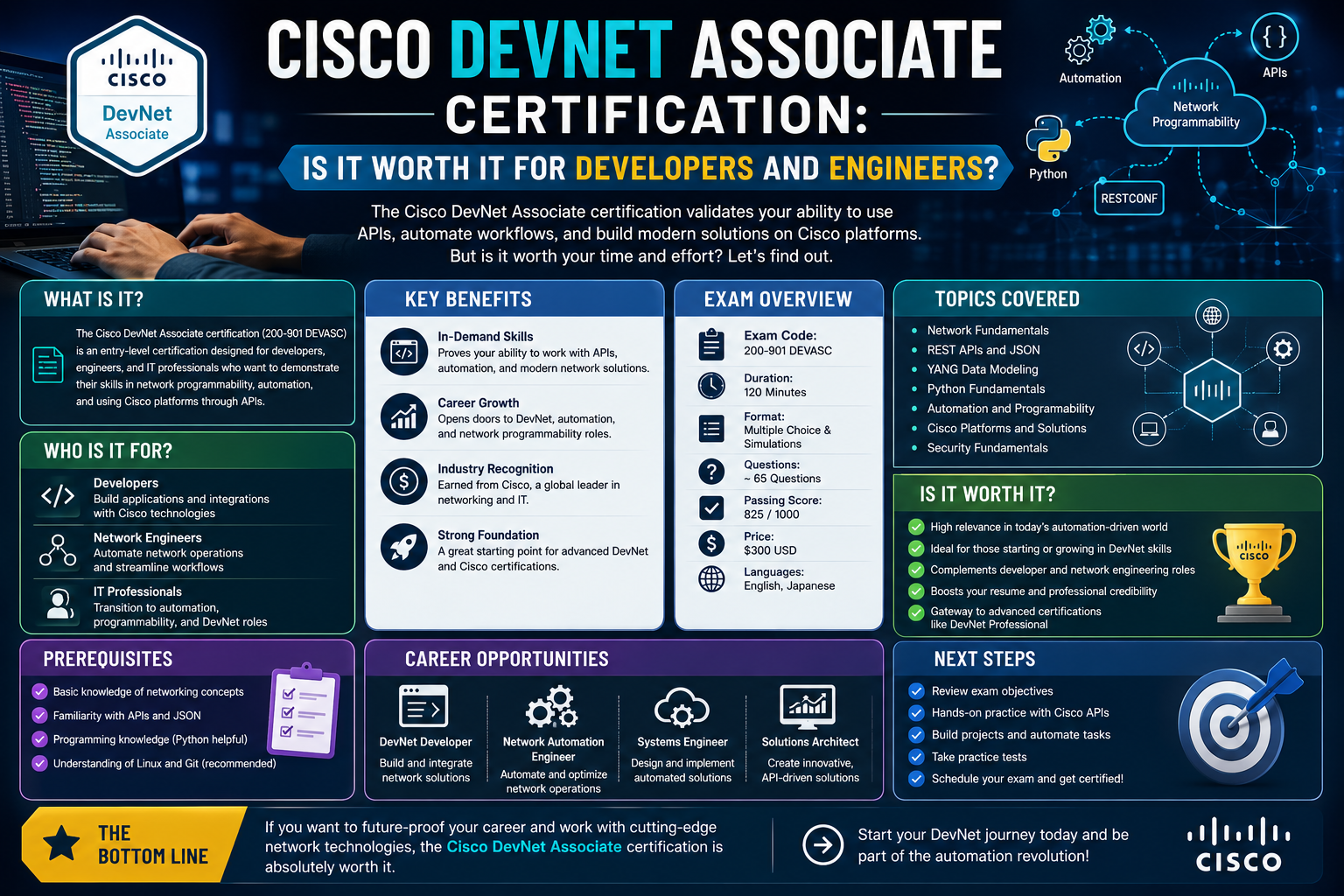
Modern networking has changed dramatically over the last decade. In earlier enterprise environments, network management was heavily manual. Engineers would configure routers, switches, and firewalls using command-line interfaces, often repeating similar tasks across multiple devices. While this approach worked for smaller, static environments, it became increasingly inefficient as networks grew in size, complexity, and geographical distribution.
The rise of cloud computing, virtualization, and large-scale distributed systems changed everything. Organizations began demanding faster deployments, more flexible infrastructure, and systems that could scale on demand. This shift naturally pushed networking toward automation and software-defined control.
Instead of manually configuring every device, engineers started relying on scripts, APIs, and automation frameworks. Networks became programmable environments where behavior could be defined through software rather than manual intervention. This transformation created a gap between traditional network engineering and software development skills—two disciplines that previously operated in separate domains.
It is within this evolving landscape that Cisco introduced the DevNet program, designed to bridge the gap between networking and software development.
The Purpose of Cisco DevNet in a Changing IT Landscape
Cisco DevNet was created to support professionals who work at the intersection of networking and software. Rather than treating networks as static systems, DevNet promotes the idea that networks are programmable platforms that can be extended, customized, and automated.
At its core, DevNet is not just about certification. It is a broader ecosystem that encourages developers, system engineers, and IT professionals to think in terms of APIs, automation workflows, and software-driven infrastructure. Cisco recognized that future network professionals would need more than just knowledge of routing protocols and switching fundamentals—they would also need the ability to interact with systems programmatically.
This shift is particularly important in environments that rely on Cisco technologies. Many enterprise networks, cloud-connected infrastructures, and enterprise collaboration systems are built on Cisco platforms. DevNet provides the tools and knowledge required to extend these systems using software development principles.
The DevNet Associate certification sits at the entry level of this ecosystem, offering a foundation for understanding how software and networking integrate.
What the DevNet Associate Certification Represents
The DevNet Associate certification is designed as an entry point into Cisco’s software-focused certification track. It validates that an individual understands the fundamentals of software development in the context of networking environments.
Unlike traditional networking certifications that focus heavily on hardware configuration, routing protocols, or infrastructure design, the DevNet Associate focuses on programmability. It evaluates whether a candidate can interact with APIs, understand basic software development principles, and apply automation techniques to network systems.
This makes it fundamentally different from many other entry-level certifications in the IT industry. Instead of concentrating solely on how networks operate, it emphasizes how networks can be controlled and extended through software.
The certification is particularly relevant for individuals who work with Cisco technologies or want to transition into roles that combine networking with programming. It provides a structured introduction to topics that are essential in modern IT environments, such as REST APIs, automation tools, version control systems, and application deployment concepts.
Why Cisco Introduced DevNet Associate
Cisco introduced the DevNet Associate certification in response to a growing industry demand for automation and programmability skills. As enterprise networks became more complex, the need for automated solutions became unavoidable.
Manual configuration methods were no longer sufficient for large-scale environments that required rapid deployment and continuous updates. Network downtime, configuration errors, and operational inefficiencies became significant challenges for organizations managing hundreds or thousands of devices.
At the same time, software development practices were evolving rapidly. Developers were increasingly relying on APIs, microservices, and cloud-based infrastructure to build scalable applications. Cisco recognized that networking professionals needed to adopt similar approaches.
DevNet Associate was designed to address this gap by teaching foundational programming concepts in a networking context. It helps professionals understand how to interact with Cisco platforms programmatically and how to build automation workflows that reduce manual effort.
In essence, Cisco created DevNet Associate to prepare professionals for the future of network engineering—one where infrastructure is managed through code rather than manual configuration.
The Convergence of Networking and Software Development
One of the most important trends in IT today is the convergence of networking and software development. These two fields, once distinct, are now deeply interconnected.
Network engineers are expected to understand scripting languages, automation frameworks, and API interactions. Similarly, software developers are increasingly required to understand network behavior, infrastructure constraints, and deployment environments.
This convergence is driven by the need for agility and scalability. Businesses want systems that can adapt quickly to changing requirements. This is only possible when infrastructure is programmable.
The DevNet Associate certification reflects this reality. It introduces professionals to the idea that networks are not just physical or virtual devices—they are programmable systems that can be controlled through software.
This shift has created new career opportunities, such as network automation engineers, DevOps engineers, and integration specialists. These roles require a combination of networking knowledge and programming skills, which is exactly what the DevNet Associate aims to develop.
Key Knowledge Areas Covered in DevNet Associate
Although the DevNet Associate certification is entry-level, it covers a wide range of technical domains. These domains are designed to provide a balanced understanding of both software development and networking fundamentals.
Software Development Foundations
One of the core areas of focus is software development. Candidates are expected to understand basic programming concepts, including data structures, variables, loops, and functions. Python is commonly emphasized due to its widespread use in automation and scripting.
Version control systems also play an important role. Understanding how to manage code changes, collaborate in teams, and maintain software versions is essential for automation workflows.
Software design principles such as modularity, scalability, and maintainability are also introduced to help candidates understand how to build efficient and reusable code.
APIs and Application Integration
APIs are central to the DevNet Associate certification. They serve as the primary mechanism through which software interacts with network devices and services.
Candidates are expected to understand how APIs work, including how requests are structured, how authentication is handled, and how responses are interpreted. REST APIs are particularly important, as they are widely used in Cisco platforms and modern software systems.
This knowledge enables professionals to retrieve network data, modify configurations, and automate tasks without manual intervention.
Cisco Platforms and Automation Tools
Another key area is familiarity with Cisco platforms. This includes understanding how Cisco systems expose programmability features and how they can be controlled through software interfaces.
Automation tools such as configuration management systems and orchestration platforms are also part of the knowledge base. These tools allow professionals to manage large-scale networks efficiently.
The goal is not just to understand Cisco products but to understand how they fit into a broader automated infrastructure ecosystem.
Application Deployment and Security
Deploying applications in network environments requires careful consideration of security and stability. DevNet Associate introduces basic concepts of secure application deployment.
This includes understanding authentication methods, encryption principles, and secure communication protocols. It also involves learning how to ensure that applications do not compromise network integrity.
Security is a critical aspect of modern networking, and even at the associate level, professionals are expected to understand its importance.
Infrastructure and Network Fundamentals
Although DevNet Associate focuses heavily on software, it still requires a solid understanding of networking fundamentals. This includes knowledge of network topologies, protocols, and device behavior.
Understanding how data flows through a network is essential for building effective automation solutions. Without this foundation, it becomes difficult to design systems that interact correctly with infrastructure components.
Integration of Concepts
What makes DevNet Associate unique is how it combines these different domains. Instead of treating software and networking as separate subjects, it integrates them into a single learning framework.
This integration reflects real-world scenarios where automation scripts interact with network devices, APIs control infrastructure behavior, and applications depend on network performance.
The Role of APIs in Modern Network Environments
APIs are one of the most important technologies in modern IT systems. They act as intermediaries that allow different systems to communicate with each other.
In networking environments, APIs enable automation by allowing software to send commands to devices, retrieve configuration data, and monitor system performance.
The DevNet Associate certification places strong emphasis on understanding APIs because they are the foundation of network programmability.
Professionals who understand APIs can significantly reduce manual workloads by automating repetitive tasks. This not only improves efficiency but also reduces the likelihood of human error.
Why DevNet Associate Appeals to Modern IT Professionals
The DevNet Associate certification appeals to a wide range of IT professionals because it aligns with current industry trends.
For network engineers, it provides an opportunity to transition into automation-focused roles. For developers, it offers insight into how software interacts with infrastructure. For system integrators, it provides the tools needed to connect different technologies into cohesive systems.
This versatility makes it a valuable certification for professionals who want to remain relevant in a rapidly evolving industry.
The demand for automation skills continues to grow, and certifications like DevNet Associate help professionals position themselves for future opportunities in cloud computing, DevOps, and network automation.
The Growing Importance of Programmable Infrastructure
As organizations continue to adopt cloud-based architectures and distributed systems, programmable infrastructure has become essential.
Instead of manually managing individual devices, IT teams now rely on software to control entire networks. This approach allows for faster deployments, improved scalability, and more efficient resource management.
DevNet Associate introduces professionals to the foundational concepts required to work in such environments. It helps them understand how infrastructure can be treated as code and how automation can streamline operations.
This shift is not limited to large enterprises. Even small and medium-sized organizations are adopting automation to improve efficiency and reduce operational costs.
The Entry-Level Nature of DevNet Associate
Despite covering advanced concepts, DevNet Associate remains an entry-level certification. It is designed to be accessible to individuals with limited experience in software development or networking.
This accessibility is important because it allows a broader range of professionals to enter the field of network automation. By starting with foundational concepts, candidates can gradually build the skills needed for more advanced roles.
The certification acts as a stepping stone toward more specialized DevNet certifications, which focus on specific areas such as security, infrastructure, and application development.
The Broader Impact of DevNet Skills in IT Careers
The skills gained through the DevNet Associate extend beyond Cisco environments. Understanding APIs, automation, and software development principles is valuable in almost any IT role.
These skills can be applied in cloud environments, enterprise networks, and software development projects. They also provide a strong foundation for roles in DevOps, site reliability engineering, and system integration.
As IT systems become more interconnected, professionals who understand both software and networking will be in higher demand. DevNet Associate helps build this hybrid skill set, making it a relevant certification for long-term career growth.
Understanding the DEVASC Exam in a Practical Context
The DevNet Associate certification is anchored around a single exam that evaluates how well a candidate understands the intersection of software development and networking. Instead of testing isolated theory, the exam focuses on applied knowledge—how concepts are used in real environments where automation, APIs, and infrastructure interact continuously.
At its core, the exam is designed to reflect real operational challenges. Modern IT environments rarely involve simple, standalone tasks. Instead, professionals are expected to work across systems, troubleshoot integration issues, and ensure that applications interact smoothly with network infrastructure.
This is why the exam emphasizes scenario-based understanding rather than pure memorization. Candidates are expected to interpret situations where a network service is not behaving as expected, or where an API call fails due to authentication or formatting issues.
The goal is not just to determine whether someone knows definitions, but whether they can think like an automation engineer who understands both software logic and network behavior simultaneously.
How the Exam Reflects Industry Workflows
One of the most important aspects of the DevNet Associate exam is how closely it mirrors real-world workflows. In modern IT environments, tasks are rarely performed manually. Instead, engineers rely on scripts, APIs, and orchestration tools to manage systems at scale.
For example, instead of logging into multiple devices to apply configuration changes, engineers often write scripts that automate the process across an entire network. Similarly, instead of manually checking device status, monitoring systems are built to pull data through APIs.
The exam reflects this shift by testing understanding of automation principles. Candidates must demonstrate awareness of how software interacts with infrastructure and how different systems communicate through standardized interfaces.
This alignment with real-world workflows is what makes the certification particularly relevant for professionals working in modern IT environments.
Software Development Thinking in Networking Environments
A major shift introduced by DevNet Associate is the expectation that networking professionals think like software developers.
Traditionally, network engineers focused on device configuration, protocol behavior, and physical or logical network design. However, modern environments require a more abstract way of thinking.
Instead of configuring individual devices, professionals must think in terms of systems, services, and automated workflows. This requires understanding programming logic, data structures, and application behavior.
For example, when working with network automation, a simple task such as updating device configurations becomes a software problem. The engineer must consider input validation, error handling, API communication, and execution flow.
This blending of disciplines is one of the most challenging aspects for candidates, but also one of the most valuable in professional environments.
The Role of Python in Network Automation
Python plays a central role in the DevNet Associate because of its simplicity and flexibility. It is widely used in automation tasks due to its readability and extensive library support.
In network environments, Python is often used to interact with APIs, process data, and automate repetitive tasks. It allows engineers to write scripts that can perform complex operations across multiple devices with minimal manual intervention.
What makes Python particularly useful is its ability to bridge the gap between networking and software development. Engineers who may not have a formal programming background can still use Python to build automation workflows.
Within the context of DevNet Associate, Python is not treated as an advanced programming language but as a practical tool for solving network-related problems.
Version Control and Collaborative Development Practices
Modern IT environments are highly collaborative. Multiple engineers often work on the same automation scripts, configuration files, or infrastructure definitions.
To manage this complexity, version control systems are essential. They allow teams to track changes, collaborate efficiently, and maintain consistency across development environments.
DevNet Associate introduces the concept of version control as part of its broader software development focus. Candidates are expected to understand how changes are tracked, how code is merged, and how different versions of a project are managed.
This is particularly important in automation environments where a small change in a script can have a significant impact on network behavior.
Understanding version control is not just a technical skill—it is a collaboration skill that ensures stability in shared development environments.
APIs as the Communication Layer of Modern Networks
APIs serve as the backbone of modern network automation. They allow systems to communicate without requiring direct manual interaction.
In traditional networking, engineers would configure devices individually using command-line interfaces. In contrast, API-driven environments allow software to send structured requests that trigger changes across multiple systems.
This abstraction layer is what makes large-scale automation possible. Instead of focusing on individual devices, engineers can focus on higher-level logic that defines how systems should behave.
For DevNet Associate candidates, understanding APIs is essential. It involves knowing how requests are structured, how authentication works, and how responses are interpreted.
More importantly, it requires understanding how APIs fit into larger workflows where multiple systems interact dynamically.
Infrastructure as Code and Its Influence on DevNet Concepts
Infrastructure as Code (IaC) is a major concept influencing modern networking and DevNet Associate principles. It refers to the practice of managing infrastructure through machine-readable configuration files rather than manual processes.
This approach allows infrastructure to be versioned, tested, and deployed in a consistent manner. It also reduces human error and increases scalability.
DevNet Associate introduces foundational ideas that align closely with this philosophy. While it does not focus deeply on any specific IaC tool, it prepares candidates to understand the mindset behind it.
This includes thinking of infrastructure as programmable entities rather than static hardware components. It also involves understanding how automation scripts can define and modify system behavior.
Network Automation Workflows in Real Environments
In real-world IT environments, automation workflows are used to streamline repetitive tasks and improve operational efficiency.
These workflows often involve multiple steps, including data retrieval, processing, decision-making, and execution. For example, a workflow might collect network performance data, analyze it, and then trigger configuration changes if certain thresholds are exceeded.
DevNet Associate helps professionals understand how these workflows are constructed. It emphasizes the importance of logical flow, error handling, and system integration.
Automation workflows are not just about writing scripts—they are about designing systems that can operate reliably with minimal human intervention.
Security Considerations in Programmable Networks
Security plays a critical role in any automated or programmable environment. As networks become more software-driven, they also become more exposed to potential vulnerabilities.
DevNet Associate introduces basic security principles related to application deployment and API usage. This includes authentication mechanisms, secure communication protocols, and safe handling of sensitive data.
In automated environments, security is not an afterthought. It must be integrated into every stage of development and deployment.
For example, when using APIs to manage network devices, proper authentication ensures that only authorized systems can make changes. Similarly, encrypted communication prevents unauthorized access to data in transit.
Understanding these principles is essential for anyone working with programmable infrastructure.
System Integration and the Role of DevNet Skills
System integration is one of the most practical applications of DevNet Associate knowledge. It involves connecting different systems so that they can work together seamlessly.
In modern IT environments, organizations often use multiple platforms for networking, cloud services, monitoring, and application deployment. Integrating these systems is essential for operational efficiency.
DevNet skills allow professionals to build bridges between these systems using APIs and automation tools. Instead of working in isolated environments, systems can share data and respond dynamically to changes.
This integration capability is particularly valuable in enterprise environments where complexity is high and efficiency is critical.
Comparing Traditional Networking Roles with DevNet-Focused Roles
Traditional network engineering roles focus heavily on device configuration, troubleshooting, and infrastructure maintenance. These roles are essential but often involve repetitive manual tasks.
DevNet-focused roles, on the other hand, emphasize automation, integration, and software-driven infrastructure management. Instead of manually configuring devices, professionals build systems that automate these processes.
This shift represents a fundamental change in how networking careers evolve. Professionals are no longer limited to hardware-focused responsibilities—they can now move into software-driven roles that involve programming and system design.
DevNet Associate serves as a bridge between these two career paths, allowing traditional network engineers to transition into automation-focused roles.
Career Pathways Enabled by DevNet Associate Skills
The skills developed through the DevNet Associate program open the door to multiple career pathways in IT. These pathways are not limited to a single job title but span across several emerging roles.
One of the most common pathways is network automation engineering. Professionals in this role design and maintain systems that automate network operations using scripts and APIs.
Another pathway is DevOps engineering, where DevNet skills are applied to infrastructure automation and continuous deployment pipelines.
System integration roles also benefit significantly from DevNet knowledge, as these positions require connecting multiple technologies into unified systems.
In addition, cloud-focused roles increasingly require an understanding of APIs and automation, making DevNet skills relevant in cloud engineering environments.
The Learning Curve and Initial Challenges
While DevNet Associate is considered entry-level, it introduces concepts that can be challenging for professionals without programming experience.
One of the main challenges is the shift in thinking from manual configuration to automated logic. This requires understanding how to break down tasks into programmable steps.
Another challenge is learning to work with APIs, which requires familiarity with structured data formats, authentication methods, and request-response cycles.
For network professionals with a limited programming background, this transition can take time. However, once the foundational concepts are understood, the learning curve becomes more manageable.
Misconceptions About DevNet Associate Difficulty
There is a common misconception that DevNet Associate is either too technical for beginners or too basic for experienced professionals. In reality, it sits between these extremes.
It is designed to be accessible while still introducing meaningful technical depth. Beginners may find certain concepts challenging, especially around APIs and programming logic, while experienced professionals may find the networking fundamentals more familiar.
The certification is not intended to make someone an expert in either networking or software development. Instead, it aims to create professionals who can operate effectively at the intersection of both domains.
Industry Demand for Automation and Integration Skills
The demand for automation and integration skills continues to grow across the IT industry. Organizations are increasingly adopting cloud-based systems, distributed architectures, and software-defined infrastructure.
In these environments, manual configuration is no longer sustainable. Automation becomes essential for scalability and efficiency.
Professionals who understand how to build and manage automated systems are therefore highly valued. DevNet Associate provides foundational knowledge that aligns directly with this demand.
As organizations continue to modernize their infrastructure, the relevance of automation skills will only increase, making DevNet knowledge increasingly important in technical career development.
Practical Application Scenarios in Enterprise Environments
In enterprise environments, DevNet skills are applied in a wide range of scenarios. These include network provisioning, configuration management, system monitoring, and performance optimization.
For example, when deploying new network services, automation scripts can be used to configure devices consistently across multiple locations. Similarly, monitoring systems can use APIs to collect real-time data and detect anomalies.
These applications demonstrate how DevNet concepts translate into operational efficiency. Instead of relying on manual processes, organizations can build intelligent systems that respond dynamically to changing conditions.
This practical relevance is one of the main reasons DevNet Associate has become increasingly important in modern IT environments.
The Expanding Role of Network Programmability in Modern IT Systems
Network programmability has moved from being a niche technical concept to a foundational requirement in modern IT environments. As organizations scale their infrastructure across hybrid cloud systems, remote data centers, and distributed applications, the ability to control networks through software has become essential.
This shift is not simply about convenience. It is driven by necessity. Traditional methods of managing networks through manual configuration cannot keep up with the speed, scale, and complexity of modern digital systems. Enterprises now operate in environments where thousands of changes may be required daily across global infrastructure.
In such settings, programmable networks allow engineers to define behavior using software logic rather than physical intervention. This transformation has created a new category of professionals who combine networking expertise with software development thinking.
The DevNet Associate certification exists within this transformation. It prepares individuals to understand how programmable systems behave, how automation is structured, and how software interacts with network infrastructure in dynamic environments.
The Evolution of Career Paths in Network Engineering
The traditional career path for network engineers once followed a predictable trajectory: entry-level technician roles, followed by network administrator positions, and eventually senior infrastructure engineering roles.
However, this structure has changed significantly. With the rise of automation, cloud computing, and software-defined networking, new hybrid roles have emerged that blend networking with programming and system design.
Today, professionals are increasingly expected to operate across disciplines. A modern network engineer may also need to understand scripting, API integration, and infrastructure automation tools. Similarly, system administrators are often required to work with cloud APIs and automated deployment pipelines.
This evolution has led to the creation of new roles such as network automation engineer, infrastructure developer, and integration specialist. These positions require a broader skill set than traditional networking roles and often demand familiarity with both infrastructure and software development concepts.
DevNet Associate plays an important role in this transition by introducing foundational knowledge that supports these hybrid career paths.
Network Automation Ecosystem in Enterprise Environments
Enterprise environments rely heavily on automation ecosystems to manage complexity. These ecosystems consist of multiple interconnected tools, systems, and processes that work together to manage infrastructure at scale.
At the center of these ecosystems are automation frameworks that allow engineers to define workflows for configuration, monitoring, and deployment. These workflows replace manual intervention with predefined logic that can be executed consistently across environments.
Within such ecosystems, APIs act as communication bridges between systems. They allow different platforms to exchange data, trigger actions, and maintain synchronization across distributed environments.
Automation ecosystems also include orchestration layers that coordinate tasks across multiple systems. These orchestration layers ensure that processes occur in the correct sequence and that dependencies are managed effectively.
DevNet Associate introduces the foundational concepts required to understand these ecosystems. While it does not focus on any single tool or platform, it prepares professionals to understand how different components interact within automated environments.
The Role of DevNet Skills in Cloud-Integrated Infrastructure
Cloud computing has become a dominant force in modern IT infrastructure. Most organizations now operate hybrid environments that combine on-premises systems with cloud-based services.
In these environments, network automation becomes even more critical. Cloud resources are often dynamic, meaning they can be created, modified, or destroyed on demand. Managing such environments manually is not practical.
DevNet skills are particularly valuable in cloud-integrated environments because they provide the ability to interact with cloud services programmatically. This includes managing virtual networks, configuring security rules, and automating deployment processes.
In many cases, cloud platforms expose their functionality through APIs, making DevNet knowledge directly applicable. Engineers who understand how to work with APIs can automate cloud infrastructure in the same way they automate traditional network systems.
This convergence of cloud computing and network automation represents one of the most important trends in modern IT.
Collaboration Between DevOps and Network Engineering Disciplines
One of the most significant shifts in IT organizations is the growing collaboration between DevOps and network engineering teams. Historically, these two disciplines operated independently. DevOps teams focused on application deployment and software delivery, while network engineers focused on infrastructure stability and connectivity.
Today, these boundaries are becoming increasingly blurred. Applications and infrastructure are now deeply interconnected, requiring joint responsibility for performance, reliability, and scalability.
DevNet skills serve as a bridge between these two disciplines. Professionals with DevNet knowledge can communicate effectively with both software developers and infrastructure engineers. They understand how applications interact with networks and how network behavior affects application performance.
This collaborative approach is essential in environments where continuous integration and continuous deployment practices are used. In such environments, infrastructure changes must be coordinated with application updates, requiring tight integration between teams.
Real-World Roles That Rely on DevNet Competencies
Several modern IT roles rely heavily on the skills associated with the DevNet Associate. These roles may vary in title and responsibility, but they share a common requirement for automation and integration expertise.
One such role is the network automation engineer. Professionals in this role design systems that automate the configuration, monitoring, and management of network infrastructure. They often work with APIs, scripting languages, and orchestration tools to reduce manual workloads.
Another important role is the infrastructure integration specialist. These professionals focus on connecting different systems within an organization, ensuring that data flows smoothly between applications, networks, and cloud platforms.
DevOps engineers also benefit from DevNet skills, particularly when working in environments that require infrastructure as code and automated deployment pipelines. Understanding how networks behave under automated conditions helps ensure stable and reliable application delivery.
System reliability engineers represent another emerging role where DevNet knowledge is valuable. These professionals focus on maintaining system uptime and performance, often relying on automation to detect and resolve issues.
The Automation Toolchain and Its Industry Relevance
Modern automation relies on a diverse toolchain that spans multiple technologies and platforms. This toolchain includes configuration management systems, orchestration frameworks, scripting environments, and deployment pipelines.
Tools used in automation environments allow engineers to define infrastructure behavior in a repeatable and scalable way. Instead of manually configuring each system, engineers write instructions that are executed across multiple devices or environments.
This approach significantly reduces operational complexity and improves consistency across systems. It also enables faster deployment cycles and more efficient resource utilization.
DevNet Associate provides foundational awareness of how these toolchains operate. While it does not focus on specific tools in depth, it emphasizes the principles behind automation, such as repeatability, scalability, and system integration.
Understanding these principles allows professionals to adapt to different toolchains as technologies evolve.
Problem-Solving Patterns in Automation-Centric Environments
Working in automation-focused environments requires a different approach to problem-solving compared to traditional IT roles. Instead of resolving issues manually, professionals must identify patterns and design automated solutions.
This often involves analyzing system behavior, identifying inefficiencies, and creating workflows that eliminate repetitive tasks. Problem-solving becomes more about system design than individual troubleshooting.
For example, instead of fixing a single misconfigured device, an automation engineer might design a system that prevents misconfigurations from occurring across all devices in the future.
This shift in thinking is one of the most important aspects of DevNet skill development. It encourages professionals to move from reactive problem-solving to proactive system design.
Common Challenges Faced by Professionals Transitioning into DevNet Roles
Professionals transitioning into DevNet-related roles often face several challenges. One of the most common is adapting to the programming mindset required for automation tasks.
Many network engineers are accustomed to working directly with devices rather than writing code to manage them. Shifting from manual configuration to script-based automation requires a change in thinking.
Another challenge is understanding how different systems interact through APIs. While APIs simplify communication between systems, they also introduce complexity in terms of structure, authentication, and data handling.
Additionally, professionals may struggle with debugging automated systems. Unlike manual processes, automation workflows can fail in indirect ways, making troubleshooting more complex.
Overcoming these challenges requires practice, experimentation, and exposure to real-world scenarios.
Transitioning from Traditional Networking to Automation-Focused Roles
The transition from traditional networking roles to automation-focused roles is gradual rather than immediate. It involves building new skills while maintaining existing infrastructure knowledge.
Professionals typically begin by learning scripting and automation fundamentals. This is followed by exposure to APIs and system integration concepts. Over time, they begin to apply these skills to real-world network environments.
As experience grows, professionals become more comfortable designing automated workflows and managing programmable infrastructure.
DevNet Associate acts as an entry point into this transition by providing structured exposure to both networking and software development principles.
Industry Use Cases for Network Automation and DevNet Skills
Network automation is applied in a wide range of industry use cases. In enterprise environments, it is used to manage large-scale infrastructure deployments, ensuring consistency across geographically distributed systems.
In cloud environments, automation is used to provision resources dynamically based on demand. This allows organizations to scale infrastructure efficiently without manual intervention.
In security operations, automation is used to detect threats and respond to incidents in real time. Automated systems can isolate affected devices, update configurations, and trigger alerts without human input.
In application delivery environments, automation ensures that infrastructure changes align with software updates, reducing downtime and improving reliability.
These use cases demonstrate the versatility of DevNet-related skills across different domains.
The Role of Continuous Learning in Automation Careers
Careers in network automation require continuous learning due to the rapid evolution of technologies. New tools, frameworks, and platforms are constantly emerging, making it necessary for professionals to stay updated.
DevNet Associate provides a foundational starting point, but long-term success depends on ongoing skill development. Professionals must continuously expand their knowledge of scripting, APIs, cloud services, and orchestration systems.
This continuous learning process ensures that professionals remain adaptable in a changing industry landscape.
The Future Direction of Network Programmability
The future of networking is increasingly software-driven. As artificial intelligence, machine learning, and automation technologies continue to evolve, networks are becoming more intelligent and self-managing.
In future environments, networks may be capable of automatically adjusting configurations based on real-time conditions. This could include optimizing traffic flow, detecting anomalies, and responding to security threats without human intervention.
DevNet-related skills will play a critical role in enabling these systems. Professionals who understand how to design and manage programmable infrastructure will be essential in building next-generation networks.
Strategic Skill Building for Long-Term Career Growth
Building a long-term career in network automation requires a strategic approach to skill development. Rather than focusing on isolated technologies, professionals must develop a combination of networking knowledge, programming ability, and system integration expertise.
This combination allows individuals to operate effectively in complex environments where multiple systems interact dynamically.
DevNet Associate provides a foundation for this skill combination by introducing the core principles required to understand modern infrastructure systems.
As professionals gain experience, they can expand into specialized areas such as cloud automation, security automation, or large-scale system orchestration.
Integration of Automation Thinking into Organizational Culture
As organizations adopt automation at scale, it becomes more than just a technical implementation—it becomes part of organizational culture.
Teams begin to prioritize efficiency, consistency, and scalability in all aspects of infrastructure management. Manual processes are gradually replaced by automated workflows, and decision-making becomes increasingly data-driven.
DevNet-related knowledge contributes to this cultural shift by enabling professionals to design systems that support automation-first approaches.
This transformation is not limited to technical teams. It affects how organizations operate at every level, from infrastructure management to application development and business operations.
Conclusion
The Cisco DevNet Associate certification represents a clear response to how modern IT environments have evolved from manually managed systems into highly automated, software-driven infrastructures. Its value does not come from focusing solely on networking or purely on software development, but from combining both domains into a single practical skill set that reflects real-world industry demands.
For professionals entering the field, DevNet Associate provides a structured foundation in APIs, automation workflows, basic programming concepts, and network fundamentals. These areas are no longer optional in many IT roles; they are becoming essential as organizations increasingly rely on programmable infrastructure to manage complexity, reduce operational overhead, and improve scalability.
What makes this certification particularly relevant is its alignment with industry transformation. Cloud computing, DevOps practices, and infrastructure-as-code methodologies have reshaped how systems are built and maintained. Networks are no longer static environments—they are dynamic, programmable ecosystems that must respond to changing conditions in real time. DevNet Associate introduces the mindset required to operate effectively in such environments.
It also plays an important role in career development. Whether someone is transitioning from traditional networking, entering software development, or working in system integration, the certification provides a bridge between disciplines. It helps professionals understand how applications interact with infrastructure and how automation can replace repetitive manual processes with efficient, scalable solutions.
However, its true value depends on how the knowledge is applied. The certification itself is not an endpoint but a starting point for deeper exploration into network automation, cloud engineering, and DevOps practices. Those who continue building on its foundation will find opportunities in increasingly in-demand roles that require hybrid technical expertise.
Ultimately, DevNet Associate is most valuable for individuals who recognize that the future of IT is programmable, automated, and interconnected. It equips learners with the essential mindset and technical grounding needed to participate in that future effectively, making it a meaningful step in a long-term technology career path.
As organizations continue to modernize their infrastructure, the importance of skills introduced in the DevNet Associate will only increase. Enterprises are actively moving toward automation-first strategies, where efficiency, reliability, and scalability depend on how well systems are programmed rather than manually managed. This shift means professionals who understand APIs, scripting, and network automation will remain highly relevant across multiple industries.
Even as tools and platforms evolve, the core principles taught in DevNet Associate—such as structured thinking, integration logic, and automation design—remain transferable. These principles allow professionals to adapt quickly to new technologies without starting from scratch. For anyone aiming to build a future-proof IT career, developing this hybrid mindset between networking and software is no longer optional; it is becoming a core requirement in modern digital environments.