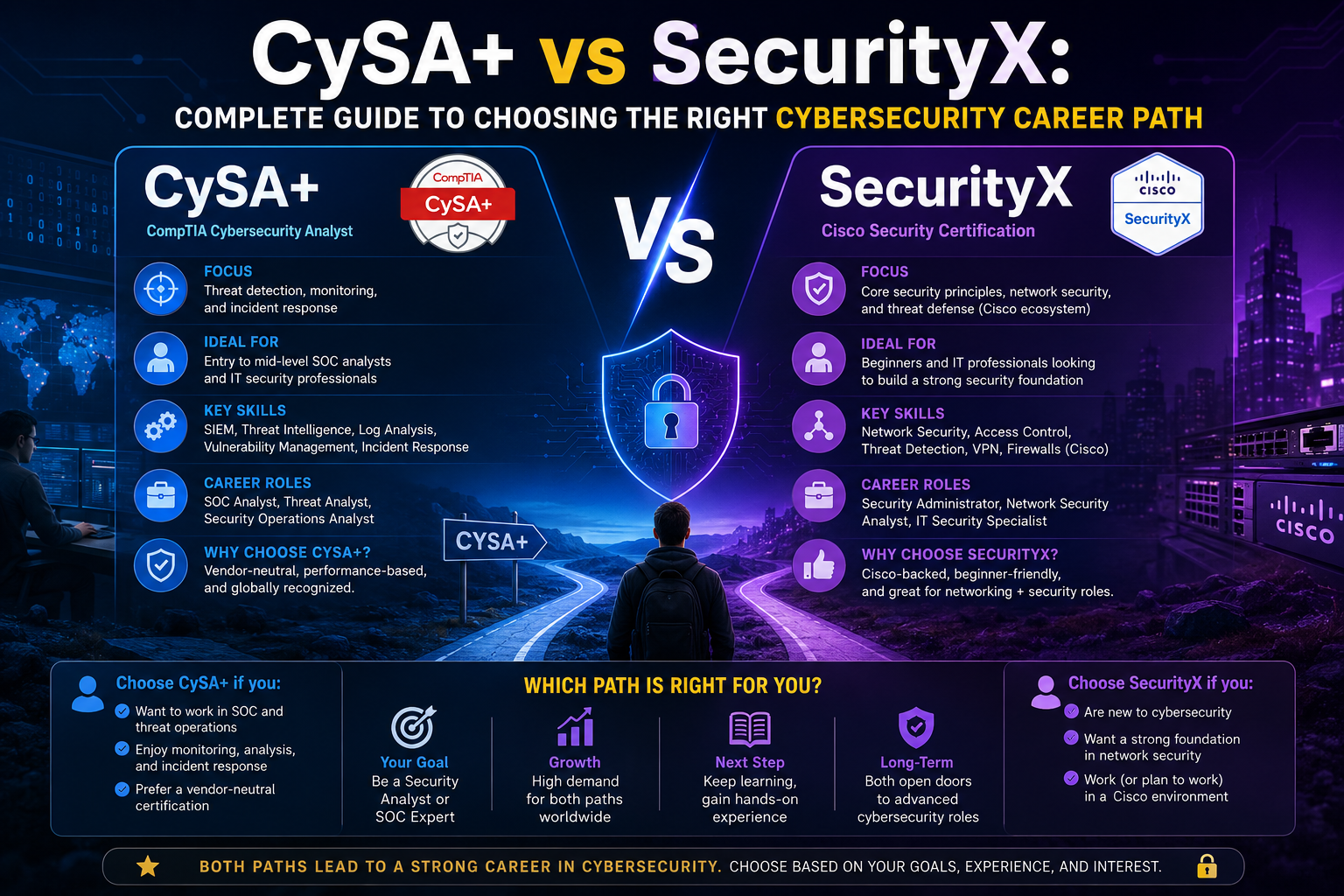
The modern digital landscape is expanding at a pace that has never been seen before. Organizations of all sizes now depend heavily on digital systems, cloud platforms, interconnected devices, and remote infrastructures to run their daily operations. While this transformation has improved efficiency and global connectivity, it has also opened the door to a growing number of cyber threats. From ransomware attacks and phishing campaigns to advanced persistent threats and insider risks, the complexity of cybersecurity challenges continues to increase year after year.
As a result, enterprises are no longer satisfied with basic security measures. They are actively building structured cybersecurity teams that can monitor threats in real time, respond to incidents quickly, and design secure infrastructures from the ground up. This shift has created strong demand for professionals who can operate at different levels of cybersecurity maturity—ranging from entry-level analysts to senior security architects and risk managers.
In this evolving job market, certifications play a major role in validating knowledge and skills. Employers often use them as benchmarks to filter candidates, especially when hiring for technical roles where hands-on capability is critical. Among the many cybersecurity certifications available today, CySA+ and SecurityX stand out as two important milestones within a structured career progression.
Although both certifications belong to the same ecosystem, they represent very different levels of expertise. One focuses on operational security analysis, while the other emphasizes advanced enterprise security design and leadership responsibilities. Understanding how they differ is essential for anyone planning a long-term cybersecurity career.
The Role of Certifications in Cybersecurity Career Growth
Cybersecurity is one of the few technical fields where certifications carry significant weight in both hiring and career progression. Unlike some industries where experience alone may be enough, cybersecurity roles often require proof of specific technical competencies. This is because security professionals are responsible for protecting critical infrastructure, sensitive data, and business continuity.
Certifications help bridge the gap between theoretical knowledge and real-world application. They demonstrate that a candidate has been trained in specific tools, methodologies, and frameworks relevant to security operations. More importantly, they show that an individual has a structured understanding of cybersecurity principles rather than isolated technical knowledge.
For early-career professionals, certifications provide direction and structure. For mid-career professionals, they validate specialization. For senior professionals, they confirm expertise in architecture, governance, and strategic decision-making.
Within this framework, CySA+ and SecurityX serve two distinct but connected purposes. CySA+ validates operational and analytical skills, while SecurityX validates advanced engineering and enterprise-level security design capabilities.
Understanding the CySA+ Certification in Depth
The CySA+ certification is designed for professionals who are actively involved in the detection, analysis, and response to cybersecurity threats. It is closely aligned with roles found in Security Operations Centers (SOC), threat intelligence teams, and incident response units.
At its core, CySA+ focuses on behavioral analytics and threat detection. Instead of only teaching how systems should be secured in theory, it emphasizes how attacks actually occur in real environments and how security tools can be used to identify malicious activity.
Professionals who pursue CySA+ are typically expected to work with security monitoring tools, analyze logs, investigate alerts, and respond to incidents as they occur. This makes it a highly practical certification, deeply rooted in day-to-day cybersecurity operations.
Core Responsibilities Linked to CySA+ Skills
A CySA+ certified professional is generally involved in a wide range of operational security tasks. These include monitoring network traffic for suspicious activity, identifying vulnerabilities within systems, and analyzing security incidents to determine their root cause.
One of the most important aspects of this role is incident response. When a security breach occurs, time is critical. A CySA+ level professional must be able to quickly assess the situation, contain the threat, and minimize damage to the organization. This requires not only technical knowledge but also the ability to remain calm under pressure and follow structured response procedures.
Another key responsibility is vulnerability management. Systems and applications are constantly being updated, and each update can introduce new vulnerabilities. A CySA+ professional must regularly assess systems, prioritize risks, and recommend appropriate mitigation strategies.
Threat intelligence is also an important part of the role. Cyber threats evolve rapidly, and security teams must stay informed about new attack techniques, malware variants, and adversary tactics. CySA+ professionals often analyze threat data to identify patterns and anticipate potential attacks before they occur.
Skill Set Developed Through CySA+
The CySA+ certification builds a strong foundation in several technical areas that are essential for security operations. These include log analysis, network monitoring, threat detection, and vulnerability assessment.
One of the key skills developed is analytical thinking. Cybersecurity is not just about reacting to alerts; it is about understanding what those alerts mean in a broader context. CySA+ teaches professionals how to interpret data from different security tools and correlate events to identify potential threats.
Another important skill is familiarity with security tools and technologies. While the certification does not focus on any single product, it emphasizes the use of security information and event management systems, intrusion detection systems, and endpoint protection tools.
Incident handling is another core area. Professionals learn how to follow structured frameworks for identifying, containing, and recovering from security incidents. This includes documenting incidents, communicating with stakeholders, and ensuring that lessons learned are applied to improve future security posture.
Experience Expectations for CySA+
CySA+ is generally considered a mid-level certification in the cybersecurity career path. It is not designed for complete beginners, but rather for individuals who already have some foundational experience in IT or networking.
Typically, candidates are expected to have a few years of experience in network administration, systems support, or security operations. This background helps ensure that they understand how networks function and how security controls are applied in real environments.
Without this foundational experience, the concepts covered in CySA+ may feel abstract or difficult to apply. This is why it is often positioned after entry-level certifications in structured learning paths.
Introduction to SecurityX (Formerly CASP+)
SecurityX represents a significantly more advanced stage in the cybersecurity certification journey. Unlike CySA+, which focuses on operational analysis, SecurityX is designed for professionals who are responsible for designing and securing entire enterprise environments.
This certification targets senior-level cybersecurity roles, including security architects, enterprise security engineers, and risk management leaders. These professionals are not only responsible for identifying threats but also for building systems that prevent those threats from succeeding in the first place.
SecurityX reflects a shift from tactical execution to strategic design. It assumes that the professional already understands how attacks work and how incidents are handled. The focus now moves toward creating resilient, scalable, and secure infrastructures that can withstand complex threat landscapes.
Strategic Role of SecurityX Professionals
A SecurityX-certified professional operates at a much higher level within an organization. Instead of focusing on individual incidents or vulnerabilities, they are responsible for designing security frameworks that protect the entire enterprise.
This includes developing secure network architectures, defining access control policies, and ensuring compliance with regulatory requirements. They must also consider how different systems interact with each other and how security controls can be implemented without disrupting business operations.
In many cases, SecurityX professionals are involved in decision-making processes that affect the entire organization. They work closely with leadership teams to align security strategies with business objectives.
Core Domains of SecurityX Knowledge
SecurityX covers several advanced domains that reflect its senior-level focus. One of the most important is enterprise security architecture. This involves designing systems that are secure by default and resilient against both internal and external threats.
Another major domain is risk management. SecurityX professionals must be able to assess risks at an organizational level, weighing potential threats against business impact. This requires a deep understanding of both technical vulnerabilities and business processes.
Advanced cryptography is also a key area. Professionals must understand how encryption is used to protect data in transit and at rest, and how cryptographic systems are implemented in modern cloud and hybrid environments.
Security operations at scale are another critical domain. While CySA+ focuses on responding to incidents, SecurityX focuses on building systems that can detect and respond to threats automatically across large, complex infrastructures.
Technical and Leadership Expectations in SecurityX
SecurityX is unique because it blends deep technical expertise with strategic leadership responsibilities. Professionals are expected to understand advanced security technologies such as cloud security frameworks, identity management systems, and automation tools.
At the same time, they must also be capable of communicating security strategies to non-technical stakeholders. This includes explaining risks, justifying security investments, and aligning security initiatives with organizational goals.
Leadership is a key component of this certification. SecurityX professionals often guide security teams, define best practices, and oversee the implementation of enterprise-wide security programs.
Experience Level Required for SecurityX
SecurityX is not intended for early or mid-career professionals. It typically requires extensive experience in IT and cybersecurity, often spanning several years of hands-on work in security-focused roles.
Candidates are expected to have deep knowledge of networking, system administration, security operations, and risk management. Without this foundation, the advanced concepts covered in SecurityX can be extremely challenging to grasp.
This high experience requirement reflects the certification’s focus on enterprise-level security design and leadership responsibilities.
Key Differences in Purpose and Focus
While both CySA+ and SecurityX belong to the same cybersecurity certification ecosystem, their purpose and focus are fundamentally different.
CySA+ is operational. It focuses on identifying threats, analyzing security data, and responding to incidents. It is about understanding what is happening in real time within an organization’s systems.
SecurityX is strategic. It focuses on designing secure systems, managing risk at an organizational level, and ensuring that security is embedded into every layer of enterprise infrastructure.
One operates in the present moment of threat detection, while the other focuses on long-term security planning and architecture.
The Career Path Connection Between CySA+ and SecurityX
In a structured cybersecurity career path, CySA+ often serves as a stepping stone toward more advanced certifications like SecurityX. It helps professionals build the analytical and operational skills needed to understand how security systems function in real environments.
SecurityX builds on this foundation by expanding into architecture, engineering, and leadership. Without the operational understanding gained from CySA+, it can be difficult to fully appreciate the complexity of enterprise security design.
This progression reflects how cybersecurity careers naturally evolve. Professionals typically begin by working in operational roles, where they learn how threats are detected and managed. As they gain experience, they move into more strategic positions where they are responsible for designing and governing security systems at scale.
How Employers View Mid-Level vs Senior-Level Cybersecurity Certifications
In modern cybersecurity hiring practices, employers rarely look at certifications in isolation. Instead, they interpret them as signals of where a professional fits within a structured security hierarchy. CySA+ and SecurityX are often viewed in this exact way—one as a validation of operational competence, and the other as proof of strategic and architectural expertise.
CySA+ is commonly associated with hands-on security roles where professionals actively engage with security tools, monitor alerts, and respond to threats in real time. Hiring managers see CySA+ as evidence that a candidate can function effectively in a Security Operations Center or a similar environment. It signals readiness for tasks that require attention to detail, analytical thinking, and the ability to respond quickly under pressure.
SecurityX, on the other hand, is interpreted very differently. It signals maturity, leadership potential, and deep technical expertise across enterprise environments. Employers typically associate it with professionals who can design security systems, evaluate organizational risk, and contribute to high-level security strategy discussions. It is not about reacting to threats but about preventing them through architecture and governance.
Because of this difference, the two certifications often appeal to different layers within the same organization. CySA+ aligns with tactical execution teams, while SecurityX aligns with strategic planning and leadership roles.
The Skill Progression Gap Between CySA+ and SecurityX
One of the most important aspects to understand when comparing these two certifications is the significant skill gap that exists between them. While they belong to the same career ecosystem, they are not sequentially similar in difficulty or responsibility level in a simple linear way. Instead, they represent a shift in professional identity.
CySA+ focuses heavily on technical execution. Professionals are expected to understand how to analyze logs, identify suspicious behavior, investigate alerts, and respond to security incidents. The emphasis is on observation, interpretation, and reaction.
SecurityX shifts this entirely. Instead of focusing on reacting to incidents, it focuses on preventing them at scale. This requires a completely different mindset—one that prioritizes system design, architectural planning, and long-term risk reduction.
A CySA+ professional might ask, “What is happening in this system right now?” A SecurityX professional instead asks, “How do we design this system so this never happens in the first place?”
This shift in thinking is one of the biggest challenges for professionals moving from CySA+ level knowledge to SecurityX level mastery. It is not just an increase in difficulty—it is a change in perspective.
Why CySA+ Builds the Foundation for Advanced Security Thinking
Although CySA+ is often viewed as a mid-level certification, its importance in the cybersecurity learning journey should not be underestimated. It provides the operational foundation that makes advanced security design possible.
At the CySA+ level, professionals develop a strong understanding of how threats behave in real environments. They learn how attackers move through systems, how vulnerabilities are exploited, and how security tools detect suspicious activity. This real-world exposure is critical because it builds intuition about how systems fail and how attacks succeed.
Without this understanding, advanced security architecture can become theoretical and disconnected from reality. SecurityX assumes that the professional already understands what happens when systems are compromised. It builds on that assumption to design environments where those compromises are far less likely to occur.
In this sense, CySA+ is not just a stepping stone—it is a grounding experience. It ensures that future architects and security leaders are not designing systems in isolation from operational reality.
The Strategic Nature of SecurityX Responsibilities
SecurityX professionals operate at a level where cybersecurity decisions are closely tied to business outcomes. Their work is not limited to technical systems; it directly influences how organizations operate, scale, and manage risk.
One of the most important responsibilities at this level is enterprise security architecture. This involves designing systems that can operate securely across multiple environments, including on-premises infrastructure, cloud platforms, and hybrid setups. SecurityX professionals must ensure that security controls are consistent, scalable, and aligned with organizational goals.
Another key responsibility is risk governance. Unlike operational roles that focus on individual incidents, SecurityX-level professionals assess risk across entire systems and business units. They evaluate the likelihood and impact of potential threats and make recommendations that balance security with operational efficiency.
This requires a deep understanding of business priorities. For example, implementing strict security controls may reduce risk but could also slow down business processes. SecurityX professionals must find the right balance between protection and performance.
Decision-Making Authority in SecurityX-Level Roles
One of the most defining characteristics of SecurityX-level professionals is the degree of decision-making authority they hold. Unlike CySA+ level roles, where individuals typically follow established procedures and frameworks, SecurityX professionals often help define those frameworks in the first place.
They may be responsible for choosing security technologies, defining enterprise-wide policies, and establishing standards for how systems are built and maintained. In many cases, their decisions influence the entire security posture of an organization.
This level of responsibility requires not only technical expertise but also strong communication and leadership skills. SecurityX professionals must be able to explain complex technical concepts to executives, justify security investments, and guide teams in implementing security strategies effectively.
Technical Depth vs Architectural Breadth
One of the key differences between CySA+ and SecurityX is the balance between technical depth and architectural breadth.
CySA+ focuses more on technical depth within a specific operational scope. Professionals go deep into topics such as log analysis, threat detection, vulnerability scanning, and incident response. The goal is to develop strong hands-on capabilities in security operations.
SecurityX, by contrast, emphasizes architectural breadth. Professionals must understand how different systems interact across an entire enterprise. This includes networking, cloud computing, identity management, application security, and regulatory compliance.
Instead of focusing deeply on one area, SecurityX professionals must be able to connect multiple areas together. They must understand how a change in one part of the system can affect security across the entire organization.
This shift from depth to breadth is one of the most challenging transitions in a cybersecurity career. It requires professionals to move beyond specialized technical expertise and develop a more holistic understanding of enterprise systems.
The Role of Automation and Modern Security Engineering
In recent years, automation has become a central part of modern cybersecurity strategies. Both CySA+ and SecurityX touch on automation, but in very different ways.
At the CySA+ level, automation is typically used to improve efficiency in security operations. This might include automated alerting, log collection, or basic incident response workflows. The focus is on reducing manual effort and improving response times.
At the SecurityX level, automation becomes far more strategic. Professionals design automated security frameworks that operate across entire enterprise environments. This includes infrastructure automation, policy enforcement, and large-scale orchestration of security controls.
SecurityX professionals often work with concepts such as infrastructure as code, where entire systems are defined and managed through automated processes. This allows organizations to maintain consistent security configurations across complex environments.
The ability to design and implement these automated systems is one of the key differences between mid-level and senior-level cybersecurity professionals.
Risk Thinking Evolution from CySA+ to SecurityX
Risk management is present in both CySA+ and SecurityX, but the way it is approached differs significantly.
In CySA+, risk is often evaluated in the context of individual systems or incidents. Professionals assess vulnerabilities, determine their severity, and recommend mitigation strategies. The focus is operational and immediate.
In SecurityX, risk is viewed at an enterprise level. Professionals evaluate how different risks interact across systems, departments, and business processes. They consider long-term implications and strategic impact.
This requires a more abstract way of thinking. Instead of focusing on immediate threats, SecurityX professionals must anticipate future risks and design systems that remain secure even as technology and business requirements evolve.
Organizational Impact of Security Certifications
The presence of CySA+ or SecurityX certified professionals within an organization can influence its overall cybersecurity maturity.
CySA+ professionals strengthen the operational layer of security. They improve incident detection, enhance monitoring capabilities, and ensure that threats are identified and addressed quickly. Their impact is often immediate and measurable in terms of response times and incident resolution efficiency.
SecurityX professionals, however, influence the structural foundation of security within the organization. Their decisions affect how systems are built, how data is protected, and how risk is managed at the highest level. Their impact is long-term and often embedded within the organization’s architecture.
Together, these two levels of expertise create a layered security model where operational teams and architectural teams work in coordination.
The Transition Challenge Between Certification Levels
Moving from CySA+ level knowledge to SecurityX level expertise is not simply a matter of studying more advanced material. It requires a significant shift in how professionals think about cybersecurity.
At the CySA+ level, success is often measured by accuracy and responsiveness. At the SecurityX level, success is measured by design effectiveness and long-term resilience.
Many professionals find this transition challenging because it requires stepping away from hands-on operational work and focusing more on abstract system design. It also requires greater collaboration with business leaders, compliance teams, and executive stakeholders.
This transition is often gradual and is usually supported by years of practical experience in both operational and engineering roles.
How Career Direction Influences Certification Choice
Choosing between CySA+ and SecurityX is not just a matter of difficulty level; it is closely tied to long-term career direction.
Professionals who enjoy hands-on technical work, incident response, and threat analysis often find CySA+ aligned with their interests. It allows them to stay close to real-time security operations and develop great analytical skills.
Professionals who are more interested in system design, architecture, and strategic decision-making tend to gravitate toward SecurityX. This path involves less direct interaction with incidents and more focus on designing systems that prevent them.
Both paths are valuable, but they lead to very different types of cybersecurity careers.
Industry Relevance of Operational vs Architectural Expertise
The cybersecurity industry relies on both operational and architectural expertise to function effectively. Without operational professionals, threats would go undetected. Without architectural professionals, systems would remain vulnerable by design.
CySA+ professionals ensure that security teams can respond quickly and effectively to emerging threats. SecurityX professionals ensure that systems are designed to reduce the likelihood and impact of those threats in the first place.
This balance is what makes modern cybersecurity ecosystems resilient and adaptable.
Evolving Expectations in Cybersecurity Job Roles
As cyber threats become more sophisticated, job roles in cybersecurity are also evolving. Employers are no longer looking for narrowly focused skill sets. Instead, they expect professionals to understand multiple layers of security, from detection and response to architecture and governance.
This evolution has increased the importance of certifications like CySA+ and SecurityX. They represent different but complementary skill sets that align with the needs of modern cybersecurity teams.
Organizations increasingly prefer candidates who understand both operational security and architectural principles, even if they specialize in one area.
Building a Long-Term Cybersecurity Identity
Ultimately, the choice between CySA+ and SecurityX is not just about certifications. It reflects how a professional wants to shape their identity in the cybersecurity field.
Some professionals build their careers around operational excellence, focusing on detecting and responding to threats. Others build their careers around strategic design, focusing on creating secure systems and managing enterprise risk.
Both identities are essential in modern cybersecurity environments, and both contribute to organizational resilience in different ways.
Mapping Real Job Roles Across Both Certifications
Understanding how CySA+ and SecurityX translate into actual job roles is one of the clearest ways to see the difference between the two certifications. While both belong to the cybersecurity field, they align with very different professional environments, responsibilities, and expectations.
CySA+ is closely connected to roles that operate within security monitoring and response environments. These include positions such as SOC analyst, threat intelligence analyst, vulnerability analyst, and junior security engineer roles. In these positions, professionals spend most of their time interacting with security tools, analyzing alerts, investigating anomalies, and responding to incidents as they occur. The work is fast-paced, detail-oriented, and heavily dependent on accurate interpretation of data.
SecurityX aligns with more senior and design-focused roles. These include security architect, enterprise security engineer, cybersecurity consultant, and risk management lead positions. Instead of reacting to security events, professionals in these roles design systems that reduce the likelihood of incidents occurring in the first place. Their responsibilities are broader and involve long-term planning, architectural decision-making, and cross-organizational collaboration.
The key distinction between the two sets of roles lies in timing and scope. CySA+ roles operate in real time, dealing with ongoing events and immediate threats. SecurityX roles operate in planning cycles, focusing on how systems should be built, integrated, and maintained over time.
This difference in job function also explains why the certifications require different levels of experience and mindset. One is grounded in operational execution, while the other is centered on strategic design and leadership.
SOC Evolution vs Enterprise Security Architecture Teams
Security Operations Centers, commonly known as SOCs, represent one of the most common environments where CySA+ skills are applied. SOC teams are responsible for continuously monitoring an organization’s network and systems for suspicious activity. They use various tools to detect anomalies, investigate alerts, and escalate incidents when necessary.
In a SOC environment, efficiency and accuracy are critical. Analysts must quickly determine whether an alert represents a genuine threat or a false positive. They must also document findings and communicate clearly with other security teams. The CySA+ certification directly supports these responsibilities by focusing on threat detection, log analysis, and incident response workflows.
SecurityX, however, aligns with enterprise security architecture teams rather than SOC environments. These teams are responsible for designing the overall structure of an organization’s security systems. They determine how networks are segmented, how identity is managed, how data is protected, and how security controls are integrated across cloud and on-premises environments.
Unlike SOC teams, architecture teams do not primarily deal with individual incidents. Instead, they focus on preventing incidents through design choices. This includes selecting security frameworks, defining enterprise policies, and ensuring compliance with regulatory standards.
The evolution from SOC analyst to security architect is not automatic. It requires years of experience, exposure to different types of environments, and a shift from reactive thinking to proactive design thinking.
Skill Stack Breakdown: From Analyst Thinking to Architect Thinking
One of the most important differences between CySA+ and SecurityX lies in the type of thinking each certification develops.
CySA+ builds what can be described as analyst thinking. This involves focusing on individual data points, identifying patterns in logs, and responding to specific alerts. Analysts learn to think in terms of events, causes, and immediate responses. The mindset is investigative and detail-focused.
SecurityX builds an architect’s thinking. This involves stepping back from individual events and understanding how entire systems behave. Architects must consider how networks, applications, users, and data interact at scale. Their focus is not on individual incidents but on system-wide resilience.
Analyst thinking is reactive by nature. It answers questions like what happened, how it happened, and what should be done now. Architect thinking is proactive. It answers questions like how we can prevent this from happening, how we can design systems that fail safely, and how we can reduce risk across the entire organization.
Both types of thinking are essential in cybersecurity, but they operate at different levels of abstraction. One deals with immediate reality, while the other deals with system design and future readiness.
When Skipping CySA+ Makes Sense in Practice
Although the traditional cybersecurity path recommends progressing through CySA+ before attempting SecurityX, there are real-world scenarios where professionals consider skipping CySA+ entirely.
One such scenario involves professionals who already have extensive hands-on experience in security operations. For example, individuals who have worked for several years in SOC environments, incident response teams, or vulnerability management roles may already possess the practical skills covered in CySA+. For these professionals, CySA+ may serve more as validation than as new learning.
Another scenario involves professionals transitioning from related fields such as network engineering or systems administration. If they have already been exposed to security monitoring tools and have practical experience with threat detection, they may feel confident moving directly toward more advanced architectural concepts.
However, skipping CySA+ is not simply about experience level. It also depends on how well a professional understands security operations at a conceptual level. Even if someone has worked in IT for years, they may not have deeply engaged with threat analysis or incident response workflows. In such cases, skipping CySA+ can create gaps in foundational understanding.
SecurityX assumes that professionals already understand how attacks are detected and how incidents are handled. If that understanding is incomplete, the transition can become significantly more difficult.
Common Mistakes Professionals Make When Jumping to Advanced SecurityX
One of the most common mistakes professionals make when attempting to move directly to SecurityX is underestimating the depth of architectural thinking required. Many assume that advanced certifications are simply extensions of earlier knowledge, but SecurityX requires a fundamentally different mindset.
A frequent issue is focusing too heavily on memorizing concepts rather than understanding system-wide interactions. SecurityX is not about isolated knowledge areas; it is about how those areas combine to form secure enterprise environments.
Another mistake is neglecting operational experience. Professionals who skip CySA+ or similar stages sometimes struggle to understand how theoretical designs behave in real-world conditions. Without exposure to incident response and threat detection, it becomes difficult to anticipate how attackers exploit systems in practice.
There is also a tendency to underestimate the importance of governance and compliance at the SecurityX level. While CySA+ focuses on technical operations, SecurityX incorporates regulatory, business, and strategic considerations. Professionals who are not familiar with these broader factors may find themselves overwhelmed by the scope of decision-making required.
These challenges do not make SecurityX inaccessible, but they do highlight why foundational experience is often critical for success.
How Employers Structure Career Ladders Around These Certifications
Many organizations design their cybersecurity teams using layered career structures. These structures often mirror the progression from operational roles to strategic roles, even if they do not explicitly reference certifications.
At the entry and mid-level stages, employees typically work in operational roles such as security analysts or SOC team members. These roles focus on monitoring systems, responding to alerts, and supporting incident investigations. CySA+ aligns closely with this stage of the career ladder.
As professionals gain experience, they may move into more specialized or senior operational roles. These include senior analysts, incident response specialists, or security engineers. At this stage, professionals begin to take on more complex responsibilities and may start contributing to security design discussions.
At the senior level, professionals transition into architecture and leadership roles. These positions involve designing security frameworks, defining enterprise policies, and guiding organizational strategy. SecurityX aligns with this stage of the career ladder.
Employers value this progression because it ensures that senior security professionals have a deep understanding of both operational realities and strategic design principles.
Operational Security vs Enterprise Design Thinking
Operational security and enterprise design represent two distinct but interconnected aspects of cybersecurity.
Operational security focuses on the day-to-day protection of systems. It involves monitoring, detection, response, and recovery. Professionals working in this area are responsible for ensuring that threats are identified quickly and handled effectively.
Enterprise design focuses on building inherently secure systems. It involves designing architectures that minimize risk, implementing security controls at scale, and ensuring that systems remain resilient even under attack.
CySA+ aligns with operational security, while SecurityX aligns with enterprise design.
The key difference between the two is timing. Operational security deals with what is happening now. Enterprise design deals with what should exist in the future.
Both are essential for a strong cybersecurity posture. Without operational security, threats go unnoticed. Without enterprise design, systems remain vulnerable by default.
The Hidden Gap: Experience vs Exam Readiness
One of the most overlooked aspects of cybersecurity certification progression is the gap between exam readiness and real-world experience.
A professional can prepare for and pass an advanced certification exam without having fully internalized the practical experience behind the concepts. This is especially true in cybersecurity, where theoretical knowledge and practical application can sometimes diverge.
CySA+ helps reduce this gap by reinforcing hands-on operational skills. It encourages professionals to engage directly with security tools and incident workflows.
SecurityX, however, operates at a level where experience becomes even more important. Understanding architectural principles is not enough without having seen how systems behave under real-world conditions.
Professionals who rely solely on theoretical preparation may find that they can understand concepts but struggle to apply them effectively in complex environments.
Transitioning from Tactical Defense to Strategic Security Leadership
One of the most significant shifts in cybersecurity careers is the transition from tactical defense roles to strategic leadership roles.
Tactical defense involves responding to immediate threats. It is focused on detection, analysis, and response. Professionals in this space are deeply involved in operational security activities.
Strategic leadership involves shaping the direction of an organization’s security posture. It includes defining policies, designing systems, and aligning security initiatives with business goals.
CySA+ prepares professionals for tactical defense roles by strengthening analytical and operational skills. SecurityX prepares professionals for strategic leadership roles by expanding their understanding of architecture, governance, and risk management.
This transition is not only technical but also psychological. It requires professionals to move from solving immediate problems to designing systems that prevent those problems from occurring.
How Cybersecurity Domains Overlap in Real Work Environments
Although CySA+ and SecurityX represent different levels of expertise, real-world cybersecurity work often involves overlap between operational and architectural domains.
For example, a security architect may need to understand how SOC teams detect threats to design better monitoring systems. Similarly, a security analyst may need to understand architectural decisions to interpret system behavior accurately.
This overlap is what makes cybersecurity such a dynamic field. No role exists in isolation. Instead, each layer of security depends on the others to function effectively.
CySA+ provides insight into the operational layer, while SecurityX provides insight into the architectural layer. Together, they form a more complete understanding of how security systems operate in practice.
Building Competence Without Following a Strict Certification Order
While structured certification paths provide guidance, real-world cybersecurity careers do not always follow a strict linear progression. Professionals often move between roles, gain experience in different domains, and develop skills in a non-linear way.
Some may begin in networking or systems administration before moving into security operations. Others may enter cybersecurity through development, risk management, or cloud engineering. Each path contributes different perspectives that can eventually lead to both CySA+ and SecurityX level expertise.
What matters most is not the order in which certifications are obtained, but the depth of understanding gained through practical experience.
CySA+ and SecurityX are milestones that represent different stages of professional maturity. They are not rigid requirements but indicators of capability within a broader cybersecurity ecosystem.
Conclusion
CySA+ and SecurityX represent two very different stages in a cybersecurity professional’s journey, even though they exist within the same certification ecosystem. One focuses on operational defense, while the other emphasizes enterprise-level security design and leadership. Understanding this distinction is essential for making informed career decisions in a field that is becoming increasingly complex and competitive.
CySA+ is best understood as the foundation of practical cybersecurity operations. It develops the skills needed to monitor systems, analyze threats, investigate incidents, and respond effectively to security events. Professionals at this level are deeply involved in the day-to-day realities of cybersecurity, where speed, accuracy, and attention to detail matter the most. This certification helps build the analytical mindset required to understand how attacks unfold in real environments and how security tools are used to detect and mitigate them. For many professionals, it serves as the point where theoretical knowledge begins to transform into hands-on operational expertise.
SecurityX, in contrast, represents a significant step into advanced cybersecurity leadership and architecture. It shifts the focus away from reacting to individual incidents and toward designing systems that are secure by default. Professionals at this level are responsible for building enterprise-wide security frameworks, managing complex risk environments, and aligning security strategies with business goals. This requires not only technical depth but also strategic thinking, communication skills, and the ability to evaluate long-term organizational risk.
The relationship between the two certifications is not simply linear, but complementary. CySA+ builds the operational understanding that makes SecurityX concepts more meaningful and practical. Without experience in threat detection and incident response, advanced architectural decisions can become abstract and difficult to apply effectively. On the other hand, SecurityX expands a professional’s perspective, allowing them to see beyond individual security events and understand how entire systems can be designed for resilience and scalability.
Choosing between CySA+ and SecurityX ultimately depends on career stage, experience level, and long-term goals. Professionals early in their cybersecurity journey generally benefit from CySA+ as it strengthens core operational skills. Those with significant experience in security or related IT fields may eventually move toward SecurityX as they transition into senior engineering, architecture, or leadership roles. However, attempting to bypass foundational experience can make advanced concepts more difficult to grasp in practical environments.
In the broader cybersecurity landscape, both certifications play essential roles. Organizations need professionals who can detect and respond to threats in real time, just as they need experts who can design secure systems that minimize those threats from the outset. Together, these roles create a balanced and resilient security posture.
Ultimately, CySA+ and SecurityX are not competing paths but interconnected stages of professional growth. One strengthens the ability to understand and respond to security challenges, while the other develops the ability to prevent and strategically manage them at scale.