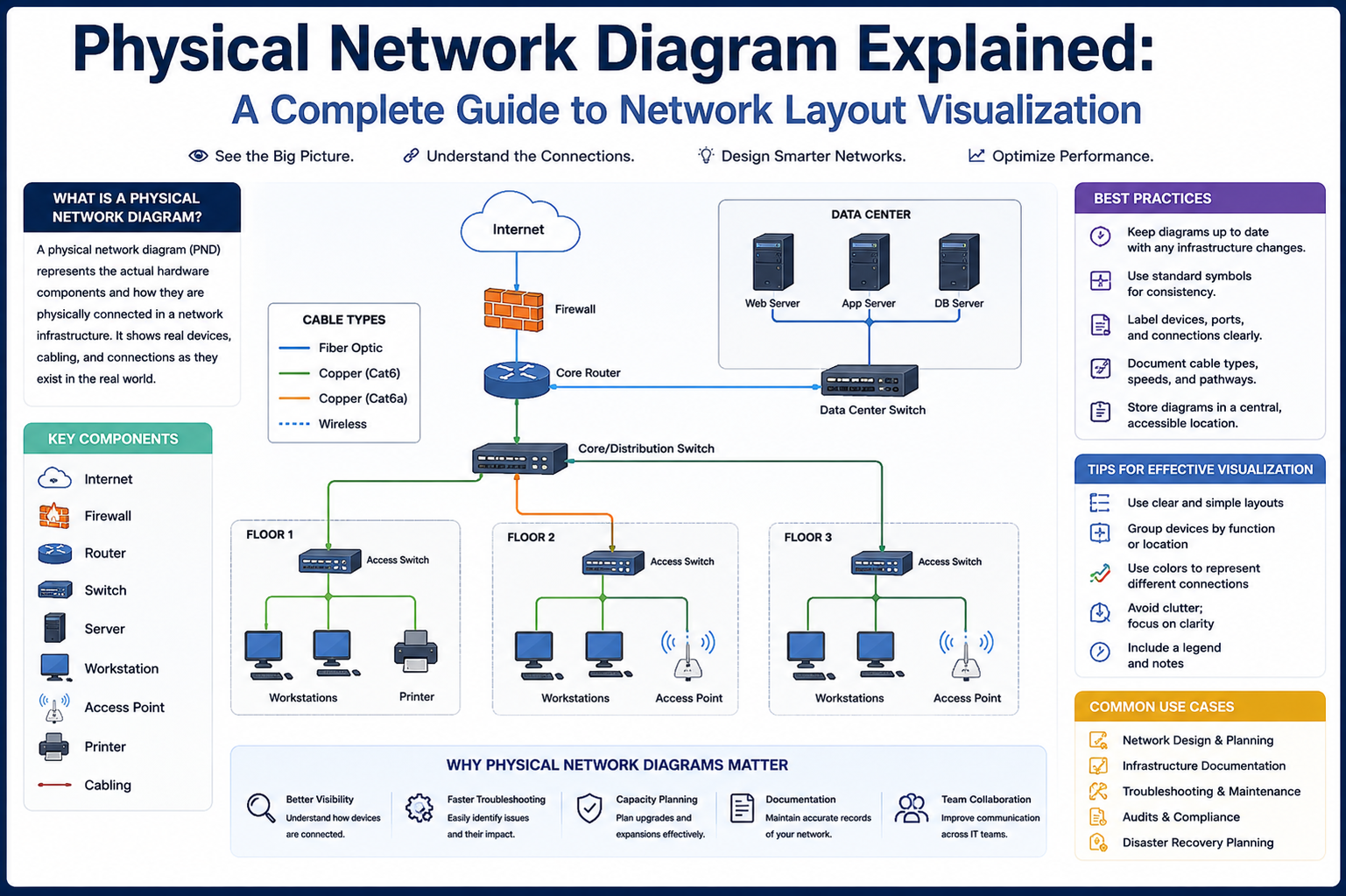
A physical network diagram is a detailed visual representation that illustrates the tangible components of a network and how they are physically arranged within a space. It focuses on the real-world placement of devices such as routers, switches, servers, cables, racks, and endpoints. Rather than abstract concepts or data flow, it captures the exact positioning and interconnections of hardware, offering a concrete view of the infrastructure. This type of diagram acts much like an architectural blueprint, allowing IT professionals to see how every piece of equipment fits together within offices, buildings, or data centers. By translating complex systems into a visual format, it becomes significantly easier to understand how the network operates at a physical level.
The Role of Physical Layout in Network Infrastructure
The physical layout of a network is a foundational element that directly impacts performance, reliability, and scalability. A well-structured physical network diagram provides a clear picture of how devices are distributed across locations, ensuring efficient use of space and resources. It highlights cable paths, equipment placement, and connectivity points, enabling teams to identify potential bottlenecks or inefficiencies. When organizations grow, having a documented layout simplifies expansion by showing available capacity and optimal placement for new devices. Without this clarity, even minor changes can become complicated and time-consuming, increasing the risk of errors and downtime.
Distinction Between Physical and Logical Network Diagrams
While both physical and logical diagrams serve important roles, they address entirely different aspects of a network. A physical diagram emphasizes hardware placement and physical connections, whereas a logical diagram focuses on how data flows between devices, including IP addressing, routing, and protocols. The physical diagram answers questions like “Where is the server located?” and “Which cable connects these switches?” In contrast, the logical diagram explains how information travels across the network. Together, they provide a comprehensive understanding, but the physical diagram is essential for hands-on tasks such as installation, maintenance, and troubleshooting.
Importance of Visualization in Complex Systems
Modern networks can be incredibly complex, often spanning multiple floors, buildings, or even geographic regions. In such environments, relying solely on text-based documentation is insufficient. Visualization through a physical network diagram transforms complexity into clarity by presenting information in an intuitive format. It allows IT teams to quickly grasp relationships between devices and identify dependencies. This visual approach reduces the likelihood of miscommunication and ensures that everyone involved, from engineers to management, has a shared understanding of the infrastructure.
Enhancing Planning and Deployment Efficiency
One of the primary benefits of a physical network diagram is its role in planning and deployment. Before installing new equipment or expanding an existing network, teams can use the diagram to evaluate available space, power requirements, and connectivity options. It helps in determining optimal device placement to ensure efficient cable management and proper airflow in data centers. By visualizing the setup in advance, organizations can avoid costly mistakes and ensure a smoother implementation process. This proactive approach saves both time and resources while improving overall network performance.
Supporting Effective Troubleshooting Processes
When issues arise within a network, time is often critical. A physical network diagram serves as a valuable troubleshooting tool by pinpointing the exact location of devices and their connections. Instead of guessing or manually tracing cables, technicians can quickly identify the affected components and take appropriate action. This reduces downtime and minimizes disruption to operations. Additionally, it helps in isolating problems more accurately, whether they are related to hardware failure, cable damage, or connectivity issues.
Facilitating Clear Communication Across Teams
Communication is a key factor in managing any IT infrastructure, especially when multiple teams are involved. A physical network diagram acts as a universal reference point that bridges the gap between technical and non-technical stakeholders. Engineers can use it to explain configurations, while managers can gain insights into the network’s structure without needing deep technical knowledge. This shared understanding improves collaboration and ensures that decisions are based on accurate information.
Core Elements of a Physical Network Diagram
A physical network diagram is composed of several essential elements, each contributing to a complete representation of the network. These elements include devices such as switches, routers, servers, and endpoints, as well as the cables and connectors that link them together. It also incorporates environmental factors like racks, power sources, and cooling systems. By combining these components into a single visual framework, the diagram provides a holistic view of the infrastructure, making it easier to manage and maintain.
Representation of Devices and Hardware Components
At the heart of any physical network diagram are the devices themselves. Each piece of hardware is represented with clear labels and symbols, indicating its type, function, and location. This includes core devices like routers and switches, as well as peripheral equipment such as printers and workstations. Accurate representation ensures that anyone reviewing the diagram can quickly identify each component and understand its role within the network. Proper labeling also aids in inventory management and simplifies future upgrades or replacements.
Mapping Cable Connections and Pathways
Cabling is a critical aspect of network infrastructure, and a physical network diagram provides a detailed view of how cables are routed and connected. It shows the paths that cables take between devices, including patch panels, wall jacks, and conduits. This information is essential for maintaining organized cable management and preventing issues such as signal interference or physical damage. By clearly mapping connections, the diagram helps technicians quickly locate and address problems, reducing the need for time-consuming manual tracing.
Integration of Environmental and Spatial Details
Beyond devices and cables, a physical network diagram also incorporates environmental and spatial details. This includes the layout of rooms, floors, and buildings, as well as the placement of racks and equipment within those spaces. These details are particularly important in data centers, where factors like airflow, temperature, and power distribution play a significant role in performance. By including this information, the diagram provides a comprehensive view that goes beyond connectivity to encompass the entire physical environment.
The Significance of Floor Plans in Network Design
Floor plans are a fundamental component of physical network diagrams, offering a bird’s-eye view of how devices are distributed within a space. They show the location of workstations, servers, switches, and other equipment across rooms or floors, along with the pathways for cables and power sources. This perspective helps teams understand how different areas are connected and ensures that the network is designed for optimal efficiency. A well-structured floor plan simplifies installation and maintenance while providing a clear reference for future modifications.
Understanding Rack-Level Organization
In environments such as data centers, rack diagrams play a crucial role in detailing how equipment is organized within racks. These diagrams provide a close-up view of servers, switches, and other devices, showing their exact positions and connections. Proper rack organization is essential for maximizing space utilization, maintaining efficient airflow, and ensuring easy access for maintenance. By documenting this information, rack diagrams help teams manage equipment more effectively and reduce the risk of errors during installation or troubleshooting.
Documenting Distribution Frames and Connectivity Hubs
Distribution frames serve as central points where network connections are aggregated and managed. A physical network diagram documents these hubs, including their connections to other parts of the network. This information is vital for understanding how different sections of the network are linked and for ensuring reliable connectivity. By keeping detailed records of these connections, organizations can maintain better control over their infrastructure and respond more effectively to changes or issues.
The Process of Creating a Physical Network Diagram
Creating a physical network diagram requires careful planning and attention to detail. It begins with gathering accurate information about the network, including device specifications, locations, and connections. This data is then translated into a visual format using diagramming tools, with a focus on clarity and consistency. The process involves organizing components logically, labeling them appropriately, and ensuring that the diagram reflects the actual setup as closely as possible. A well-created diagram serves as a reliable reference for both current operations and future planning.
Choosing Appropriate Tools for Diagram Creation
Selecting the right tools is an important step in creating an effective physical network diagram. Diagramming software provides features such as drag-and-drop elements, templates, and customization options, making it easier to design clear and accurate representations. The choice of tool depends on the complexity of the network and the specific needs of the organization. Regardless of the tool used, the goal is to produce a diagram that is easy to understand, maintain, and update over time.
Collaboration in Diagram Development
Developing a physical network diagram is rarely a solo effort. It requires collaboration between network engineers, system administrators, and facilities teams to ensure accuracy and completeness. Each group brings valuable insights, from understanding cable routes to knowing equipment specifications. By working together, teams can create a diagram that reflects the वास्तविक infrastructure and addresses all relevant aspects. Collaboration also helps in identifying potential issues early and ensuring that the diagram meets the needs of all stakeholders.
Ensuring Accuracy and Consistency in Documentation
Accuracy is critical when creating a physical network diagram, as even small errors can lead to confusion or mismanagement. Consistency in labeling, symbols, and formatting is equally important, as it ensures that the diagram is easy to read and interpret. Establishing standard conventions for naming devices, color-coding cables, and representing components helps maintain uniformity across diagrams. This consistency becomes especially valuable in large organizations where multiple diagrams may be used.
Adapting Diagrams for Scalability and Growth
Networks are dynamic and constantly evolving, making scalability an important consideration in diagram design. A physical network diagram should be flexible enough to accommodate future changes, such as the addition of new devices or expansion into new areas. This involves leaving space for growth, using modular designs, and maintaining clear organization. By planning for scalability, organizations can avoid the need for frequent redesigns and ensure that their diagrams remain relevant over time.
Maintaining Relevance Through Regular Updates
A physical network diagram is only useful if it reflects the current state of the network. Regular updates are essential to keep the diagram accurate and reliable. This involves documenting changes as they occur, whether it’s adding new equipment, removing outdated devices, or modifying connections. Keeping the diagram up to date ensures that it remains a valuable resource for troubleshooting, planning, and communication.
The Value of Structured Documentation Practices
Structured documentation practices play a key role in maintaining effective physical network diagrams. This includes organizing diagrams in a centralized repository, using version control to track changes, and following standardized procedures for updates. By adopting these practices, organizations can ensure that their diagrams are easily accessible and consistently maintained. This structured approach enhances efficiency and reduces the risk of errors or outdated information.
Conclusion
A physical network diagram stands as an essential foundation for understanding and managing modern IT infrastructure. By providing a clear visual representation of hardware components, their placement, and their interconnections, it transforms complex environments into something structured and manageable. This clarity is not just helpful but necessary for ensuring that networks operate efficiently, remain scalable, and can be maintained without unnecessary confusion or delays.
Beyond simple visualization, these diagrams play a critical role in planning, deployment, and daily operations. They allow teams to anticipate challenges before they arise, streamline installations, and respond quickly when issues occur. Instead of relying on guesswork, IT professionals can depend on accurate, well-organized diagrams to guide their decisions and actions. This reduces downtime, improves reliability, and ultimately supports the broader goals of the organization.
Consistency and accuracy are what give a physical network diagram its true value. When maintained properly and updated regularly, it becomes a living document that evolves alongside the network itself. It supports collaboration across teams, ensures alignment between technical and non-technical stakeholders, and provides a dependable reference point for both current operations and future growth.
In a landscape where networks continue to expand in size and complexity, having a well-crafted physical network diagram is no longer optional. It is a practical necessity that brings order, efficiency, and confidence to network management, enabling organizations to operate with greater precision and resilience.