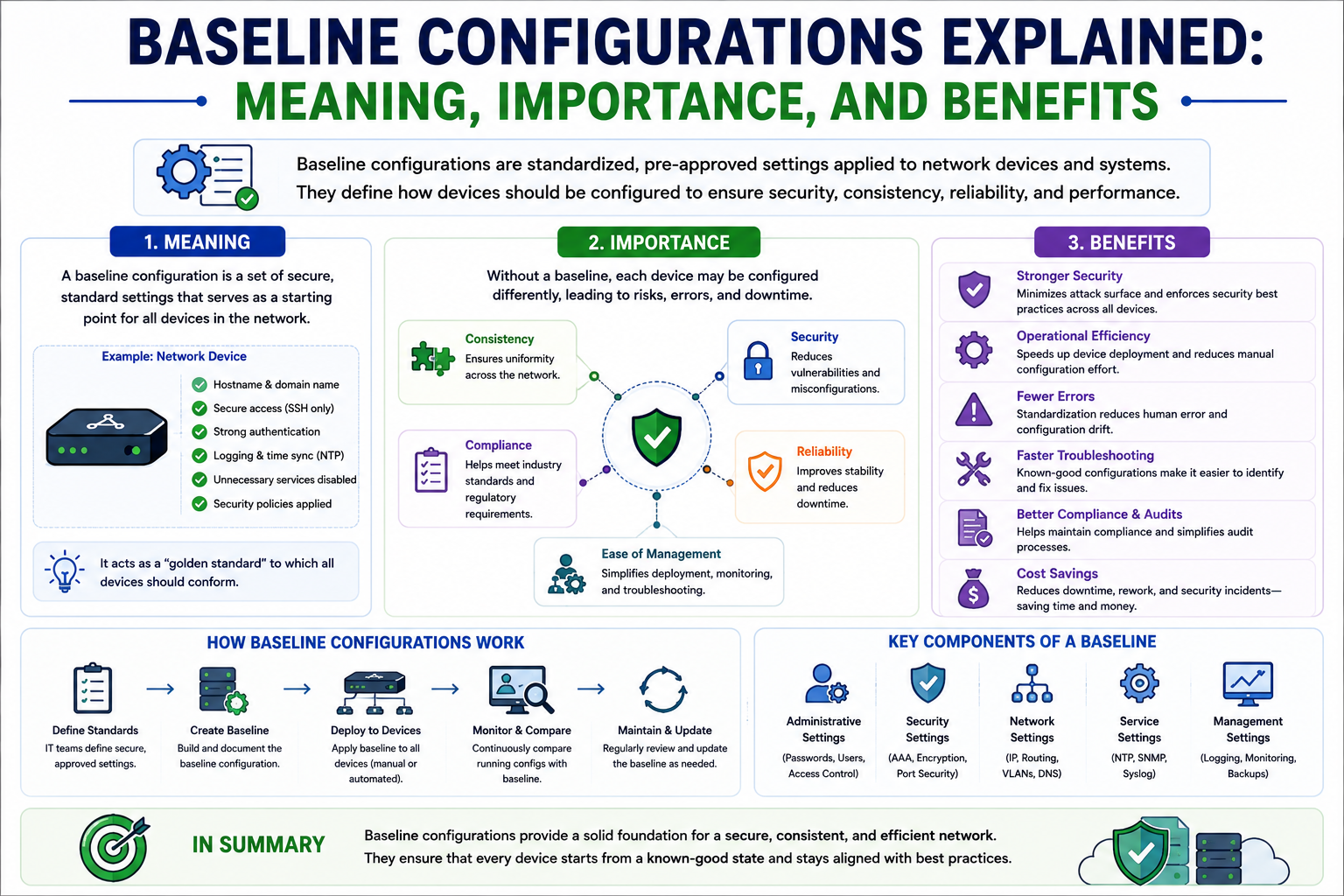
A baseline configuration is a predefined, standardized setup that defines how systems, devices, and applications should be configured from the very beginning. It acts as a reference point that ensures every system operates in a consistent, predictable, and secure manner. Instead of building configurations from scratch every time, organizations rely on baselines to maintain uniformity across environments. This approach eliminates uncertainty and provides a clear structure for how systems should function, making IT operations far more efficient and reliable.
Why Baseline Configurations Matter in Modern IT Environments
Modern IT environments are complex, with countless devices, applications, and network components interacting continuously. Without a structured approach, managing these elements becomes chaotic and prone to errors. Baseline configurations bring order to this complexity by establishing a consistent standard. They ensure that every system aligns with organizational requirements, reducing the chances of misconfigurations that can lead to performance issues or security vulnerabilities. This consistency becomes especially important as organizations scale and introduce new technologies.
The Role of Baselines in Creating Stability
Stability is one of the most critical outcomes of implementing baseline configurations. When systems are configured according to a predefined standard, they behave predictably under various conditions. This predictability reduces unexpected failures and ensures smoother operations. IT teams can rely on these stable configurations to maintain uptime and deliver consistent performance, which is essential for both internal processes and user satisfaction.
How Baseline Configurations Simplify IT Management
Managing IT systems without a baseline is like trying to organize a library without a cataloging system. Baseline configurations simplify management by providing a clear blueprint for setup and maintenance. IT teams no longer need to guess how a system should be configured. Instead, they follow established guidelines that ensure uniformity across all devices. This structured approach reduces administrative overhead and allows teams to focus on more strategic tasks rather than repetitive configuration work.
Eliminating Guesswork with Standardized Setups
One of the most valuable aspects of baseline configurations is the elimination of guesswork. Every system follows the same predefined rules, which means there is no ambiguity in how configurations should be applied. This clarity is particularly beneficial when onboarding new team members or deploying new systems. Everyone works from the same reference point, ensuring consistency and reducing the likelihood of errors.
Strengthening Security from the Ground Up
Security is a major concern in any IT environment, and baseline configurations play a crucial role in addressing it. By incorporating security measures directly into the baseline, organizations can ensure that every system is protected from the start. This includes setting strong authentication requirements, enabling firewalls, and disabling unnecessary services. With these safeguards in place, systems are less vulnerable to threats, and security becomes an integral part of the infrastructure rather than an afterthought.
Reducing Vulnerabilities Through Consistent Configurations
Inconsistent configurations often create gaps that attackers can exploit. Baseline configurations minimize these risks by ensuring that all systems adhere to the same security standards. When every device is configured correctly, there are fewer weak points for potential threats to target. This uniformity significantly enhances the overall security posture of the organization.
Improving Troubleshooting Efficiency
Troubleshooting becomes much easier when baseline configurations are in place. Since all systems follow a standard setup, IT teams can quickly identify deviations that may be causing issues. Instead of analyzing each system individually, they can compare it against the baseline to pinpoint discrepancies. This approach speeds up problem resolution and reduces downtime, ensuring that systems are restored to normal operation as quickly as possible.
Using Baselines as a Reference for Issue Resolution
Baseline configurations act as a reliable reference point during troubleshooting. When a system behaves unexpectedly, IT teams can refer to the baseline to determine what has changed. This comparison makes it easier to identify misconfigurations or unauthorized changes. As a result, issues can be resolved more efficiently, minimizing disruptions to business operations.
Supporting Compliance and Regulatory Requirements
Many industries are subject to strict regulatory requirements that dictate how systems should be configured and managed. Baseline configurations help organizations meet these requirements by embedding compliance standards into the setup process. By following predefined guidelines, organizations can ensure that their systems align with industry regulations, reducing the risk of non-compliance and associated penalties.
Maintaining Consistency Across Large-Scale Deployments
As organizations grow, managing a large number of systems becomes increasingly challenging. Baseline configurations provide a scalable solution by ensuring that every new system is configured consistently. Whether deploying a single device or hundreds of systems, the same baseline can be applied to maintain uniformity. This scalability is essential for organizations that need to expand their infrastructure without compromising on quality or security.
Defining the Components of a Baseline Configuration
A baseline configuration is made up of several key components that work together to create a stable and secure environment. These components include hardware specifications, software settings, and network configurations. Each element plays a vital role in ensuring that systems operate efficiently and meet organizational standards.
Hardware as the Foundation of Baselines
Hardware components form the physical backbone of any IT system. Baseline configurations define the required specifications for processors, memory, storage, and other hardware elements. By standardizing these components, organizations can ensure consistent performance and compatibility across all systems. This consistency simplifies maintenance and reduces the risk of hardware-related issues.
Software Settings That Drive System Behavior
Software configurations determine how systems function on a day-to-day basis. This includes operating system settings, installed applications, and system preferences. Baseline configurations ensure that all software is set up according to best practices, enabling smooth operation and optimal performance. These settings also play a crucial role in maintaining security and compatibility.
Network Configurations for Seamless Connectivity
Network settings are essential for enabling communication between systems. Baseline configurations define how devices connect to the network, including IP addressing, routing, and security protocols. By standardizing these configurations, organizations can ensure reliable connectivity and efficient data flow. This consistency is critical for maintaining network performance and avoiding connectivity issues.
Different Types of Baseline Configurationst
Baseline configurations can be categorized into different types based on their purpose. Each type focuses on a specific aspect of the IT environment, ensuring comprehensive coverage of all system components. These categories include system baselines, application baselines, compliance baselines, and security baselines.
System Baselines as the Blueprint for Operations
System baselines define the core configuration of operating systems and hardware. They establish the fundamental rules that govern how systems operate, ensuring consistency across all devices. This standardization reduces variability and helps maintain a stable environment.
Application Baselines for Optimized Performance
Application baselines focus on configuring software applications to ensure they perform efficiently. This includes setting parameters for performance, compatibility, and security. By standardizing application configurations, organizations can avoid conflicts and ensure that all applications function as intended.
Compliance Baselines for Meeting Standards
Compliance baselines are designed to align systems with regulatory requirements. They include configurations that ensure adherence to industry standards and legal obligations. By implementing these baselines, organizations can simplify the process of maintaining compliance and avoid potential penalties.
Security Baselines as the First Line of Defense
Security baselines establish the protective measures that safeguard systems against threats. These configurations include access controls, encryption settings, and monitoring mechanisms. By integrating security into the baseline, organizations can create a मजबूत defense against potential attacks.
The Strategic Importance of Baseline Configurations
Baseline configurations are not just technical guidelines; they are a strategic asset that supports the overall goals of an organization. By ensuring consistency, security, and efficiency, they enable IT teams to operate more effectively. This structured approach allows organizations to focus on innovation and growth while maintaining a strong and reliable IT foundation.
Operational Efficiency Through Repeatable Processes
Another major advantage of baseline configurations is the ability to create repeatable processes across the entire IT environment. When every system follows the same approved setup, deployments become faster and more predictable. IT teams can roll out new devices, servers, or virtual machines without rebuilding settings manually each time. This not only saves time but also reduces human error, which is one of the most common causes of technical issues. Repeatable processes also improve collaboration between teams because everyone follows the same operational standards.
Better Change Management and Configuration Control
Baseline configurations make change management far more structured. Before any update or modification is introduced, teams can compare proposed changes against the existing baseline to evaluate potential risks. This creates a controlled environment where updates are documented, reviewed, and implemented systematically rather than randomly. As a result, organizations can avoid unnecessary disruptions, maintain version consistency, and quickly roll back changes if something goes wrong. This level of control is essential for maintaining long-term system reliability.
A Strong Foundation for Future Growth
As technology environments continue to evolve, organizations need systems that can adapt without becoming disorganized. Baseline configurations provide that foundation by creating a structured starting point for future upgrades, migrations, and expansions. Whether integrating cloud services, adding new applications, or scaling infrastructure, a well-defined baseline keeps everything aligned. This makes growth more manageable and ensures that expansion does not introduce avoidable risks or inconsistencies into the IT ecosystem.
Conclusion
Baseline configurations provide a clear, standardized foundation that keeps IT systems consistent, secure, and manageable from the very beginning. By defining how hardware, software, and network components should be set up, they remove uncertainty and create a structured environment where systems operate predictably. This consistency not only simplifies daily operations but also strengthens security, improves troubleshooting, and supports compliance requirements without added complexity.
As organizations grow and technology environments become more dynamic, having a reliable baseline ensures that expansion and changes do not lead to disorder. It enables teams to scale efficiently, manage updates with confidence, and maintain control over their infrastructure. In a fast-moving digital landscape, baseline configurations are essential for building stable, resilient, and future-ready IT systems.