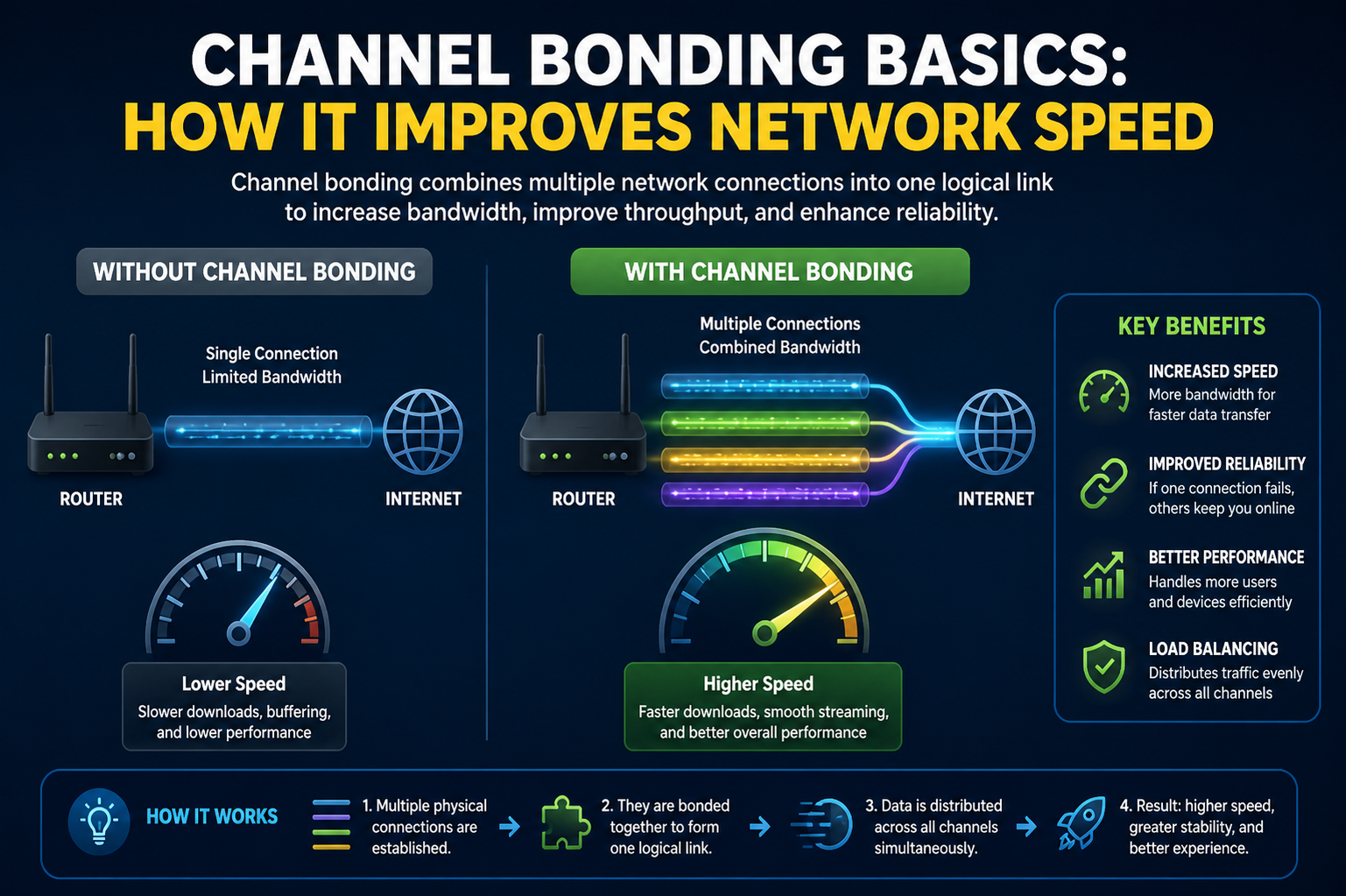
Channel bonding is a networking method designed to enhance internet performance by merging multiple independent connections into a single, more powerful communication system. Instead of depending on one internet line, this approach combines several connections so they work together as one unified pipeline. The purpose is to improve speed, stability, and overall efficiency in data transmission. Each individual connection contributes its own capacity, and when these capacities are combined, the result is a stronger and more capable network experience. This technique is especially useful in environments where large volumes of data are constantly being transferred, or where uninterrupted connectivity is essential for daily operations. Rather than relying on a single point of access, the system distributes the workload across multiple pathways, reducing strain on any one connection and improving overall performance.
Fundamental Idea Behind Connection Aggregation
At its foundation, channel bonding is based on the idea of connection aggregation, where multiple network links are treated as a single logical unit. Each internet connection has its own speed limits and performance characteristics, which can restrict efficiency when used independently. By combining them, these limitations are reduced because data is no longer dependent on just one pathway. Instead, traffic is shared across several routes simultaneously. This structure allows better use of available resources, ensuring that no single connection becomes overwhelmed. The system intelligently balances data flow so that each connection contributes according to its strength and capacity. This creates a smoother and more efficient communication process, especially when handling demanding digital tasks such as large file transfers or continuous streaming activities.
Importance of Channel Bonding in Modern Connectivity
In today’s digital environment, the demand for high-speed and reliable internet has increased significantly. Many activities require constant and stable connectivity, and a single network connection often struggles to meet these demands. Channel bonding becomes important because it addresses these limitations by expanding available bandwidth and improving reliability. It allows multiple weaker connections to work together and function like a stronger unified system. This is particularly useful in situations where network congestion or instability can disrupt performance. By distributing traffic across several connections, the system reduces the risk of slowdowns and interruptions. As a result, users experience more consistent performance, even when network conditions are not ideal. This makes it a practical solution for both personal and professional digital environments.
How Multiple Connections Are Combined into One System
The process of combining multiple connections involves a structured method where each network link is integrated into a single operational framework. Instead of functioning independently, each connection becomes part of a coordinated system that shares data responsibilities. The system identifies all available connections and organizes them into a unified structure. Once this is done, data is no longer sent through just one route but is distributed across all active links. This ensures that every connection contributes to the overall performance. The system continuously monitors each link to ensure balanced usage and optimal efficiency. If one connection becomes slower or unstable, the system automatically adjusts and redistributes the load to maintain smooth performance across the entire network.
Data Segmentation and Transmission Process
A key part of channel bonding is the way data is handled during transmission. Instead of sending large chunks of information through a single path, the system divides data into smaller segments. These segments are then transmitted across multiple connections at the same time. Each segment travels independently through a different route, depending on network conditions and performance levels. This parallel transmission increases efficiency and reduces delays. Once all segments reach their destination, they are carefully reassembled in the correct order to recreate the original information. This entire process happens seamlessly and quickly, allowing users to experience uninterrupted connectivity. The segmentation method also helps reduce the risk of congestion, as no single connection is overloaded with excessive data traffic.
Dynamic Distribution of Network Traffic
Channel bonding relies heavily on dynamic traffic distribution, which ensures that data is sent through the most efficient available paths. The system continuously evaluates the condition of each connection, including its speed, stability, and responsiveness. Based on this real-time analysis, it decides how to distribute incoming and outgoing data. Faster connections may handle larger portions of the traffic, while slower ones carry smaller loads. This dynamic adjustment helps maintain balanced performance across all connections. If any link experiences a drop in quality, the system quickly adapts by shifting traffic to more reliable routes. This constant adjustment process ensures that the network remains stable and efficient even when conditions change frequently.
Role of Bandwidth Expansion in Performance Enhancement
One of the most significant advantages of channel bonding is the expansion of usable bandwidth. Each internet connection has a fixed capacity, which limits how much data can be transmitted at once. When multiple connections are combined, their bandwidth is pooled together, creating a larger overall capacity. This expanded bandwidth allows more data to flow simultaneously, improving speed and responsiveness. It also reduces delays during high-demand activities, such as downloading large files or streaming high-quality media. The system ensures that bandwidth is distributed efficiently across all connections, preventing unnecessary congestion. By maximizing the use of available capacity, channel bonding significantly enhances overall network performance.
Improving Stability Through Redundant Connections
Stability is a critical factor in any network system, and channel bonding improves it by introducing redundancy. When multiple connections are active at the same time, the system does not rely on just one source of connectivity. Instead, it distributes data across all available links. If one connection fails or becomes unstable, the others continue to function without interruption. This redundancy ensures that the overall network remains operational even under unfavorable conditions. It reduces the risk of complete connectivity loss and helps maintain continuous data flow. This makes channel bonding particularly valuable in environments where consistent uptime is essential and interruptions can cause significant disruptions.
Balancing Load Across Active Connections
Load balancing is an essential function within channel bonding systems. It ensures that no single connection is overused while others remain underutilized. The system constantly evaluates the performance of each connection and distributes data accordingly. This balanced approach prevents bottlenecks and improves overall efficiency. By spreading traffic evenly, the system ensures that each connection contributes effectively to the network’s performance. Load balancing also helps extend the lifespan of network resources by preventing excessive strain on any one connection. This creates a more stable and reliable system that can handle varying levels of demand without performance degradation.
Real-Time Adaptation to Network Conditions
One of the most advanced features of channel bonding is its ability to adapt in real time to changing network conditions. Internet connections can fluctuate in speed and reliability due to various factors, and the system is designed to respond to these changes instantly. It continuously monitors performance metrics and adjusts data distribution accordingly. If a connection becomes slower, the system reduces its load and shifts traffic to more stable links. This real-time adaptability ensures that users experience consistent performance even in unpredictable network environments. It also enhances efficiency by ensuring that all available resources are used in the most effective way possible.
Efficiency in High-Demand Digital Environments
Channel bonding is particularly effective in environments where high data demand is constant. Activities such as large-scale data transfers, continuous streaming, and real-time communication require stable and high-speed connectivity. By combining multiple connections, the system provides the necessary bandwidth and stability to support these activities without interruption. It reduces lag, minimizes buffering, and ensures smooth performance even during peak usage periods. This makes it a valuable solution for scenarios where performance cannot be compromised. The ability to maintain efficiency under heavy load conditions is one of the key strengths of channel bonding.
Packet Reassembly and Data Integrity
After data is transmitted through multiple connections, it must be accurately reassembled at the destination. The system ensures that all data packets are collected and arranged in the correct order to reconstruct the original information. This process is critical for maintaining data integrity and preventing errors. Even though packets travel through different routes, the system tracks each one carefully to ensure nothing is lost or misplaced. Once all packets arrive, they are combined seamlessly, creating a complete and accurate output. This ensures that users receive data exactly as it was intended, without corruption or missing elements.
Overall Functionality and Network Enhancement
Channel bonding functions as a comprehensive enhancement to traditional networking systems by improving speed, stability, and efficiency simultaneously. It transforms multiple separate connections into a unified system capable of handling greater data loads with improved reliability. By distributing traffic, balancing loads, and adapting to real-time conditions, it ensures smooth and continuous connectivity. This makes it a powerful approach for improving overall network performance in a wide range of digital environments.
Upstream and Downstream Data Flow in Channel Bonding
Channel bonding operates by improving both directions of internet communication, which are known as upstream and downstream data flows. Downstream refers to data received by a device, such as loading websites, streaming content, or downloading files. Upstream refers to data sent from a device, such as uploading documents, sharing media, or sending requests over the internet. In a bonded system, both of these directions are enhanced by using multiple connections simultaneously. Instead of relying on a single pathway for incoming or outgoing traffic, the system distributes data across several active links. This ensures that communication remains balanced and efficient in both directions, improving overall responsiveness and reducing delays during data transfer activities.
Enhancing Download Performance Through Multiple Paths
Download performance is significantly improved in channel bonding because incoming data is divided and received through multiple network connections at the same time. Instead of waiting for all information to travel through a single line, the system splits incoming data into smaller portions and retrieves them simultaneously through different paths. This parallel reception increases the overall speed at which data reaches the device. It also reduces congestion, especially when handling large files or high-quality media streams. The system continuously manages how incoming packets are distributed and ensures they are received efficiently. Once all parts arrive, they are combined seamlessly, providing a smooth and uninterrupted user experience even during heavy download activity.
Improving Upload Efficiency with Combined Connections
Upload efficiency benefits greatly from channel bonding because outgoing data is also divided and transmitted through multiple connections. When a user sends information, such as large files or media content, the system breaks the data into smaller segments and sends them through all available links. This reduces the time required to complete uploads and prevents delays caused by single-connection limitations. Each connection contributes to carrying a portion of the outgoing data, ensuring faster and more balanced transmission. The system monitors the performance of each link and adjusts distribution dynamically to maintain optimal upload speed. This is particularly useful in situations where large amounts of data must be sent frequently and efficiently.
Parallel Data Transmission Mechanism
Channel bonding relies on parallel data transmission, which allows multiple data streams to move simultaneously through different connections. Instead of sending data sequentially through one path, the system divides it into multiple streams that travel at the same time. This parallel structure significantly improves efficiency and reduces waiting time. Each stream is assigned to a connection based on its current performance and stability. As a result, faster connections handle more data while slower ones contribute proportionally. This method ensures that all available network resources are used effectively. Parallel transmission also reduces the impact of delays, as data does not depend on a single route for completion.
Intelligent Routing of Data Packets
Intelligent routing is a core feature of channel bonding that ensures data packets are sent through the most efficient available paths. The system continuously evaluates each connection’s speed, stability, and responsiveness. Based on this analysis, it decides how to distribute packets across the network. If a connection is performing well, it may carry a larger share of the data. If it becomes unstable, the system immediately reduces its load and redirects traffic to stronger connections. This intelligent routing process ensures that data is always transmitted through the best possible routes. It enhances performance by minimizing delays and avoiding inefficient pathways.
Synchronization of Data Streams
Synchronization is essential in channel bonding because data is split and transmitted through multiple connections at different speeds. To ensure accuracy, the system carefully tracks each data segment and maintains synchronization during transmission. Even though packets may travel through different routes, they are coordinated in a way that ensures they arrive correctly and in order. The system temporarily holds faster-arriving packets until slower ones catch up, ensuring that the final data is complete and properly structured. This synchronization process prevents errors and ensures that users receive accurate and usable information without disruption or data loss.
Role of Load Distribution in Network Efficiency
Load distribution plays an important role in maintaining efficiency within a bonded network. Instead of allowing one connection to handle all traffic, the system spreads data evenly across all available links. This prevents overload on any single connection and ensures that each one contributes to overall performance. Load distribution is continuously adjusted based on real-time conditions, allowing the system to respond quickly to changes in network strength or speed. By balancing the workload, the system avoids congestion and improves responsiveness. This creates a smoother and more reliable internet experience, especially during periods of high data demand.
Reducing Bottlenecks in Data Transfer
Bottlenecks occur when a single connection becomes overwhelmed with too much data, slowing down overall performance. Channel bonding helps eliminate this issue by dividing traffic across multiple connections. Since no single link carries the entire load, the risk of congestion is significantly reduced. Each connection handles a portion of the data, ensuring smoother and more efficient transfer. If one connection slows down, others continue to operate normally, preventing complete disruption. This distributed approach ensures that data flows continuously without unnecessary delays, even under heavy network usage conditions.
Adaptive Bandwidth Allocation System
Channel bonding uses an adaptive bandwidth allocation system that adjusts how much data each connection handles. Instead of assigning fixed roles, the system continuously evaluates performance and reallocates bandwidth accordingly. Faster connections may receive more data responsibility, while slower ones handle smaller portions. This adaptive behavior ensures that bandwidth is always used in the most efficient way possible. It also allows the system to respond quickly to changes in network conditions. If a connection improves or declines in performance, the system adjusts immediately, maintaining consistent overall efficiency and stability.
Handling Variable Network Conditions
Network conditions are often unpredictable, with speeds and stability changing due to various factors. Channel bonding is designed to handle these variations by continuously monitoring each connection. When performance fluctuates, the system adapts by redistributing traffic across more stable links. This ensures that overall connectivity remains consistent even when individual connections experience issues. The ability to handle variable conditions is one of the key strengths of channel bonding, as it allows uninterrupted communication even in unstable environments. This adaptability ensures that users experience fewer disruptions and more reliable performance.
Packet Prioritization for Efficient Flow
Packet prioritization is used in channel bonding to ensure that important data is transmitted efficiently. The system identifies different types of data and assigns priority levels based on their importance or urgency. High-priority packets are transmitted through faster or more stable connections, while less critical data may use slower routes. This prioritization helps maintain smooth performance for essential tasks such as real-time communication or active data transfers. By managing traffic based on importance, the system ensures that critical operations are not delayed by less urgent processes, improving overall responsiveness.
Maintaining Continuous Connectivity
One of the key advantages of channel bonding is its ability to maintain continuous connectivity even when individual connections fail. Since multiple links are active at the same time, the system does not depend on a single source of internet access. If one connection becomes unavailable, others continue to function without interruption. The system automatically redistributes traffic to maintain stability. This redundancy ensures that users remain connected even during unexpected network failures. Continuous connectivity is especially important for tasks that require uninterrupted communication, such as streaming or remote collaboration.
Real-Time Adjustment of Data Flow
Channel bonding constantly adjusts data flow in real time to maintain optimal performance. The system monitors each connection’s condition and responds instantly to any changes. If a connection becomes faster, it may be assigned more traffic. If it slows down, its load is reduced. These real-time adjustments ensure that the network operates at maximum efficiency at all times. This dynamic management prevents performance drops and keeps data flowing smoothly across all active connections. It also ensures that users experience consistent speed and reliability regardless of changing network conditions.
Improved Responsiveness in Digital Communication
By combining multiple connections and optimizing data flow, channel bonding improves responsiveness in digital communication. Actions such as loading web pages, sending messages, or participating in online activities become faster and more fluid. Reduced delays and improved data distribution ensure that responses are received quickly. This enhanced responsiveness is particularly important in environments where timing and accuracy are critical. The system’s ability to manage multiple connections efficiently results in a smoother and more responsive digital experience overall.
Stability Through Distributed Network Usage
Stability is strengthened in channel bonding through distributed network usage. Instead of relying on one connection, the system spreads data across multiple links, reducing the risk of failure. If one connection becomes unstable, others continue to support the network. This distribution ensures that performance remains consistent even under challenging conditions. It also reduces the impact of fluctuations in individual connections. By maintaining balanced usage across all links, the system creates a more stable and reliable communication environment for all types of data activities.
Specialized Systems Used in Channel Bonding
Channel bonding depends on specialized systems that coordinate multiple internet connections into a unified structure. These systems can be hardware-based, software-based, or a combination of both. Their main responsibility is to manage how data is split, transmitted, and reassembled across different network links. Without these systems, multiple connections would operate independently and would not function as a single unit. The specialized system acts as a control layer that ensures smooth coordination between all active connections. It constantly monitors performance, distributes data intelligently, and ensures that each connection contributes effectively to the overall network performance. This structured management is what allows channel bonding to deliver improved speed and stability.
Hardware-Based Channel Bonding Approach
Hardware-based channel bonding relies on physical networking devices that are designed to support multiple internet connections at the same time. These devices are configured to combine separate network links into a single operational system. They handle tasks such as traffic distribution, packet management, and connection monitoring internally. The advantage of using hardware is that it provides a stable and dedicated environment for managing network traffic. It reduces reliance on external systems and ensures consistent performance. Hardware solutions are often used in environments where reliability is critical and continuous connectivity is required. These systems are built to handle heavy data loads and maintain efficiency even under demanding network conditions.
Software-Based Channel Bonding Approach
Software-based channel bonding uses applications installed on computers or devices to manage multiple internet connections. These applications perform similar functions to hardware systems but operate through software algorithms instead of physical devices. They control how data is divided, transmitted, and reassembled across available connections. Software solutions offer flexibility because they can be installed on different devices without requiring specialized equipment. They are often easier to deploy and adjust according to user needs. These systems continuously monitor connection performance and dynamically allocate traffic to maintain efficiency. Software-based approaches are widely used in environments where flexibility and cost efficiency are important.
Integration of Multiple Network Interfaces
Channel bonding often involves the integration of multiple network interfaces within a single system. Each interface represents a separate connection point that can access the internet independently. When combined, these interfaces work together as part of a unified network structure. The system manages all interfaces simultaneously, ensuring that data is distributed evenly and efficiently. This integration allows devices to use different types of connections at the same time, increasing overall bandwidth. It also improves redundancy, as multiple interfaces provide backup options if one connection fails. The integration process is carefully managed to ensure smooth coordination between all active network sources.
Concept of Aggregated Bandwidth Systems
Aggregated bandwidth refers to the combined capacity of multiple internet connections working together as one system. Instead of relying on the speed of a single connection, channel bonding merges the bandwidth of all available links. This creates a larger and more powerful communication channel capable of handling increased data loads. The system does not simply add speeds together in a direct manner but distributes traffic intelligently to maximize efficiency. Each connection contributes based on its capability, ensuring balanced usage. Aggregated bandwidth systems are especially useful in environments where high-speed data transfer is essential and single connections are not sufficient.
Difference Between Channel Bonding and Traditional Single Connections
Traditional single connections rely on one pathway for all data transmission, which can create limitations in speed and stability. Channel bonding, on the other hand, uses multiple pathways simultaneously to overcome these limitations. In a single connection system, performance is restricted by the capacity of that one link. If it becomes overloaded or unstable, the entire network is affected. Channel bonding eliminates this dependency by distributing traffic across several connections. This reduces congestion and improves reliability. The difference lies in how data is managed, with channel bonding offering a more flexible and resilient approach to network communication.
Understanding DOCSIS-Based Channel Enhancement
Some network systems use a method that enhances cable-based internet by combining multiple channels within the same infrastructure. This approach improves performance by increasing both upload and download capacity through channel aggregation. It operates within the framework of cable communication systems and is designed to optimize data flow across available channels. By combining multiple data streams, it increases overall efficiency and reduces delays. This method is commonly used in environments where cable infrastructure is the primary source of connectivity. It focuses on maximizing the performance of existing systems rather than relying on additional external connections.
Network Interface Bonding in Devices
Network interface bonding involves combining multiple network cards or interfaces within a single device to improve data throughput. Each interface acts as an independent connection point, and when bonded together, they function as one unified system. This increases the total amount of data that can be handled by the device. It also provides redundancy, ensuring that if one interface fails, others continue to operate. This method is often used in servers and high-performance systems where consistent data flow is essential. The bonding process is managed through specialized configurations that ensure all interfaces work together efficiently.
Traffic Management Across Multiple Links
Traffic management is a crucial aspect of channel bonding, as it determines how data is distributed across multiple connections. The system continuously evaluates each connection and assigns traffic based on performance levels. Faster and more stable connections handle larger portions of data, while slower ones contribute smaller amounts. This balanced distribution prevents overload and ensures smooth operation. Traffic management also involves adjusting data flow in real time, allowing the system to respond to changes in network conditions. This dynamic approach ensures that all available connections are used efficiently without unnecessary strain.
Role of Network Coordination Systems
Network coordination systems are responsible for ensuring that all bonded connections work together smoothly. They act as the central control unit that manages data distribution, packet tracking, and connection monitoring. These systems ensure that all parts of the network operate in harmony. Without proper coordination, multiple connections would function independently and fail to provide unified performance. The coordination system ensures synchronization between all data streams, allowing them to be combined correctly at the destination. This ensures accuracy and consistency in data transmission across the entire network.
Handling Mixed Connection Types
Channel bonding is capable of working with different types of internet connections simultaneously. These may include wired, wireless, or mobile connections. The system treats each connection as part of a single network structure and manages them collectively. This flexibility allows users to combine different technologies to achieve better performance. Each connection type may have different speeds and stability levels, but the system adjusts traffic distribution accordingly. This ensures that even mixed connections contribute effectively to overall performance. It also increases accessibility by allowing the use of multiple available network sources.
Efficiency Gains Through Combined Infrastructure
Combining multiple network connections results in significant efficiency improvements. Instead of relying on a single infrastructure, channel bonding utilizes all available resources simultaneously. This reduces delays, increases throughput, and improves responsiveness. The system ensures that each connection is used to its full potential without overloading any single link. Efficiency is achieved through intelligent distribution and continuous monitoring of network performance. This allows the system to adapt to changing conditions and maintain optimal functionality. Combined infrastructure creates a more powerful and reliable communication environment.
Limitations of Multi-Connection Systems
While channel bonding offers many advantages, it also has certain limitations. One key requirement is the availability of multiple internet connections, which may not always be accessible in all environments. Additionally, managing multiple connections requires proper configuration and system compatibility. Some devices may not support advanced bonding features without additional setup. There is also a level of complexity involved in maintaining and optimizing such systems. These limitations mean that careful planning is required before implementation. Despite these challenges, the benefits often outweigh the constraints in suitable environments.
System Requirements for Effective Operation
For channel bonding to function effectively, certain system requirements must be met. These include compatible networking hardware or software capable of managing multiple connections. Stable and active internet sources are also necessary to ensure consistent performance. The system must be able to monitor, distribute, and reassemble data efficiently across all connections. Proper configuration is essential to ensure balanced traffic flow and avoid inefficiencies. When these requirements are met, channel bonding can operate at its full potential, delivering improved speed, stability, and reliability across all connected networks.
Hardware Requirements for Channel Bonding Systems
Channel bonding requires suitable hardware capable of managing multiple internet connections at the same time. This hardware acts as the foundation for combining different network links into one unified system. Devices such as advanced routers, network gateways, or dedicated bonding appliances are typically used to handle this function. These devices are designed to process high volumes of data, distribute traffic efficiently, and maintain stable communication between all connected networks. Without compatible hardware, it becomes difficult to achieve proper coordination between multiple connections. The hardware continuously monitors performance, balances traffic, and ensures that each connection contributes effectively to the overall system. This makes it a critical component for achieving reliable and efficient channel bonding performance.
Software Requirements and System Control
Software plays an equally important role in channel bonding by controlling how data is managed across multiple connections. Specialized applications are responsible for dividing data into packets, distributing them across available links, and reassembling them at the destination. These programs operate in real time, constantly analyzing network conditions to optimize performance. They ensure that traffic is allocated efficiently based on speed, stability, and availability of each connection. Software-based control also allows flexibility, as it can be installed on different devices without requiring additional physical equipment. It provides a user-friendly way to manage complex networking tasks while maintaining consistent performance across all active connections.
Importance of Network Compatibility
Network compatibility is essential for successful channel bonding because not all connections or devices operate in the same way. The system must be able to work with different types of internet sources, including wired and wireless connections. Each connection may have different speeds, protocols, or stability levels, but the bonding system must unify them into a single operational structure. Compatibility ensures that data can flow smoothly across all links without interruption or conflict. When devices and connections are fully compatible, the system can distribute traffic more efficiently and maintain stable performance. Lack of compatibility may result in reduced efficiency or limited functionality, making this a crucial factor in implementation.
Configuration and Setup Process
The configuration process for channel bonding involves setting up multiple internet connections so they can function together as a single system. This requires identifying available network sources and integrating them into a unified structure through either hardware or software settings. The system must be properly configured to ensure that data is distributed evenly and efficiently across all connections. During setup, parameters such as traffic allocation, priority rules, and performance monitoring are defined. Once configured, the system continuously manages connections without requiring manual intervention. Proper setup is essential for achieving optimal performance and ensuring that all connections work in harmony.
Real-Time Monitoring of Network Performance
Real-time monitoring is a key feature of channel bonding systems, allowing continuous observation of each active connection. The system tracks metrics such as speed, stability, latency, and availability. This information is used to make instant adjustments in data distribution. If a connection slows down or becomes unstable, the system quickly reduces its load and shifts traffic to stronger links. This ensures that performance remains consistent even when network conditions change. Real-time monitoring also helps identify potential issues before they affect overall performance. By constantly observing and adjusting, the system maintains efficiency and reliability across all connections.
Fault Tolerance and Connection Recovery
Fault tolerance is one of the major strengths of channel bonding systems. Since multiple connections are used simultaneously, the system can continue functioning even if one or more connections fail. When a failure occurs, the system automatically redistributes traffic to the remaining active connections. This ensures that data flow is not interrupted and users continue to experience connectivity without disruption. Connection recovery mechanisms also allow failed links to rejoin the system once they are restored. The ability to handle failures without affecting overall performance makes channel bonding highly reliable in unstable network environments.
Performance Optimization Techniques
Performance optimization in channel bonding involves adjusting how data is handled across multiple connections to achieve maximum efficiency. The system continuously evaluates connection quality and redistributes traffic based on performance levels. Faster connections are used more heavily, while slower ones are assigned lighter loads. Optimization also includes minimizing delays, reducing packet loss, and ensuring smooth data flow. These techniques allow the system to adapt to changing network conditions and maintain consistent performance. By fine-tuning how resources are used, channel bonding ensures that all available bandwidth is utilized effectively.
Data Integrity During Transmission
Maintaining data integrity is essential in channel bonding because information is split into multiple packets and sent through different routes. The system ensures that all packets arrive correctly and are reassembled in the proper order. Each packet is tracked during transmission to prevent loss or corruption. If any packet is delayed or missing, the system manages retransmission to maintain completeness. This careful handling ensures that the final output is accurate and reliable. Data integrity is especially important in applications where precision and correctness are critical, such as file transfers and real-time communication.
Scalability of Channel Bonding Systems
Channel bonding systems are highly scalable, meaning they can be expanded to include more connections as needed. Additional internet sources can be integrated into the system to increase bandwidth and improve performance. This scalability makes it suitable for both small-scale and large-scale environments. As demand increases, more connections can be added without disrupting existing operations. The system automatically adjusts to accommodate new links and redistributes traffic accordingly. This flexibility allows channel bonding to grow with user requirements and adapt to increasing data demands over time.
Energy and Resource Efficiency Considerations
Channel bonding also involves considerations related to energy and resource efficiency. Since multiple connections are active simultaneously, efficient management is required to avoid unnecessary resource consumption. The system ensures that each connection is used only as needed, preventing wasteful usage of network resources. By balancing traffic intelligently, it reduces overload and improves overall efficiency. Resource management also helps maintain system stability by avoiding excessive strain on any single connection. This balanced approach ensures that performance improvements do not come at the cost of unnecessary resource consumption.
Challenges in Implementation and Maintenance
Implementing channel bonding can present certain challenges, particularly in terms of setup complexity and ongoing maintenance. Proper configuration is required to ensure that all connections work together effectively. Managing multiple connections also requires monitoring and adjustment to maintain optimal performance. Compatibility issues between different network types may also arise, requiring careful planning. Maintenance involves regularly checking system performance and making adjustments as needed. Despite these challenges, the benefits of improved speed, stability, and reliability often make channel bonding a worthwhile solution for many environments.
Security Considerations in Bonded Networks
Security is an important aspect of channel bonding because multiple connections increase the number of pathways through which data travels. The system must ensure that all transmitted data remains protected across different networks. Encryption and secure communication protocols are often used to safeguard information during transmission. Each connection must be monitored to prevent unauthorized access or data interception. By maintaining strong security measures, the system ensures that combined connections do not introduce vulnerabilities. Secure channel bonding helps protect sensitive information while still delivering improved performance.
Future Potential of Combined Network Systems
The concept of combining multiple network connections continues to evolve, offering significant potential for future development. As digital demands increase, systems that enhance speed, reliability, and efficiency will become even more important. Channel bonding represents a step toward more advanced and flexible networking solutions. Its ability to integrate multiple connections and optimize performance makes it a strong foundation for future innovations in connectivity. As technology advances, these systems are expected to become more efficient, automated, and widely used across different digital environments.
Final Conclusion
Channel bonding is a powerful networking approach that transforms multiple independent internet connections into a unified and efficient system. It improves speed, enhances stability, and ensures continuous data flow by distributing traffic intelligently across all available links. Through advanced coordination, real-time monitoring, and adaptive management, it delivers a more reliable and high-performing network experience. Despite certain limitations and setup requirements, its benefits make it a valuable solution for environments that demand strong and consistent connectivity.