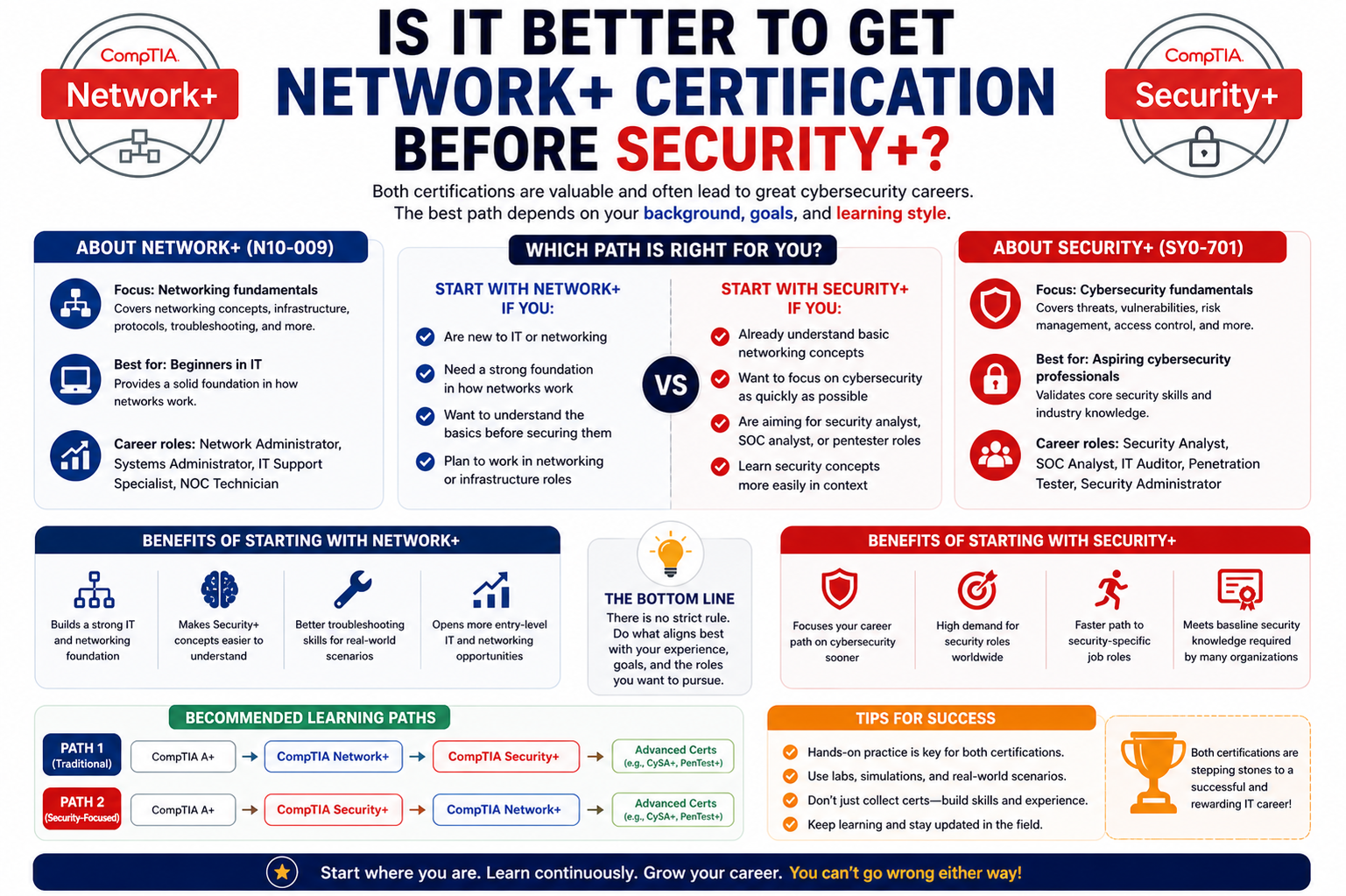
Deciding whether to begin your IT certification journey with Network+ or Security+ is not a one-size-fits-all decision. It depends heavily on your current knowledge, your long-term career direction, and how comfortable you are with networking and security concepts. Both certifications serve different purposes, yet they are closely connected in the broader IT and cybersecurity ecosystem. Choosing the right starting point can significantly shape how quickly and effectively you grow in your IT career.
Understanding the Role of CompTIA Certifications in IT Foundations
CompTIA certifications are designed to validate essential IT skills in a vendor-neutral way, meaning the knowledge you gain is not tied to any specific company or product. Instead, they focus on universal IT principles that apply across multiple environments and technologies. This makes them especially valuable for beginners entering the IT industry, as well as professionals looking to expand into new domains. Network+ and Security+ are two of the most popular certifications in this category, each serving a distinct but complementary role in career development.
Why Networking Knowledge Matters Before Security Concepts
Networking forms the backbone of modern IT infrastructure. Every application, system, and service depends on how data moves across networks. Understanding concepts such as routing, switching, IP addressing, and network protocols provides a strong technical base for any IT role. Without this foundation, it becomes much harder to fully understand how security threats operate or how defenses are built. This is why many professionals consider networking knowledge a critical stepping stone before diving deeper into cybersecurity topics.
How Network+ Builds the Core Technical Foundation
The Network+ certification focuses on building a solid understanding of how networks function in real-world environments. It introduces key topics such as network architecture, troubleshooting, network operations, and best practices for maintaining connectivity. It also helps learners understand how devices communicate and how data flows across different systems. This knowledge becomes essential not only for networking roles but also for any cybersecurity position where understanding traffic behavior and infrastructure is important.
How Security+ Expands Into Cybersecurity Fundamentals
Security+ takes a different direction by focusing on protecting systems, networks, and data from threats. It introduces concepts such as risk management, threat detection, cryptography, identity management, and security controls. While it does not require deep networking expertise as a formal prerequisite, it assumes that learners already understand how networks function. Without that background, many security concepts can feel abstract or difficult to apply in practical scenarios.
The Relationship Between Networking and Cybersecurity Knowledge
Cybersecurity is deeply connected to networking because most attacks target networked systems. Whether it is malware, unauthorized access, or data interception, understanding how data travels across networks helps in identifying vulnerabilities and defending against threats. For example, recognizing unusual traffic patterns or misconfigured network devices requires knowledge of how networks are supposed to operate. This overlap is one of the main reasons why many learners benefit from studying networking before security.
Choosing Based on Career Direction in Cybersecurity Roles
If your primary goal is to enter the cybersecurity field, Security+ often becomes the more direct certification to pursue. Many entry-level cybersecurity roles list it as a preferred or required qualification. It demonstrates that you understand essential security principles and are prepared for roles in threat analysis or security operations. However, even in this case, having networking knowledge from Network+ can make the learning process smoother and help you stand out in technical discussions.
When Network+ Becomes the Better First Step
For individuals who are completely new to IT or planning to work in system administration or networking roles, starting with Network+ is often the better choice. It builds the foundational understanding needed to manage systems, troubleshoot connectivity issues, and support IT infrastructure. These skills are frequently used in help desk and system support positions, making Network+ highly practical for early career development. It also prepares learners for more advanced certifications later on.
How System Administration Careers Influence Certification Choice
System administration roles require strong knowledge of how networks operate within organizations. Tasks such as managing servers, configuring network services, and ensuring system uptime all depend on networking fundamentals. Because of this, Network+ aligns closely with the day-to-day responsibilities of system administrators. Security+ can still be valuable in these roles, but it typically builds on the foundation that Network+ helps establish first.
Using Job Requirements to Guide Certification Decisions
One of the most practical ways to decide between Network+ and Security+ is to study real job listings. Employers often specify the certifications they prefer or require for entry-level roles. By analyzing multiple job postings, patterns begin to emerge that show which certification is more commonly requested for your desired career path. This approach helps align your certification journey with actual industry demand rather than guesswork or assumptions.
Understanding Industry Expectations and Practical Skill Demand
In many IT job markets, employers value practical knowledge as much as certifications. While Security+ may open doors in cybersecurity roles more quickly, Network+ often strengthens your ability to understand and communicate technical issues effectively. Employers appreciate candidates who not only hold certifications but also demonstrate a clear understanding of how systems work together. This balance of networking and security knowledge is often what sets strong candidates apart.
Why Both Certifications Can Complement Each Other Naturally
Although many learners choose one certification before the other, Network+ and Security+ are not competing paths. Instead, they complement each other by covering different layers of IT knowledge. Networking provides the structure, while security focuses on protection. Together, they create a more complete understanding of how modern IT environments function. Even if you choose one first, the other often becomes a logical next step in your career progression.
Building a Clear Path Between Network+ and Security+ Based on Skill Progression
Continuing the decision between Network+ and Security+, it becomes important to understand how skills naturally build on each other in IT. Many learners underestimate how interconnected networking and security really are. Instead of viewing them as separate choices, it helps to think of them as layers of the same technical foundation. The order in which you learn them can influence how quickly you grasp advanced concepts, especially in real-world environments where both fields constantly overlap.
How Foundational IT Knowledge Shapes Certification Success
Before stepping into either certification, your existing IT knowledge plays a major role in determining which path feels more comfortable. If you already understand basic networking concepts such as IP addressing, DNS, and routing, you may find Security+ more accessible at the start. On the other hand, if these concepts are unfamiliar, starting with Network+ can reduce confusion later. Strong foundational knowledge helps avoid memorization without understanding, which is often a challenge for beginners.
Why Security Concepts Depend on Network Understanding
Security operations rely heavily on understanding how data moves across systems. For example, detecting suspicious activity often involves analyzing network traffic patterns, identifying unusual ports, or recognizing unauthorized connections. Without a clear understanding of networking fundamentals, these security tasks can feel abstract or overly technical. Network+ helps bridge this gap by explaining how systems communicate, which later makes Security+ concepts more practical and easier to apply.
How Network+ Strengthens Real-World Troubleshooting Skills
One of the biggest advantages of Network+ is its focus on troubleshooting. In IT environments, problems rarely appear as isolated issues. Instead, they often involve multiple layers such as hardware, software, and connectivity. Network+ trains you to think logically about where a problem might originate. This troubleshooting mindset is valuable not only for networking roles but also for security roles where identifying the source of an issue is critical.
Security+ as a Direct Entry Point Into Cybersecurity Roles
For those aiming to enter cybersecurity as quickly as possible, Security+ is often considered the more direct path. It covers essential topics such as threat detection, vulnerability management, and incident response. These areas are commonly required in entry-level cybersecurity jobs. Because of this, some learners prefer to start with Security+ to gain faster access to job opportunities, even if their networking knowledge is still developing.
The Importance of Career Timing in Certification Decisions
Timing can influence which certification makes more sense first. If you are already employed in an IT support or networking-related role, Network+ may help you grow within your current position. However, if you are actively trying to switch into cybersecurity, Security+ might offer more immediate career benefits. The decision is less about which certification is better and more about which aligns with your current career stage and urgency.
How Help Desk and Entry-Level IT Roles Influence Learning Order
Many IT professionals begin their careers in help desk or technical support positions. These roles typically involve troubleshooting connectivity issues, supporting users, and managing basic network problems. In such environments, Network+ knowledge is directly applicable and often improves job performance. This experience can later make Security+ concepts easier to understand because you have already seen how systems behave in real environments.
Why Networking Still Matters Even in Cybersecurity-Focused Roles
Even in cybersecurity-focused careers, networking knowledge remains essential. Security analysts, penetration testers, and incident responders all rely on understanding network behavior. Attacks are often detected by analyzing logs, monitoring traffic, and identifying anomalies in communication patterns. Without networking knowledge, interpreting these signals becomes significantly more difficult, which can slow down response times and reduce effectiveness.
Balancing Short-Term Goals With Long-Term Career Growth
Choosing between Network+ and Security+ often comes down to balancing short-term job goals with long-term career development. Security+ may provide quicker access to cybersecurity roles, but Network+ builds a broader technical foundation that supports long-term growth. Professionals who understand both networking and security tend to advance more easily into specialized or senior positions later in their careers.
How Learning Order Impacts Confidence in Technical Roles
Confidence plays a major role in IT success. Starting with Network+ often helps build confidence gradually by introducing core concepts in a structured way. Once you understand how networks operate, Security+ becomes easier to grasp because you can connect security principles to real systems. Without this foundation, some learners may feel overwhelmed by the abstract nature of cybersecurity topics.
Understanding Employer Expectations Across Different IT Fields
Different IT roles have different expectations. Networking roles often prioritize certifications like Network+, while cybersecurity roles may prioritize Security+. However, many employers appreciate candidates who understand both areas. This is especially true in smaller organizations where IT professionals handle multiple responsibilities. In such environments, having a combination of both certifications can be a strong advantage.
How Industry Overlap Makes Both Certifications Valuable
In modern IT environments, the boundaries between networking and security are increasingly blurred. Firewalls, intrusion detection systems, and secure network configurations all require knowledge of both domains. This overlap means that regardless of which certification you choose first, you will eventually benefit from understanding the other. Many professionals naturally end up studying both over time.
Preparing Mentally for Either Certification Path
Choosing between Network+ and Security+ is not just about technical knowledge; it is also about mindset. Network+ tends to be more structured and foundational, making it easier for beginners to follow. Security+, on the other hand, requires more analytical thinking and understanding of real-world attack scenarios. Being mentally prepared for the style of learning involved can help improve your success rate in either certification path.
How Network+ Knowledge Enhances Security+ Performance in Real Scenarios
When you move deeper into IT learning, it becomes clear that Network+ is not just a standalone certification but a support system for understanding Security+. Many topics in Security+ assume that you already know how networks behave under normal conditions. Once you understand routing, switching, and data flow, it becomes much easier to recognize abnormal behavior that may indicate a security threat. This connection between normal network operations and suspicious activity is what makes Network+ knowledge highly valuable for security-focused learning.
Why Security+ Becomes Easier After Learning Networking Fundamentals
Security+ introduces a wide range of cybersecurity concepts that can feel overwhelming without a technical foundation. Topics such as encryption, authentication, and access control are easier to understand when you already know how data moves between systems. For example, understanding how a packet travels across a network helps you grasp how attackers might intercept or manipulate that traffic. This makes Network+ a powerful stepping stone that reduces the complexity of Security+ topics.
The Role of Protocols in Both Networking and Security
Protocols are one of the most important areas where Network+ directly supports Security+. In networking, protocols define how devices communicate. In security, those same protocols are analyzed to identify weaknesses or misconfigurations. If you understand how protocols like TCP/IP, DNS, and HTTP work, you are better equipped to understand how attackers exploit them. This dual relevance shows why networking knowledge is often considered essential for cybersecurity professionals.
How Cybersecurity Thinking Builds on Network Awareness
Cybersecurity is not only about tools and technologies but also about understanding system behavior. Network+ teaches you what normal communication looks like between devices, servers, and applications. Once you understand this baseline, Security+ helps you identify deviations from it. This shift from “how systems work” to “how systems are attacked” is much smoother when you already have networking awareness. Without it, security concepts may feel disconnected from real environments.
When Security+ First Can Still Be a Practical Choice
Although Network+ is often recommended first, there are situations where starting with Security+ makes sense. If your goal is to quickly enter cybersecurity roles or if you already have basic networking knowledge, Security+ can serve as an efficient entry point. It introduces you directly to security principles, allowing you to focus on threat detection and protection strategies earlier in your career. This path is often chosen by learners who are transitioning from non-IT backgrounds but want to specialize in security.
The Importance of Hands-On Experience in Both Certifications
Both Network+ and Security+ benefit greatly from practical experience. Networking labs help you understand how devices connect and communicate, while security labs help you understand how systems are defended or attacked. Hands-on practice bridges the gap between theory and real-world application. Whether you start with Network+ or Security+, practical exposure strengthens your ability to apply knowledge in actual IT environments.
How Job Roles Influence the Value of Each Certification
Different job roles prioritize different skill sets. Networking roles such as network technician or system support engineer benefit more from Network+ knowledge. Cybersecurity roles such as security analyst or SOC analyst often prioritize Security+. However, many modern IT positions require a mix of both skills. Understanding this overlap helps you choose a certification path that aligns with your intended job role rather than focusing only on exam difficulty.
Why Entry-Level IT Professionals Often Start With Network+
For beginners, Network+ provides a structured introduction to IT systems. It builds confidence by explaining how networks function step by step. This structured learning approach makes it easier to transition into more advanced topics later. Many entry-level professionals prefer this path because it reduces confusion and creates a strong base for future certifications. Once this foundation is established, Security+ becomes more approachable.
Security+ as a Bridge Into Advanced Cybersecurity Careers
Security+ is often seen as the gateway to advanced cybersecurity certifications and roles. It introduces essential concepts that are required in almost every security position. Once you understand these fundamentals, you can progress into more specialized areas such as penetration testing, incident response, or cloud security. In this sense, Security+ acts as a bridge between basic IT knowledge and advanced cybersecurity expertise.
How Both Certifications Work Together in Career Development
Rather than viewing Network+ and Security+ as competing options, it is more accurate to see them as complementary steps in a career path. Network+ builds the foundation, while Security+ builds specialization. Together, they create a balanced understanding of IT infrastructure and security practices. Professionals who understand both areas are often more versatile and capable of handling complex IT environments.
Understanding the Learning Curve Difference Between Both Certifications
Network+ tends to focus more on structured concepts such as hardware, topology, and connectivity, which are easier for beginners to visualize. Security+, however, involves more abstract thinking such as risk analysis, threat modeling, and encryption concepts. This difference in learning style can influence which certification feels easier depending on your background. Choosing the right order can help reduce frustration and improve long-term learning efficiency.
How Industry Trends Influence Certification Choices
Modern IT environments are increasingly focused on security due to rising cyber threats. This trend has made Security+ more popular for entry-level cybersecurity roles. At the same time, the importance of networking has not decreased because all security systems depend on stable and well-understood networks. This balance means that both certifications remain relevant, but their importance depends on your specific career direction and timing.
How Real IT Environments Combine Networking and Security Skills
In real-world IT environments, networking and security are rarely separated. Every system that handles data requires both connectivity and protection. This means professionals often deal with situations where they must understand how a network is built while also identifying potential security risks within it. Because of this overlap, both Network+ and Security+ knowledge become useful at the same time, even if you start with only one certification.
Why Starting With Network+ Can Reduce Long-Term Learning Difficulty
Starting with Network+ can make future cybersecurity learning significantly easier. Once you understand how data moves through routers, switches, and devices, you naturally begin to recognize how vulnerabilities can appear in those paths. This foundational understanding reduces the effort needed to memorize security concepts later, because you can connect them directly to real network behavior instead of learning them in isolation.
How Security+ Builds Critical Thinking Skills for IT Professionals
Security+ is not just about memorizing threats or tools; it also develops analytical thinking. You learn how to evaluate risks, identify weak points, and respond to incidents. These skills require a good understanding of how systems interact. When combined with networking knowledge, this analytical approach becomes even more powerful, allowing professionals to make informed decisions during security incidents.
The Importance of Understanding Attack Vectors Through Networking
Most cyberattacks exploit weaknesses in network communication. Whether it is unauthorized access, malware distribution, or data interception, the attack often travels through network pathways. Understanding these pathways helps you identify where attacks may occur and how they can be prevented. Network+ provides this visibility into how systems communicate, making it easier to understand the logic behind many Security+ topics.
How Employers View Combined Network+ and Security+ Knowledge
Employers often value candidates who understand both networking and security because it shows versatility. In many IT roles, employees are expected to troubleshoot connectivity issues while also ensuring systems remain secure. Having both certifications demonstrates that you can handle multiple responsibilities, which is especially valuable in smaller organizations or hybrid IT roles where job functions overlap.
Why Some Professionals Skip Network+ but Still Benefit From It
Some learners choose to skip Network+ and go directly to Security+ to enter the cybersecurity field faster. While this approach can work, it often leads to gaps in understanding that must be filled later. Many professionals eventually revisit networking concepts because they become necessary for advanced security tasks. This shows that even if Network+ is skipped initially, its knowledge is still essential in practice.
How Certification Order Affects Job Readiness
The order in which you earn certifications can influence how prepared you feel for job roles. Starting with Network+ often leads to stronger technical confidence in troubleshooting and infrastructure-related tasks. Starting with Security+ may lead to faster exposure to cybersecurity concepts but may require additional effort to understand underlying network behavior. Both paths can lead to success, but the learning experience will feel different depending on the order.
The Role of Continuous Learning Beyond Certifications
Certifications like Network+ and Security+ are only the beginning of an IT career. Technology evolves constantly, and professionals must continue learning even after earning certifications. Network+ helps build a foundation for understanding systems, while Security+ introduces ongoing cybersecurity principles. Together, they encourage a mindset of continuous improvement, which is essential in the IT industry.
How Entry-Level Roles Influence Long-Term Certification Strategy
Entry-level IT roles often determine how certifications are applied in real work environments. For example, help desk and technical support roles benefit more from networking knowledge, while security operations roles focus more on threat detection and analysis. Your current role can guide which certification provides more immediate value and helps you build relevant experience for future advancement.
Why Many Professionals Eventually Earn Both Certifications
Even though learners often choose one certification first, many eventually earn both Network+ and Security+. This is because the combination provides a complete understanding of IT infrastructure and security principles. Networking explains how systems function, while security explains how those systems are protected. Together, they create a well-rounded skill set that is highly valued in the industry.
Choosing Between Network+ and Security+
The final decision between Network+ and Security+ depends on your career goals, current knowledge level, and urgency to enter a specific role. If you are completely new to IT, Network+ provides a smoother learning path. If you are focused on entering cybersecurity quickly, Security+ may be more direct. Neither choice is wrong, but each leads to a different learning experience and career progression path.
How Hands-On Practice Strengthens Both Network+ and Security+ Learning
Practical experience plays a major role in understanding both networking and security concepts. While theory helps you pass exams, hands-on practice helps you understand how systems behave in real environments. When you work with network configurations, troubleshoot connectivity issues, or simulate security incidents, the concepts from both certifications become much clearer and easier to retain. This applied learning approach bridges the gap between knowledge and real-world application.
Why Networking Labs Improve Security Understanding
Networking labs help you visualize how devices communicate, how data flows, and how configurations impact connectivity. Once you understand these fundamentals, security concepts such as intrusion detection, firewall rules, and traffic filtering become easier to interpret. You start recognizing how normal traffic should behave, which makes it easier to identify anomalies that may indicate a security issue. This connection is one of the strongest reasons why networking knowledge supports cybersecurity learning.
How Security Scenarios Rely on Network Awareness
In cybersecurity scenarios, professionals often analyze logs, monitor traffic, and investigate suspicious activity. These tasks require a clear understanding of how networks operate under normal conditions. Without that baseline, it becomes difficult to determine whether behavior is legitimate or malicious. Network+ helps establish this baseline understanding, which directly improves performance in Security+ topics such as incident response and threat analysis.
The Value of Logical Thinking in Both Certifications
Both Network+ and Security+ encourage structured, logical thinking. Networking problems often require step-by-step troubleshooting, while security problems require identifying patterns and evaluating risks. Developing this mindset early helps you approach IT challenges more effectively. Instead of guessing solutions, you learn to analyze symptoms, identify causes, and apply correct fixes based on technical reasoning.
How Certification Knowledge Transfers to Real IT Jobs
The knowledge gained from Network+ and Security+ is not limited to exam preparation. In real IT environments, professionals constantly apply these concepts. Network administrators use networking principles to maintain connectivity and optimize performance, while security analysts use security principles to protect systems and respond to incidents. The overlap between these roles shows how transferable the knowledge from both certifications really is.
Why Employers Appreciate Versatile IT Professionals
Employers often prefer candidates who can handle multiple aspects of IT infrastructure. A professional who understands both networking and security is more adaptable in dynamic environments. They can assist with troubleshooting, system configuration, and security monitoring as needed. This versatility increases their value in the workplace and often leads to more opportunities for career advancement.
How Learning Order Impacts Confidence in Problem Solving
The order in which you learn Network+ and Security+ can influence your confidence when solving technical problems. Starting with networking often builds confidence in understanding systems at a foundational level. This makes security concepts easier to absorb later. Starting with security can provide faster exposure to cybersecurity topics but may require additional effort to understand underlying network behavior. Both approaches eventually lead to competency, but the learning journey differs.
The Role of Cybersecurity Awareness in Networking Roles
Even in traditional networking roles, cybersecurity awareness is becoming increasingly important. Network administrators must consider security when configuring devices, managing traffic, and maintaining infrastructure. This means that Security+ knowledge can still benefit networking professionals. Understanding security principles helps prevent misconfigurations and improves overall system protection.
How IT Career Growth Depends on Combined Knowledge
Long-term career growth in IT often depends on combining multiple skill sets. Professionals who understand both networking and security are better prepared for advanced roles such as system architect, security engineer, or infrastructure specialist. These roles require a broad understanding of how systems operate and how they are protected. Having both Network+ and Security+ knowledge creates a strong foundation for these career paths.
Why Many Learners Revisit Networking After Security+
It is common for learners who start with Security+ to revisit networking concepts later. As they progress in cybersecurity roles, they often encounter situations where deeper networking knowledge is required. This reinforces the idea that networking is not optional but essential for long-term success in IT. Even if Security+ comes first, Network+ concepts eventually become necessary in practical environments.
How Continuous Practice Reinforces Certification Knowledge
Continuous practice helps reinforce everything learned in both certifications. Working with real systems, virtual labs, or simulation tools ensures that knowledge stays relevant and usable. Over time, repeated exposure to networking and security scenarios builds stronger intuition, allowing professionals to respond more quickly and accurately in real-world situations.
How Both Certifications Shape a Strong IT Foundation
Network+ and Security+ together create a balanced IT foundation. Networking teaches how systems communicate, while security teaches how those systems are protected. This combination is essential in modern IT environments where connectivity and security must work together seamlessly. Professionals who understand both areas are better equipped to handle complex technical challenges.
Why Certification Order Should Match Career Intentions
Ultimately, the order in which you choose Network+ or Security+ should align with your career intentions. If your focus is infrastructure and system support, networking first is often more beneficial. If your focus is cybersecurity and threat analysis, security first may be more appropriate. Aligning certification order with career direction ensures that your learning is both efficient and relevant to your goals.
How Real-World IT Environments Blur the Line Between Networking and Security
In modern IT systems, networking and security are deeply interconnected rather than separate disciplines. Every application, server, and cloud service depends on a network, and every network must be protected. This overlap means that professionals rarely work in purely “networking” or purely “security” roles. Instead, they constantly switch between both perspectives, which makes understanding both areas extremely valuable in real job scenarios.
Why Network Visibility Is Essential for Security Monitoring
Security monitoring depends heavily on visibility into network traffic. Without understanding what normal network communication looks like, it becomes difficult to detect abnormal behavior. Security tools often analyze packets, logs, and connection patterns to identify threats. Network+ knowledge helps you interpret this data correctly, allowing you to distinguish between legitimate activity and potential security incidents more effectively.
How Security Threats Often Begin at the Network Level
Most cybersecurity threats originate through network interactions. Attackers exploit vulnerabilities in communication protocols, misconfigured devices, or exposed services. Understanding how networks are structured helps you identify where these vulnerabilities exist. This is why networking knowledge is often considered the first layer of defense in cybersecurity, even before advanced security tools are applied.
The Importance of Layered Thinking in IT Problem Solving
Both Network+ and Security+ encourage a layered approach to problem solving. In networking, you analyze physical, data link, and application layers to identify issues. In security, you evaluate risks across systems, users, and processes. This layered thinking helps professionals break down complex problems into smaller, manageable parts, making troubleshooting and analysis more efficient.
How Network Fundamentals Improve Incident Response Skills
Incident response requires quick and accurate decision-making. When a security issue occurs, professionals must trace the source of the problem and understand how it spreads across systems. Networking knowledge allows you to follow the path of data and identify where the issue began. This significantly improves response time and accuracy during real-world security incidents.
Why Security+ Alone May Not Be Enough for Technical Depth
Security+ provides a strong introduction to cybersecurity principles, but it does not deeply explore networking infrastructure. Without networking knowledge, some security concepts may feel theoretical rather than practical. For example, understanding firewall behavior or intrusion detection systems becomes much clearer when you already know how network traffic is structured and transmitted.
How Network+ Builds Confidence for Technical Environments
Network+ helps build confidence by introducing structured, foundational concepts. Learners gain a clear understanding of how devices connect, how data flows, and how systems communicate. This structured knowledge reduces confusion when moving into more advanced topics. As a result, learners often feel more prepared to handle complex IT environments after completing Network+.
The Role of Troubleshooting in Both Networking and Security
Troubleshooting is a shared skill across both certifications. In networking, you troubleshoot connectivity, performance, and configuration issues. In security, you troubleshoot breaches, unauthorized access, and system anomalies. The ability to diagnose problems logically is one of the most valuable skills in IT, and it improves significantly when both networking and security concepts are understood together.
How Career Flexibility Improves With Both Certifications
Having both Network+ and Security+ increases career flexibility. You are not limited to a single domain and can apply for roles in networking, system administration, or cybersecurity. This flexibility is especially useful in organizations where IT roles overlap. Professionals who understand both areas can move between responsibilities more easily, making them more valuable to employers.
Why Many IT Professionals Develop Hybrid Skill Sets
The IT industry increasingly values hybrid skill sets. Professionals who understand both networking and security can handle a wider range of responsibilities. This includes configuring systems, monitoring security, and responding to incidents. As technology environments become more complex, the demand for professionals who can operate across multiple domains continues to grow.
How Learning Order Influences Long-Term Career Growth
The order in which you learn Network+ and Security+ can shape your long-term development. Starting with networking often leads to stronger technical foundations, while starting with security can lead to faster entry into cybersecurity roles. However, in both cases, professionals eventually benefit from understanding both areas. Long-term success in IT is less about the order and more about continuous skill development.
The Importance of Building a Strong Technical Base Early
A strong technical base makes advanced learning easier. Network+ provides this base by explaining core infrastructure concepts. Once this foundation is established, Security+ becomes more intuitive because you can connect security principles to real systems. Without this base, advanced topics may require more effort to understand and apply effectively.
How Both Certifications Prepare You for Advanced IT Roles
Network+ and Security+ are stepping stones toward more advanced certifications and roles. They prepare you for specialized paths such as network engineering, cybersecurity analysis, cloud security, and infrastructure management. Together, they provide a balanced understanding of IT systems, which is essential for progressing into higher-level technical positions.
Conclusion
Choosing between Network+ and Security+ is not about finding a universally correct starting point, but about aligning your decision with your current knowledge level and career direction. Both certifications are closely connected, and each one strengthens your understanding of the other in different ways.
Network+ builds the essential foundation of how networks operate, how systems communicate, and how data flows across infrastructure. This knowledge becomes extremely valuable when moving into security concepts because cybersecurity is built on understanding network behavior and identifying what does not belong.
Security+, on the other hand, provides a more direct path into cybersecurity roles by focusing on threats, vulnerabilities, risk management, and protection strategies. It can help you enter the security field faster, especially if you already have some basic networking knowledge.
In most cases, starting with Network+ creates a smoother learning experience and stronger technical confidence, especially for beginners. However, if your goal is to quickly transition into cybersecurity roles, starting with Security+ can also be a practical choice.
Ultimately, both certifications complement each other rather than compete. Many professionals benefit from earning both over time, as the combination creates a well-rounded understanding of IT infrastructure and security. The best path is the one that matches your goals, supports your current skill level, and keeps your long-term career growth in focus.