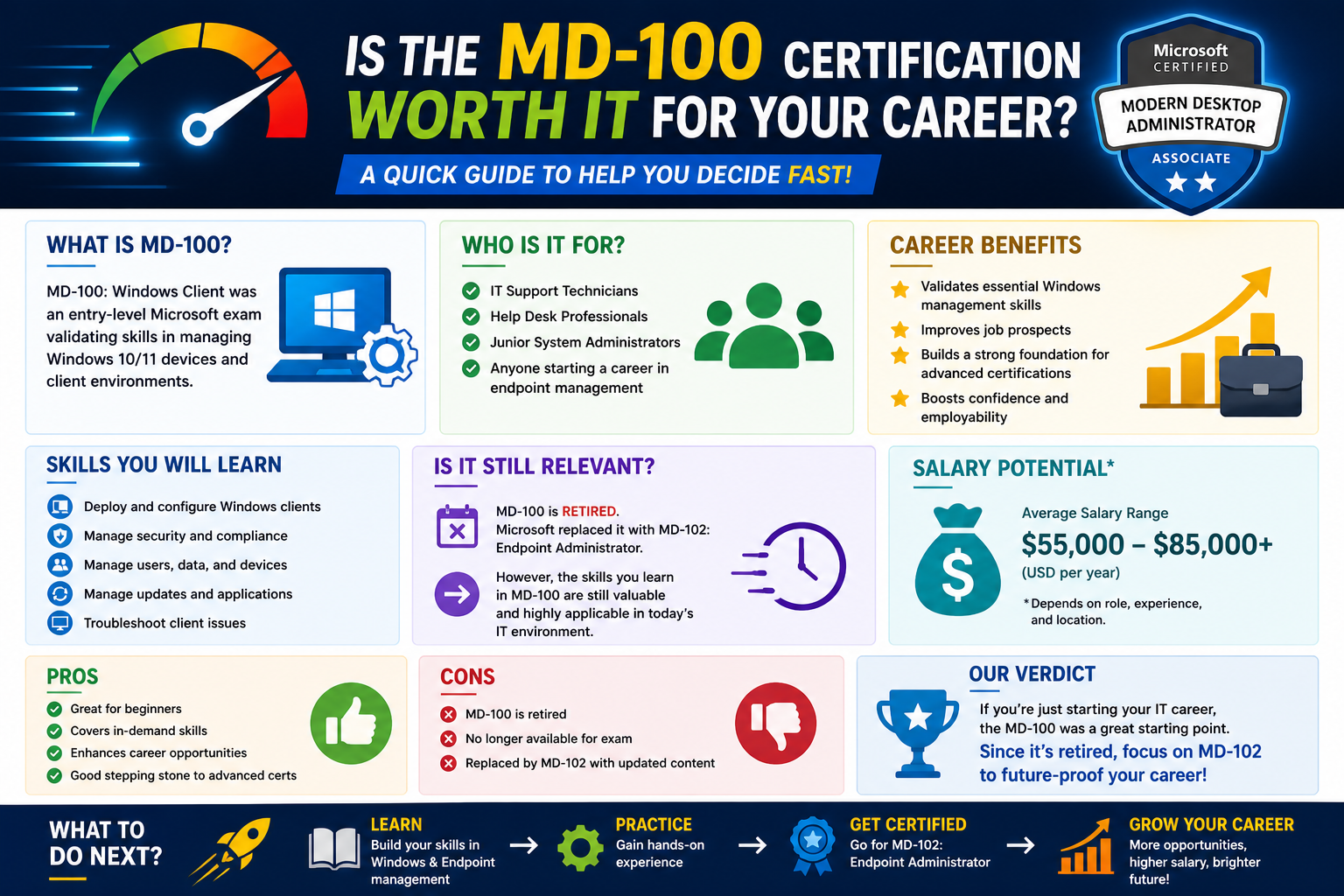
The world of IT support and desktop administration continues to evolve as businesses rely more heavily on Windows-based enterprise environments. Within this space, certifications have long played a major role in proving technical ability and readiness for real-world responsibilities. One of the certifications that gained significant attention was the MD-100 exam, which focused on validating skills in managing Windows devices in business environments. Even though Microsoft later transitioned its certification structure toward a newer unified exam path, understanding the value of MD-100 remains important for anyone evaluating their entry into desktop administration roles or looking to build foundational Windows expertise.
The Role of MD-100 in Modern Desktop Administration Learning
The MD-100 exam was originally designed as a core component of Microsoft’s desktop administration certification track. It focused primarily on Windows operating system deployment, configuration, and maintenance within organizational environments. For aspiring IT professionals, it represented the foundational step toward becoming a certified desktop administrator. While the certification landscape has since shifted, the core knowledge areas that MD-100 covered are still highly relevant for understanding how enterprise Windows environments function and how IT teams manage large-scale device ecosystems efficiently.
Why MD-100 Became an Important Entry Point for IT Professionals
One of the reasons MD-100 gained popularity was its alignment with real-world job roles. Many organizations rely on Windows devices across departments, and managing these systems requires structured knowledge rather than informal experience alone. The exam was structured to validate whether candidates understood how to deploy operating systems, manage user access, configure connectivity, and maintain system stability. For beginners entering IT support or desktop administration, it provided a clear roadmap of essential skills needed to operate in professional environments.
Core Focus Areas of the MD-100 Exam Structure
The MD-100 exam was built around several key technical domains that reflect everyday responsibilities of a desktop administrator. These included deploying Windows installations, managing device configurations, handling storage systems, configuring network connectivity, and maintaining system health. Each of these areas corresponds directly to tasks performed in enterprise IT environments, making the exam more practical than purely theoretical certifications. Candidates were expected to demonstrate familiarity with both system tools and administrative workflows used in business environments.
Understanding the Practical Nature of MD-100 Skills
Unlike highly specialized certifications that focus on niche technologies, MD-100 emphasized broad, practical skills. It tested how well a candidate could navigate Windows environments, apply system policies, troubleshoot common issues, and ensure device security. These are the same tasks performed daily by help desk technicians and junior system administrators. Because of this practical alignment, the certification was often seen as a bridge between academic knowledge and real-world IT responsibilities.
The Value of Foundational Windows Knowledge in IT Careers
Even beyond certification status, the knowledge associated with MD-100 continues to hold value. Understanding how Windows devices operate in enterprise environments is essential for many IT roles. Whether managing user accounts, configuring system updates, or resolving connectivity issues, these foundational skills remain relevant across help desk support, systems administration, and network management. Employers consistently look for professionals who can demonstrate comfort with Windows environments, regardless of certification changes over time.
How MD-100 Helped Shape Entry-Level IT Skill Development
For many learners, MD-100 served as a structured learning path rather than just an exam. It guided candidates through essential Windows administration concepts in a logical sequence. This helped individuals build confidence in handling system deployment, managing organizational policies, and supporting end users. The structured nature of the exam objectives ensured that learners did not overlook critical areas such as security configuration or device management, which are often essential in real workplace scenarios.
The Relevance of Enterprise Windows Management Skills Today
Even as certification structures evolve, enterprise Windows management remains a core requirement in IT departments worldwide. Organizations still rely on centralized device management, secure user authentication systems, and controlled access to resources. The skills once tested in MD-100 continue to form the backbone of these processes. This means that studying MD-100 concepts can still provide strong preparation for roles involving endpoint administration and IT support responsibilities.
The Relationship Between MD-100 and Real IT Job Roles
MD-100 was closely aligned with roles such as desktop support technician, junior system administrator, and IT support analyst. These positions require hands-on experience with Windows systems and the ability to troubleshoot technical issues efficiently. The exam ensured that candidates understood not just how systems work in theory, but how they are maintained and supported in real organizational environments. This alignment with job roles made the certification particularly appealing for those starting their IT careers.
Why Employers Value Windows Administration Fundamentals
Employers place strong emphasis on candidates who understand Windows administration fundamentals because these skills directly impact productivity and system reliability. A well-managed Windows environment reduces downtime, improves security, and ensures smooth access to business applications. Professionals who understand these systems can quickly resolve issues and maintain operational continuity. This is why certifications like MD-100 were widely recognized as indicators of readiness for entry-level IT responsibilities.
Learning Through Structured Certification Preparation
One of the indirect benefits of preparing for MD-100 was the structured learning experience it provided. Candidates were exposed to key concepts in a logical progression, starting from system deployment and moving toward advanced configuration and maintenance tasks. This structured approach helped learners develop a complete understanding of Windows environments rather than fragmented knowledge. It also ensured better retention of practical skills needed for workplace scenarios.
The Importance of Device and User Management Knowledge
A significant portion of MD-100 focused on managing devices and user environments effectively. This includes configuring user accounts, assigning permissions, and ensuring secure access to organizational resources. These tasks are central to IT administration in any company using Windows systems. Understanding how to properly manage users and devices helps maintain security, reduce errors, and ensure smooth collaboration across teams within an organization.
Networking and Connectivity in Windows Environments
Another critical aspect covered in MD-100 was network configuration and connectivity management. In enterprise environments, devices must communicate efficiently across local networks and cloud-based systems. The exam emphasized understanding how Windows devices connect to networks, how to troubleshoot connectivity issues, and how to ensure stable communication between systems. These skills are essential for maintaining business continuity in any organization relying on digital infrastructure.
System Maintenance and Long-Term Stability in IT Systems
Maintaining Windows systems over time is just as important as initial setup and configuration. MD-100 emphasized ongoing maintenance tasks such as updates, performance monitoring, and system troubleshooting. These responsibilities ensure that devices remain secure, efficient, and reliable throughout their lifecycle. IT professionals who understand maintenance processes can significantly reduce system failures and improve overall organizational efficiency.
Relevance of MD-100 Knowledge Despite Certification Changes
Although certification structures have changed and newer exams have replaced MD-100, the foundational knowledge it represents remains relevant. The principles of Windows deployment, device management, and system maintenance continue to be essential in modern IT environments. For learners and professionals, studying these concepts still provides strong value in building technical confidence and preparing for real-world responsibilities in desktop administration and IT support roles.
Early Career IT Growth Through Windows Administration Skills
For individuals beginning their IT careers, developing strong Windows administration skills can open the door to multiple job opportunities. Whether working in help desk support, system administration, or IT operations, the ability to manage Windows environments is highly valuable. Learning the concepts associated with MD-100 helps build this foundation, enabling professionals to progress into more advanced technical roles over time.
The Practical Relevance of MD-100 in Real IT Environments
Understanding whether MD-100 is worth it becomes clearer when you connect it to real workplace demands. In most organizations that rely on Windows systems, IT teams spend a significant portion of their time handling everyday operational tasks such as setting up devices, managing updates, resolving user issues, and maintaining system performance. The MD-100 exam was designed to reflect exactly these responsibilities. It was not focused on abstract theory but on the actual tasks that junior administrators and support technicians perform regularly in enterprise environments.
How MD-100 Aligns With Day-to-Day IT Responsibilities
One of the strongest points in favor of MD-100 was its alignment with real job functions. IT professionals in entry-level roles are often responsible for deploying Windows systems to new devices, ensuring users can log in correctly, and making sure systems are connected to organizational networks. They also handle troubleshooting when applications fail or when devices behave unexpectedly. MD-100 covered all of these areas, making it a practical benchmark for measuring readiness in real IT environments rather than just academic understanding.
Windows Deployment Skills and Their Importance
Deploying Windows operating systems is one of the core responsibilities of desktop administrators. In enterprise environments, this process must be efficient, standardized, and repeatable across multiple devices. MD-100 placed strong emphasis on understanding deployment methods, installation options, and configuration settings. This knowledge ensures that systems are set up correctly from the beginning, reducing future technical issues and improving consistency across organizational devices.
Device Configuration and Enterprise Readiness
After deployment, devices must be configured to meet organizational standards. This includes setting system preferences, applying security policies, and ensuring compatibility with enterprise tools. MD-100 focused heavily on this aspect, teaching candidates how to prepare Windows devices for business use. This includes configuring user settings, managing system updates, and applying organizational policies that ensure devices operate securely and efficiently within a managed environment.
Managing User Access in Organizational Systems
User management is another critical area covered in MD-100. In any organization, employees require access to specific resources based on their roles. This involves creating user accounts, assigning permissions, and ensuring secure authentication methods are in place. MD-100 helped learners understand how Windows environments manage identity and access control, which is essential for maintaining security and preventing unauthorized access to sensitive data.
The Importance of Device Security in Windows Environments
Security is a major concern in modern IT infrastructure, and MD-100 included key concepts related to protecting devices and data. This includes configuring security settings, managing updates, and understanding how to protect systems from common vulnerabilities. In enterprise environments, even small security mistakes can lead to significant risks. The exam ensured that candidates understood the importance of maintaining secure configurations across all managed devices.
Understanding Windows Update and Maintenance Processes
Regular updates and system maintenance are essential for keeping Windows environments stable and secure. MD-100 emphasized how updates are managed in enterprise settings, including how systems receive patches and how administrators ensure compatibility with business applications. Maintenance tasks such as monitoring system performance and troubleshooting issues were also part of the exam focus, reflecting real-world responsibilities of IT support teams.
Network Connectivity and Its Role in Enterprise Systems
In most organizations, Windows devices must operate within complex network environments. MD-100 covered how devices connect to networks, how connectivity issues are diagnosed, and how systems communicate within organizational infrastructure. This knowledge is essential because network-related problems are among the most common issues IT teams face. Understanding connectivity ensures that users can access resources without interruption.
Troubleshooting Skills Developed Through MD-100 Preparation
Troubleshooting is a key skill for any IT professional, and MD-100 preparation helps develop this ability in a structured way. Candidates learn how to identify system issues, analyze error messages, and apply appropriate solutions. Whether dealing with login problems, application failures, or connectivity issues, troubleshooting requires logical thinking and familiarity with system tools. MD-100 encouraged this mindset by exposing learners to common enterprise-level problems.
Why MD-100 Was Considered Beginner-Friendly Yet Challenging
Although MD-100 was classified as an associate-level certification, it still required a solid understanding of Windows environments. It was considered beginner-friendly because it did not require deep prior experience, but it was still challenging because it expected candidates to understand proper administrative methods rather than informal or self-taught approaches. This balance made it an effective entry point into professional IT certification paths.
The Structured Learning Approach Behind MD-100
One of the key advantages of preparing for MD-100 was the structured learning experience it provided. Instead of learning scattered topics, candidates followed a clear progression of Windows administration concepts. This included system deployment, configuration, user management, networking, and maintenance. This structured approach helped learners build a complete mental model of how enterprise Windows systems operate.
How MD-100 Prepared Learners for Microsoft Ecosystems
MD-100 was also closely aligned with broader Microsoft ecosystems used in enterprise environments. This included integration with cloud-based identity systems and device management tools. Understanding how Windows devices interact with organizational systems is essential for modern IT roles. MD-100 helped learners develop this understanding by focusing on how devices are managed within a centralized environment rather than as standalone systems.
The Importance of Consistency in IT Administration Practices
In enterprise environments, consistency is critical. Systems must be configured in a uniform way to ensure stability, security, and predictability. MD-100 emphasized standardized methods of deployment and configuration, ensuring that IT professionals understand the importance of following best practices. This reduces errors and ensures that all systems within an organization operate under the same guidelines.
Device Lifecycle Management in Enterprise IT
Another important concept covered in MD-100 is device lifecycle management. This includes the process of deploying new systems, maintaining them during their active use, and eventually retiring or replacing them. Understanding this lifecycle is essential for IT professionals who manage large numbers of devices. Proper lifecycle management ensures efficiency, reduces costs, and maintains system performance over time.
The Role of IT Support Teams in Windows Environments
IT support teams are often the first point of contact when technical issues arise in an organization. MD-100 prepared individuals for this responsibility by focusing on practical troubleshooting, user support, and system management skills. These teams play a crucial role in maintaining productivity across organizations by resolving issues quickly and effectively.
Why Hands-On Practice Matters in MD-100 Preparation
While theoretical knowledge is important, hands-on experience is equally valuable when preparing for MD-100 concepts. Working directly with Windows systems helps learners understand how configurations behave in real environments. This practical exposure reinforces theoretical concepts and builds confidence in handling real IT tasks.
Building Confidence Through Structured Certification Learning
One of the indirect benefits of MD-100 preparation was the confidence it built in learners. By systematically covering essential Windows administration topics, candidates gained assurance in their ability to manage enterprise systems. This confidence is important when transitioning into real IT roles, where quick decision-making and problem-solving are often required.
Career Path Connections to MD-100 Skills
The skills associated with MD-100 are directly linked to several IT career paths. These include desktop support technician, IT support specialist, junior systems administrator, and help desk analyst. Each of these roles requires strong Windows administration knowledge and the ability to resolve technical issues efficiently. MD-100 served as a foundation for entering these career paths and progressing into more advanced roles over time.
Continued Importance of Windows Administration Knowledge
Even though certification structures evolve, the core knowledge of Windows administration remains essential in IT. Organizations continue to rely on Windows-based systems for business operations, making these skills highly relevant. Understanding system deployment, configuration, and maintenance continues to be a valuable asset for IT professionals in a wide range of industries.
MD-100 and Its Role in Building Enterprise IT Foundations
The MD-100 exam was widely recognized as a stepping stone for anyone aiming to build a career in enterprise IT environments centered around Windows systems. Its structure was designed to introduce learners to the realities of managing business devices at scale. Instead of focusing on advanced engineering concepts, it emphasized the essential operational knowledge required to keep organizational systems running smoothly. This made it particularly valuable for beginners who needed a structured introduction to IT administration in professional environments.
Understanding Device Management at Scale in Organizations
One of the most important concepts covered in MD-100 was large-scale device management. In enterprise environments, IT teams are responsible for hundreds or even thousands of devices, all of which must function consistently. MD-100 helped learners understand how Windows systems are deployed, configured, and maintained across multiple endpoints. This includes applying consistent settings, ensuring software compatibility, and managing updates across an entire organization without disrupting productivity.
The Importance of Standardized Configuration Practices
Consistency is critical in IT environments, and MD-100 emphasized the importance of standardized configuration practices. When systems are set up differently across departments or users, it creates inefficiencies and increases the risk of errors. The exam taught learners how to apply uniform settings, manage system policies, and ensure that all devices follow the same organizational rules. This approach reduces troubleshooting complexity and improves overall system reliability.
How MD-100 Developed Problem-Solving Skills
Problem-solving is one of the most valuable skills in IT, and MD-100 preparation helped develop this ability through structured learning. Candidates were exposed to scenarios involving system errors, connectivity issues, and configuration problems. Instead of memorizing answers, learners were encouraged to understand the underlying system behavior. This approach builds analytical thinking, allowing IT professionals to diagnose and resolve issues more effectively in real-world environments.
Windows Security Concepts in Enterprise Environments
Security plays a central role in enterprise IT, and MD-100 included important concepts related to protecting Windows devices. This includes managing system permissions, configuring security policies, and ensuring devices are protected against unauthorized access. In business environments, even small security gaps can lead to significant risks, so understanding these principles is essential. MD-100 helped ensure that candidates were aware of how to maintain secure system configurations.
Role of Authentication and Identity Management
Authentication and identity management are fundamental to enterprise Windows environments. MD-100 introduced learners to the way user identities are managed within organizational systems. This includes account creation, permission assignment, and secure login processes. Understanding how users are authenticated ensures that only authorized individuals can access specific resources, which is critical for maintaining organizational security and compliance.
Managing Software and Application Deployment
Another key area covered in MD-100 was application management. In enterprise environments, software must be deployed and maintained efficiently across multiple devices. The exam focused on how applications are installed, updated, and managed within Windows systems. This ensures that employees have access to the tools they need while maintaining system stability and security across the organization.
The Importance of Connectivity in Enterprise Workflows
Modern businesses rely heavily on connected systems, and MD-100 addressed the importance of network connectivity in Windows environments. Devices must be able to communicate with servers, cloud services, and other endpoints without interruption. The exam included concepts related to diagnosing connectivity issues and ensuring stable communication across networks. This knowledge is essential for maintaining productivity in any organization.
Understanding System Monitoring and Maintenance Tasks
System monitoring is a crucial responsibility for IT professionals, and MD-100 covered how Windows environments are monitored and maintained over time. This includes tracking system performance, identifying potential issues, and applying updates or fixes when needed. Regular maintenance ensures that devices continue to operate efficiently and reduces the risk of unexpected system failures.
Why MD-100 Focused on Real Administrative Scenarios
One of the strengths of MD-100 was its focus on real administrative scenarios rather than abstract theory. The exam was designed to reflect the actual challenges faced by IT professionals in enterprise environments. This includes troubleshooting user issues, managing device configurations, and maintaining system security. By focusing on practical situations, MD-100 ensured that learners were prepared for real job responsibilities.
The Relationship Between MD-100 and IT Support Roles
MD-100 was closely aligned with IT support roles, where professionals are responsible for assisting users and maintaining system functionality. Help desk technicians and support analysts often deal with issues related to Windows devices, making the skills covered in MD-100 highly relevant. These roles require quick problem resolution, strong technical understanding, and familiarity with Windows administration tools.
How MD-100 Encouraged Structured IT Thinking
A key benefit of studying MD-100 was the development of structured thinking in IT environments. Instead of approaching problems randomly, learners were taught to follow logical steps when diagnosing and resolving issues. This includes identifying the problem, analyzing potential causes, testing solutions, and applying fixes. This structured approach is essential for efficient and effective IT support.
Enterprise Device Lifecycle Awareness Through MD-100
MD-100 also introduced the concept of device lifecycle management in enterprise environments. Devices go through stages such as deployment, usage, maintenance, and retirement. Understanding this lifecycle helps IT professionals manage resources effectively and ensure that systems remain secure and up to date throughout their operational life.
The Value of Troubleshooting Methodologies
Troubleshooting is not just about fixing problems but understanding why they occur. MD-100 emphasized structured troubleshooting methodologies that help IT professionals identify root causes rather than just symptoms. This approach improves long-term system stability and reduces recurring issues in enterprise environments.
Integration of Windows with Organizational Systems
Enterprise environments often use integrated systems where Windows devices connect with centralized management tools and services. MD-100 introduced learners to how Windows systems interact with broader organizational infrastructure. This includes understanding how devices are managed remotely and how policies are applied across networks.
The Importance of Efficiency in IT Operations
Efficiency is a major goal in IT administration, and MD-100 reflected this through its focus on streamlined processes. Whether deploying systems, managing updates, or resolving issues, efficiency ensures that IT teams can support large numbers of users without delays. MD-100 helped learners understand how to perform tasks in a way that saves time and reduces complexity.
How MD-100 Built Confidence for Entry-Level Professionals
For many learners, MD-100 served as a confidence-building certification. By covering essential Windows administration skills, it helped individuals feel more prepared for real-world IT roles. This confidence is important when entering the workforce, where professionals must handle technical issues independently and make informed decisions under pressure.
The Continued Relevance of Windows Administration Knowledge
Even though certification structures have changed, the knowledge associated with MD-100 remains relevant. Windows systems continue to be widely used in enterprise environments, and IT professionals still need to understand how to deploy, configure, and maintain them. These foundational skills are essential for anyone pursuing a career in desktop support or systems administration.
How MD-100 Supported Career Progression in IT
MD-100 was often used as a stepping stone for career advancement in IT. By mastering its content, professionals could move into more advanced roles such as systems administrator or IT operations specialist. The certification provided a structured pathway for building technical expertise and progressing within the IT field.
Preparing for Real-World IT Challenges Through MD-100 Concepts
Ultimately, MD-100 was designed to prepare individuals for real-world IT challenges. From managing user accounts to troubleshooting system issues, the skills it covered are directly applicable to enterprise environments. This practical focus made it a valuable learning tool for anyone entering the IT industry.
Foundation for Advanced IT Knowledge Development
MD-100 also served as a foundation for more advanced IT learning. Once professionals understood basic Windows administration, they could move on to more complex topics such as cloud integration, advanced security configurations, and enterprise-level system management. This progression highlights the importance of mastering foundational skills before advancing to specialized areas.
MD-100 and Its Impact on Long-Term IT Career Growth
When evaluating whether MD-100 is worth it, one of the strongest considerations is its long-term impact on IT career development. Even though certification paths have evolved, the knowledge structure behind MD-100 continues to influence how beginners enter the field of Windows administration. It acted as a gateway into enterprise IT by building confidence in handling real administrative tasks. For many professionals, this foundation became the starting point for roles in desktop support, systems administration, and IT operations.
Bridging the Gap Between Beginner Knowledge and Enterprise Skills
One of the key strengths of MD-100 was its ability to bridge the gap between basic computer literacy and enterprise-level IT skills. Many beginners understand how to use Windows as end users, but they lack knowledge of how systems are deployed, managed, and secured in organizations. MD-100 filled this gap by introducing structured administrative concepts. It helped learners transition from simple usage to understanding how IT departments control and maintain large-scale environments.
Understanding Organizational IT Infrastructure Through MD-100 Concepts
Enterprise IT environments are complex systems made up of devices, networks, users, and policies working together. MD-100 helped learners understand how Windows devices fit into this broader infrastructure. It explained how systems are connected, how data flows between devices, and how administrators ensure consistency across an organization. This understanding is essential for anyone working in IT support or system administration roles.
The Importance of Policy-Based Management in Windows Systems
Policy-based management is a core concept in enterprise environments, and MD-100 introduced learners to how system policies control device behavior. Instead of configuring each device individually, organizations apply centralized policies that ensure consistency and security. Understanding this concept is critical for IT professionals because it allows them to manage large environments efficiently without manual configuration of every single device.
User Experience Management in Enterprise Environments
MD-100 also emphasized managing user experiences in controlled IT environments. This includes configuring desktop settings, managing access to applications, and ensuring that users can perform their tasks without technical interruptions. A well-managed user environment improves productivity and reduces support requests, making it an essential part of enterprise IT operations.
Security Awareness and Risk Reduction in IT Systems
Security remains one of the most important aspects of IT management, and MD-100 helped learners understand how to reduce risks in Windows environments. This includes controlling access to sensitive data, applying system updates, and ensuring devices are protected from unauthorized changes. In enterprise environments, security is not optional, and MD-100 reinforced this mindset from the beginning of an IT career journey.
The Role of IT Professionals in Business Continuity
IT professionals play a direct role in maintaining business continuity, and MD-100 highlighted this responsibility through its focus on system reliability and troubleshooting. When systems fail or become unstable, business operations can be disrupted. By understanding how to maintain and repair Windows environments, IT professionals ensure that organizations continue operating smoothly even when technical issues arise.
Real-World Application of MD-100 Knowledge in Work Environments
One of the strongest arguments for MD-100 being valuable is its real-world application. The skills it covered are not limited to exams but are directly used in IT support jobs. Tasks such as setting up devices, resolving login issues, configuring network access, and maintaining system performance are daily responsibilities in many organizations. MD-100 helped prepare learners for these exact scenarios.
Building Confidence in Handling Technical Support Requests
For many entry-level IT professionals, handling support requests can be challenging at first. MD-100 helped build confidence by exposing learners to common system issues and structured troubleshooting methods. This preparation allows professionals to respond to technical problems more effectively and reduces hesitation when dealing with real user issues in workplace environments.
The Value of Structured Learning in IT Certification Paths
Structured learning is one of the most important advantages of certification-based education. MD-100 provided a clear roadmap of what an IT professional should know about Windows environments. Instead of learning randomly from different sources, learners followed a guided structure that covered all essential areas of desktop administration. This approach improves knowledge retention and ensures complete understanding of core concepts.
How MD-100 Supports Long-Term Skill Development
Even beyond initial job roles, MD-100 concepts continue to support long-term skill development in IT careers. As professionals move into more advanced roles, they build upon foundational knowledge of Windows administration. Concepts such as system deployment, user management, and network configuration remain relevant even in advanced IT specializations like cloud computing and cybersecurity.
The Transition From MD-100 to Modern Certification Paths
While MD-100 itself is no longer part of the current certification structure, its knowledge areas have been integrated into newer certification paths. This means that the skills it represented are still valid, even if the exam format has changed. Modern certifications continue to expect professionals to understand Windows environments, device management, and enterprise system administration.
The Importance of Foundational Certifications in IT Careers
Foundational certifications like MD-100 play a crucial role in shaping IT careers. They provide structured learning, validate essential skills, and prepare individuals for entry-level roles. Without this foundation, it becomes more difficult to progress into advanced IT positions. MD-100 served as this foundation for many professionals entering the desktop administration field.
How MD-100 Encourages Analytical Thinking in IT Roles
Analytical thinking is essential in IT environments, and MD-100 encouraged this by teaching structured troubleshooting and system analysis. Instead of guessing solutions, learners were taught to evaluate symptoms, identify causes, and apply logical fixes. This approach is essential for minimizing downtime and improving system reliability in enterprise environments.
The Role of Continuous Learning in IT Career Success
IT is a constantly evolving field, and MD-100 highlighted the importance of continuous learning. Even after mastering foundational skills, professionals must continue updating their knowledge to keep up with new technologies and system updates. MD-100 served as an introduction to this mindset by encouraging structured skill development and ongoing practice.
Why Employers Value Windows Administration Experience
Employers consistently value candidates who understand Windows administration because these skills directly affect organizational efficiency. From managing employee devices to ensuring secure access to systems, Windows administrators play a critical role in daily operations. MD-100 helped validate that candidates possessed these essential skills.
How MD-100 Prepares for Multi-Role IT Responsibilities
In many organizations, IT professionals are required to handle multiple responsibilities, including support, administration, and troubleshooting. MD-100 prepared learners for this by covering a wide range of essential topics. This versatility makes professionals more valuable in small and medium-sized IT teams where roles often overlap.
The Lasting Educational Value of MD-100 Knowledge
Even after changes in certification structures, the educational value of MD-100 remains strong. The concepts it taught continue to be relevant in modern IT environments, making it useful for self-study and career preparation. Understanding how Windows systems operate at an enterprise level is still a critical skill for IT professionals today.
Final Conclusion
From a career development perspective, MD-100 is worth it for anyone entering or working in Windows-based IT environments. It provides foundational knowledge, builds practical skills, and prepares learners for real-world responsibilities in desktop administration and IT support roles. Even though certification paths have evolved, the skills behind MD-100 remain essential for building a strong IT career foundation.