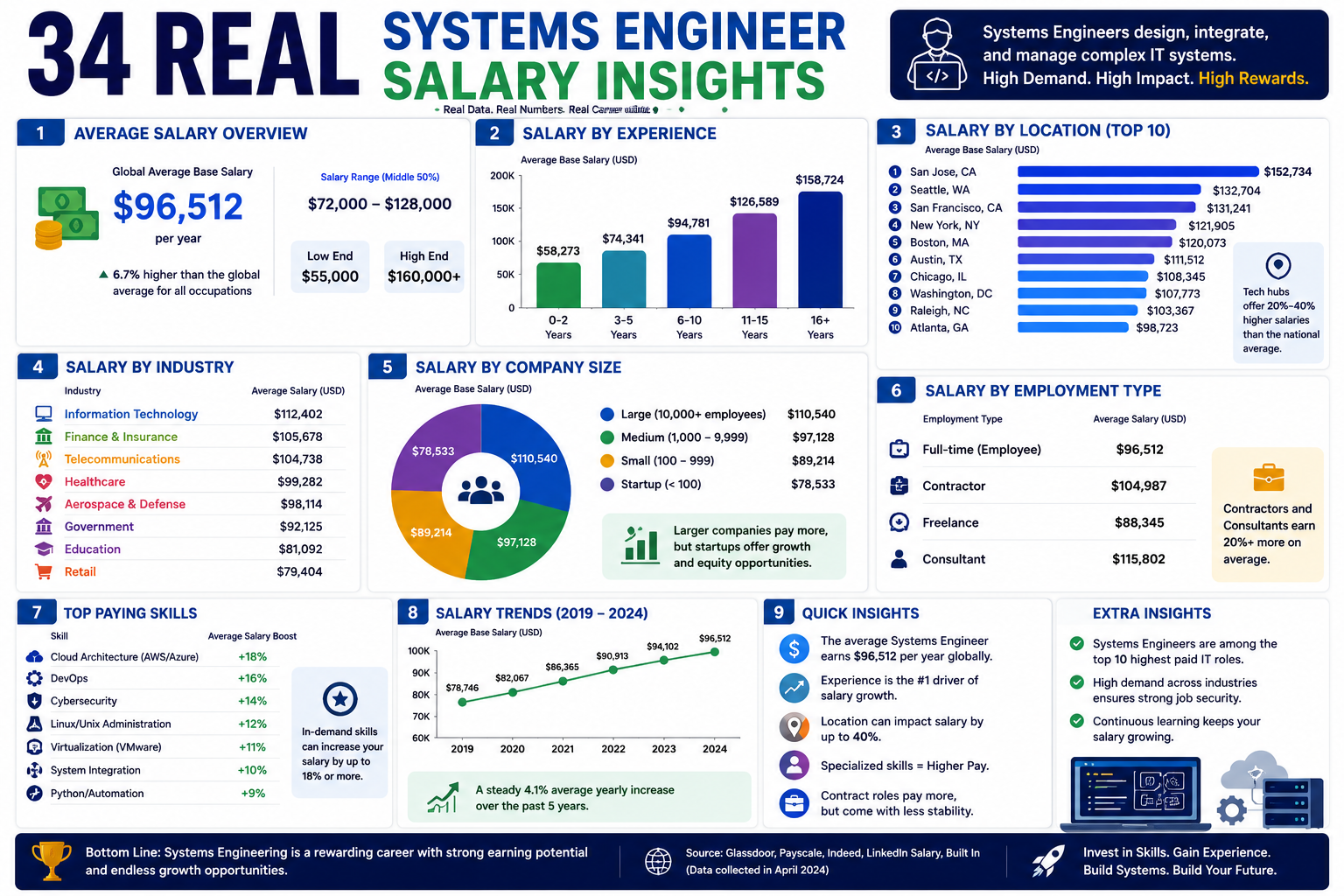
Systems engineers play a crucial role in modern IT environments by ensuring that complex infrastructure systems operate smoothly, securely, and efficiently. Their responsibilities span across servers, networks, cloud platforms, and automation frameworks, making them essential to nearly every technology-driven organization. Because of this wide scope of responsibility, their salaries reflect both technical depth and operational importance. Compensation varies widely depending on experience, skills, and location, but overall, systems engineering remains one of the most stable and rewarding career paths in IT.
What Systems Engineers Do
A systems engineer is responsible for designing, implementing, and maintaining the backbone of IT infrastructure. This includes ensuring that applications run without interruption, data is properly managed, and systems remain scalable as organizational needs grow. They work behind the scenes to integrate different technologies into a unified environment, whether on-premises, in cloud platforms, or hybrid setups. Their role is both technical and strategic, requiring them to balance performance, security, and cost efficiency while supporting business operations.
Core Responsibilities in Modern Infrastructure
In day-to-day operations, systems engineers handle server deployment, operating system configuration, and infrastructure maintenance. They also manage virtualization environments, support cloud migrations, and ensure system uptime through continuous monitoring. A significant part of the job includes writing scripts to automate repetitive tasks, which improves efficiency and reduces human error. They also respond to incidents, troubleshoot failures, and collaborate with networking, security, and development teams to ensure smooth system performance across the organization.
Technical Skills That Define the Role
Systems engineers rely on a strong mix of technical expertise to perform effectively. Proficiency in Linux and Windows environments is essential, as most infrastructure relies on both operating systems. Knowledge of scripting languages such as Bash, PowerShell, or Python is highly valuable for automation tasks. Familiarity with tools like Ansible, Terraform, Docker, and Kubernetes is increasingly important as organizations adopt cloud-native architectures. These skills allow engineers to build scalable, automated, and resilient systems.
Job Titles and Variations
The systems engineer role often appears under different titles depending on the organization and responsibilities involved. Common variations include infrastructure engineer, cloud systems engineer, IT systems administrator, and DevOps engineer. While the titles may differ, the core responsibilities remain similar—maintaining system stability, improving performance, and ensuring seamless integration between different IT components. In some environments, these roles may overlap significantly, especially in smaller teams or fast-moving tech companies.
Understanding Salary Expectations
Salary expectations for systems engineers depend on multiple factors, including experience level, geographic location, and technical expertise. On average, systems engineers earn competitive salaries compared to other IT roles due to the critical nature of their work. Entry-level professionals typically start with moderate compensation, while experienced engineers working in complex environments or specialized industries can earn significantly higher salaries. The earning potential continues to grow as engineers gain more advanced skills and certifications.
Salary Trends Across Major Cities
Salaries for systems engineers vary significantly depending on location. Major metropolitan areas and technology hubs tend to offer higher compensation due to increased demand and cost of living. Cities with strong technology sectors often provide more opportunities for career growth and higher-paying roles. However, remote work has also expanded access to competitive salaries, allowing engineers in lower-cost regions to earn wages comparable to those in major cities.
High Paying Tech Hubs
In major tech hubs, systems engineers often receive some of the highest salaries in the field. These regions are home to large technology companies, cloud providers, and enterprise organizations that rely heavily on advanced infrastructure. The demand for skilled engineers in these areas is consistently high, which drives salaries upward. However, these benefits are often balanced by higher living expenses, making it important to evaluate overall financial impact rather than salary alone.
Mid Range Growing Tech Cities
Mid-sized cities with growing technology sectors offer a strong balance between salary and cost of living. These locations often attract companies expanding their infrastructure operations, leading to increased demand for systems engineers. While salaries may not reach the highest levels seen in major tech hubs, professionals often benefit from lower living costs and improved work-life balance. These regions are becoming increasingly attractive for IT professionals seeking stable long-term careers.
Lower Cost Regions with Competitive Pay
In lower-cost regions, systems engineers may earn slightly lower base salaries, but the overall compensation can still be highly competitive when adjusted for living expenses. Many organizations in these areas also offer remote opportunities, allowing engineers to work for companies based in higher-paying regions while living locally. This combination creates strong earning potential without the financial pressure of expensive urban environments.
Key Salary Influencing Factors
Several factors influence how much a systems engineer earns beyond location and job title. These include the complexity of systems managed, the level of responsibility, and the size of the organization. Engineers working in large-scale or mission-critical environments typically earn more due to the higher stakes involved. Additionally, roles that require continuous availability or incident response responsibilities often include additional compensation.
Industry Impact on Compensation
Different industries offer varying levels of compensation for systems engineers. Sectors such as finance, healthcare, cloud computing, and cybersecurity tend to pay higher salaries due to strict uptime requirements and regulatory demands. These industries rely heavily on stable and secure infrastructure, making skilled systems engineers highly valuable. In contrast, education or non-profit sectors may offer lower compensation but often provide more predictable workloads.
Project Complexity and Its Effect
The complexity of the systems an engineer works on has a direct impact on salary. Engineers involved in large-scale infrastructure, global deployments, or cloud migration projects often receive higher compensation. These projects require advanced technical knowledge, problem-solving skills, and the ability to manage high-pressure environments. The greater the responsibility and technical challenge, the higher the earning potential tends to be.
Automation and Infrastructure Tools Impact.
Automation skills significantly influence salary potential in systems engineering. Engineers who can implement infrastructure-as-code solutions and automate system processes bring substantial value to organizations. Tools that streamline deployment, monitoring, and configuration management reduce manual workload and increase efficiency. Professionals with strong automation expertise are often considered for higher-paying DevOps or cloud engineering roles.
On Call Duties and Extra Compensation
Many systems engineering roles include on-call responsibilities, requiring engineers to respond to system incidents outside regular working hours. This level of responsibility often comes with additional compensation, such as bonuses or overtime pay. Organizations value engineers who can handle critical issues quickly and efficiently, especially in environments where downtime can lead to significant business losses.
Experience Based Salary Growthy
Experience plays one of the most important roles in determining salary growth for systems engineers. As professionals gain hands-on exposure to different systems and technologies, their value in the job market increases significantly. Experience not only improves technical ability but also enhances problem-solving skills and decision-making in high-pressure situations.
Entry Level Earnings Overview
At the beginning of their careers, systems engineers typically focus on basic system maintenance, troubleshooting, and support tasks. Entry-level roles provide foundational experience in managing infrastructure and working with enterprise systems. While responsibilities are limited compared to senior positions, this stage is critical for building the technical foundation required for long-term career growth.
Mid Career Compensation Growth
Mid-level systems engineers take on more responsibility, including system design, automation implementation, and infrastructure optimization. At this stage, professionals often manage projects independently and contribute to strategic improvements in IT environments. Their compensation increases significantly as they demonstrate the ability to handle complex systems and deliver reliable solutions.
Senior Level Earnings Potential
Senior systems engineers often work as technical leads or architects, managing large-scale infrastructure and guiding strategic decisions. Their responsibilities include designing system architecture, leading teams, and ensuring long-term scalability and security. Due to their expertise and leadership role, they typically command the highest salaries in the field.
Essential Tools Used Daily
Systems engineers rely on a wide range of tools to manage infrastructure efficiently. These tools support tasks such as system monitoring, configuration management, automation, and performance optimization. Familiarity with modern IT tools is essential for maintaining efficiency and staying competitive in the field.
Operating Systems Expertise
Strong knowledge of both Linux and Windows operating systems is fundamental for systems engineers. These environments form the foundation of most enterprise infrastructures. Engineers must be capable of configuring systems, troubleshooting issues, and ensuring security across both platforms to maintain stable operations.
Automation and Scripting Importance
Automation plays a critical role in modern systems engineering. Scripting languages are used to automate repetitive tasks, reduce manual errors, and improve system reliability. Engineers who can write efficient scripts are able to manage larger systems more effectively and increase overall productivity.
Cloud Platform Knowledge
Cloud platforms have become central to modern IT infrastructure. Systems engineers are expected to work with cloud services for computing, storage, networking, and deployment. Understanding cloud architecture is essential for managing scalable and flexible systems that meet modern business needs.
Virtualization and Container Systems
Virtualization and container technologies allow organizations to optimize resource usage and improve deployment efficiency. Systems engineers often manage virtual machines and containerized applications to support flexible infrastructure environments. These technologies are essential for modern application delivery models.
Monitoring and Performance Tools
Monitoring tools are used to track system performance, detect issues, and ensure uptime. Systems engineers rely on these tools to identify potential failures before they impact users. Effective monitoring is critical for maintaining system reliability and operational efficiency.
Certifications That Improve Salary
Certifications can significantly enhance a systems engineer’s earning potential by validating technical skills and expertise. They demonstrate proficiency in specific technologies and increase credibility in the job market. Many employers consider certifications as an important factor when determining salary and promotions.
Cloud and Linux Certifications
Cloud and Linux certifications are highly valued in systems engineering roles. They confirm an engineer’s ability to manage cloud environments and Linux-based systems effectively. These certifications often lead to higher-paying opportunities in enterprise and cloud-focused organizations.
Server and Virtualization Certifications
Certifications related to servers and virtualization demonstrate expertise in managing enterprise infrastructure. They validate skills in system configuration, virtualization platforms, and infrastructure management, which are essential for advanced systems engineering roles.
Career Growth Strategies to Increase Pay
Increasing salary as a systems engineer requires continuous skill development and strategic career moves. Focusing on automation, cloud technologies, and infrastructure design can significantly boost earning potential. Expanding technical expertise, gaining certifications, and taking on leadership responsibilities all contribute to long-term salary growth and career advancement.
Conclusion
Systems engineering continues to be one of the most important and in-demand roles in modern IT environments. As organizations rely more heavily on cloud infrastructure, automation, and always-available digital services, the responsibility placed on systems engineers keeps increasing. This demand directly influences salary growth, making the role financially rewarding for professionals who continuously upgrade their skills.
Earnings in this field are not fixed by job title alone. They are shaped by experience, technical depth, industry choice, and the ability to work with modern tools such as cloud platforms, automation frameworks, and virtualization technologies. Engineers who adapt to evolving technologies and take ownership of complex systems consistently move into higher salary brackets over time.
Location also plays a role, but it is no longer the only deciding factor, especially with remote work becoming more common. What truly sets professionals apart is their ability to design, manage, and optimize scalable systems that support business-critical operations without interruption.
For anyone considering or already working in this field, the long-term outlook remains strong. With continuous learning, certification upgrades, and hands-on experience in advanced infrastructure environments, systems engineers can steadily increase both their value and earning potential throughout their careers.