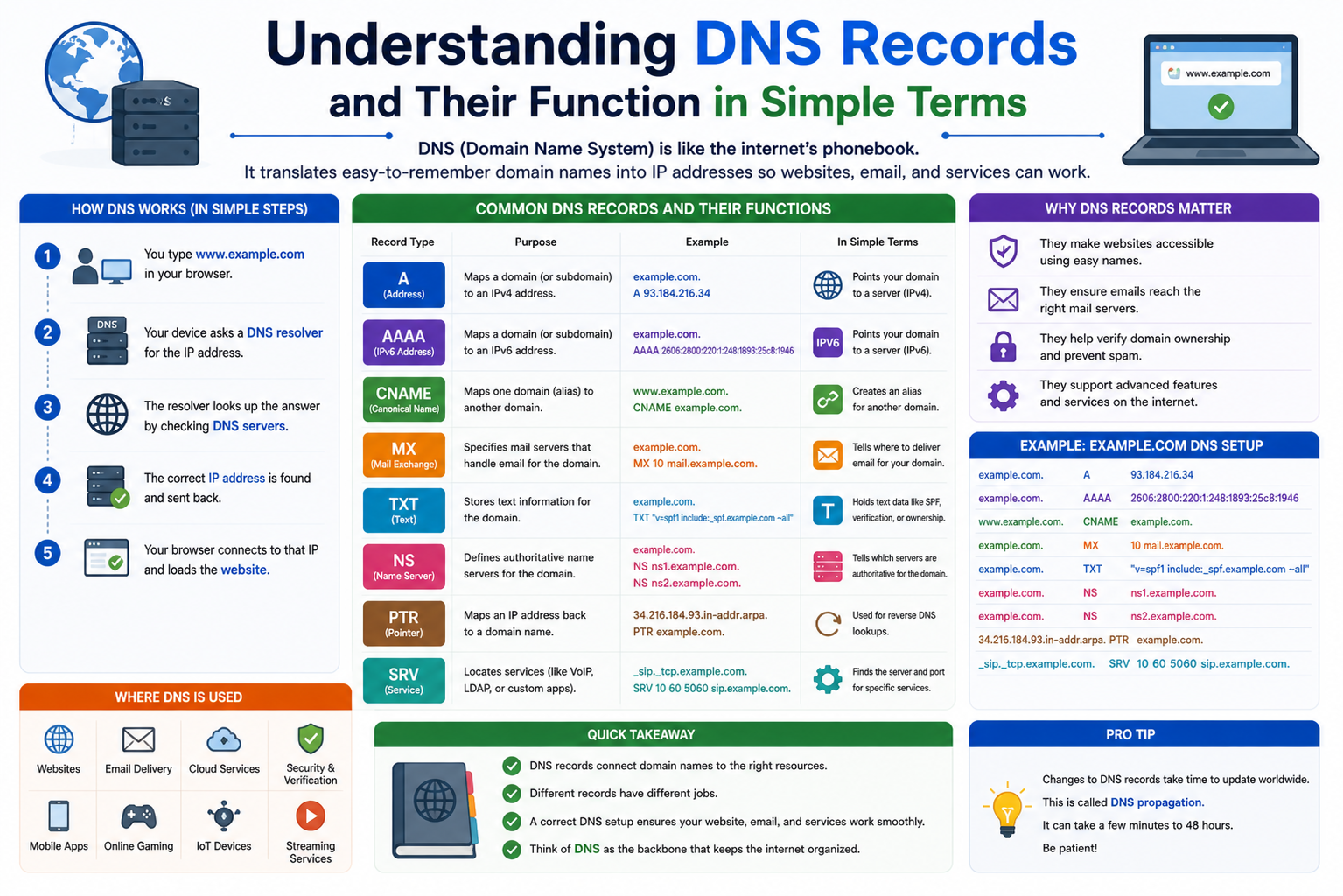
The Domain Name System, commonly known as DNS, plays a critical role in making the internet usable for everyday users. Without DNS, navigating the web would require remembering complex numerical IP addresses instead of simple, human-readable names. For instance, instead of typing a familiar website name into a browser, users would need to input a string of numbers representing the server’s location. DNS eliminates this complexity by acting as a translator between human-friendly names and machine-readable IP addresses. This translation process happens almost instantly behind the scenes, allowing users to access websites and online services seamlessly. While this basic concept is straightforward, the underlying mechanisms that make DNS work are far more detailed and intricate. Understanding DNS at a deeper level involves exploring how information is stored, retrieved, and managed through DNS records, which serve as the foundational instructions guiding this system.
What DNS Records Are and Why They Matter
DNS records can be thought of as structured pieces of information stored within a DNS database. These records define how domain-related queries should be handled and provide essential instructions to DNS servers. Every time a user attempts to access a website, send an email, or interact with an online service, DNS records are consulted to determine the correct destination. These records are not just optional components; they are essential for the proper functioning of internet services. Without them, DNS servers would have no way to resolve names into addresses or route traffic accurately. Each DNS record type serves a specific purpose, whether it is linking a name to an IP address, directing email traffic, or verifying ownership of a domain. Because of their importance, DNS records are widely used not only in networking but also in system administration, cybersecurity, and cloud infrastructure management. A solid understanding of these records can significantly improve troubleshooting skills and overall system efficiency.
How DNS Queries Retrieve Information
When a DNS query is initiated, it follows a structured process to retrieve the required information. The system begins by checking local caches to see if the requested information is already available. If it is not, the query moves through a hierarchy of DNS servers, starting from root servers and progressing to more specific authoritative servers. These authoritative servers contain the actual DNS records for a domain and provide the final answer to the query. The response returned includes several important fields that describe the record in detail. Among these fields are the name associated with the record, the time-to-live value, the class type, the record type, and the data itself. Each of these elements plays a role in determining how the information is interpreted and how long it can be stored for future use. This structured response ensures consistency and reliability across the entire DNS system, enabling efficient communication between clients and servers.
Breaking Down the Components of DNS Record Responses
A DNS response is composed of multiple components that together define how the system should behave. The first component is the name, which identifies the host or domain associated with the record. This is the reference point used when resolving queries. The second component is the time-to-live value, often abbreviated as TTL. This value specifies how long the record can be cached by a system before it must be refreshed. A shorter TTL means more frequent updates, while a longer TTL reduces the number of queries but may delay the propagation of changes. The third component is the class, which typically indicates the protocol being used. In most cases, this is set to represent internet-based communication. The fourth component is the type, which defines the kind of DNS record being referenced, such as those used for mapping addresses or handling email routing. Finally, the data field contains the actual information associated with the record, such as an IP address or another domain name. Together, these components form a complete set of instructions that guide how DNS queries are resolved.
The Importance of Efficient DNS Tools and Query Methods
To better understand and troubleshoot DNS behavior, specialized tools are often used to perform queries and analyze results. These tools allow users to directly interact with DNS servers and observe how records are returned. By examining query responses, administrators can identify configuration issues, verify record accuracy, and ensure that systems are functioning as expected. Such tools are widely available across different operating systems and are considered essential for anyone working with networking or system administration. They provide a clear view of how DNS records are structured and how they respond to different types of requests. Learning how to use these tools effectively can greatly enhance one’s ability to diagnose and resolve issues related to connectivity, performance, and security.
How DNS Simplifies Complex Network Interactions
Although DNS operates behind the scenes, its impact on everyday internet usage is profound. It simplifies complex network interactions by abstracting technical details away from users. Instead of dealing with numerical identifiers, users can rely on intuitive naming conventions to access resources. This abstraction not only improves usability but also supports scalability, allowing the internet to grow without becoming unmanageable. As new devices, services, and applications are added, DNS continues to provide a consistent framework for addressing and communication. Its distributed nature ensures redundancy and reliability, making it resilient to failures and capable of handling vast amounts of traffic. Understanding how DNS achieves this level of efficiency requires a closer look at the specific types of records it uses, each contributing to the system in a unique way.
Introduction to Common Types of DNS Records
DNS records come in various types, each designed to handle a specific aspect of domain resolution and network communication. Some records are responsible for linking domain names to IP addresses, while others manage email routing or provide verification data. There are also records that define authoritative servers and those that enable reverse lookups. Each type plays a distinct role within the DNS ecosystem, ensuring that different kinds of requests are processed correctly. By categorizing these records based on their functions, it becomes easier to understand how they work together to support internet operations. As we move deeper into the topic, examining these record types individually will reveal how they contribute to the overall efficiency and reliability of DNS.
Understanding Address Mapping Through DNS Records
One of the most fundamental functions of DNS is mapping domain names to IP addresses. This process is handled by specific types of DNS records designed for address resolution. These records ensure that when a user enters a domain name, the system can quickly determine the corresponding IP address and establish a connection. This mapping is essential for web browsing, as it allows browsers to locate servers hosting the requested content. Without accurate address mapping, users would not be able to access websites or online services reliably. The efficiency of this process depends on the proper configuration and maintenance of DNS records, highlighting their importance in everyday internet usage.
The Expanding Role of DNS in Modern Networking
As technology evolves, the role of DNS continues to expand beyond simple name resolution. It now supports a wide range of applications, including load balancing, security verification, and service discovery. Modern DNS implementations are designed to handle increasing complexity while maintaining high performance and reliability. This evolution has led to the development of new record types and advanced configurations that address emerging challenges in networking. For example, DNS can be used to distribute traffic across multiple servers, improving performance and reducing downtime. It can also play a role in verifying the authenticity of services, helping to prevent unauthorized access and enhance security. These advancements demonstrate that DNS is not just a basic utility but a critical component of modern internet infrastructure.
Exploring Address Records and Their Function in DNS
Address records are among the most essential components within the DNS ecosystem because they directly connect human-readable names to machine-readable IP addresses. These records are responsible for translating a domain name into an IPv4 address, which is the format most commonly used across the internet. When a user enters a website name into a browser, the DNS system checks the corresponding address record to determine where the request should be sent. This process happens in milliseconds, yet it relies heavily on the accuracy and availability of these records. In many cases, a single domain may be associated with multiple IP addresses through multiple address records. This setup is often used for load balancing, ensuring that traffic is distributed across several servers rather than overloading a single one. It also improves reliability, as if one server becomes unavailable, others can continue handling requests without interruption.
Understanding IPv6 and Its Role in DNS Records
With the rapid growth of internet-connected devices, the limitations of IPv4 addresses have become increasingly apparent. This has led to the adoption of IPv6, a newer addressing system designed to provide a significantly larger pool of available addresses. DNS supports this transition through specialized records that map domain names to IPv6 addresses. These records function similarly to traditional address records but are specifically designed to handle the extended format of IPv6. As more networks and services adopt IPv6, these records are becoming more common and increasingly important. They ensure compatibility with modern infrastructure and enable seamless communication between devices using different addressing schemes. The coexistence of IPv4 and IPv6 within DNS highlights the system’s flexibility and its ability to adapt to evolving technological requirements.
How Canonical Name Records Simplify Domain Management
Canonical name records play a unique role in DNS by allowing one domain name to act as an alias for another. Instead of directly pointing to an IP address, these records redirect queries from one name to a different domain name, which is then resolved through its own records. This approach simplifies domain management, especially in environments where multiple subdomains need to reference the same underlying resource. By using canonical name records, administrators can centralize configurations and reduce redundancy. If the target domain’s IP address changes, only its primary record needs to be updated, and all associated aliases will automatically reflect the change. However, there are important rules governing their use. These records should not coexist with other record types for the same alias, and they must always point to another domain name rather than an IP address. Following these guidelines ensures proper DNS behavior and avoids potential conflicts during resolution.
The Role of Mail Exchange Records in Email Delivery
Mail exchange records are specifically designed to handle the routing of email messages. When an email is sent, the sending server queries DNS to determine which mail server is responsible for receiving messages for the recipient’s domain. This information is stored in mail exchange records, which include a priority value indicating the order in which servers should be used. Lower priority values represent higher preference, meaning the server with the lowest number will be contacted first. If that server is unavailable, the system will attempt to deliver the message to the next server in the list. This prioritization ensures reliable email delivery even in the presence of server failures or network issues. Mail exchange records are a critical component of email infrastructure, enabling efficient communication across different systems and networks.
Name Server Records and Their Authority in DNS
Name server records define which servers are responsible for providing authoritative answers for a domain. These records essentially delegate control over a domain’s DNS data to specific servers, ensuring that queries are directed to the correct source. Authoritative servers contain the official DNS records for a domain and are considered the final authority when resolving queries. By specifying multiple name servers, DNS provides redundancy and improves reliability. If one server becomes unavailable, others can continue to respond to queries, preventing service disruptions. The distribution of name server records across different locations further enhances resilience, making the DNS system robust and capable of handling large volumes of traffic. Understanding how these records function is key to managing domain configurations and ensuring consistent performance.
Reverse DNS and the Purpose of Pointer Records
While most DNS queries involve translating domain names into IP addresses, there are situations where the reverse process is required. Pointer records enable this functionality by mapping an IP address back to a domain name. This process, known as reverse DNS lookup, is commonly used in network diagnostics, security checks, and email verification. For example, mail servers often use reverse lookups to confirm that incoming messages originate from legitimate sources. Pointer records are stored in a special namespace designed specifically for reverse mapping, which differs from the standard domain structure. Although this setup may seem complex, it allows DNS to support bidirectional resolution, enhancing its versatility and usefulness in various applications.
Text Records and Their Versatility in DNS Applications
Text records are among the most flexible types of DNS records, as they can store arbitrary text-based information. This capability makes them useful for a wide range of purposes, from verifying domain ownership to implementing security measures. Many online services require users to add specific text records to their DNS configuration as a way of proving control over a domain. Once the record is detected, the service can proceed with verification or configuration steps. Text records are also commonly used in email security frameworks, where they store policies that help prevent spoofing and unauthorized use of a domain. Their adaptability allows them to support both human-readable and machine-readable data, making them a valuable tool in modern DNS management.
Certification Authority Authorization Records and Security Control
Certification authority authorization records add an extra layer of security by specifying which certificate authorities are permitted to issue digital certificates for a domain. Digital certificates are essential for establishing secure connections, and controlling their issuance helps prevent unauthorized or fraudulent certificates. By defining trusted authorities within DNS, organizations can reduce the risk of security breaches and ensure that only approved entities can generate certificates for their domains. Although not all domains use these records, they are becoming more common as security concerns continue to grow. Their implementation demonstrates how DNS can be leveraged not only for connectivity but also for enforcing security policies and protecting online assets.
How Different DNS Record Types Work Together
Each type of DNS record serves a specific purpose, but their true strength lies in how they work together to create a cohesive system. Address records handle direct mappings, canonical name records provide flexibility, mail exchange records manage email routing, and name server records establish authority. Pointer records enable reverse lookups, text records support verification and security, and certification authority authorization records add an additional layer of control. Together, these records form a comprehensive framework that supports a wide range of internet functions. By understanding the role of each record type and how they interact, it becomes easier to appreciate the complexity and efficiency of DNS as a whole.
How DNS Caching Improves Performance and Efficiency
DNS caching is a fundamental mechanism that significantly enhances the speed and efficiency of internet browsing. When a DNS query is resolved, the result is temporarily stored in various locations, including the user’s device, local network, and intermediate DNS servers. This stored information allows future requests for the same domain to be answered more quickly without needing to repeat the entire lookup process. The duration for which this data is stored is determined by the time-to-live value defined in the DNS record. Shorter durations ensure that updates propagate quickly, while longer durations reduce the number of queries sent across the network. This balance between freshness and efficiency is crucial for maintaining optimal performance. Without caching, every request would need to traverse the full DNS resolution path, leading to increased latency and unnecessary network traffic.
The Role of Time-to-Live in DNS Record Management
The time-to-live value plays a central role in how DNS records are managed and utilized across the internet. It defines how long a particular record can remain in cache before it must be refreshed from an authoritative source. This value is specified in seconds and directly impacts how quickly changes to DNS configurations take effect. For example, if a record has a high time-to-live value, updates to that record may take longer to propagate because cached versions will continue to be used until they expire. On the other hand, a low value ensures rapid updates but increases the number of queries directed to authoritative servers. Administrators must carefully choose appropriate values based on their specific needs, balancing the desire for quick updates with the need to minimize server load and maintain performance.
Understanding DNS Propagation and Its Real-World Impact
DNS propagation refers to the time it takes for changes made to DNS records to become visible across the entire internet. When a record is updated, the new information must replace cached versions stored in various locations worldwide. This process does not happen instantly because different systems may retain cached data until its time-to-live expires. As a result, users in different regions may experience different versions of a domain during the propagation period. This delay can affect website accessibility, email delivery, and other services that rely on DNS. Understanding propagation is essential for planning changes, such as migrating servers or updating configurations, as it helps set realistic expectations and avoid potential disruptions.
How DNS Supports Load Balancing and High Availability
DNS plays a significant role in distributing traffic across multiple servers, a process known as load balancing. By associating a single domain with multiple IP addresses, DNS can direct user requests to different servers based on availability or predefined rules. This approach improves performance by preventing any single server from becoming overwhelmed and ensures that services remain accessible even if one server fails. Load balancing can be implemented in various ways, including simple round-robin distribution or more advanced techniques that consider geographic location and server health. This capability is particularly important for large-scale applications and services that must handle high volumes of traffic while maintaining reliability and responsiveness.
The Interaction Between DNS and Content Delivery Systems
Modern web infrastructure often relies on distributed systems designed to deliver content efficiently to users around the world. DNS plays a key role in directing users to the most appropriate server within these systems. When a user requests a resource, DNS can respond with an IP address corresponding to a server that is geographically closer or less congested. This reduces latency and improves the overall user experience. The interaction between DNS and distributed content systems demonstrates how DNS extends beyond basic name resolution to become an integral part of performance optimization. By intelligently routing traffic, DNS helps ensure that users receive content quickly and reliably, regardless of their location.
Security Considerations in DNS Operations
As a critical component of internet infrastructure, DNS is also a target for various security threats. Attackers may attempt to exploit vulnerabilities in DNS to redirect traffic, intercept data, or disrupt services. Techniques such as cache poisoning and spoofing can compromise the integrity of DNS responses, leading users to malicious destinations. To mitigate these risks, several security measures have been developed, including mechanisms that verify the authenticity of DNS data. Proper configuration of DNS records, combined with the use of security extensions, can significantly reduce the likelihood of successful attacks. Administrators must remain vigilant and implement best practices to protect DNS infrastructure and maintain trust in online communications.
The Importance of Monitoring and Troubleshooting DNS
Effective DNS management requires continuous monitoring and the ability to troubleshoot issues when they arise. Problems with DNS can manifest in various ways, such as slow response times, failed connections, or incorrect routing of traffic. Identifying the root cause of these issues often involves analyzing DNS queries and responses, checking record configurations, and verifying server availability. Tools designed for DNS analysis provide valuable insights into how the system is functioning and help pinpoint areas that need attention. Regular monitoring ensures that potential problems are detected early, reducing the risk of prolonged outages or degraded performance.
How DNS Adapts to Changing Network Environments
The dynamic nature of modern networks requires DNS to be flexible and adaptable. As organizations adopt new technologies, migrate services to different environments, or expand their infrastructure, DNS must be updated to reflect these changes. This adaptability is achieved through the ability to modify DNS records and configurations as needed. Whether it involves adding new servers, updating IP addresses, or implementing new security measures, DNS provides the tools necessary to support evolving requirements. Its distributed architecture allows changes to be made incrementally, ensuring continuity while updates are applied.
The Growing Complexity of DNS in Modern Systems
As internet technologies continue to evolve, the complexity of DNS systems has increased significantly. What was once a relatively simple mechanism for name resolution has become a sophisticated framework supporting a wide range of functions. This complexity is driven by the need to handle large-scale traffic, ensure security, and integrate with various services and platforms. While this added complexity can present challenges, it also enables greater functionality and resilience. Understanding how different components of DNS interact and contribute to the overall system is essential for effectively managing and optimizing network operations.
Advanced DNS Configurations and Their Practical Applications
As networking environments become more sophisticated, DNS configurations have evolved to support a wide range of advanced use cases. Beyond simple name resolution, DNS can be configured to handle complex routing logic, integrate with cloud-based services, and support hybrid infrastructures. Administrators often use DNS to manage traffic across multiple data centers, ensuring that users are directed to the most appropriate resource based on availability, location, or performance considerations. This level of control allows organizations to maintain high service quality while adapting to changing demands. Advanced configurations may also include failover strategies, where DNS automatically redirects traffic to backup systems in the event of a failure. These capabilities highlight the flexibility of DNS and its importance in maintaining modern digital services.
The Role of Automation in DNS Management
Managing DNS manually can become challenging as systems grow in size and complexity. Automation plays a crucial role in simplifying DNS management by allowing administrators to update records, deploy configurations, and monitor performance with minimal manual intervention. Automated systems can quickly apply changes across multiple servers, reducing the risk of human error and ensuring consistency. This is particularly important in environments where frequent updates are required, such as cloud deployments or dynamic applications. By integrating DNS management with automation tools, organizations can achieve greater efficiency and responsiveness, enabling them to adapt to changes بسرعة while maintaining stability. Automation also supports scalability, allowing DNS infrastructure to grow alongside the systems it supports.
DNS and Its Integration with Cloud Infrastructure
The rise of cloud computing has significantly influenced how DNS is used and managed. In cloud environments, resources are often dynamic, with IP addresses and services changing frequently. DNS provides a stable layer of abstraction that allows users to access these resources without needing to track underlying changes. Cloud platforms often include built-in DNS services that integrate seamlessly with other components, enabling automated updates and real-time adjustments. This integration ensures that applications remain accessible even as their infrastructure evolves. DNS also plays a key role in connecting on-premises systems with cloud-based resources, supporting hybrid architectures that combine the strengths of both environments.
Ensuring Reliability Through Redundancy and Distribution
One of the key strengths of DNS is its distributed architecture, which enhances reliability and fault tolerance. By spreading DNS servers across multiple locations, the system can continue operating even if one or more servers become unavailable. This redundancy ensures that queries can still be resolved, minimizing the impact of outages. Additionally, distributing DNS servers geographically reduces latency by allowing users to connect to the nearest available server. This approach not only improves performance but also increases resilience against localized failures. Properly configuring redundancy is essential for maintaining uninterrupted access to online services and ensuring a consistent user experience.
DNS Logging and Analytics for Better Insights
Monitoring DNS activity through logging and analytics provides valuable insights into how systems are being used and how they are performing. DNS logs can reveal patterns in user behavior, identify potential security threats, and highlight areas where performance can be improved. By analyzing this data, administrators can make informed decisions about optimizing configurations and addressing issues. For example, unusual spikes in DNS queries may indicate malicious activity, while consistent delays in responses could point to performance bottlenecks. Leveraging analytics tools allows organizations to proactively manage their DNS infrastructure and maintain a high level of service quality.
The Impact of DNS on Security and Trust
DNS is a foundational element of internet security, as it directly influences how users connect to online resources. Ensuring the integrity and authenticity of DNS data is critical for maintaining trust in digital communications. Security measures such as validation mechanisms help protect against tampering and unauthorized modifications. Additionally, careful management of DNS records can prevent misconfigurations that might expose systems to risk. Organizations must adopt a proactive approach to DNS security, regularly reviewing configurations and implementing best practices to safeguard their infrastructure. As cyber threats continue to evolve, the role of DNS in maintaining a secure online environment becomes increasingly important.
Best Practices for Managing DNS Records Effectively
Effective DNS management requires a combination of careful planning, regular maintenance, and adherence to best practices. Administrators should ensure that records are accurately configured and kept up to date, as outdated or incorrect entries can lead to connectivity issues. It is also important to use appropriate time-to-live values to balance performance and flexibility. Regular audits of DNS configurations can help identify potential problems before they impact users. Additionally, maintaining clear documentation of DNS settings makes it easier to manage changes and troubleshoot issues. By following these practices, organizations can ensure that their DNS infrastructure remains reliable and efficient.
Common Challenges in DNS and How to Address Them
Despite its reliability, DNS is not without challenges. Issues such as misconfigured records, propagation delays, and server outages can affect performance and accessibility. Troubleshooting these problems often requires a systematic approach, including verifying record accuracy, checking server status, and analyzing query responses. Understanding how DNS works at a deeper level can make it easier to identify and resolve these issues. In many cases, problems can be prevented through proper planning and regular monitoring. Being prepared to address challenges ensures that disruptions are minimized and that services remain available to users.
How DNS Handles Large-Scale Traffic Across the Internet
As internet usage continues to expand globally, DNS must efficiently handle massive volumes of traffic generated by millions of users and devices. Every time someone accesses a website, sends an email, or connects to an online service, a DNS query is triggered. At scale, this results in billions of queries being processed daily. To manage this load, DNS relies on a distributed and hierarchical architecture that spreads requests across multiple servers. Root servers, top-level domain servers, and authoritative servers all share the responsibility of resolving queries. This layered approach prevents bottlenecks and ensures that no single server becomes overwhelmed. Additionally, many organizations deploy multiple authoritative servers in different regions to further distribute traffic and improve responsiveness. This design enables DNS to maintain high performance even under heavy demand, making it one of the most scalable systems on the internet.
The Importance of Anycast Routing in DNS Performance
Anycast routing is a networking technique widely used in DNS to improve speed and reliability. Instead of directing all traffic to a single server, anycast allows multiple servers to share the same IP address. When a user sends a DNS query, it is automatically routed to the nearest or most optimal server based on network conditions. This reduces latency and ensures faster response times. If one server becomes unavailable, traffic is seamlessly redirected to another without requiring any changes on the user’s side. This built-in redundancy makes DNS more resilient to failures and enhances the overall user experience. Anycast is particularly valuable for global services, where users are distributed across different geographic regions and require consistent performance regardless of location.
DNS and Its Role in Service Discovery
Beyond traditional name resolution, DNS is increasingly used for service discovery in modern applications. Service discovery involves locating specific services within a network, such as databases, application servers, or microservices. DNS can store information about these services and provide it to applications when needed. This approach simplifies the process of connecting different components within a system, especially in dynamic environments where services may frequently change. By using DNS for service discovery, developers can avoid hardcoding IP addresses or configurations, making applications more flexible and easier to maintain. This capability is particularly useful in cloud-native architectures, where scalability and adaptability are essential.
How DNS Supports Modern Application Architectures
Modern applications often rely on distributed architectures that require efficient communication between multiple components. DNS plays a crucial role in enabling this communication by providing a consistent method for locating resources. Whether it is connecting to an API, accessing a database, or retrieving content from a remote server, DNS ensures that each request is directed to the correct destination. This is especially important in microservices architectures, where applications are composed of many smaller, independent services. DNS allows these services to interact seamlessly, even as they scale or move within the infrastructure. Its ability to adapt to changing environments makes it an essential tool for supporting modern development practices.
The Evolution of DNS Protocol Enhancements
Over time, DNS has undergone several enhancements to address emerging challenges and improve its functionality. These enhancements include extensions that add security features, increase data capacity, and support new types of queries. For example, newer protocols enable DNS to handle larger responses and provide additional information beyond basic address mapping. Other improvements focus on encrypting DNS traffic to protect user privacy and prevent interception. These advancements demonstrate how DNS continues to evolve in response to changing technological and security needs. By incorporating these enhancements, DNS remains a robust and adaptable system capable of supporting the modern internet.
DNS in Content Filtering and Access Control
DNS is also used as a tool for controlling access to online content. Organizations and service providers can configure DNS to block or redirect requests for certain domains, effectively filtering the content that users can access. This approach is commonly used in corporate environments, educational institutions, and parental control systems. By managing DNS records and responses, administrators can enforce policies that restrict access to harmful or inappropriate content. While this method is not foolproof, it provides a simple and efficient way to implement basic access control without requiring complex infrastructure. It also highlights the versatility of DNS in supporting not just connectivity but also governance and policy enforcement.
The Relationship Between DNS and Network Latency
Network latency, or the delay experienced when transmitting data, is directly influenced by DNS performance. The time it takes to resolve a domain name can impact how quickly a website begins to load. Optimizing DNS configurations, such as using efficient caching strategies and geographically distributed servers, can significantly reduce this delay. Techniques like anycast routing and load balancing further enhance performance by ensuring that queries are handled by the most appropriate server. Reducing DNS latency is especially important for applications that require real-time interactions, such as online gaming, video streaming, and financial transactions. By minimizing delays in the resolution process, DNS contributes to a smoother and more responsive user experience.
Challenges of Managing DNS in Distributed Environments
While DNS provides many benefits, managing it in distributed environments can be complex. Organizations must coordinate configurations across multiple servers, ensure consistency of records, and handle updates efficiently. Inconsistencies or delays in synchronization can lead to errors and service disruptions. Additionally, as systems grow, the number of DNS records and queries increases, making management more challenging. Tools and automation can help address these issues, but they require careful implementation and oversight. Understanding these challenges is essential for maintaining a reliable DNS infrastructure and ensuring that it continues to perform effectively as systems scale.
Final Thoughts
DNS records are the backbone of the Domain Name System, providing the instructions that enable seamless communication across the internet. From mapping names to addresses and routing emails to supporting security and performance optimization, these records play a vital role in modern networking. Understanding how they function and how they interact with each other is essential for anyone involved in managing or maintaining digital systems. As technology continues to advance, DNS will remain a critical component of internet infrastructure, evolving to meet new demands while continuing to provide the reliable foundation upon which online services depend.