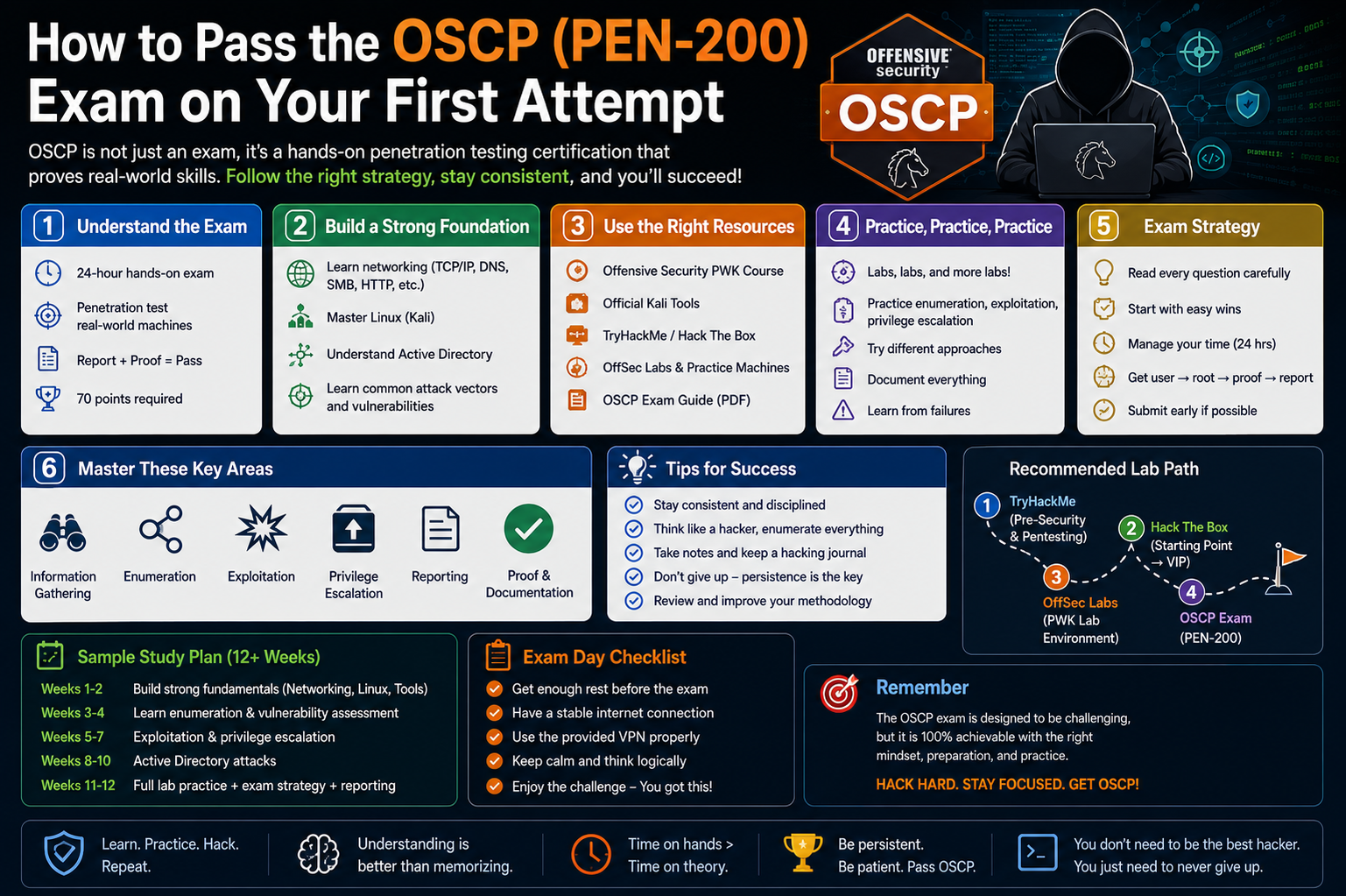
Passing the PEN-200 OSCP certification on the first attempt is not a casual achievement. It is an intense, demanding experience that tests not only technical knowledge but also patience, endurance, and mental resilience. The journey can feel overwhelming at times, especially when self-doubt creeps in or when progress seems slow. Many candidates experience stress, long nights, and moments where quitting feels like the easiest option. The pressure of performing well on exam day can create anxiety, particularly when there is uncertainty about whether preparation has been sufficient. Despite these challenges, the process itself is deeply rewarding. It forces growth, sharpens problem-solving abilities, and builds a level of confidence that extends far beyond the exam.
The emotional side of preparation is often underestimated. It is not just about learning tools or techniques, but about developing persistence and staying calm under pressure. There are moments when tasks seem impossible, when systems refuse to yield, and when hours of effort lead to no visible progress. These experiences are part of the transformation. They train the mind to think differently, to approach problems creatively, and to remain composed even when the situation feels uncertain.
Planning Before Starting the Course
Preparation for this certification begins long before enrolling in the course. One of the most important aspects is understanding the structure, cost, and time commitment involved. The program combines course material, lab access, and exam attempts into a single package. Since access is time-bound, careful planning becomes essential. Once access begins, the countdown starts, and every day matters.
This makes pre-planning a critical step. Instead of rushing into the course, it is far more effective to evaluate current knowledge and identify gaps. Building a strong foundation beforehand allows learners to use their lab time more efficiently. Without this preparation, valuable time may be spent learning basic concepts that could have been mastered earlier.
A thoughtful approach involves reviewing prerequisites and honestly assessing skill levels. Networking knowledge, familiarity with operating systems, and basic scripting skills are not optional luxuries. They are core requirements that influence how quickly one can progress through the material. Preparing in advance reduces pressure later and creates a smoother learning experience.
Building Strong Networking Fundamentals
Networking is at the heart of penetration testing. A solid understanding of how systems communicate is essential for identifying vulnerabilities and navigating target environments. Concepts such as IP addressing, subnets, ports, and protocols form the backbone of many attack strategies. Without this knowledge, even basic enumeration becomes difficult.
It is not necessary to be an expert-level network engineer, but a comfortable understanding of core principles is crucial. Being able to interpret scan results, understand service behavior, and troubleshoot connectivity issues can save significant time during both practice and the exam.
Hands-on familiarity is particularly valuable. Knowing how to analyze network traffic, interpret responses, and identify anomalies provides a strong advantage. These skills allow candidates to move beyond theory and actively engage with real-world scenarios.
Developing Practical Linux Skills
Linux plays a central role throughout the OSCP journey. Most tools, environments, and target systems rely heavily on Linux-based operations. For individuals coming from a different background, this can initially feel unfamiliar. However, gaining comfort with the Linux command line is essential.
Understanding file systems, permissions, processes, and system navigation forms the foundation. These are not abstract concepts but practical skills that are used repeatedly during enumeration and exploitation. Tasks such as modifying files, searching for sensitive data, and analyzing system behavior all depend on command-line proficiency.
Learning Linux effectively involves hands-on practice. Reading about commands is not enough; they must be used regularly until they become second nature. Over time, the command line becomes less intimidating and more like a powerful tool for exploration and control.
Strengthening Scripting Knowledge
While deep programming expertise is not required, basic scripting knowledge significantly enhances efficiency. Understanding how scripts work, how to modify them, and how to troubleshoot errors can make a noticeable difference during exploitation.
Bash and Python are particularly useful in this context. They allow candidates to automate repetitive tasks, adapt existing tools, and better understand exploit code. The goal is not to write complex programs from scratch but to develop the ability to read and adjust scripts as needed.
This skill becomes especially important when dealing with custom exploits or when small changes are required to match a specific environment. Even a basic understanding of variables, loops, and logic can help in adapting tools to different scenarios.
Practicing Through Simulated Environments
Before diving into the official labs, it is beneficial to gain experience in smaller, structured environments. These platforms provide a stepping stone, allowing learners to apply foundational knowledge without feeling overwhelmed.
Such environments introduce key concepts like enumeration, service analysis, and exploitation techniques in a manageable way. They also provide exposure to commonly used tools and workflows. This early practice builds confidence and prepares candidates for the more complex challenges ahead.
Working through these scenarios helps develop a systematic approach. Instead of randomly trying techniques, learners begin to follow a logical process: scanning, analyzing, identifying weaknesses, and exploiting them. This structured thinking becomes invaluable during the actual course and exam.
Choosing the Right Time to Start
Timing plays a crucial role in success. Since the course requires consistent effort over an extended period, it is important to select a timeframe that allows for focused study. Attempting the course during a busy or unpredictable period can lead to unnecessary stress and reduced productivity.
A realistic schedule should include daily study time, with room for breaks and recovery. Consistency is more important than intensity. Spending a few focused hours each day is often more effective than occasional long sessions.
Balancing study with personal and professional responsibilities is essential. Overloading the schedule can lead to burnout, while insufficient effort can slow progress. Finding the right balance ensures steady improvement without compromising well-being.
Approaching the Course Material Effectively
Once the course begins, the provided material becomes the primary guide. It includes detailed explanations, practical demonstrations, and exercises designed to reinforce learning. Approaching this material with focus and discipline is key.
Reading thoroughly and understanding each concept before moving on helps build a strong foundation. Skipping sections or rushing through topics can create gaps that become problematic later. Taking time to experiment with tools and techniques enhances comprehension and retention.
Exercises within the material offer valuable opportunities to apply knowledge. Some are straightforward, while others require independent research and problem-solving. Engaging with these exercises actively strengthens critical thinking skills and prepares candidates for real-world scenarios.
The Importance of Documentation
Documentation is a skill that often determines success. Keeping detailed notes of every step, command, and observation ensures that progress can be tracked and replicated. This habit becomes especially important during the exam, where a comprehensive report is required.
Good documentation includes clear explanations, relevant screenshots, and organized structure. It should be detailed enough that another person could follow the same steps and achieve the same results. Developing this habit early makes the reporting process much smoother later.
In addition to exam requirements, documentation also serves as a personal knowledge base. Reviewing past notes can help reinforce learning and provide quick references when facing similar challenges.
Gaining Value from Additional Training
Supplementary training resources can provide additional perspectives and reinforce key concepts. These resources often present topics in different ways, making it easier to understand complex ideas.
They also offer opportunities for extra practice in controlled environments. This can be particularly helpful for topics that require repetition, such as enumeration techniques or privilege escalation methods.
Using additional resources strategically can enhance preparation without replacing the core course material. The goal is to strengthen understanding and build confidence before tackling more advanced challenges.
Mastering the Lab Environment Through Consistent Practice
The lab environment is where everything starts to come together. It transforms theoretical understanding into real, hands-on experience. Instead of following guided instructions, you are given access to systems with minimal direction, forcing you to think independently and apply your knowledge creatively. This is where persistence becomes critical. Some machines will fall quickly, while others may take hours or even days to fully understand and exploit. The key is to remain patient and methodical, carefully analyzing each system and documenting every step along the way. Over time, patterns begin to emerge, and your ability to recognize vulnerabilities improves significantly.
Working through the lab also introduces more advanced techniques such as pivoting between networks and chaining exploits together. These concepts can feel complex at first, but repeated exposure builds familiarity. Each compromised machine is not just a victory but also a learning opportunity that strengthens your overall approach. The more time you spend experimenting, failing, and trying again, the more confident and capable you become. This gradual progression is what ultimately prepares you for the unpredictable nature of the exam.
Performing Under Pressure on Exam Day
The exam is designed to test not only your technical skills but also your ability to perform under pressure. With a limited time window and no external assistance, it becomes a true measure of how well you can think critically and manage stress. Preparation plays a huge role here, but so does mindset. Staying calm, taking breaks when needed, and avoiding panic are just as important as technical knowledge. When faced with a difficult system, stepping away briefly can often provide a fresh perspective and lead to new ideas.
Time management is another crucial factor. Deciding which targets to focus on, when to move on, and how to allocate your energy can significantly impact your overall performance. Maintaining clear and organized notes throughout the exam ensures that reporting is efficient and accurate afterward. By the end of the process, the experience feels less like a test and more like a culmination of everything you have practiced. It is challenging, intense, and demanding, but also deeply satisfying once completed.
Conclusion
Successfully passing the OSCP on the first attempt is not the result of luck but of careful preparation, consistent effort, and a strong mindset. From building foundational knowledge in networking and Linux to developing scripting skills and practicing in lab environments, every step contributes to the final outcome. The journey requires discipline, patience, and the ability to push through moments of doubt and difficulty.
What makes this achievement truly meaningful is not just the certification itself but the transformation that happens along the way. You develop a structured approach to problem-solving, learn to remain calm under pressure, and gain confidence in your ability to tackle complex challenges. The experience reshapes how you think and work, leaving you better prepared for real-world scenarios. In the end, the effort invested pays off not only in passing the exam but in becoming a more skilled and resilient professional.