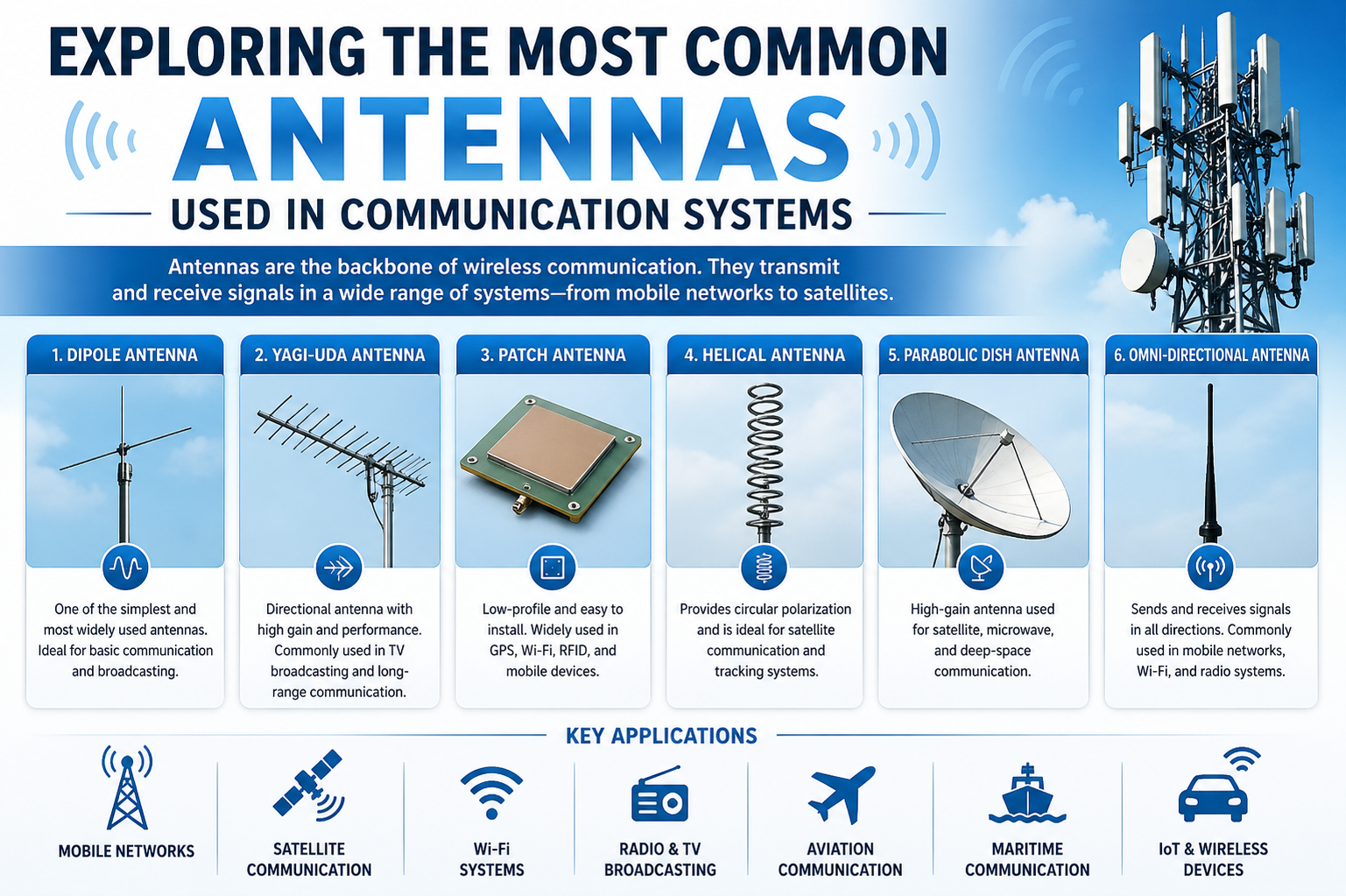
To someone without technical experience, antennas may appear to be simple metal structures designed to send and receive signals. However, beneath that simplicity lies a sophisticated system that plays a crucial role in modern communication. Antennas are the backbone of wireless connectivity, enabling everything from mobile networks to home internet systems. Their design, structure, and functionality vary widely depending on the purpose they serve, and understanding these variations is essential for anyone looking to optimize network performance. Among the many types available, two of the most widely used and fundamentally important categories are omnidirectional and directional antennas. Each serves a distinct purpose, and their differences define how effectively signals are transmitted and received in various environments.
The Role of Antennas in Wireless Communication
Antennas function as the interface between electronic devices and the electromagnetic waves that carry information through the air. When a device transmits data, the antenna converts electrical signals into radio waves, which then travel through space. Conversely, when receiving data, the antenna captures radio waves and converts them back into electrical signals that devices can interpret. This seemingly straightforward process is influenced by several factors, including antenna type, placement, environmental conditions, and signal interference. Because of these variables, choosing the right antenna is not just a technical decision but a strategic one that can significantly impact performance, reliability, and coverage.
Introduction to Omnidirectional Antennas
Omnidirectional antennas are designed to provide signal coverage in all directions along a horizontal plane. This means that instead of focusing energy in a single direction, they distribute it evenly around the antenna, creating a circular coverage pattern. This characteristic makes them particularly useful in scenarios where devices are spread out in multiple directions relative to the antenna’s position. Their design is typically simple, often resembling a vertical rod or stick, and they are commonly seen on home routers, access points, and communication towers. The ability to broadcast signals in every direction makes them highly versatile and easy to deploy in a wide range of environments.
How Omnidirectional Antennas Operate
The working principle of an omnidirectional antenna revolves around uniform signal distribution. By radiating energy equally across a horizontal plane, these antennas ensure that all nearby devices receive a consistent signal, regardless of their position around the antenna. This does not mean the signal extends equally in all three dimensions; instead, it is strongest along the horizontal axis and weaker above and below the antenna. This pattern is ideal for ground-level communication where most devices are located. The simplicity of this design eliminates the need for precise alignment, making installation straightforward and accessible even for non-technical users.
Advantages of Omnidirectional Antennas
One of the most significant advantages of omnidirectional antennas is their ease of use. Because they do not require precise aiming, they can be installed quickly and with minimal technical expertise. This makes them an excellent choice for residential and small business environments where simplicity and convenience are priorities. Additionally, their wide coverage area ensures that multiple devices can connect simultaneously without the need for repositioning. This is particularly beneficial in environments like homes, offices, and public spaces where users are constantly moving. Their ability to provide consistent coverage across a broad area makes them a reliable solution for general-purpose connectivity.
Limitations of Omnidirectional Antennas
Despite their versatility, omnidirectional antennas are not without drawbacks. Because they distribute signals in all directions, they are more susceptible to interference from other الأجهزة and signals operating in the same frequency range. This can lead to reduced performance, especially in densely populated areas with many competing networks. Additionally, their range is typically shorter compared to directional antennas, as the signal strength is spread out rather than concentrated. This makes them less suitable for long-distance communication or scenarios where a strong, focused signal is required. Understanding these limitations is essential when deciding whether an omnidirectional antenna is the right choice for a specific application.
Common Uses of Omnidirectional Antennas
Omnidirectional antennas are widely used in everyday communication systems due to their practicality and efficiency. One of the most common examples is the home Wi-Fi router, where the antenna ensures that internet connectivity is available throughout the house. They are also used in cellular networks, where large towers equipped with omnidirectional antennas provide coverage to entire مناطق. In public spaces such as cafes, airports, and offices, these antennas enable seamless connectivity for multiple users at once. Their ability to support a wide range of devices without requiring constant adjustment makes them indispensable in modern communication infrastructure.
Placement Considerations for Omnidirectional Antennas
Proper placement of an omnidirectional antenna is crucial to achieving optimal performance. Since these antennas broadcast signals in all directions, their location should be chosen carefully to maximize coverage and minimize interference. Placing the antenna in a central, elevated position helps ensure that the signal reaches all intended areas. Avoiding obstacles such as walls, furniture, and electronic الأجهزة can further improve signal quality. Additionally, keeping the antenna away from other الأجهزة that emit electromagnetic interference can reduce signal degradation. Even though these antennas are easy to install, thoughtful positioning can make a significant difference in their effectiveness.
Importance of Orientation and Environment
While omnidirectional antennas do not require precise alignment, their orientation still plays a role in performance. Keeping the antenna upright ensures that the signal is distributed evenly across the horizontal plane. Tilting or bending the antenna can distort the coverage pattern and lead to uneven signal distribution. The surrounding environment also has a significant impact on performance. खुले spaces allow signals to travel freely, while obstacles like walls and металличес structures can weaken or block signals. Understanding how the environment interacts with the antenna can help users make better decisions بشأن placement and configuration.
Introduction to Directional Antennas
Directional antennas represent a more focused and specialized approach to wireless communication. Unlike omnidirectional designs that spread signals in every direction, directional antennas concentrate energy toward a specific target. This focused transmission allows signals to travel farther and with greater strength, making these antennas ideal for scenarios where precision and distance are critical. Their appearance is often more complex, commonly featuring dish-like structures or flat panels, and they are widely used in professional and industrial communication systems. By narrowing the path of transmission, directional antennas achieve a level of efficiency that broad-coverage solutions cannot match.
How Directional Antennas Function
The core principle behind directional antennas is signal concentration. Instead of dispersing energy, these antennas channel it into a defined beam, similar to how a flashlight directs light forward rather than illuminating an entire room. This focused beam enhances both transmission and reception in the chosen direction while reducing signal strength elsewhere. As a result, devices positioned along the beam’s path receive a stronger and more stable connection. This design relies heavily on precise alignment, as even slight deviations can significantly affect performance. The effectiveness of a directional antenna is therefore closely tied to how accurately it is aimed at its intended target.
Types of Directional Antennas
Directional antennas come in several forms, each designed for specific applications and performance requirements. One well-known type is the Yagi antenna, which uses multiple parallel elements to direct signals forward. Another common type is the parabolic antenna, recognizable by its dish shape, which reflects signals into a concentrated beam for long-distance communication. Patch antennas, often used in modern wireless devices, provide a more compact solution while still offering directional capabilities. Although these designs differ in structure and complexity, they all share the same fundamental goal of enhancing signal strength in a particular direction.
Advantages of Directional Antennas
One of the most significant benefits of directional antennas is their ability to achieve long-range communication. By concentrating energy into a focused beam, they can transmit signals over much greater distances than omnidirectional antennas. This makes them particularly valuable in applications such as linking networks between buildings or connecting remote locations. Another advantage is improved signal quality, as the focused transmission reduces interference from unwanted sources. Additionally, directional antennas are more energy-efficient because they direct power only where it is needed, minimizing waste and improving overall performance.
Energy Efficiency and Signal Clarity
The efficiency of directional antennas extends beyond just range. Because they limit signal انتشار to a specific path, they reduce the likelihood of interference from other الأجهزة and networks. This results in clearer, more reliable communication, especially in environments with heavy signal traffic. The focused nature of the transmission also means that less power is required to achieve the same level of performance compared to a system that spreads energy in all directions. Over time, this efficiency can contribute to cost savings, particularly in large-scale or long-term deployments where energy consumption is a concern.
Challenges of Using Directional Antennas
Despite their advantages, directional antennas present certain challenges that must be carefully managed. The most notable is the requirement for precise alignment. Unlike omnidirectional antennas, which function effectively regardless of orientation, directional antennas must be aimed accurately at their target. This process can be time-consuming and may require specialized tools or expertise. Environmental factors such as wind, ساختمان movement, or physical obstructions can also affect alignment and performance. These challenges make directional antennas less suitable for casual or rapidly changing setups where flexibility is needed.
Cost and Complexity Considerations
Another important factor to consider is cost. Directional antennas are generally more expensive than their omnidirectional counterparts, both in terms of initial purchase and installation. The need for mounting structures, alignment tools, and professional expertise can increase overall expenses. Additionally, maintaining optimal performance may require periodic adjustments and monitoring. While these costs are often justified by the improved performance and range, they can be a barrier for smaller المشاريع or individual users. Careful planning is therefore essential to ensure that the benefits outweigh the investment.
Common Applications of Directional Antennas
Directional antennas are widely used in scenarios where targeted communication is essential. One of the most common applications is point-to-point networking, where two locations are connected directly through a focused wireless link. This is often used by internet service providers to deliver connectivity across long distances without relying on physical cables. Satellite communication is another प्रमुख application, where dish antennas are used to send and receive signals from orbiting satellites. In broadcasting, directional antennas help deliver television and radio signals to specific مناطق with greater efficiency.
Role in Public and Private Networks
In both public and private networks, directional antennas play a crucial role in optimizing performance. In large venues such as stadiums or transportation hubs, they can be used to deliver strong signals to specific areas with high user density. In industrial settings, they enable reliable communication between equipment and control systems across large facilities. Even in residential scenarios, directional antennas can be used to extend connectivity to outbuildings or remote parts of a property. Their ability to focus signals precisely makes them an invaluable tool for enhancing network reliability and coverage.
Use in Emergency and Specialized Operations
Directional antennas are also essential in specialized fields such as emergency response and البحث operations. Their ability to detect and focus on specific signals makes them ideal for locating distress beacons or tracking communication sources. In these situations, accuracy and range are critical, and directional antennas provide both. They are also used in scientific research, الدفاع systems, and advanced communication technologies where precision is paramount. These کاربردات highlight the versatility and importance of directional antennas beyond everyday use.
Installation and Alignment Practices
Proper installation is vital to achieving the full benefits of a directional antenna. The first step is identifying the exact target location, whether it is another antenna, a satellite, or a specific coverage area. Once the target is determined, the antenna must be carefully aligned to ensure that the signal path is unobstructed. Tools such as signal strength meters or built-in diagnostic software can assist in fine-tuning the alignment. Even small adjustments can have a significant impact on performance, so patience and precision are essential during this process.
Height and Line of Sight Considerations
Elevation plays a critical role in the effectiveness of directional antennas. To maintain a strong connection, there must be a clear line of sight between the transmitting and receiving points. This often requires mounting the antenna on a բարձր structure such as a mast or tower. Obstacles like buildings, trees, and terrain features can disrupt the signal path, reducing performance. Ensuring that both ends of a connection are positioned at مناسب heights helps maintain a stable and reliable link. This consideration is especially important in long-distance communication જ્યાં even minor obstructions can have significant effects.
Integration with Network Devices
Directional antennas are typically used in conjunction with other networking equipment, such as access points and client devices. Proper configuration of these devices is essential to ensure seamless communication. This includes setting matching frequencies, امنیت parameters, and operational modes. In many cases, devices are configured in bridge mode to facilitate direct communication between two نقاط. Attention to these details helps prevent compatibility issues and ensures that the antenna system operates efficiently.
Environmental and Maintenance Factors
External conditions can have a significant impact on the performance of directional antennas. Weather elements such as wind, rain, and extreme temperatures can affect both the physical structure and signal quality. Regular maintenance is therefore important to ensure that the antenna remains properly aligned and free from damage. Checking mounting hardware, تنظيف surfaces, and monitoring performance metrics can help identify and address potential issues قبل they become serious problems. A proactive approach to maintenance helps preserve the reliability and longevity of the system.
Comparing Coverage Patterns and Signal Behavior
When evaluating communication antennas, one of the most important distinctions lies in how they distribute signals across space. Omnidirectional antennas create a circular coverage pattern that radiates outward in all horizontal directions, ensuring that devices surrounding the antenna receive a relatively even signal. In contrast, directional antennas produce a focused beam that concentrates energy toward a specific path. This difference directly affects how signals behave in real-world environments. With omnidirectional designs, the signal spreads widely but becomes weaker as distance increases. Directional systems, however, maintain stronger signal intensity over longer distances because energy is not dispersed unnecessarily. Understanding this contrast helps clarify why each antenna type excels in different परिस्थितियों and why selecting the correct pattern is essential for reliable communication.
Impact of Distance and Range on Performance
Distance plays a defining role in determining antenna effectiveness. Omnidirectional antennas are well suited for short to medium ranges where consistent coverage is more important than reaching distant نقاط. As the signal travels outward in all directions, its strength gradually diminishes, limiting the effective range. Directional antennas overcome this limitation by focusing energy into a narrow beam, allowing signals to travel significantly farther without substantial loss. This makes them ideal for long-distance links, such as connecting buildings or transmitting data across open terrain. The relationship between range and signal concentration highlights the trade-off between coverage breadth and दूरी, a factor that must be carefully balanced when designing any wireless system.
Signal Strength and Stability Considerations
Signal strength is not only about how far a signal can travel but also how stable and consistent it remains during transmission. Omnidirectional antennas provide uniform coverage, but their signals can fluctuate بسبب interference and environmental obstacles. Because they receive signals from all directions, they are more likely to pick up unwanted noise, which can degrade performance. Directional antennas, by contrast, minimize interference by focusing only on the intended signal path. This results in stronger and more stable connections, especially in crowded or high-interference environments. The ability to maintain signal integrity is one of the primary reasons directional antennas are preferred for critical and long-range communication tasks.
Understanding Interference and Noise
Interference is a major challenge in wireless communication, and antenna type plays a significant role in how it is managed. Omnidirectional antennas are inherently more vulnerable to interference because they are constantly receiving signals from every direction. This can include signals from nearby networks, electronic devices, and حتی environmental sources. Directional antennas reduce this issue by narrowing their reception field, effectively filtering out unwanted signals from outside the targeted area. This selective reception improves overall signal clarity and reduces the likelihood of disruptions. თუმცა, it also means that any misalignment can weaken the intended signal, emphasizing the importance of proper setup and calibration.
Adaptability in Different Environments
Different environments present unique challenges for antenna performance, and adaptability is key to maintaining reliable communication. In indoor settings with walls, furniture, and الأجهزة, omnidirectional antennas are often more practical because they can distribute signals around obstacles. Their ability to provide widespread coverage makes them ideal for homes, offices, and عمومی spaces. In outdoor or open environments, directional antennas excel due to their ability to maintain strong connections over long distances without significant obstruction. Terrain, building density, and atmospheric conditions all influence how signals propagate, and selecting an antenna that aligns with these factors is essential for optimal performance.
Scalability and Network Expansion
As networks grow, scalability becomes an important consideration. Omnidirectional antennas offer simplicity when expanding coverage within a محدودة area, as additional devices can connect without requiring significant adjustments. However, as the network becomes more complex, interference and congestion can increase, reducing efficiency. Directional antennas provide a more controlled approach to expansion by enabling targeted links between specific نقاط. This makes them suitable for structured network designs where performance and reliability must be maintained across multiple locations. ორივე approaches have their place, and the choice often depends on the size and complexity of the network being developed.
Energy Distribution and Efficiency
Energy efficiency is another key factor that differentiates antenna types. Omnidirectional antennas distribute energy evenly, which is beneficial for coverage but not always efficient for power usage. Much of the transmitted energy may not reach intended devices, especially in sparsely populated areas. Directional antennas, on the other hand, direct energy precisely where it is needed, reducing waste and improving overall efficiency. This focused approach not only enhances performance but also lowers power consumption in many cases. Over time, this efficiency can translate into cost savings, particularly in large-scale deployments where energy usage is a significant concern.
Mobility and User Movement
User mobility is an important consideration in modern communication systems. Omnidirectional antennas are well suited for environments where users frequently move, such as homes, offices, and public spaces. Their wide coverage ensures that devices remain connected regardless of their position relative to the antenna. Directional antennas are less adaptable to movement because their focused beam requires devices to remain within a محدد path. This makes them more suitable for fixed connections rather than dynamic environments. The ability to support mobility is a critical factor in determining which antenna type is appropriate for a given application.
Installation Flexibility and Practical Deployment
Ease of installation can significantly influence the choice of antenna. Omnidirectional antennas are straightforward to deploy, requiring minimal planning and adjustment. Their forgiving nature allows them to function effectively even when placement is not perfect. Directional antennas, in contrast, demand careful planning and precise alignment. Factors such as angle, height, and दूरी must be carefully calculated to achieve optimal performance. While this complexity can be challenging, it also allows for highly customized and efficient communication setups when executed correctly. The level of expertise required for installation is therefore an important consideration in practical deployment.
Cost Implications and Budget Planning
Budget constraints often play a निर्णायक role in selecting communication تجهیزات. Omnidirectional antennas are generally more affordable and require less specialized equipment for installation. This makes them accessible for residential users and small businesses. Directional antennas typically involve higher costs due to their پیچیدہ design, mounting requirements, and need for professional setup. However, their superior performance in certain scenarios can justify the investment. সিদ্ধান্ত-makers must weigh initial costs against long-term benefits to determine the most cost-effective solution for their needs.
Reliability and Maintenance Requirements
Reliability is a critical factor in any communication system. Omnidirectional antennas are relatively low-maintenance, as their simple design and lack of alignment requirements reduce the likelihood of performance issues. Directional antennas, while highly effective, require regular monitoring to ensure that alignment remains accurate and that environmental factors have not affected performance. Maintenance tasks may include adjusting positioning, checking mounting structures, and ensuring that there are no new obstructions in the signal path. A proactive approach to maintenance helps ensure consistent performance and extends the lifespan of the antenna system.
Security and Signal Control
Security is an often-overlooked aspect of antenna selection. Omnidirectional antennas broadcast signals in all directions, which can make them more vulnerable to unauthorized access if proper security measures are not in place. Directional antennas offer a higher level of control by limiting signal انتشار to a specific path, reducing the likelihood of unintended interception. This makes them a preferred choice in scenarios where data security is a priority. By controlling where signals are transmitted and received, directional systems provide an إضافی layer of protection for sensitive communications.
Balancing Performance and Practical Needs
Choosing between omnidirectional and directional antennas ultimately involves balancing multiple factors, including coverage, range, cost, and complexity. Each type offers distinct advantages and limitations, and neither is universally superior. The key is to match the antenna’s capabilities with the specific requirements of the environment and application. Whether the goal is to provide seamless coverage in a home or establish a long-distance communication link, understanding these trade-offs enables more informed and effective decisions.
Selecting the Right Antenna for Specific Needs
Choosing the most suitable antenna requires a clear understanding of the environment, the intended purpose, and the performance expectations. There is no universal solution that works perfectly in every situation, so the decision must be based on practical requirements rather than assumptions. For general connectivity in homes, offices, or public areas, omnidirectional antennas often provide the best balance of simplicity and coverage. They allow multiple devices to connect from different directions without requiring constant adjustment. On the other hand, when the goal is to establish a stable connection over a long distance or between fixed locations, directional antennas become the more effective choice. Their focused signal ensures stronger communication where it is needed most, even across challenging terrain or large gaps.
Evaluating Environmental Factors
The surrounding environment has a powerful influence on how well an antenna performs. Indoor spaces filled with walls, furniture, and electronic devices can weaken signals and create interference. In such conditions, omnidirectional antennas are generally more forgiving because they spread signals in multiple directions, allowing them to navigate around obstacles. Outdoor environments introduce a different set of challenges, including weather conditions, terrain variations, and physical obstructions like trees or buildings. Directional antennas often perform better in these settings because they can maintain a focused path that avoids unnecessary signal loss. Carefully assessing environmental conditions helps ensure that the chosen antenna delivers consistent and reliable performance.
Importance of Line of Sight in Communication
Line of sight is a critical concept in wireless communication, especially for directional antennas. A clear, unobstructed path between the transmitting and receiving points allows signals to travel efficiently without significant degradation. Even small obstacles can disrupt this path and weaken the connection. For long-distance links, maintaining proper elevation and avoiding बाधाएं becomes essential. Omnidirectional antennas are less dependent on perfect line of sight, but they still benefit from open placement and minimal obstruction. Understanding how line of sight affects signal propagation can significantly improve overall network reliability.
Balancing Coverage and Precision
One of the central decisions in antenna selection is choosing between wide coverage and precise targeting. Omnidirectional antennas excel at covering large areas with minimal effort, making them ideal for environments where users are spread out and frequently moving. Directional antennas, in contrast, provide precise control over where signals are sent and received. This precision is valuable in scenarios where interference must be minimized or where communication needs to be directed toward a specific نقطة. Balancing these two approaches requires careful consideration of how the network will be used and what level of control is necessary.
Integration with Modern Networking Systems
Modern communication networks rely on a combination of technologies working together seamlessly. Antennas are just one component of a larger system that includes routers, access points, and client devices. Ensuring compatibility between these components is essential for achieving optimal performance. Proper configuration of frequencies, channels, and security settings helps prevent conflicts and ensures smooth operation. Whether using omnidirectional or directional antennas, integrating them effectively into the overall network design enhances both efficiency and reliability. A well-coordinated system can deliver strong performance even in complex or demanding environments.
Adapting to Changing Requirements
Communication needs are constantly evolving, and antenna systems must be flexible enough to adapt. As the number of connected devices increases, networks may require upgrades or adjustments to maintain performance. Omnidirectional antennas can handle moderate growth بسهولة, but they may struggle in highly congested environments. Directional antennas offer a scalable solution for expanding networks by creating dedicated links between specific نقاط. Planning for future expansion ensures that the network remains efficient and capable of meeting new demands without requiring a complete redesign.
Performance Optimization Techniques
Maximizing antenna performance involves more than simply choosing the right type. Placement, orientation, and configuration all play महत्वपूर्ण roles in determining how well the system functions. Positioning antennas at مناسب heights, avoiding مصادر interference, and ensuring proper alignment can significantly improve signal quality. नियमित monitoring and adjustments help maintain optimal performance over time. Even small changes in placement or configuration can lead to noticeable improvements, making ongoing optimization an essential part of network management.
Reliability in Real-World Applications
In real-world scenarios, reliability is often more important than theoretical performance. An antenna system must deliver consistent results under varying conditions, including changes in मौसम, user activity, and environmental عوامل. Omnidirectional antennas provide dependable coverage for everyday use, while directional antennas offer стабиль connections for specialized applications. ორივე types can be highly reliable when properly installed and maintained. The key is to understand their strengths and limitations and apply them appropriately within the network.
Security Considerations in Wireless Communication
Wireless communication inherently involves transmitting signals through open space, which introduces potential security risks. Omnidirectional antennas, by broadcasting signals in all directions, may expose networks to unauthorized access if proper safeguards are not in place. Implementing strong encryption, secure authentication methods, and नियमित updates helps protect against these threats. Directional antennas provide an added layer of control by limiting signal انتشار to a specific path, reducing exposure. However, security should never rely solely on antenna type; it must be supported by comprehensive network protection measures.
Cost Versus Long-Term Value
Financial considerations are always a factor when designing or upgrading a network. Omnidirectional antennas are typically more affordable and easier to install, making them a practical choice for many users. Directional antennas may require a higher initial investment due to their complexity and installation requirements. However, their superior performance in certain applications can provide greater long-term value. Evaluating both immediate costs and future benefits helps ensure that the chosen solution is both effective and sustainable. A well-planned investment can reduce the need for frequent upgrades and maintenance.
Future Trends in Antenna Technology
Advancements in technology continue to shape the development of communication antennas. Modern designs are becoming more compact, efficient, and capable of handling higher data rates. Innovations in materials and engineering are improving signal strength while reducing power consumption. As wireless networks evolve to support new applications, including smart devices and high-speed connectivity, antennas will play an increasingly important role. Both omnidirectional and directional designs are expected to benefit from these advancements, offering improved performance and greater flexibility. Staying informed about these trends helps users make better decisions when planning for future upgrades.
Bringing It All Together
Antennas are far more complex and influential than they might initially appear. They determine how signals are transmitted, how far they can travel, and how reliably they reach their مقصد. Omnidirectional antennas provide broad, convenient coverage that suits everyday connectivity needs, while directional antennas deliver focused, high-performance communication for specialized applications. Each type has its own strengths and challenges, and understanding these differences is essential for making informed decisions. By considering factors such as environment, range, interference, cost, and scalability, it becomes possible to design a communication system that meets both current and future requirements. With the right approach, antennas can deliver strong, stable, and efficient connectivity across a wide range of scenarios.
Conclusion
Communication antennas are a foundational element of modern wireless systems, shaping how signals move, connect, and perform across different environments. What may appear to be a simple component is, in reality, a carefully engineered solution that directly influences network reliability, speed, and coverage. Understanding the differences between omnidirectional and directional antennas provides valuable insight into how wireless communication can be optimized for specific needs. Each type serves a distinct purpose, and their effectiveness depends largely on how well they are matched to the intended application.
Omnidirectional antennas stand out for their simplicity and wide-area coverage. They are ideal for everyday use where multiple devices need consistent connectivity without complex setup. Their ability to broadcast signals in all directions makes them a practical choice for homes, offices, and public environments where ease of use and flexibility are essential. However, this convenience comes with trade-offs, particularly in terms of range and susceptibility to interference. These limitations highlight the importance of thoughtful placement and environmental awareness when using omnidirectional designs.
Directional antennas, on the other hand, offer precision and power. By concentrating signals into a focused beam, they achieve greater distances and stronger connections, making them indispensable for long-range communication and targeted networking. Their efficiency and reduced interference make them highly effective in demanding scenarios, but they require careful alignment and planning to function properly. This added complexity is balanced by their superior performance in situations where accuracy and stability are critical.
Selecting the right antenna is not simply a technical decision but a strategic one that involves balancing coverage, range, cost, and complexity. Environmental conditions, user behavior, and future scalability all play a role in determining the most suitable solution. A well-informed choice can significantly enhance network performance, while a poor selection can lead to inefficiencies and connectivity issues.
Ultimately, both omnidirectional and directional antennas have their place in modern communication systems. Their strengths complement each other, and in many cases, they are used together to create robust and adaptable networks. By understanding their characteristics and applying them appropriately, it becomes possible to build systems that deliver reliable, high-quality connectivity across a wide range of applications.