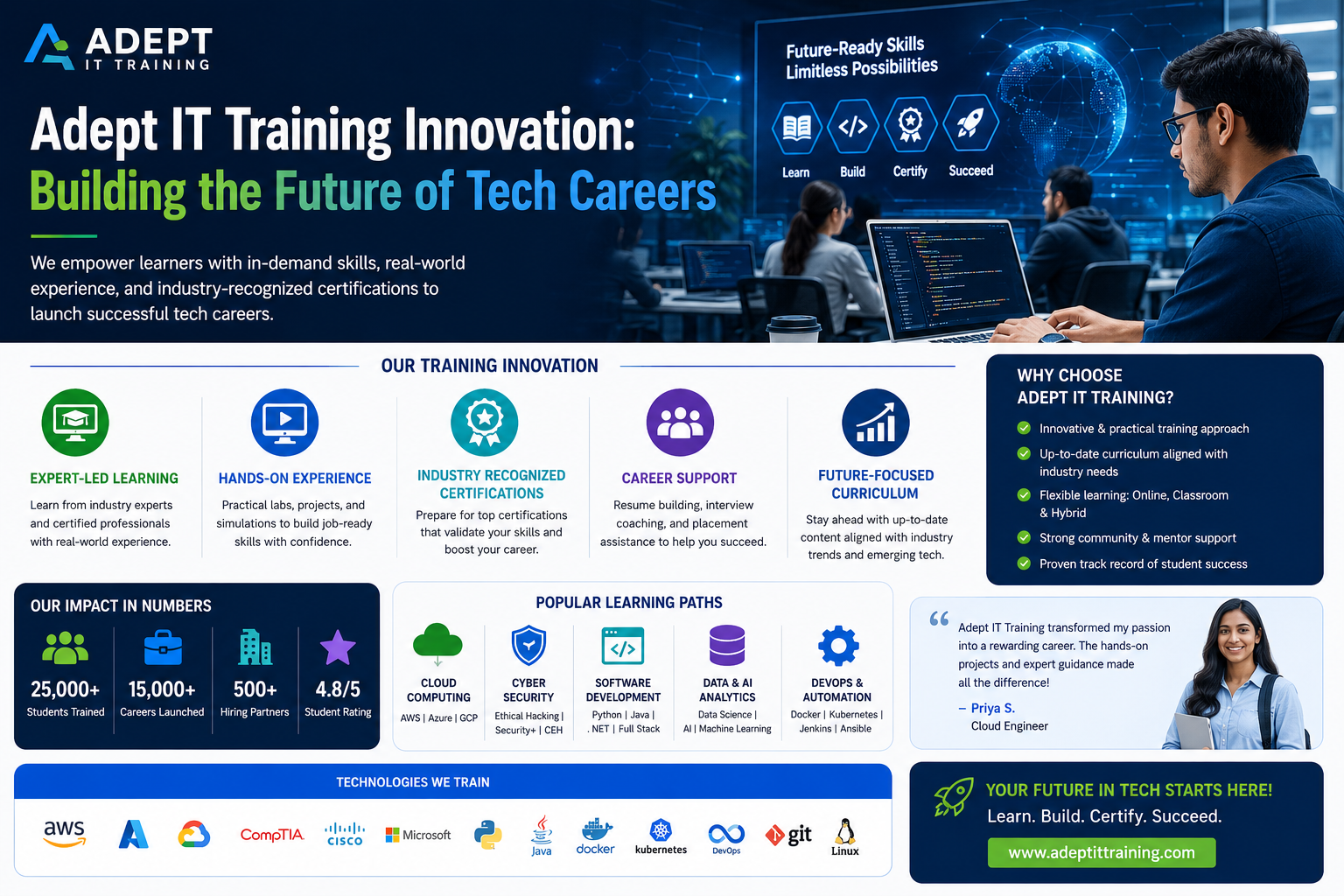
The landscape of IT education has been changing steadily for decades, shaped by new technologies, evolving job roles, and the increasing demand for practical, job-ready skills. Traditional learning methods, which once relied heavily on textbooks, static videos, and isolated practice environments, are gradually being replaced by more dynamic and interactive systems designed to mirror real-world workflows.
In this evolving environment, a new learning platform has been introduced with the intention of redefining how IT skills are developed and applied. Instead of focusing only on memorization or exam preparation, the emphasis has shifted toward active engagement, continuous feedback, and practical application. The goal is no longer just to help learners pass certifications, but to help them build confidence in real technical environments where problem-solving is essential.
This shift represents more than a technological upgrade. It reflects a deeper understanding of how people learn complex technical subjects. Learning in IT is most effective when it is immersive, structured, and responsive to individual progress. By integrating multiple learning styles into a single system, modern platforms aim to reduce the gap between theoretical knowledge and practical ability.
The introduction of this new approach marks a turning point in how structured technical education is delivered. It is designed to meet learners where they are, guide them through progressively challenging concepts, and reinforce knowledge through hands-on engagement. Instead of treating learning as a linear journey, it acknowledges that progress is often non-linear and requires flexibility.
The Evolution of IT Training Systems
IT training has undergone several major transformations over the years. In its earliest forms, learning was largely classroom-based, dependent on instructor-led sessions and physical materials. While effective for foundational understanding, these methods often lacked flexibility and accessibility for global learners.
As technology advanced, digital learning platforms began to emerge. Video-based instruction became a central component, allowing learners to access training from anywhere. This shift significantly expanded access to technical education, making it possible for individuals across different regions to develop industry-relevant skills without being tied to physical classrooms.
However, even video-based systems had limitations. They often placed learners in a passive role, where information was consumed rather than actively applied. While supplementary labs and exercises existed, they were frequently disconnected from the learning material, requiring learners to switch between environments or repeat content to fully understand concepts.
The new generation of learning systems addresses these gaps by integrating instruction, practice, and evaluation into a unified experience. Instead of separating theory from practice, modern platforms combine them in real time. This allows learners to immediately apply what they are learning, reinforcing knowledge through action rather than repetition alone.
This evolution also reflects changes in the IT industry itself. Modern IT roles demand not only theoretical understanding but also the ability to adapt quickly, troubleshoot effectively, and work within complex systems. Training environments now aim to replicate these conditions as closely as possible, preparing learners for real-world challenges rather than isolated exam scenarios.
A Learner-Centered Design Philosophy
At the core of the new learning approach is a shift in design philosophy. Instead of building systems around content delivery alone, the focus has moved toward creating environments that support the learner’s entire journey. This includes how information is presented, how practice is structured, and how progress is measured over time.
A learner-centered design recognizes that individuals absorb information differently. Some prefer visual explanations, while others benefit more from step-by-step breakdowns or interactive exercises. By offering multiple ways to engage with the same concept, the learning experience becomes more adaptable and inclusive.
This approach also acknowledges the importance of cognitive load. When learners are overwhelmed with too much information at once, retention decreases. Modern platforms aim to reduce this burden by presenting information in smaller, more manageable segments, allowing users to focus on one concept at a time before progressing further.
Another key aspect of this philosophy is context-based learning. Instead of presenting abstract concepts in isolation, topics are embedded within scenarios that reflect real-world usage. This helps learners understand not only how something works, but also why it matters and when it should be applied.
The design also prioritizes continuity. Rather than treating each lesson as a separate unit, learning paths are structured to build progressively. Each new concept reinforces previous knowledge, creating a connected framework that supports long-term retention.
Integrating Practical Skills with Theoretical Knowledge
One of the most significant improvements in modern IT education is the integration of practical skills directly into the learning process. Instead of separating theory from practice, both are combined into a single continuous experience.
This integration is essential because IT systems are inherently practical. Understanding a concept in theory is only the first step; being able to apply it in real scenarios is what defines true competency. Modern learning platforms address this by embedding interactive exercises directly alongside instructional content.
As learners progress through topics, they are encouraged to apply concepts immediately. This reinforces understanding and helps identify gaps in knowledge early. Instead of waiting until the end of a course to practice, learners engage with real or simulated environments throughout the learning journey.
This method also encourages active problem-solving. Rather than following instructions passively, learners are prompted to make decisions, troubleshoot issues, and experiment with different approaches. This builds confidence and prepares them for unpredictable challenges in real-world IT environments.
Another important aspect of this integration is feedback. Immediate responses to actions help learners understand the impact of their decisions. Whether an approach is correct or needs adjustment, feedback provides guidance that supports continuous improvement.
Personalization and Adaptive Learning Paths
One of the defining features of modern training systems is personalization. Not all learners progress at the same pace, and not all require the same depth of explanation. Adaptive learning paths address this by adjusting content based on performance and engagement.
When a learner demonstrates a strong understanding of a topic, the system may allow them to move forward more quickly. Conversely, if difficulties are detected, additional resources or practice opportunities can be introduced. This ensures that learning remains efficient without sacrificing comprehension.
Personalization also extends to content recommendations. Based on progress and areas of interest, learners can be guided toward relevant topics that support their goals. This helps create a more focused and meaningful learning experience.
The adaptive nature of these systems also reduces frustration. Instead of forcing all learners through identical content at the same pace, the system responds to individual needs. This makes learning more accessible and reduces the likelihood of disengagement.
Over time, this approach builds a more accurate picture of each learner’s strengths and weaknesses. This information can then be used to further refine the learning experience, making it increasingly aligned with individual goals.
Modern Learning Interfaces and User Experience Design
The way information is presented plays a crucial role in how effectively it is absorbed. Modern learning platforms place significant emphasis on interface design, ensuring that content is both accessible and easy to navigate.
A well-designed interface reduces distractions and allows learners to focus on the material itself. Clean layouts, intuitive navigation, and structured content presentation all contribute to a more effective learning environment.
Interactive elements are also integrated directly into the interface. Instead of switching between separate tools, learners can engage with quizzes, exercises, and simulations within the same environment. This reduces friction and helps maintain focus.
Another important aspect of user experience design is clarity. Technical concepts can often be complex, so presenting them in a visually organized and structured way helps improve understanding. Breaking down information into digestible segments ensures that learners are not overwhelmed.
The interface also supports multiple learning modes. Whether a learner prefers reading, watching, or interacting, the system accommodates different preferences within a unified structure. This flexibility enhances accessibility and supports a wider range of learning styles.
Continuous Assessment and Knowledge Reinforcement
Assessment is no longer confined to final evaluations or end-of-module tests. Instead, modern systems incorporate continuous assessment throughout the learning process. This approach helps reinforce knowledge and identify areas that require further attention.
By embedding assessment into the learning flow, learners receive ongoing feedback about their understanding. This allows them to adjust their approach in real time, rather than discovering gaps in knowledge after completing a section.
These assessments are designed to be low-pressure and supportive. The goal is not to evaluate performance in isolation, but to guide learning and reinforce key concepts. This creates a more encouraging environment that supports long-term growth.
Reinforcement also occurs through repetition and variation. Concepts are revisited in different contexts to strengthen understanding. This helps ensure that knowledge is retained over time rather than quickly forgotten after initial exposure.
The combination of continuous assessment and reinforcement creates a learning cycle that supports steady improvement. Instead of focusing solely on outcomes, the emphasis is placed on the learning process itself.
Expanding Access Through Structured Digital Learning
One of the most significant advantages of modern training systems is accessibility. Learners from different regions, backgrounds, and experience levels can engage with the same high-quality material without geographical limitations.
Structured digital learning environments provide consistency in content delivery. Regardless of where a learner is located, they receive the same foundational material, ensuring equal access to knowledge.
This accessibility also supports diverse learning schedules. Individuals can progress at their own pace, fitting learning into their personal and professional lives. This flexibility is particularly important in fields like IT, where continuous skill development is essential.
In addition, structured digital systems help bridge skill gaps across different regions and industries. By providing standardized learning pathways, they contribute to a more globally connected and skilled workforce.
The Role of Hands-On Environments in Skill Development
Hands-on practice is a critical component of effective IT education. Theoretical knowledge alone is not sufficient to build real-world competence. Practical environments allow learners to apply concepts in realistic scenarios, reinforcing understanding through experience.
Modern learning systems integrate these environments directly into the learning process. Instead of treating practice as a separate activity, it becomes part of the core learning journey.
These environments are designed to simulate real systems, allowing learners to experiment, troubleshoot, and build solutions in a controlled setting. This reduces risk while still providing meaningful experience.
Hands-on learning also encourages exploration. Learners are free to test different approaches and observe outcomes, which helps develop problem-solving skills and technical confidence.
Over time, repeated exposure to practical scenarios helps bridge the gap between learning and professional application.
Expanding the Modern IT Learning Experience
The next phase of digital IT education is defined by how seamlessly learning environments integrate into the daily routines of learners. Instead of requiring users to adapt their schedules around rigid training structures, modern platforms are designed to adapt to the learner’s pace, availability, and evolving skill level. This shift reflects a broader understanding that professional development in technology is not a one-time achievement but an ongoing process.
As IT systems become more complex, the need for continuous skill development has grown significantly. Professionals are expected to stay updated with changing tools, evolving architectures, and emerging security practices. Traditional learning models, which often focused on static content delivery, are no longer sufficient to meet these demands. The modern approach emphasizes flexibility, adaptability, and long-term engagement.
This expanded learning experience is not just about delivering more content. It is about restructuring how knowledge is consumed, practiced, and retained. By combining structured progression with real-time application, learners are able to build a deeper understanding and develop skills that remain relevant in practical environments.
The Shift from Passive Consumption to Active Engagement
One of the most important transformations in IT education is the move away from passive learning. In older models, learners primarily watched instructional content and later attempted to apply it in separate environments. This separation often created gaps between understanding and execution.
Modern systems reduce this gap by embedding active engagement directly into the learning process. Instead of waiting until the end of a lesson to apply knowledge, learners interact with concepts as they are introduced. This creates a continuous cycle of learning and application that strengthens comprehension.
Active engagement also improves retention. When learners are required to interact with material, make decisions, and solve problems in real time, they are more likely to remember what they have learned. This is because the brain processes active experiences more deeply than passive observation.
Another benefit of this approach is increased motivation. Learners are more engaged when they are involved in the learning process rather than simply observing it. Interactive elements create a sense of participation, making the experience more dynamic and rewarding.
This shift also aligns more closely with real-world IT environments. Professionals in the field rarely work with isolated instructions. Instead, they must analyze situations, interpret data, and make informed decisions. Active learning prepares individuals for these realities by simulating similar conditions during training.
Adaptive Feedback Systems and Continuous Improvement
Feedback plays a critical role in any learning process, but modern systems have significantly enhanced how feedback is delivered. Instead of waiting for formal assessments, learners now receive continuous feedback throughout their learning journey.
This feedback is often immediate, allowing users to understand the impact of their actions as they happen. When a mistake is made, the system can highlight it instantly and guide how to correct it. This real-time correction helps prevent the reinforcement of incorrect understanding.
Adaptive feedback systems also analyze patterns over time. If a learner consistently struggles with a specific concept, the system can adjust the learning path to include additional explanations, exercises, or alternative approaches. This ensures that gaps in understanding are addressed before they become larger obstacles.
The goal of these systems is not only to identify errors but to support improvement. Feedback is designed to be constructive, guiding learners toward better understanding rather than simply marking performance as correct or incorrect.
Over time, this creates a personalized learning experience that evolves alongside the learner. Instead of following a fixed curriculum, users experience a dynamic pathway that adjusts based on their progress and performance.
Building Real-World Readiness Through Scenario-Based Learning
One of the most effective ways to prepare learners for IT roles is through scenario-based learning. This method places individuals in simulated environments that reflect real-world challenges, requiring them to apply their knowledge in practical contexts.
Unlike traditional exercises that focus on isolated concepts, scenario-based learning combines multiple skills into a single challenge. For example, a learner may need to troubleshoot a system issue that involves networking, security, and system configuration all at once. This mirrors the complexity of real IT environments, where problems rarely exist in isolation.
Scenario-based learning also encourages critical thinking. Instead of following step-by-step instructions, learners must analyze situations, identify potential causes, and determine appropriate solutions. This helps develop decision-making skills that are essential in professional settings.
Another advantage of this approach is its ability to simulate uncertainty. In real-world IT environments, problems often do not come with clear instructions. Learners must learn how to navigate ambiguity and make informed choices based on available information.
By practicing in controlled but realistic environments, learners gain confidence in their ability to handle complex situations. This reduces the gap between training and real-world performance, making the transition into professional roles smoother and more effective.
The Role of Structured Progression in Skill Development
Effective learning is not random; it is structured. Modern IT training systems use carefully designed progression paths to guide learners from foundational concepts to advanced applications.
Structured progression ensures that learners build knowledge step by step. Each new concept is introduced only after the necessary foundational understanding has been established. This prevents confusion and helps maintain a logical flow of learning.
This approach also helps reduce cognitive overload. By breaking down complex subjects into smaller, manageable sections, learners can focus on mastering one concept at a time before moving forward.
Progression is often reinforced through layering. Early concepts are revisited in more advanced contexts, helping learners see how foundational knowledge connects to higher-level skills. This reinforces understanding and improves long-term retention.
Another important aspect of structured progression is consistency. Learners are guided along a clear path, which helps reduce uncertainty about what to learn next. This creates a more organized and purposeful learning experience.
Enhancing Knowledge Retention Through Multi-Format Learning
Different learners absorb information in different ways. Some prefer visual explanations, while others benefit from reading or hands-on practice. Modern IT training systems address this by offering multi-format learning experiences.
Instead of relying on a single method of instruction, content is presented in multiple formats. This may include visual demonstrations, written explanations, interactive exercises, and practical simulations. Each format reinforces the same concept differently.
This multi-format approach strengthens retention by engaging different cognitive pathways. When information is encountered in multiple forms, it becomes easier to remember and apply.
It also allows learners to choose the format that best suits their learning style. This flexibility improves engagement and reduces frustration, particularly when dealing with complex topics.
In addition, multi-format learning supports reinforcement. Concepts introduced in one format can be revisited in another, helping solidify understanding over time.
Intelligent Organization of Learning Content
As training libraries grow, organizations become increasingly important. Without a clear structure, learners can struggle to find relevant content or understand how different topics connect.
Modern systems address this challenge by organizing content intelligently. Instead of presenting materials as isolated units, they are grouped based on skills, topics, and learning objectives.
This structure allows learners to navigate content more efficiently. They can explore topics by category, follow structured learning paths, or focus on specific areas of interest.
An intelligent organization also supports discovery. Learners are often introduced to related topics that complement their current studies, helping them build a broader understanding of the subject area.
Search functionality plays a key role in this system. Advanced search tools allow learners to quickly locate specific topics, tools, or concepts without having to navigate through large volumes of content.
This level of organization reduces time spent searching for material and increases time spent actively learning.
Deepening Engagement Through Interactive Learning Elements
Interactivity is one of the most powerful tools in modern education. It transforms learning from a passive activity into an engaging experience where learners actively participate in their development.
Interactive elements can take many forms, including quizzes, simulations, decision-based scenarios, and real-time exercises. Each of these formats encourages learners to apply knowledge rather than simply absorb it.
This type of engagement improves understanding because it requires active participation. Instead of reading or watching content, learners must think critically and respond to challenges.
Interactive learning also provides immediate reinforcement. When learners make decisions, they can instantly see the results of their actions. This creates a feedback loop that strengthens comprehension.
Another benefit is increased motivation. Interactive environments are more engaging and enjoyable, which encourages learners to spend more time exploring and practicing.
Over time, this leads to deeper understanding and stronger skill development.
Data-Driven Insights and Learning Analytics
Modern IT training systems increasingly rely on data to improve learning outcomes. By analyzing how learners interact with content, systems can identify patterns, strengths, and areas that require improvement.
Learning analytics provide insights into progress, engagement levels, and performance trends. This information helps learners understand their development in a more structured and measurable way.
These insights can also be used to guide future learning decisions. If a learner consistently performs well in certain areas but struggles in others, the system can adjust recommendations accordingly.
For instructors and administrators, analytics provide a broader view of learner progress across groups. This helps identify common challenges and refine learning materials to better meet user needs.
Data-driven insights also support motivation. When learners can see their progress clearly, they are more likely to stay engaged and committed to their goals.
Strengthening Skill Application Through Repetition and Variation
Repetition is a fundamental part of learning, but repetition alone is not enough. Modern systems enhance repetition by introducing variation in how concepts are practiced.
Instead of repeating the same exercise in the same format, learners encounter different scenarios that require the same underlying knowledge. This helps strengthen understanding while preventing memorization without comprehension.
Variation also prepares learners for real-world unpredictability. In professional environments, no two problems are the same. By practicing concepts in different contexts, learners become more adaptable and flexible in their thinking.
This method reinforces core principles while expanding the learner’s ability to apply them in diverse situations.
Over time, repetition combined with variation leads to deeper mastery and improved confidence in applying skills independently.
Advanced Skill Simulation and Immersive Practice Environments
Modern IT learning has increasingly moved toward environments that replicate real operational systems with a high degree of accuracy. Instead of relying solely on static exercises or simplified examples, learners now interact with simulations that mirror the complexity of enterprise infrastructure. These environments are not just supplementary tools; they have become central to how technical competency is developed and evaluated.
Immersive practice environments allow learners to engage with systems in a way that feels close to real-world conditions without exposing them to the risks associated with live production systems. This balance between realism and safety is essential in IT education, where mistakes in real environments can lead to downtime, data loss, or security vulnerabilities.
By simulating network architectures, server configurations, and application environments, learners gain exposure to the types of challenges they will encounter in professional roles. These simulations often include layered systems where multiple technologies interact, requiring users to think holistically rather than focusing on isolated components.
One of the most important aspects of immersive environments is unpredictability. Unlike simplified lab exercises that follow predictable patterns, advanced simulations introduce variability in system behavior. This forces learners to adapt their approach, analyze symptoms, and diagnose issues based on incomplete information—closely mirroring real-world troubleshooting scenarios.
Another key advantage is repetition through variation. Instead of repeating identical tasks, learners encounter similar problems with different underlying causes. This strengthens conceptual understanding and builds adaptability, ensuring that skills are transferable across different environments and technologies.
Over time, immersive simulations help bridge the gap between theoretical learning and professional readiness. Learners become more confident in navigating unfamiliar systems because they have already practiced responding to complexity in controlled environments.
Cognitive Science Behind Effective IT Learning
Understanding how the human brain processes and retains information is essential for designing effective technical education systems. Cognitive science provides valuable insights into how learners absorb complex material, especially in fields like IT, where abstract concepts and practical application must work together.
One of the key principles is cognitive load management. The brain has a limited capacity for processing new information at any given time. When too much information is presented at once, comprehension decreases. Effective learning systems reduce cognitive overload by breaking information into smaller, structured segments that can be processed incrementally.
Another important concept is spaced repetition. Information is more effectively retained when it is revisited over time rather than learned in a single session. By reintroducing key concepts at strategic intervals, learners strengthen memory retention and reduce the likelihood of forgetting.
Active recall also plays a major role in learning efficiency. When learners are required to retrieve information from memory rather than simply reviewing it, neural connections are strengthened. This makes it easier to recall and apply knowledge in practical situations.
Dual coding theory further explains why combining visual and textual information improves understanding. When information is presented in multiple formats, the brain creates multiple pathways for retrieval. This increases both comprehension and recall accuracy.
Emotion and engagement are also critical factors. When learners are engaged and interested in the material, their ability to retain information improves significantly. This is why interactive and problem-based learning approaches are more effective than passive observation alone.
By integrating these cognitive principles into system design, modern IT learning platforms create environments that align with how people naturally learn, rather than forcing learners to adapt to rigid instructional structures.
Bridging the Gap Between Entry-Level and Professional Expertise
One of the most significant challenges in IT education is the transition from beginner-level understanding to professional-level competence. Many learners can grasp foundational concepts but struggle when faced with real-world complexity.
This gap exists because entry-level learning often focuses on isolated concepts, while professional environments require the integration of multiple skills simultaneously. Modern learning systems address this challenge by gradually increasing complexity and introducing interconnected scenarios.
At the early stages, learners are introduced to fundamental principles in controlled environments. As they progress, these concepts are combined and applied in more complex situations that require multi-layered thinking.
This gradual escalation helps learners build confidence without overwhelming them. Instead of being suddenly exposed to advanced systems, they develop skills incrementally, with each stage reinforcing the previous one.
Another important aspect of bridging this gap is contextual understanding. Professional expertise is not just about knowing how systems work, but understanding why they behave in certain ways. Modern learning environments emphasize reasoning and decision-making, helping learners develop deeper insight into system behavior.
Mentally simulating real-world environments also plays a role in this transition. By repeatedly engaging with scenarios that reflect workplace challenges, learners develop intuition that cannot be gained through theory alone.
Over time, this structured progression transforms foundational knowledge into applied expertise, preparing learners for the demands of professional IT roles.
Collaborative Learning and Knowledge Sharing Ecosystems
Learning in modern IT environments is no longer an isolated activity. Collaboration and knowledge sharing have become essential components of skill development, reflecting the collaborative nature of real-world IT operations.
In professional environments, IT teams rarely work independently. Instead, they collaborate across different domains such as networking, security, development, and infrastructure management. Modern learning systems replicate this dynamic by encouraging shared problem-solving and peer interaction.
Collaborative learning environments allow individuals to exchange ideas, discuss solutions, and learn from different perspectives. This not only enhances understanding but also exposes learners to alternative approaches they may not have considered independently.
Knowledge sharing also strengthens retention. When learners explain concepts to others, they reinforce their own understanding. This process, often referred to as teaching-based reinforcement, deepens comprehension and improves long-term memory.
In addition, collaborative systems help simulate real workplace communication. Learners develop skills in articulating technical concepts clearly, documenting solutions, and working as part of a team. These soft skills are just as important as technical knowledge in professional IT roles.
Another benefit of collaborative learning is exposure to diverse problem-solving strategies. Different learners may approach the same problem in different ways, providing insight into multiple solutions and methodologies.
Over time, this ecosystem of shared learning creates a richer and more dynamic educational experience, where knowledge is continuously expanded through interaction.
Security Awareness and Operational Responsibility in Learning Environments
As IT systems become more interconnected, security awareness has become a fundamental aspect of technical education. Modern learning environments increasingly incorporate security principles into every stage of training, rather than treating them as separate topics.
This approach reflects the reality of modern IT operations, where security is not an isolated function but an integrated responsibility across all systems and processes. Learners are encouraged to think about security implications whenever they interact with systems, configure settings, or troubleshoot issues.
Understanding operational responsibility is also critical. In professional environments, actions taken on systems can have wide-ranging consequences. Modern training systems emphasize the importance of careful decision-making and awareness of potential impacts.
Learners are introduced to scenarios where security considerations must be balanced with functionality and performance. This helps develop judgment skills that are essential in real-world environments.
Another important aspect is risk awareness. Instead of simply learning how systems operate, learners are taught to recognize potential vulnerabilities and understand how different configurations can introduce or mitigate risks.
This integrated approach ensures that security is not viewed as an additional layer but as a core principle of system design and management.
Developing Analytical Thinking in Technical Problem Solving
Technical expertise is not only about knowing how systems function but also about developing the ability to analyze problems effectively. Analytical thinking is a key skill in IT, enabling professionals to diagnose issues, identify root causes, and implement solutions efficiently.
Modern learning systems encourage analytical thinking by presenting learners with complex, multi-step problems that require investigation. Instead of providing direct answers, these systems guide learners through the process of discovery.
This process typically involves gathering information, identifying patterns, testing hypotheses, and evaluating results. By engaging in this cycle repeatedly, learners develop structured thinking habits that are essential for troubleshooting.
Analytical thinking also involves recognizing relationships between different system components. In IT environments, issues are often interconnected, and understanding these relationships is critical for effective problem resolution.
Another important aspect is decision evaluation. Learners are encouraged to consider multiple possible solutions and assess their advantages and disadvantages before choosing a course of action. This strengthens critical thinking and reduces reliance on guesswork.
Over time, this approach builds confidence in handling unfamiliar problems and improves overall problem-solving efficiency.
Adaptive Complexity and Progressive Challenge Design
A key feature of modern IT learning systems is adaptive complexity. This means that the difficulty of learning materials adjusts based on the learner’s progress and performance.
At early stages, concepts are introduced in simplified form to build foundational understanding. As learners demonstrate proficiency, the complexity of tasks gradually increases.
This progression is carefully designed to maintain engagement without causing frustration. If the material is too easy, learners may become disengaged; if it is too difficult, they may feel overwhelmed. Adaptive systems aim to maintain an optimal balance.
Progressive challenge design also helps reinforce learning. As learners revisit concepts in more complex contexts, they deepen their understanding and develop more advanced skills.
This approach mirrors real-world professional growth, where responsibilities gradually increase as experience develops. Learners are not expected to master everything at once but are guided through a structured journey of increasing difficulty.
Real-Time Decision Making and System Interaction
In modern IT environments, professionals are often required to make decisions in real time. Whether responding to system alerts, diagnosing outages, or implementing configuration changes, timing and accuracy are critical.
Learning systems now incorporate real-time decision-making exercises that simulate these conditions. Learners must respond to changing system states, interpret information quickly, and choose appropriate actions under time constraints.
This type of training develops both technical knowledge and situational awareness. Learners learn to prioritize tasks, manage uncertainty, and adapt to evolving scenarios.
Real-time interaction also enhances engagement. Instead of static exercises, learners experience dynamic environments where their actions have immediate consequences.
This reinforces the importance of careful decision-making and helps build confidence in handling time-sensitive situations.
Continuous Skill Refinement Through Iterative Learning Cycles
Skill development in IT is not linear. It involves continuous refinement through repeated cycles of learning, application, and review. Modern training systems are designed to support this iterative process.
Each cycle allows learners to build on previous knowledge, correct misunderstandings, and refine their skills. Over time, this leads to deeper mastery and more efficient problem-solving abilities.
Iterative learning also supports long-term retention. By revisiting concepts in different contexts, learners strengthen their understanding and reduce the likelihood of forgetting.
This continuous refinement process ensures that learning remains active and ongoing, rather than being confined to specific stages or milestones.
As learners progress through multiple cycles, they develop a more integrated and flexible understanding of IT systems, enabling them to adapt to new technologies and challenges more effectively.
Strengthening Learning Momentum Through Micro-Progression Techniques
One of the most effective yet often overlooked strategies in modern IT education is the use of micro-progression. Instead of relying on large, complex milestones that can feel distant or overwhelming, learning is broken into very small, achievable steps that create a steady sense of forward movement.
Micro-progression works by transforming complex skill sets into a sequence of manageable accomplishments. Each small step builds confidence and reinforces motivation, allowing learners to feel consistent progress even when working through advanced or challenging material. This is especially important in IT domains where topics like networking, cybersecurity, and systems administration can initially appear dense or intimidating.
These incremental steps are carefully structured so that each one introduces a single idea or skill component. Once that component is understood and practiced, it naturally connects to the next stage of learning. This creates a chain-like progression where understanding accumulates gradually rather than being forced in large conceptual jumps.
Another advantage of micro-progression is reduced cognitive resistance. When learners face overly large tasks, they may hesitate or disengage due to perceived difficulty. However, when tasks are broken into smaller units, the barrier to entry becomes significantly lower. This encourages consistent participation and reduces learning fatigue.
Micro-progressive design also improves retention by naturally reinforcing repetition. Because each small step builds on the previous one, learners are continuously revisiting earlier concepts without feeling like they are repeating content. This subtle reinforcement strengthens memory without creating boredom.
Over time, this method creates a powerful momentum effect. Learners experience a steady accumulation of knowledge and skills, which builds confidence and encourages continued engagement. Instead of feeling overwhelmed by the size of the learning journey, they perceive it as a series of achievable steps that lead naturally toward mastery.
Conclusion
The evolution of IT education reflects a broader shift in how knowledge is created, shared, and applied in a rapidly changing digital world. What once relied heavily on static instruction and isolated practice has now transformed into a continuous, adaptive, and experience-driven process. This change is not simply about introducing new tools or updating content delivery methods; it represents a fundamental rethinking of how people build technical competence in environments that demand both precision and flexibility.
Modern learning systems are increasingly designed around the learner rather than the content alone. This means that progress is no longer measured only by completion of modules or exposure to information, but by the ability to apply skills in realistic and evolving situations. The focus has shifted toward capability building—developing individuals who can think critically, adapt quickly, and solve problems under conditions that closely resemble real operational challenges.
A defining characteristic of this transformation is the integration of practice and theory into a single, continuous experience. Instead of separating instruction from application, learners are now encouraged to engage with concepts as they are introduced. This approach strengthens understanding by reinforcing knowledge through immediate use, ensuring that learning is not only absorbed but also internalized. Over time, this leads to a deeper and more durable form of expertise.
Another important outcome of this modern approach is the emphasis on adaptability. In the IT field, technologies evolve rapidly, and professionals are often required to learn new systems, frameworks, or tools within short timeframes. Learning environments that prioritize adaptability help prepare individuals for this reality by exposing them to varied scenarios, unexpected challenges, and multi-layered problem-solving situations. This builds mental flexibility, which is essential for long-term success in technical careers.
Equally significant is the role of continuous engagement. Learning is no longer viewed as a finite process with a clear endpoint, but as an ongoing journey of refinement and growth. Through iterative practice, feedback-driven improvement, and progressive complexity, learners are able to continuously enhance their skills. This ensures that knowledge remains relevant even as industry standards evolve.
The human aspect of learning also plays a central role in this transformation. Motivation, confidence, and curiosity are now recognized as essential components of effective education. By designing systems that support these elements, modern learning environments help reduce frustration and increase persistence, even when dealing with complex subject matter. This creates a more supportive and sustainable learning experience that encourages long-term development rather than short-term memorization.
Ultimately, the future of IT education lies in its ability to blend structure with flexibility, theory with practice, and instruction with exploration. As technology continues to advance, the demand for skilled professionals who can navigate complexity will only grow. Learning systems that adapt to this reality will play a critical role in shaping the next generation of IT talent.
What emerges from this transformation is not just a new way of learning, but a new way of thinking about skill development itself—one that values adaptability, continuous improvement, and real-world readiness as the true markers of success in a digital-first world.