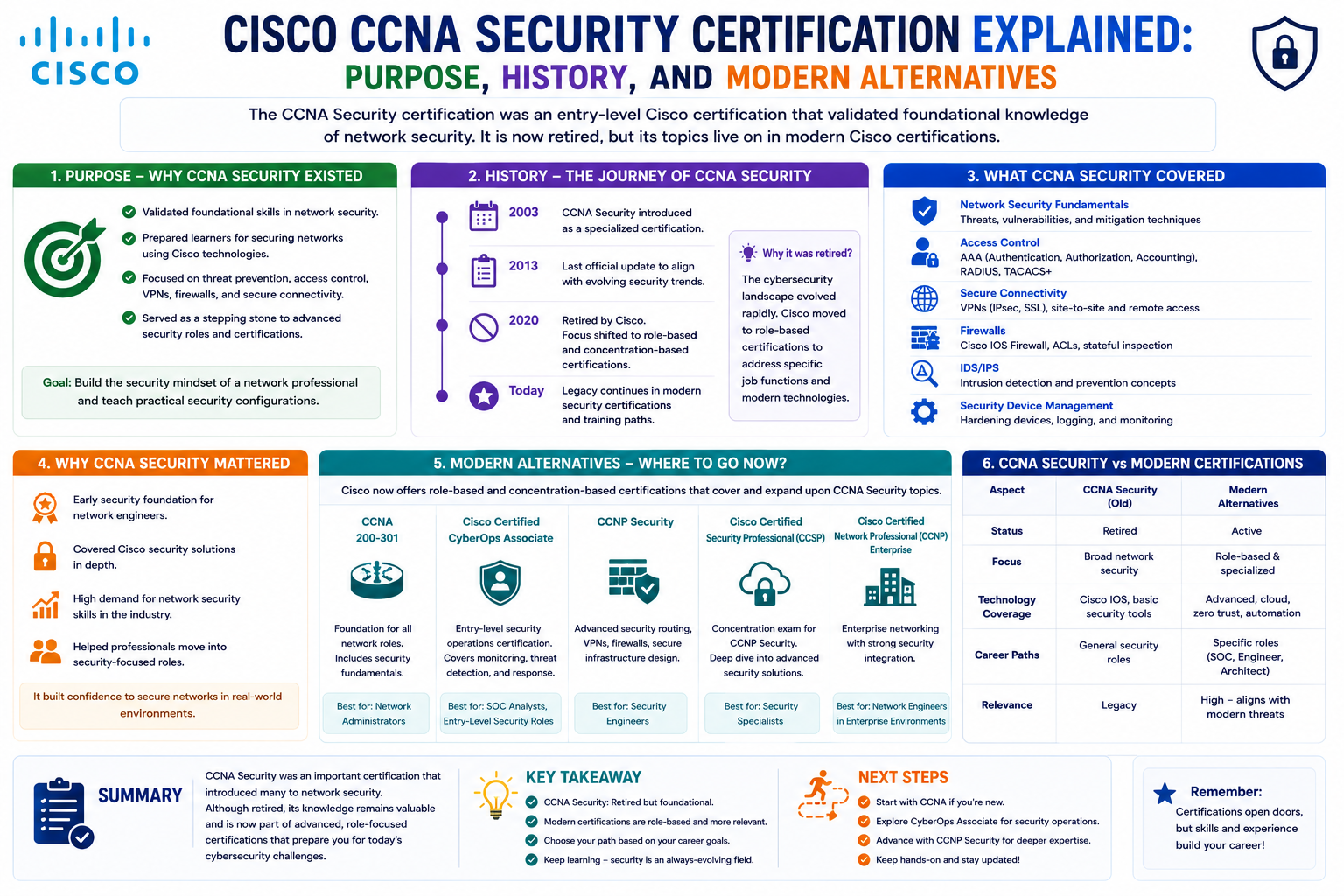
The Cisco Certified Network Associate Security certification was once a highly respected entry point for individuals aiming to build a career in network security. It served as a structured pathway for those who wanted to develop practical skills in securing network infrastructures, particularly within environments that relied on Cisco technologies. As organizations increasingly prioritized cybersecurity, certifications like this became essential benchmarks for validating knowledge and readiness in real-world scenarios. Although the certification has been retired, its influence continues to shape how foundational security training is approached today.
Understanding the Purpose of CCNA Security
The primary goal of the CCNA Security certification was to equip learners with the essential skills required to protect network systems from unauthorized access, vulnerabilities, and cyber threats. It focused on building a solid understanding of security principles while also emphasizing hands-on capabilities. Candidates were trained to configure firewalls, implement secure access controls, and monitor networks for suspicious activity. This blend of theoretical knowledge and practical application made the certification particularly valuable for those entering the cybersecurity field.
Security at the network level is a critical component of any organization’s IT infrastructure. The certification addressed this need by preparing individuals to safeguard routers, switches, and other network devices. It also introduced concepts such as threat detection, mitigation strategies, and policy enforcement. By mastering these areas, candidates could contribute to maintaining the integrity, confidentiality, and availability of data across networks.
The Role of CCNA Security in Career Development
For many aspiring professionals, CCNA Security acted as a stepping stone into the broader domain of cybersecurity. It was designed for individuals with some foundational networking knowledge who wanted to specialize further in security. The certification helped bridge the gap between general networking skills and more advanced security expertise.
Employers valued this certification because it demonstrated a candidate’s ability to handle real-world security challenges. It indicated that the individual was not only familiar with networking concepts but also capable of applying security measures effectively. This made certified professionals suitable for roles such as network security technician, junior security analyst, and support engineer.
In addition to technical skills, the certification also encouraged a security-first mindset. This perspective is crucial in modern IT environments where threats are constantly evolving. Professionals trained under this certification were better prepared to anticipate risks and respond proactively.
Structure and Learning Path
The certification path was structured to ensure a gradual progression of knowledge. Before focusing on security-specific topics, candidates were required to demonstrate a solid understanding of networking fundamentals. This approach ensured that learners had the necessary background to grasp more advanced security concepts.
The learning journey typically began with foundational networking topics such as IP addressing, routing, and switching. Once these basics were established, candidates moved on to security-focused areas. This included securing network devices, implementing access control mechanisms, and understanding common attack vectors.
Hands-on practice played a significant role in the learning process. Candidates were expected to configure security features on network devices and troubleshoot issues in simulated environments. This practical experience was essential for building confidence and competence.
Core Skills Validated by the Certification
One of the key strengths of the CCNA Security certification was its focus on practical, job-ready skills. It validated the ability to implement secure network infrastructures, which is a critical requirement in most IT roles today. Candidates learned how to configure firewalls, set up virtual private networks, and enforce security policies.
Another important area covered was threat identification. Understanding how attacks occur and recognizing early warning signs are vital skills in cybersecurity. The certification introduced various types of threats, including malware, phishing, and denial-of-service attacks, and provided strategies to mitigate them.
Access control was another major focus. Candidates were trained to implement authentication and authorization mechanisms to ensure that only authorized users could access network resources. This included configuring secure login methods and managing user privileges effectively.
Importance of Cisco-Based Security Knowledge
Cisco technologies are widely used in enterprise networks, making knowledge of their security features highly valuable. The CCNA Security certification specifically focused on securing Cisco devices, which gave candidates an advantage in environments where these technologies were prevalent.
Understanding how to secure routers and switches is essential because these devices form the backbone of most networks. The certification taught candidates how to harden these devices against attacks, configure secure communication protocols, and monitor network activity.
This vendor-specific knowledge complemented general security principles, creating a well-rounded skill set. While the concepts learned could be applied to other platforms, the hands-on experience with Cisco tools made candidates particularly attractive to employers using those systems.
Transition in Certification Strategy
As the technology landscape evolved, so did the approach to certification. The retirement of CCNA Security was part of a broader shift toward more integrated and role-based certifications. Instead of having separate certifications for different specializations at the associate level, the focus moved toward providing a comprehensive foundation that includes security as a core component.
This change reflected the growing importance of security across all areas of IT. Rather than treating it as a separate discipline, it became an integral part of networking, cloud computing, and system administration. The updated approach ensures that all professionals have a baseline understanding of security, regardless of their specific role.
While the dedicated CCNA Security certification is no longer available, its core concepts have been incorporated into newer certification paths. This ensures that the knowledge it provided continues to be relevant and accessible.
Exam Experience and Evaluation Approach
The certification process included assessments designed to evaluate both theoretical understanding and practical skills. Candidates encountered a variety of question formats, including multiple-choice questions, simulations, and scenario-based tasks. This diverse approach ensured a comprehensive evaluation of their abilities.
Simulations were particularly important क्योंकि they tested the candidate’s ability to perform real-world tasks. These exercises required configuring devices, troubleshooting issues, and applying security measures in a controlled environment. This hands-on component made the certification more than just a theoretical exercise.
Time management was also a critical factor during the exams. Candidates needed to balance speed and accuracy while navigating different types of questions. This added an additional layer of challenge and prepared them for real-world situations যেখানে quick decision-making is often required.
Relevance of Security Certifications in Modern IT
The demand for cybersecurity professionals continues to grow as organizations face increasingly sophisticated threats. Certifications play a crucial role in validating skills and demonstrating expertise. Even though CCNA Security has been retired, its legacy highlights the importance of structured learning in this field.
Modern IT environments require professionals who can adapt to changing technologies and threats. Foundational certifications provide the necessary groundwork, while advanced certifications build on that knowledge. This layered approach ensures continuous growth and development.
Security is no longer optional; it is a fundamental requirement for any organization التعاملing with digital data. Professionals with validated skills in this area are in high demand, making certifications a valuable investment in career development.
Evolution of Learning Paths in Cybersecurity
The retirement of CCNA Security marked a shift toward more flexible and comprehensive learning paths. Instead of following a single, linear certification track, learners now have multiple options depending on their interests and career goals. This allows for greater customization and specialization.
For example, some professionals may choose to focus on cybersecurity operations, بينما others may pursue advanced network security roles. Each path offers different opportunities and challenges, लेकिन all require a strong foundation in security principles.
This evolution reflects the dynamic nature of the cybersecurity field. As new technologies emerge, the skills المطلوبة also change. Certifications must adapt to remain relevant, ensuring that professionals are equipped to handle modern challenges.
Foundation for Advanced Security Roles
Although it was an entry-level certification, CCNA Security laid the groundwork for more advanced roles. It introduced concepts that are essential for higher-level certifications and تخصصات. This made it an important milestone for those pursuing long-term careers in cybersecurity.
The knowledge gained from this certification could be applied to various domains, including network defense, incident response, and security management. It provided a broad understanding of security practices, which could then be refined and expanded through further training.
Professionals who started with this certification often continued their journey by pursuing more advanced credentials. This progression allowed them to تخصص in specific areas and take on more complex responsibilities.
Continuing the Journey Beyond CCNA Security
Even though the certification is no longer available, the journey it represented continues. Learners today can follow updated paths that incorporate the same foundational principles while also addressing modern requirements. These paths provide opportunities to develop skills in areas such as automation, cloud security, and threat intelligence.
The key to success in cybersecurity is continuous learning. Technologies and threats are constantly evolving, requiring professionals to stay updated and adaptable. Certifications serve as milestones in this ongoing process, helping individuals measure their progress and validate their expertise.
By understanding the purpose and impact of CCNA Security, learners can better appreciate the أهمية of building a strong foundation. This knowledge can guide them in choosing the right certifications and career paths moving forward.
Conclusion
The Cisco Certified Network Associate Security certification played a meaningful role in shaping the early careers of many network security professionals. It provided a structured and practical introduction to securing network infrastructures, helping learners transition from general networking knowledge into specialized security roles. By focusing on real-world skills such as threat identification, access control, and device hardening, it established a strong technical foundation that remained valuable even after the certification itself was retired.
Its discontinuation reflects a broader shift in how cybersecurity education is delivered. Rather than isolating security into a single certification at the associate level, modern learning paths integrate security concepts across all areas of IT. This approach better aligns with today’s environments, where security is not a separate function but a core responsibility embedded in networking, cloud systems, and infrastructure management.
Although the CCNA Security certification is no longer available, its legacy continues through updated certifications and evolving career pathways. Learners now have more flexible options to pursue foundational knowledge and specialize according to their interests, whether in network defense, cybersecurity operations, or advanced security engineering. The core principles that defined CCNA Security remain essential, reinforcing the importance of a strong base in both networking and security.
Ultimately, success in the cybersecurity field depends on continuous learning and adaptability. The journey that once began with CCNA Security still exists in a new form, offering opportunities for growth, specialization, and long-term career development in an increasingly security-driven digital world.