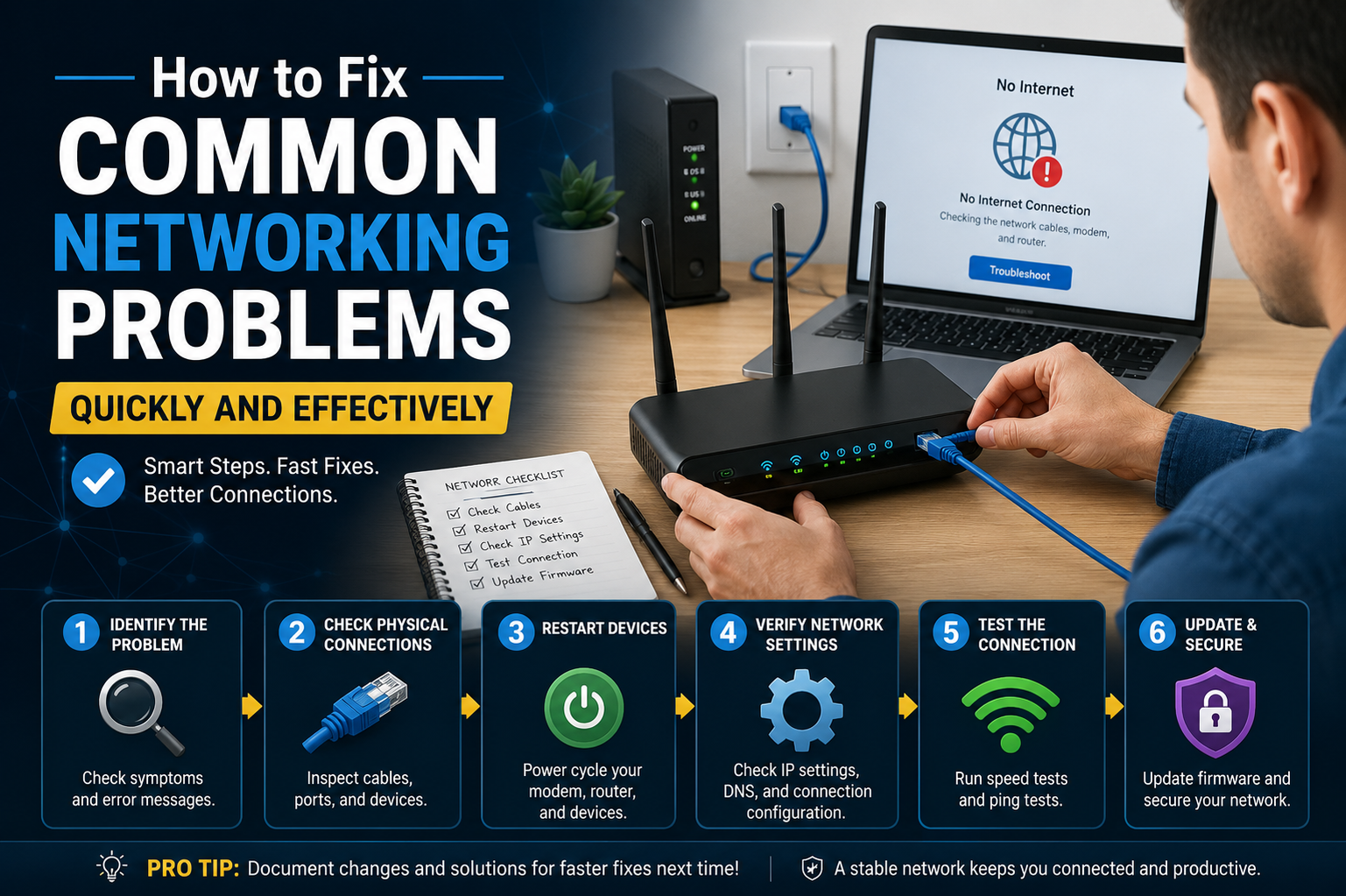
Network troubleshooting is a structured and methodical approach used to identify, analyze, and resolve issues within a computer network. It involves examining every component that contributes to connectivity, from physical hardware to logical configurations. Problems such as packet loss, duplicate addressing, misconfigured routes, and broadcast-related disruptions often fall under this domain. The goal is not only to fix immediate issues but also to understand their root causes so they can be prevented in the future. A well-practiced troubleshooting process enables professionals to respond quickly under pressure and maintain reliable communication between systems.
The Value of a Structured Troubleshooting Approach
A network is a complex system composed of interconnected devices, protocols, and services, all of which must function together seamlessly. Failures are inevitable, regardless of how well a network is designed. Having a structured troubleshooting methodology ensures that problems are addressed logically rather than randomly. Instead of guessing, professionals follow repeatable steps, allowing them to isolate issues efficiently. This consistency reduces downtime and makes it easier to document and review incidents later. Over time, this disciplined approach builds confidence and improves both speed and accuracy when diagnosing issues.
Recognizing Patterns in Network Failures
With experience, network professionals begin to notice recurring patterns in failures. Many issues originate from a small set of common causes, even though the symptoms may appear different. Misconfigurations, routing errors, and addressing conflicts frequently lead to connectivity disruptions. Recognizing these patterns helps narrow down possibilities quickly. Instead of checking every component blindly, engineers can focus on the most likely sources of failure. This pattern recognition becomes a powerful tool, especially in large or complex environments where time is critical.
Device Configuration as a Primary Cause
One of the most frequent sources of network problems is incorrect device configuration. Routers, switches, and firewalls must be set up properly to allow traffic to flow as intended. Even a small mistake, such as a closed port or incorrect rule, can block communication entirely. Security settings often restrict access by default, which can unintentionally prevent legitimate traffic. Reviewing configurations carefully and maintaining accurate documentation of network topology helps ensure that devices are aligned with the intended design. When troubleshooting, verifying configurations should always be among the first steps.
The Importance of Accurate Routing Tables
Routing tables determine how data moves across networks by defining the paths packets should take. If these tables contain errors, missing entries, or conflicts, data may fail to reach its destination. A missing route can completely prevent communication with a particular network segment. Similarly, incorrect routes may send traffic in the wrong direction, leading to delays or loss. Regularly reviewing and validating routing tables ensures that all network paths are correctly defined. This step is especially important when new devices or subnets are introduced.
Impact of Missing Routes on Connectivity
When a route is absent from a routing table, the device has no knowledge of where to send the traffic. This results in packets being dropped or misdirected. Missing routes often occur when configurations are incomplete or when routing protocols fail to advertise networks correctly. This issue is particularly common during network expansion or reconfiguration. Ensuring that every destination network is properly listed and reachable is essential for maintaining seamless communication. Troubleshooting efforts should always include verifying that all expected routes are present and functioning.
Checking Interface Status for Early Clues
The status of network interfaces provides valuable insight into connectivity issues. Interfaces act as the entry and exit points for data, and if they are down or misconfigured, communication stops immediately. Indicators such as link lights, administrative status, and operational state help determine whether an interface is functioning correctly. Tools that display interface details can reveal whether an interface is active, disabled, or experiencing errors. By checking these indicators early in the troubleshooting process, it becomes easier to identify whether the problem lies at the physical or logical level.
Common IP Configuration Problems
Even when hardware appears to be functioning properly, incorrect IP settings can disrupt communication. Devices rely on accurate addressing information to identify and reach each other. A wrong default gateway can prevent access to external networks, while an incorrect subnet mask can cause confusion about which devices are local. Conflicts between static and dynamically assigned addresses can lead to duplicate usage, resulting in intermittent connectivity. Ensuring that IP configurations are correct and consistent across devices is a critical step in resolving many network issues.
Challenges with VLAN Assignments
Virtual Local Area Networks are used to divide a physical network into smaller logical segments. While they improve organization and security, they can also introduce complexity. Incorrect VLAN assignments can prevent devices from communicating with others that should be accessible. Overlapping or conflicting configurations may lead to unpredictable behavior. Troubleshooting VLAN-related issues requires verifying that each device is assigned to the correct segment and that the necessary permissions and routing are in place. Careful planning and documentation reduce the likelihood of such errors.
Role of Network Performance Baselines
A network performance baseline represents the normal operating condition of a network under typical workloads. By understanding what “normal” looks like, it becomes easier to detect abnormalities. Deviations from baseline performance, such as increased latency or reduced throughput, often indicate underlying issues. Monitoring these metrics over time provides valuable data for troubleshooting. When a problem arises, comparing current performance with baseline values helps identify the severity and potential cause of the issue. This approach ensures that troubleshooting efforts are guided by measurable evidence rather than assumptions.
Understanding Network Collisions
Collisions occur when multiple devices attempt to transmit data simultaneously on the same communication channel. This results in corrupted transmissions that must be resent, reducing efficiency. While modern network designs minimize collisions, they can still occur in certain environments. Excessive collisions often indicate congestion or outdated infrastructure. Identifying and addressing the root cause, such as insufficient bandwidth or improper configuration, helps restore optimal performance. Monitoring collision rates can provide early warning signs of network stress.
The Effect of Broadcast Traffic Issues
Broadcast traffic is used to send data to all devices within a network segment. While necessary for certain operations, excessive broadcast traffic can overwhelm the network. Broadcast storms occur when devices continuously respond to broadcasts with more broadcasts, creating a loop that consumes bandwidth. This can lead to severe slowdowns or complete outages. Preventing such scenarios requires careful configuration and the use of mechanisms that limit unnecessary broadcast traffic. Identifying abnormal broadcast activity is an important step in diagnosing widespread connectivity issues.
Problems Caused by Duplicate Addresses
Duplicate addressing occurs when two devices share the same identifier, such as an IP or hardware address. This conflict causes confusion in the network, leading to inconsistent or failed communication. Duplicate addresses can result from manual configuration errors or issues with automatic address assignment systems. Detecting and resolving these conflicts is essential for maintaining stability. Ensuring that address allocation processes are properly managed helps prevent such issues from occurring.
Multicast Traffic and Its Misuse
Multicast communication is designed to deliver data to a specific group of interested devices. However, when misconfigured, multicast traffic may be delivered to unintended recipients. This results in unnecessary data processing and increased network load. Multicast flooding can degrade performance and make troubleshooting more complex. Proper configuration ensures that multicast traffic is limited to intended recipients, preserving bandwidth and maintaining efficiency.
Asymmetrical Routing Complexities
Asymmetrical routing occurs when data takes one path to reach its destination and a different path on the return journey. While this may not always cause immediate issues, it can complicate troubleshooting and interfere with security mechanisms. Some systems expect traffic to follow consistent paths, and deviations can lead to unexpected behavior. Understanding the routing structure and ensuring consistency where necessary helps avoid these complications. Identifying asymmetrical patterns is important when dealing with intermittent or hard-to-trace issues.
Switching and Routing Loop Challenges
Loops in switching or routing environments can create continuous data circulation, consuming bandwidth and processing resources. These loops often result from misconfigurations or missing safeguards. When loops occur, network performance can degrade rapidly, sometimes leading to complete failure. Detecting and eliminating loops requires careful analysis of network paths and configurations. Implementing preventive measures ensures that data flows efficiently without unnecessary repetition.
Conclusion
Network troubleshooting is not simply about fixing what is broken in the moment; it is about understanding how every part of a network interacts and ensuring those interactions remain stable over time. Each issue, whether it stems from configuration errors, routing inconsistencies, or addressing conflicts, reflects a deeper dependency within the network’s design. By approaching problems with a structured mindset, it becomes easier to isolate faults, reduce downtime, and maintain consistent performance across all connected systems.
A disciplined troubleshooting process transforms complexity into clarity. Instead of reacting to symptoms, professionals learn to trace issues back to their origin, using logical steps and verified data. This not only accelerates resolution but also builds a repeatable method that can be applied to future challenges. Over time, this consistency leads to improved reliability, stronger network performance, and greater confidence in handling unexpected disruptions.
Ultimately, effective network troubleshooting is a skill developed through observation, practice, and refinement. By focusing on common problem areas, maintaining accurate configurations, and continuously monitoring performance, it becomes possible to prevent many issues before they escalate. A well-maintained network is not the result of chance, but of careful planning and a proactive approach to identifying and resolving potential weaknesses.