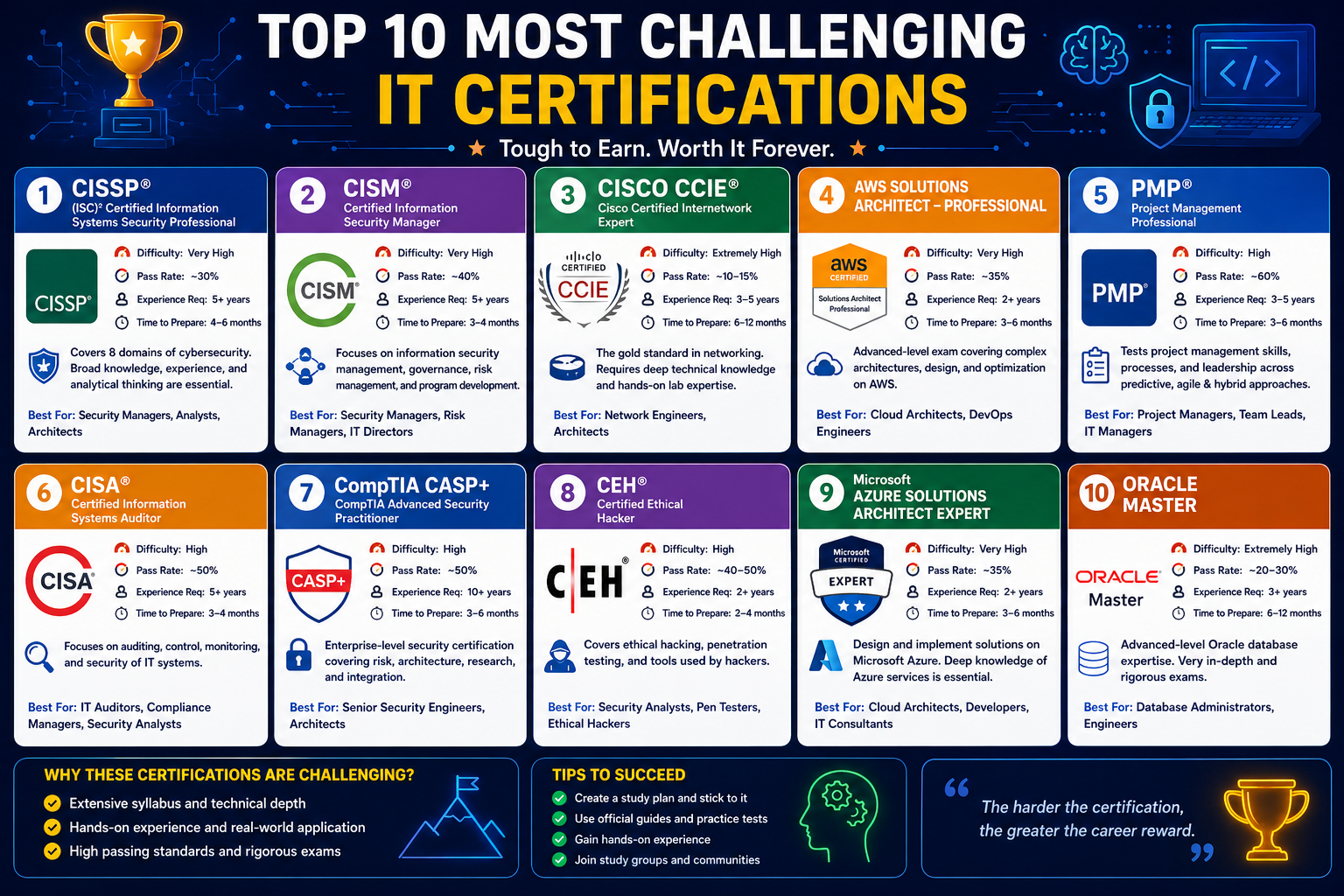
Have you ever considered what truly makes an IT certification challenging and highly respected in the global technology industry? The value of a certification is not only measured by its popularity but also by the depth of knowledge required, the level of experience expected, and the intensity of the exam process itself. Some certifications demand years of hands-on experience, while others test advanced theoretical and practical expertise in highly specialized fields like cybersecurity, cloud architecture, networking, and software development. These certifications are designed to filter out only the most skilled professionals who can handle complex real-world IT environments. In this discussion, we explore some of the most demanding certifications that continue to shape the careers of top IT professionals worldwide.
Understanding What Makes IT Certifications Difficult
The difficulty level of an IT certification is influenced by several key factors that go beyond just passing an exam. One of the most important aspects is the depth of technical knowledge required. Many advanced certifications expect candidates to have real-world experience working with enterprise-level systems. Another factor is the exam structure itself, which often includes multiple stages, scenario-based questions, and strict time limits. Some certifications also require candidates to have several years of professional experience before even being eligible to apply. In addition, maintaining these certifications often requires continuous learning and renewal through additional training and exams. All these elements combined make certain certifications extremely challenging but also highly valuable in the job market.
Certified Information Security Manager (CISM)
The Certified Information Security Manager certification is widely respected in the field of information security governance and management. It focuses on developing and managing enterprise-level security programs. The certification exam is known for its broad coverage of topics including risk management, incident response, and security governance. Candidates must demonstrate strong managerial and strategic thinking abilities rather than just technical expertise. One of the most challenging aspects of this certification is the requirement of several years of professional experience in multiple security domains. This ensures that only experienced professionals can achieve this credential. It is highly suitable for individuals aiming for leadership roles in cybersecurity and risk management.
AWS Certified Solutions Architect – Associate
This certification is one of the most recognized credentials in cloud computing and focuses on designing scalable, secure, and cost-effective solutions using cloud services. It tests the ability to design distributed systems and evaluate architectural trade-offs. Candidates are expected to have practical experience working with cloud infrastructure and services. The exam includes scenario-based questions that require deep understanding of how cloud components interact with each other. It also assesses knowledge of security, storage, and deployment strategies. This certification is especially valuable for professionals working in cloud architecture and DevOps environments.
Certified Professional in Python Programming (PCPP1)
The Certified Professional in Python Programming is designed for individuals who already have strong programming knowledge and want to validate their advanced Python skills. It covers complex topics such as object-oriented programming, design patterns, and advanced library usage. Unlike entry-level certifications, this exam demands a strong understanding of software development principles. Candidates must be able to write efficient and scalable code while solving real-world programming problems. It is particularly useful for professionals working in data science, automation, and backend development. The certification is considered difficult because it goes far beyond basic programming concepts.
Microsoft Azure Solutions Architect Expert (AZ-305)
This certification focuses on designing and implementing solutions on the Microsoft Azure platform. It is intended for professionals who can translate business requirements into secure, scalable cloud solutions. The exam tests knowledge of infrastructure, networking, identity management, and governance in cloud environments. Candidates are expected to already hold an associate-level certification before attempting this exam, which adds to its difficulty. The scenarios presented in the exam require analytical thinking and deep understanding of Azure services. It is widely respected among cloud professionals and enterprise architects.
AWS Certified SysOps Administrator – Associate
This certification validates the ability to manage and operate systems on the AWS platform. It includes tasks such as monitoring cloud environments, automating operational processes, and maintaining system reliability. The exam requires a strong understanding of AWS services and real-world operational scenarios. Candidates must demonstrate the ability to troubleshoot and optimize cloud infrastructure under pressure. The difficulty lies in the combination of theoretical knowledge and practical application required to pass the exam. It is highly recommended for system administrators and cloud engineers.
ISC2 Certified Cloud Security Professional (CCSP)
The CCSP certification is focused on advanced cloud security concepts and practices. It covers topics such as data protection, cloud architecture security, and compliance requirements. Candidates must have extensive professional experience in IT and information security before qualifying. The exam is designed to test both technical knowledge and strategic understanding of cloud environments. It is considered one of the most challenging security certifications due to its wide scope and strict experience requirements. Professionals holding this certification are recognized as experts in cloud security governance.
Certified Information Systems Auditor (CISA)
This certification is designed for professionals working in IT auditing, control, and assurance. It focuses on evaluating the effectiveness of information systems and ensuring compliance with organizational policies. The exam covers areas such as auditing processes, governance, and risk management. Candidates are expected to have significant professional experience in auditing or related fields. The difficulty of this certification comes from its emphasis on both technical and procedural knowledge. It is highly valued in roles related to IT compliance and internal auditing.
Certified Information Systems Security Professional (CISSP)
The CISSP certification is one of the most prestigious credentials in the cybersecurity industry. It covers a wide range of topics including security architecture, risk management, and network security. The exam is known for its depth and complexity, requiring candidates to have extensive professional experience in multiple security domains. It tests both technical expertise and strategic decision-making abilities. The certification is widely recognized across industries and is often required for senior cybersecurity positions. Its difficulty level makes it one of the most respected certifications globally.
Cisco Certified Network Professional Security (CCNP Security)
This certification focuses on advanced network security concepts using Cisco technologies. It includes topics such as firewall configuration, secure access, and threat protection. The exam structure includes multiple components, making it more complex than standard certifications. Candidates are expected to have strong experience in networking and security implementation. The certification is designed to test both theoretical understanding and practical skills in securing enterprise networks. It is highly valued in network security and infrastructure roles.
Cisco Certified Internetwork Expert (CCIE)
The CCIE certification is widely regarded as one of the most difficult IT certifications in the world. It represents the highest level of expertise in Cisco networking technologies. The certification process includes a rigorous written exam followed by an intensive hands-on lab exam that can last several hours. Candidates must demonstrate advanced skills in network design, troubleshooting, and automation. The difficulty level is extremely high due to the depth of knowledge and practical expertise required. It is reserved for elite networking professionals who work with large-scale enterprise systems.
Why These Certifications Are Highly Respected in the IT Industry
These advanced IT certifications are widely respected because they represent a combination of deep technical expertise, real-world experience, and the ability to solve complex enterprise-level problems. Employers value these credentials because they act as proof that a professional can handle critical systems, secure large infrastructures, or design scalable solutions under pressure. Unlike basic certifications, these are not focused on memorization but instead require strong analytical thinking and hands-on experience. Many organizations use these certifications as a benchmark when hiring for senior roles in cybersecurity, cloud architecture, and network engineering, which increases their global recognition and long-term career value.
Common Challenges Faced by Candidates During Preparation
One of the biggest challenges candidates face while preparing for these difficult IT certifications is the vast amount of study material and technical depth involved. Most of these certifications require understanding multiple domains at once, such as security, networking, cloud computing, and system architecture. Another major challenge is the lack of practical experience, as many exam questions are scenario-based and require real-world problem-solving skills. Time management during the exam is also a critical factor, since many tests are long and complex. In addition, keeping up with constantly evolving technologies makes preparation even more demanding, requiring continuous learning and practice over time.
How Professionals Can Choose the Right Certification Path
Selecting the right IT certification depends heavily on a professional’s current skill level, career goals, and area of interest. For individuals focused on cloud computing, certifications related to AWS or Microsoft Azure may be more suitable, while those interested in cybersecurity may prefer CISSP, CISM, or CCSP. Networking professionals often aim for Cisco certifications due to their strong industry relevance. It is also important to consider the time commitment and experience requirements before choosing a certification path. A well-planned strategy that aligns with long-term career objectives helps professionals maximize the value of their certification journey and ensures steady career growth in the IT industry.
Final Thoughts
The world of IT certifications is highly competitive, and only a few stand out as truly challenging due to their depth, structure, and experience requirements. These certifications are not just exams but career-defining milestones that validate advanced technical and strategic skills. Professionals who achieve them often gain access to higher-level job roles, better salaries, and global recognition in their field. Each certification serves a specific purpose, whether it is cloud computing, cybersecurity, networking, or software development. Choosing the right certification depends on your career goals, experience level, and area of interest, but all of them demand dedication, consistent practice, and real-world expertise to succeed.