In Python programming, variables are used to store and manage data in a structured way. A variable acts like a labeled container that holds values such as numbers, text, or more complex objects. The flexibility of Python allows variables to store almost any type of data, making it easier to build dynamic applications. However, variables follow certain rules, such as not starting with a number and using readable naming conventions. This foundation is essential before moving into more advanced programming concepts like object-oriented programming.
Introduction to Object-Oriented Programming Context
Object-oriented programming is a style of programming where code is organized around objects and classes rather than just functions and logic. In this approach, data and behavior are grouped together, making programs more structured and reusable. Python supports this style, allowing developers to define classes that represent real-world entities. Within this system, variables play a crucial role in storing information either at the object level or at the class level.
Understanding Python Classes as Blueprints
A class in Python can be understood as a blueprint for creating objects. It defines the structure and behavior that its objects will have. Instead of working with isolated variables, classes allow developers to group related data and functions together. For example, a class representing a vehicle can include attributes like model, color, and speed, along with behaviors like acceleration and braking. This structure helps in organizing code in a logical and reusable manner.
Creating Objects from a Class
When a class is defined, it does not represent a real entity on its own. Instead, it is used to create objects, also known as instances. Each object created from a class has access to the structure defined by that class. These objects can store their own unique data while still sharing common behavior defined in the class. This process allows developers to create multiple independent objects from a single blueprint.
Understanding Methods inside Classes
Methods are functions defined inside a class that describe the behavior of its objects. These methods can perform actions, manipulate data, or return values. They are closely tied to the class and are used by objects created from it. Methods help bring life to classes by allowing them to perform meaningful operations rather than just storing static data.
Introduction to Class Variables
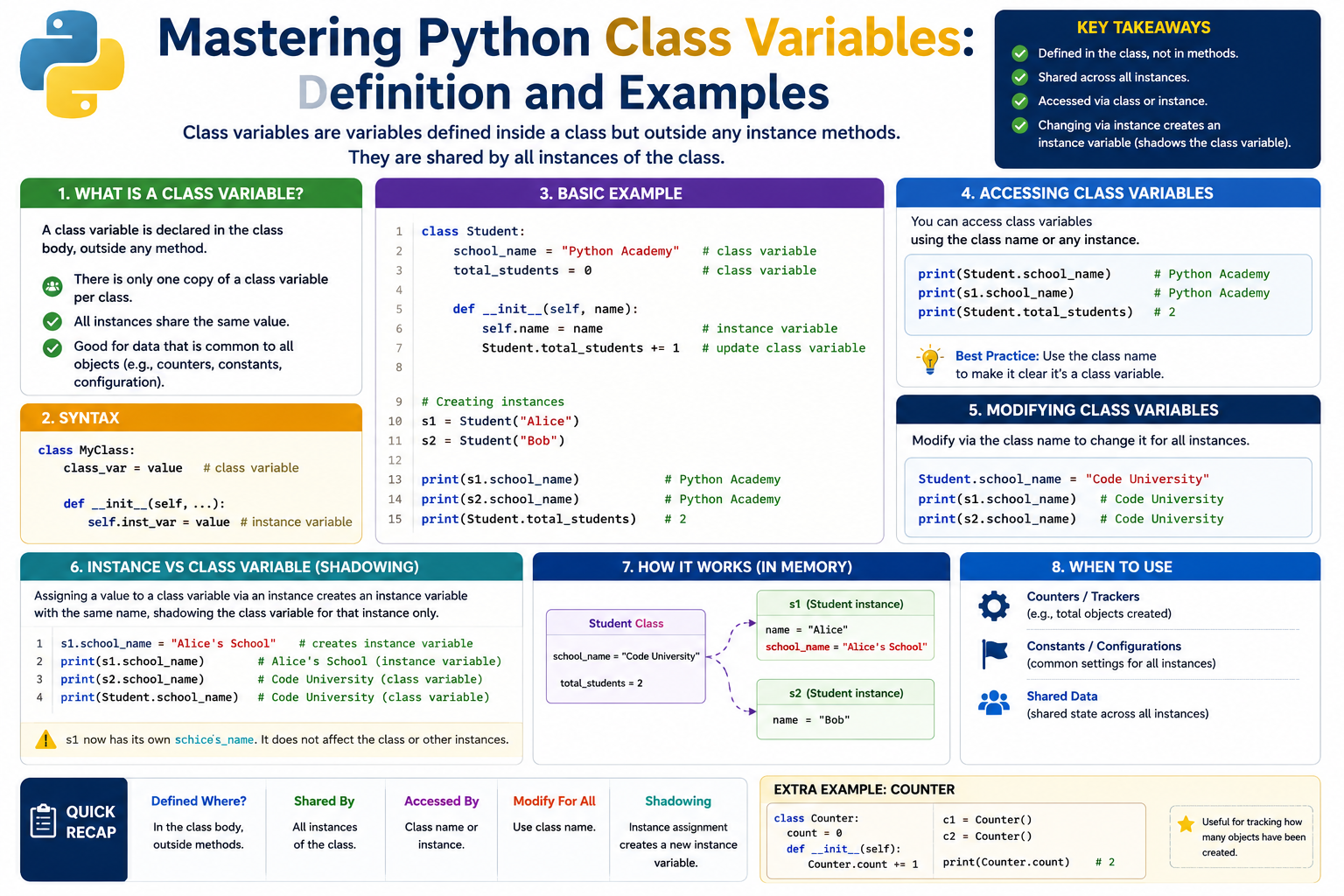
Class variables are variables that belong to the class itself rather than to any individual object. This means that all objects created from the class share the same value of a class variable. These variables are defined directly inside the class but outside any method. They are commonly used to represent properties that are common to all objects of that class.
How Class Variables Work Across Instances
When a class variable is defined, every object created from that class can access it. If the value of the class variable is changed, the change is reflected across all instances. This shared behavior makes class variables useful for storing information that should remain consistent for all objects. However, it also means that changing them requires careful consideration.
Shared Behavior and Memory Concept
Class variables are stored in a shared memory space associated with the class. Because of this, all objects reference the same value rather than creating individual copies. This reduces memory usage and ensures consistency across objects. However, it also introduces the risk of unintended changes affecting all instances, which can lead to unexpected behavior in larger programs.
Risks of Modifying Class Variables
One of the key challenges with class variables is the impact of modifying them. If a class variable is changed, it affects every object that relies on it. This can be useful in some cases but dangerous in others. For example, if a shared property is accidentally modified, it may disrupt the logic of the entire program. Therefore, developers must be cautious when working with class-level data.
Instance Variables Explained
Instance variables are variables that belong to a specific object rather than the class. Each object has its own copy of instance variables, allowing them to store unique data. Unlike class variables, instance variables are not shared between objects. This makes them ideal for storing information that differs from one object to another.
Difference Between Class and Instance Variables
The main difference between class variables and instance variables lies in their scope and behavior. Class variables are shared among all objects, while instance variables are unique to each object. Class variables are defined at the class level, whereas instance variables are defined inside methods using the object reference. Understanding this distinction is important for writing efficient and predictable code.
Practical Example with Dog Class
Consider a simple class representing a dog. The class may include a class variable such as the number of legs, which is common to all dogs. At the same time, each dog object can have its own name, breed, and age stored as instance variables. This combination allows shared characteristics to exist alongside unique attributes for each object.
How Initialization Works in Classes
When an object is created from a class, an initialization method is often used to assign values to instance variables. This method runs automatically when the object is created. It helps ensure that every object starts with properly defined data. Initialization is a key part of object creation and helps maintain consistency.
Accessing Data in Objects
Once an object is created, its data can be accessed using dot notation. This allows developers to retrieve or modify instance variables and access class variables through the object. This structured access ensures that data remains organized and easy to manage within programs.
Overriding Class Variables in Instances
Although class variables are shared, they can be overridden at the instance level. This means an individual object can have its own version of a variable that differs from the class value. However, this does not change the original class variable. It only affects that specific object, allowing flexibility when needed.
Why Class Variables Should Be Used Carefully
Class variables provide efficiency and shared behavior, but they must be used carefully. Since they are shared across all instances, any modification can have widespread effects. Developers should ensure that class variables represent truly shared data to avoid unintended consequences in program behavior.
Real-World Use Cases of Class Variables
Class variables are often used in scenarios where shared properties are needed. For example, they can represent configuration settings, default values, or constants that apply to all objects. They are also useful in tracking data that is common across all instances, such as counting how many objects have been created.
Best Practices for Using Class Variables
To use class variables effectively, developers should clearly distinguish between shared and unique data. Class variables should only store values that are meant to remain consistent across all instances. Instance variables should be used for data that varies between objects. This separation improves code clarity and reduces the risk of errors.
Common Mistakes Beginners Make
A common mistake is confusing class variables with instance variables. Beginners often modify class variables without realizing the impact on all objects. Another mistake is using class variables for data that should be unique to each object. Understanding scope and behavior helps avoid these issues.
Advanced Concept: Controlling Class Behavior
In more advanced programming, classes can be controlled using special mechanisms that define how they behave internally. These techniques allow developers to restrict changes to class variables or enforce specific rules. This adds an extra layer of control and helps maintain data integrity in complex systems.
Understanding the Relationship Between Data and Structure
Class and instance variables work together to create a structured approach to data management. Class variables provide shared structure, while instance variables provide individuality. This balance allows developers to build flexible and scalable applications that can handle both common and unique data effectively.
Deep Insight into Class Variables Behavior
Class variables in Python play a crucial role in how data is shared and managed across objects created from the same class. Unlike instance variables, which belong to individual objects, class variables are stored at the class level and are shared by every instance. When an attribute is accessed, Python first looks inside the instance; if it is not found, it checks the class, which is why class variables appear accessible through all objects. This shared nature makes them useful for storing common data like default settings or shared counters, but it also introduces risks because changing a class variable affects every instance unless it is shadowed at the object level. Additionally, when mutable types such as lists or dictionaries are used as class variables, modifications by one object can unintentionally impact others due to shared memory reference. Understanding this behavior is essential because it directly influences program design, memory efficiency, and data consistency. Proper use of class variables allows developers to build cleaner and more organized code, while misuse can lead to subtle bugs and unpredictable behavior across large applications.
Conclusion
Understanding class variables is essential for mastering object-oriented programming in Python. They provide a way to share data across all objects while maintaining a structured and efficient design. When used correctly, they simplify code and reduce redundancy. However, they must be handled with care due to their shared nature. Combining class variables with instance variables allows developers to create powerful and flexible programs that are both organized and scalable.