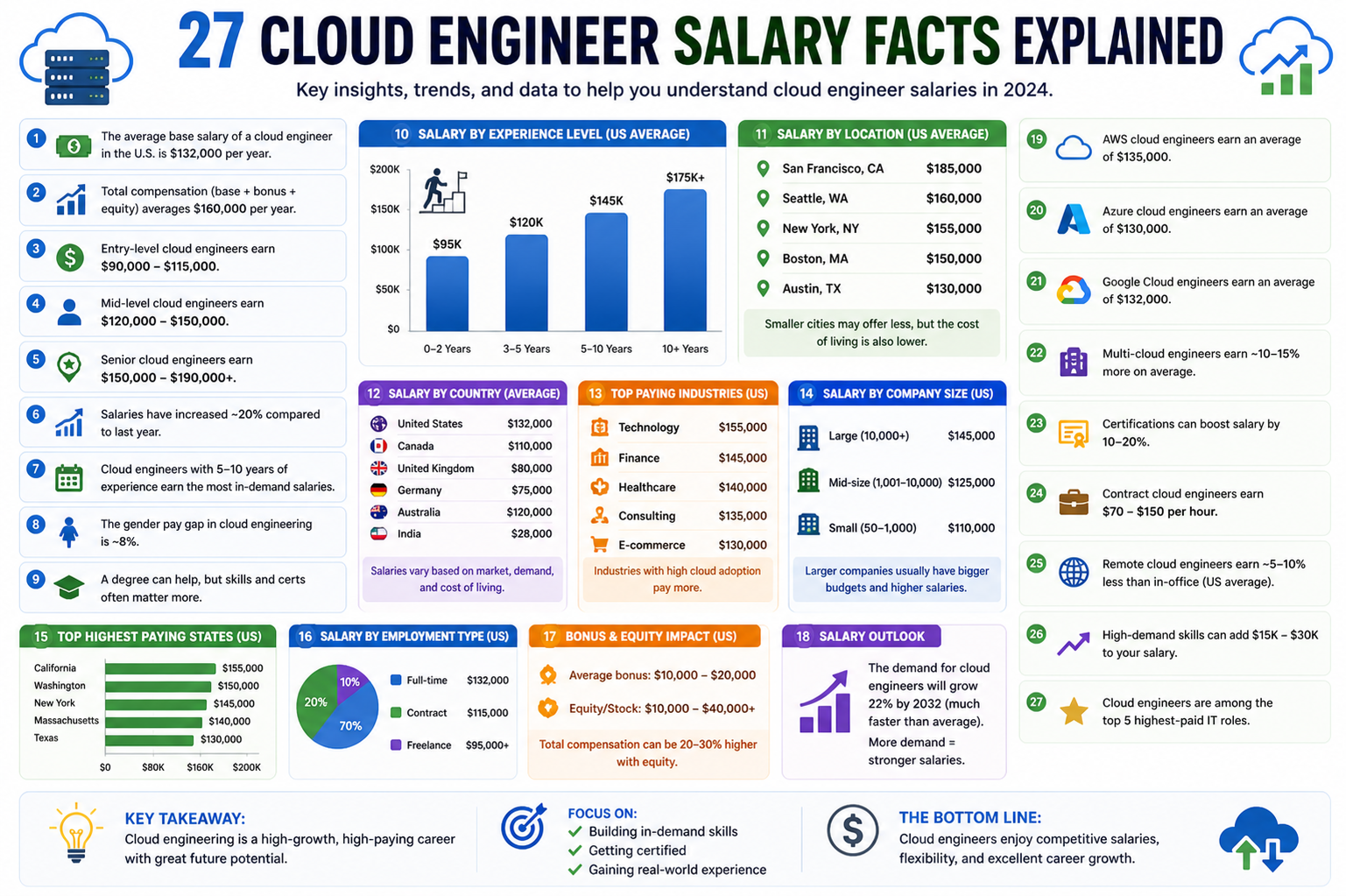
A cloud engineer is an information technology professional who designs, builds, configures, and maintains cloud-based systems for organizations. Their work revolves around helping businesses move their digital operations into cloud environments and ensuring those systems run efficiently, securely, and at scale. While the job title sounds specific, the reality is that the role varies widely from one organization to another, depending on infrastructure size, technical needs, and business goals. In some companies, a cloud engineer focuses heavily on migration projects, while in others the role is centered on optimization, maintenance, and automation of existing cloud systems.
Why the Cloud Engineer Role Is Hard to Define
One of the biggest challenges in understanding cloud engineering is the lack of a universal job description. The responsibilities of a cloud engineer can shift dramatically based on the company they work for. In smaller organizations, they may handle everything from server configuration to deployment pipelines. In larger enterprises, they might specialize in one narrow area such as cloud security, networking, or infrastructure automation. Because of this variability, the role often blends with other IT positions, making it difficult to clearly define where a cloud engineer’s responsibilities begin and end.
Core Purpose of Cloud Engineering Work
At its core, cloud engineering is about solving business problems using cloud infrastructure. This includes improving system performance, ensuring reliability, reducing operational costs, and enabling faster deployment of applications and services. Cloud engineers are often involved in moving legacy systems into modern cloud platforms, redesigning architectures for better scalability, and ensuring systems can handle increasing user demand. Their work is not just technical but also strategic, as it directly influences how efficiently a company operates in a digital environment.
Career Positioning and Growth Path
In many organizations, cloud engineering is considered a senior-level or terminal position within the infrastructure track. This means that while there are leadership roles above it, such as cloud architecture leadership or IT management, many professionals remain in hands-on engineering roles for most of their careers. This makes skill development and specialization especially important. Since the role does not always follow a strict upward ladder, engineers often increase their value by expanding technical expertise rather than simply moving into new job titles.
General Salary Expectations for Cloud Engineers
Cloud engineering is widely recognized as a high-paying field within information technology. On average, salaries typically fall into a strong six-figure range in many regions, reflecting both the demand for cloud skills and the complexity of the work involved. Entry-level professionals with limited experience tend to earn significantly less than highly experienced engineers who manage large-scale cloud environments. Mid-level professionals usually fall somewhere in between, with compensation influenced by technical skill, certifications, and industry experience.
Variability in Cloud Engineer Compensation
Despite strong overall salary averages, cloud engineer pay is not uniform. There is a wide gap between lower-end and higher-end salaries, even within the same country. This variation is influenced by factors such as company size, industry type, technical requirements, and regional demand for cloud professionals. Some organizations offer highly competitive compensation packages to attract experienced engineers, while others provide more modest salaries for entry-level or generalist roles. This inconsistency makes the field both highly rewarding and highly competitive.
Impact of Geography on Salary Differences
Location plays a major role in determining how much a cloud engineer earns. In regions with strong technology sectors and high demand for cloud expertise, salaries tend to be significantly higher. Urban tech hubs and economically advanced regions often offer the most competitive compensation packages due to competition among employers. On the other hand, areas with lower demand or smaller technology markets tend to offer lower average salaries. This geographical imbalance means that cloud engineers can sometimes increase their earning potential simply by relocating to a more competitive job market.
High-Cost Regions and Competitive Pay
In certain regions known for advanced technology industries, cloud engineers often receive some of the highest salaries in the field. These locations typically host large technology companies, cloud service providers, and startups that rely heavily on scalable infrastructure. Because of the high demand for skilled professionals, employers in these areas often compete aggressively for talent, driving salaries upward. However, these opportunities also come with increased competition, meaning only highly skilled or well-certified engineers tend to secure the top-paying roles.
Lower-Cost Regions and Entry-Level Opportunities
In contrast, regions with smaller technology ecosystems often offer lower average salaries for cloud engineers. These roles may still provide stable and respectable income, but they generally do not match the compensation levels found in major tech hubs. However, these areas can be valuable for early-career professionals who are looking to gain experience. In such markets, the barrier to entry is often lower, and competition may be less intense, allowing new engineers to build foundational skills before moving into higher-paying roles elsewhere.
Salary Gaps Within the Same Market
Even within the same city or region, cloud engineering salaries can vary widely. Some professionals earn significantly above the average due to advanced skills, specialized knowledge, or experience with complex systems. Others earn below average because of limited experience or generalist skill sets. This internal variation highlights how important personal capability is in determining compensation. Unlike some roles where pay is relatively standardized, cloud engineering rewards specialization and proven expertise.
What Drives Higher Salaries in Cloud Engineering
Several factors influence why some cloud engineers earn more than others. Deep expertise in specific cloud platforms, experience with large-scale infrastructure, and the ability to design secure and efficient systems are highly valued. Employers also place a premium on engineers who can automate processes, reduce operational costs, and improve system reliability. The ability to work across multiple cloud environments or manage hybrid systems further increases earning potential. Ultimately, salary growth is closely tied to how much value an engineer can deliver to an organization.
The Competitive Nature of High-Paying Roles
Higher-paying cloud engineering positions tend to be more competitive than lower-paying ones. As compensation increases, so does the expectation for advanced technical skills, certifications, and real-world experience. Many of the top roles require engineers to have a strong understanding of system architecture, security frameworks, and cloud-native development practices. This creates a competitive environment where professionals must continuously upgrade their skills to remain relevant and desirable in the job market.
Entry-Level vs Experienced Engineer Earnings
Entry-level cloud engineers typically begin with modest salaries compared to the overall range in the field. As they gain experience, their earning potential increases significantly. Mid-career engineers often see substantial salary growth as they take on more responsibility and specialize in specific cloud platforms or technologies. Senior engineers with extensive experience managing enterprise-level systems often command the highest salaries, reflecting their ability to handle complex and mission-critical infrastructure.
Industry Demand and Its Effect on Pay
Demand for cloud engineers continues to grow across multiple industries, not just in traditional technology companies. Sectors such as finance, education, healthcare, and retail increasingly rely on cloud infrastructure to support their operations. This widespread adoption of cloud technologies has increased competition for skilled engineers, which in turn drives salaries upward. As more organizations migrate to cloud-based systems, the need for experienced professionals continues to expand.
Salary Outlook and Career Opportunity
Cloud engineering remains one of the most financially rewarding career paths in information technology due to its critical role in modern digital infrastructure. The combination of strong demand, technical complexity, and business impact makes it a highly valued profession. However, earnings are not fixed and depend heavily on individual skill development, specialization, and career decisions. Engineers who continuously improve their expertise and adapt to new technologies are better positioned to access higher-paying opportunities.
Cloud Engineer Earnings
The field of cloud engineering offers a wide range of earning possibilities, shaped by geography, experience, specialization, and industry demand. While average salaries provide a general understanding, real-world compensation varies significantly based on individual capability and market conditions. This variability makes cloud engineering both challenging and opportunity-rich, especially for professionals willing to invest in continuous learning and technical growth.
Key Skills That Influence Cloud Engineer Earnings
A cloud engineer’s salary is strongly influenced by the technical skills they bring to the table. Beyond basic cloud knowledge, employers value professionals who can design scalable systems, troubleshoot complex infrastructure issues, and improve performance across distributed environments. Skills in networking, virtualization, containerization, and system automation often separate higher earners from average professionals. The ability to understand both development and operations workflows is also highly valued, as it allows engineers to bridge gaps between teams and streamline deployment processes. The broader and deeper the technical skill set, the greater the likelihood of earning a higher salary in competitive environments.
Importance of Cloud Platforms in Salary Growth
Cloud platforms form the foundation of most cloud engineering roles, and expertise in major providers has a direct impact on salary levels. Employers typically prioritize engineers who can confidently work within the platforms already used in their infrastructure. This familiarity reduces onboarding time and increases efficiency, which makes skilled professionals more valuable. Engineers who specialize in widely used platforms often have access to a broader range of job opportunities, and this increased demand naturally drives compensation higher. The depth of understanding within a specific cloud environment is often just as important as general cloud knowledge.
Working with AWS Ecosystem and Its Impact on Pay
Experience with large-scale cloud ecosystems significantly increases earning potential, especially when working with widely adopted platforms. Engineers who understand how to design and manage infrastructure within such ecosystems are often responsible for critical business operations. This includes managing compute resources, storage systems, databases, and security configurations. Because these environments are complex and widely used across industries, professionals with strong practical knowledge are highly sought after. Their ability to manage large distributed systems and ensure uptime reliability directly contributes to higher salary brackets.
Microsoft Azure Skills and Enterprise Value
Enterprise organizations frequently rely on integrated cloud ecosystems that connect productivity tools, communication platforms, and cloud infrastructure. Engineers who understand how these systems interact are especially valuable in corporate environments. The ability to manage identity systems, automate workflows, and maintain secure cloud environments adds significant value. Many large organizations prefer engineers who can seamlessly integrate cloud services with existing enterprise software, making this skill set highly profitable. As a result, professionals with strong experience in enterprise-focused cloud environments often see steady salary growth.
Google Cloud Expertise and Advanced Opportunities
Cloud engineers with expertise in data-driven environments and advanced computing systems often find strong opportunities in specialized industries. Platforms that emphasize data processing, machine learning, and analytics require engineers who can manage complex workloads efficiently. Professionals who understand how to optimize performance in these environments are often rewarded with higher compensation. These roles typically involve handling large datasets, designing scalable pipelines, and supporting advanced computational tasks. Because these responsibilities require both technical depth and analytical thinking, they are often among the better-paid positions in the field.
Why Multi-Cloud Knowledge Increases Salary Potential
Engineers who can work across multiple cloud platforms are often more valuable than those who specialize in only one. Many organizations now adopt multi-cloud strategies to improve reliability, flexibility, and cost efficiency. This requires engineers who understand how different systems interact and how workloads can be distributed across platforms. The ability to design and manage hybrid environments is considered a premium skill because it reduces dependency on a single provider. As a result, professionals with multi-cloud expertise often command higher salaries due to their adaptability and broader technical scope.
Role of Automation and DevOps in Cloud Careers
Automation plays a major role in modern cloud engineering, and professionals who understand how to automate infrastructure processes are highly valued. Continuous integration and continuous delivery practices help organizations deploy applications faster and with fewer errors. Engineers who can build automated pipelines, manage deployment workflows, and reduce manual intervention significantly improve system efficiency. This reduces operational costs and increases reliability, which makes such professionals more desirable. As automation becomes a core part of cloud environments, engineers with DevOps skills often see stronger salary growth.
Security Skills as a High-Value Salary Booster
Cloud security is one of the most critical aspects of modern IT infrastructure. Engineers who can design secure environments, manage access controls, and prevent data breaches are in extremely high demand. Security responsibilities often include monitoring threats, implementing encryption systems, and ensuring compliance with industry standards. Because security failures can have severe financial and reputational consequences, companies are willing to pay more for professionals who can reduce these risks. Strong security expertise is often one of the fastest ways for cloud engineers to move into higher salary brackets.
Importance of Infrastructure as Code
Modern cloud environments rely heavily on automated infrastructure management. Engineers who understand how to define infrastructure using code can deploy systems faster, reduce errors, and maintain consistency across environments. This approach allows organizations to scale efficiently and respond quickly to changes in demand. Professionals who master these tools are able to manage complex environments with less manual effort, making them highly valuable. This skill not only improves efficiency but also significantly increases earning potential in advanced cloud engineering roles.
Certifications as a Career Multiplier
Certifications play an important role in validating cloud engineering skills. They provide proof that an individual has formal training and practical understanding of specific cloud technologies. Employers often use certifications as a way to filter candidates for technical roles. While experience remains important, certifications can accelerate career growth by opening doors to better job opportunities. They are especially useful for professionals transitioning into cloud engineering or aiming to specialize in a particular platform. In many cases, certifications directly contribute to higher starting salaries.
Entry-Level Certifications and Their Benefits
Early-stage certifications are often designed to build foundational knowledge of cloud systems. They help new professionals understand core concepts such as cloud storage, networking, security basics, and deployment principles. These certifications are particularly valuable for individuals entering the field, as they provide structured learning and industry recognition. While they may not immediately lead to the highest salaries, they significantly improve job prospects and serve as a stepping stone toward more advanced roles. Over time, they help professionals build the experience needed for higher-paying positions.
Advanced Certifications and High Salary Roles
Advanced certifications are typically associated with experienced professionals who are ready to take on complex responsibilities. These certifications focus on architecture design, system optimization, and advanced cloud deployment strategies. Professionals who earn them are often considered for senior-level positions where they are responsible for large-scale infrastructure decisions. These roles require deep technical understanding and problem-solving ability, which is why they are often associated with higher compensation. Advanced certifications are widely recognized as a strong indicator of expertise in the field.
Why Companies Value Certified Cloud Engineers
Organizations value certified professionals because certifications reduce uncertainty about skill levels. Hiring managers often rely on certifications as proof that a candidate understands specific tools and technologies. This is especially important in cloud environments where mistakes can lead to system downtime or security vulnerabilities. Certified engineers are often trusted with more responsibility earlier in their roles, which can lead to faster career progression. As companies continue to adopt cloud technologies, the demand for certified professionals continues to grow steadily.
Industry Demand for Cloud Talent
Cloud engineering skills are in demand across a wide range of industries. Businesses in finance, healthcare, education, retail, and technology all rely heavily on cloud infrastructure to operate efficiently. This widespread adoption has created a strong job market for cloud professionals. As organizations continue to modernize their systems, the need for skilled engineers grows. This demand has a direct impact on salary levels, as companies compete to attract and retain qualified talent. The broader the industry adoption, the more stable and rewarding the career becomes.
How Experience Changes Salary Levels
Experience plays a major role in determining how much a cloud engineer earns. Early-career professionals typically focus on learning and performing basic tasks, while mid-level engineers take on more responsibility in system design and maintenance. Senior engineers are often responsible for entire cloud infrastructures and strategic decision-making. With each level of experience, the complexity of tasks increases, as does compensation. Employers place high value on proven experience because it reduces risk and improves system reliability. Over time, consistent experience leads to significant salary growth.
Skills and Salary Growth
The earning potential of a cloud engineer is closely tied to their technical skills, certifications, platform knowledge, and real-world experience. Professionals who continuously develop their abilities and adapt to evolving technologies are more likely to access higher-paying opportunities. As cloud systems become more central to business operations, the value of skilled engineers continues to rise across industries and regions.
AWS Cloud Ecosystem and Its Role in Career Growth
One of the most influential areas in cloud engineering is working within large cloud ecosystems that provide a wide range of services for computing, storage, networking, and security. Engineers who understand how these systems interact gain a strong advantage in the job market. These environments are widely used across industries because they allow companies to scale operations efficiently and deploy applications quickly. A cloud engineer who can design, manage, and optimize workloads within such ecosystems becomes highly valuable, as they directly contribute to system reliability and business continuity.
Deep Understanding of Cloud Service Integration
Modern cloud environments are not built around a single service but instead rely on interconnected tools working together. Engineers must understand how different components such as virtual machines, databases, storage systems, and identity management services communicate with each other. This integration is critical for building stable and efficient systems. Professionals who can design architectures that ensure smooth interaction between services are often considered highly skilled. This capability reduces system failures and improves performance, which directly impacts salary levels and job opportunities.
Microsoft Cloud Environment in Enterprise Systems
Large organizations often rely on integrated digital ecosystems where communication tools, productivity software, and cloud infrastructure are tightly connected. Engineers working in such environments must understand how these systems function together. Managing cloud resources in enterprise settings often involves handling identity services, user permissions, and secure access to internal tools. This requires both technical expertise and an understanding of organizational workflows. Engineers who can maintain stability in these environments are highly valued because they ensure smooth business operations across departments.
Data-Driven Cloud Platforms and Advanced Processing
Some cloud environments are heavily focused on data processing, analytics, and large-scale computation. Engineers working in these systems are responsible for managing high volumes of information efficiently. This includes designing pipelines that move data between storage and processing systems, optimizing performance for large workloads, and ensuring scalability. These roles often require strong analytical thinking and problem-solving skills. Because businesses rely on data for decision-making, engineers who can support these systems effectively are rewarded with higher compensation.
Machine Learning and Artificial Intelligence in Cloud Engineering
Advanced cloud platforms increasingly support artificial intelligence and machine learning workloads. Engineers in this space work with systems that require high computational power and efficient data handling. Their responsibilities include setting up environments for model training, managing resource allocation, and ensuring that systems can handle complex processing tasks. This area of cloud engineering is highly specialized and often associated with higher salaries due to its technical complexity and growing demand across industries.
Hybrid Cloud and Multi-Environment Management
Many organizations do not rely on a single cloud provider but instead use a combination of private and public cloud environments. Engineers working in such setups must ensure that systems operate seamlessly across different platforms. This requires knowledge of networking, security policies, and system interoperability. Managing hybrid environments is more complex than working within a single ecosystem, which increases the value of engineers with this expertise. Professionals who can handle multi-environment systems are often positioned for senior-level roles with higher pay.
Automation in Large-Scale Cloud Systems
Automation is a key factor in modern cloud engineering, especially in large-scale systems where manual management is not practical. Engineers design automated workflows to handle deployment, scaling, monitoring, and recovery processes. This reduces human error and increases efficiency. Automation tools allow organizations to respond quickly to demand changes and system issues. Engineers who can build and maintain these automated systems are highly valued because they improve operational reliability and reduce costs.
Infrastructure Design and System Architecture Skills
Cloud engineers often participate in designing system architectures that determine how applications and services are deployed. This involves planning how different components interact, ensuring scalability, and maintaining security standards. Strong architectural skills allow engineers to create systems that can handle high traffic and complex workloads. These responsibilities are often associated with senior positions, where decision-making has a direct impact on system performance and business outcomes. As a result, architecture-focused engineers typically earn higher salaries.
Security Management in Cloud Systems
Security is one of the most important responsibilities in cloud engineering. Engineers must ensure that data is protected, access is controlled, and systems are resistant to external threats. This includes configuring encryption, managing authentication systems, and monitoring suspicious activity. Because security failures can have serious consequences, companies place a high value on engineers who specialize in this area. Strong security skills often lead to higher-paying roles due to the critical nature of the work.
Performance Optimization and System Efficiency
Cloud engineers are also responsible for improving system performance and reducing inefficiencies. This includes optimizing resource usage, reducing latency, and improving response times for applications. Engineers analyze system behavior and make adjustments to ensure smooth operation under varying loads. Performance optimization requires both technical knowledge and analytical skills. Professionals who excel in this area help organizations save costs and improve user experience, making them highly valuable in the job market.
Monitoring and Reliability Engineering
Maintaining system reliability is a key part of cloud engineering. Engineers implement monitoring tools that track system performance, detect issues, and alert teams when problems occur. This helps prevent downtime and ensures continuous service availability. Reliability engineering also involves designing systems that can recover quickly from failures. Engineers who specialize in maintaining uptime and system stability are essential to modern businesses, and their expertise is often rewarded with higher compensation.
Scalability and Growth Management
One of the primary advantages of cloud systems is scalability, which allows resources to expand or contract based on demand. Engineers design systems that can handle sudden increases in traffic without performance issues. This involves planning resource allocation and ensuring that systems remain efficient under pressure. Scalability is crucial for businesses experiencing growth or fluctuating demand. Engineers who can design scalable systems play a key role in supporting business expansion and are often compensated accordingly.
Cost Optimization in Cloud Infrastructure
Managing cloud costs is another important responsibility for engineers. Organizations aim to balance performance with affordability, ensuring that they do not overspend on unused resources. Engineers analyze usage patterns and adjust system configurations to reduce unnecessary expenses. Cost optimization requires both technical knowledge and strategic thinking. Professionals who can reduce operational costs while maintaining performance are highly valued, as they directly contribute to financial efficiency.
Collaboration Between Development and Operations Teams
Cloud engineers often work closely with software developers, security teams, and system administrators. This collaboration ensures that applications are deployed efficiently and infrastructure is aligned with development needs. Engineers who understand both development and operational perspectives can bridge communication gaps and improve workflow efficiency. This ability to work across teams enhances productivity and makes engineers more valuable within organizations.
Career Advancement Through Specialization
Specialization is one of the most effective ways to increase salary potential in cloud engineering. Instead of remaining generalists, many professionals focus on specific areas such as security, architecture, automation, or data systems. Specialization allows engineers to develop deep expertise that is difficult to replace. Employers are often willing to pay more for specialized knowledge because it directly addresses complex technical challenges. This makes focused skill development an important strategy for career growth.
Advanced Cloud Engineering Skills
Advanced cloud engineering roles require a combination of technical depth, practical experience, and strategic thinking. Engineers who master platform integration, automation, security, and system architecture are positioned for higher-paying opportunities. As cloud systems continue to evolve, the demand for highly skilled professionals continues to increase, making this field both competitive and rewarding.
Higher Education Sector and Cloud Engineering Demand
Educational institutions have become increasingly dependent on cloud systems to manage academic records, student data, research workloads, and online learning platforms. Cloud engineers in this sector often work on migrating legacy systems into modern cloud environments, ensuring that sensitive information is stored securely and accessed efficiently. Universities and colleges also require scalable systems to handle large numbers of students, especially during peak periods such as admissions and examinations. Engineers who can design reliable and cost-effective cloud solutions for these environments play an important role in digital transformation within education.
Cloud Infrastructure in Academic Systems
Cloud engineering in education is not limited to storage or basic applications. It also involves building platforms for virtual classrooms, research computing, and collaboration tools. These systems must support thousands of users simultaneously while maintaining performance and security. Engineers must ensure that data integrity is maintained and that systems remain available at all times. Because educational institutions often operate under budget constraints, engineers are also expected to optimize resources efficiently. This combination of technical responsibility and cost awareness makes the role both challenging and impactful.
Financial Industry Dependence on Cloud Systems
The financial sector relies heavily on cloud infrastructure to process transactions, manage accounts, and store sensitive financial data. Cloud engineers in this industry are responsible for building secure and highly reliable systems that can handle large volumes of real-time data. Even minor system failures can lead to significant financial losses, so reliability and security are top priorities. Engineers must design systems that can process transactions quickly while ensuring compliance with strict regulatory standards. This high level of responsibility often results in strong compensation packages.
Security and Compliance in Financial Cloud Systems
Security in financial cloud environments is more complex than in many other industries. Engineers must implement strict access controls, encryption methods, and continuous monitoring systems to protect sensitive information. Compliance with financial regulations is also a major requirement, meaning engineers must ensure that systems meet legal and industry standards. This includes maintaining audit logs, securing data transfers, and preventing unauthorized access. Because of the high stakes involved, professionals with expertise in financial cloud security are often among the highest paid in the field.
High-Speed Data Processing in Finance
Financial institutions require cloud systems that can process data extremely quickly. Engineers must design architectures capable of handling high-frequency transactions, real-time analytics, and rapid decision-making systems. Performance optimization is critical, as even small delays can impact trading, payments, and financial reporting. Engineers working in this environment must carefully balance speed, accuracy, and reliability. Those who can successfully manage these demands are highly valued for their ability to maintain system efficiency under pressure.
Retail and E-Commerce Cloud Requirements
Retail and online commerce industries rely on cloud infrastructure to manage product catalogs, customer data, payment systems, and logistics operations. Cloud engineers in this space are responsible for ensuring that systems can handle fluctuating traffic, especially during high-demand periods. Scalability is essential, as online platforms must remain stable even during sudden spikes in user activity. Engineers must also ensure that customer data is securely stored and that transactions are processed without errors. The ability to maintain smooth user experiences directly influences business success.
Healthcare Industry Cloud Adoption
Healthcare organizations increasingly depend on cloud systems to store patient records, manage hospital operations, and support medical research. Cloud engineers working in healthcare must prioritize data privacy and compliance with strict regulations. Systems must be designed to ensure that sensitive health information is protected while remaining accessible to authorized personnel. Engineers may also support telemedicine platforms and diagnostic tools that rely on cloud computing. Because healthcare data is highly sensitive, professionals in this field must maintain extremely high security standards.
Cost Management in Cloud Engineering Roles
One of the important responsibilities of cloud engineers is managing infrastructure costs effectively. Cloud systems can become expensive if not properly optimized, so engineers must monitor usage patterns and adjust resources accordingly. This includes scaling systems based on demand, removing unused resources, and selecting cost-efficient configurations. Effective cost management helps organizations reduce unnecessary expenses while maintaining performance. Engineers who excel in this area contribute directly to financial efficiency and are often rewarded with higher compensation.
Performance Optimization Across Industries
Regardless of industry, cloud engineers are expected to ensure that systems perform efficiently under varying workloads. This includes reducing latency, improving response times, and ensuring that applications remain stable during peak usage. Performance optimization requires continuous monitoring and adjustment of system resources. Engineers must analyze system behavior and make improvements based on real-time data. This ongoing responsibility ensures that cloud environments remain efficient and reliable across different business conditions.
Automation and Workflow Efficiency
Automation continues to play a major role in improving cloud operations. Engineers design automated systems that handle deployment, scaling, monitoring, and recovery processes. This reduces manual intervention and increases system reliability. Automation also helps organizations respond quickly to changes in demand or system failures. Engineers who can build and maintain these automated workflows significantly improve operational efficiency. As automation becomes more advanced, it continues to increase the value of skilled cloud professionals.
Infrastructure Reliability and System Stability
Maintaining system stability is one of the most important responsibilities of a cloud engineer. Engineers must ensure that systems remain available even in the event of failures or unexpected traffic spikes. This involves designing redundant systems, implementing failover mechanisms, and monitoring system health continuously. Reliable infrastructure ensures that businesses can operate without interruptions. Engineers who specialize in system reliability are highly valued because they reduce downtime and improve user trust.
Scalability Challenges in Modern Cloud Systems
Scalability is a core advantage of cloud computing, but it also presents technical challenges. Engineers must design systems that can grow efficiently without losing performance. This involves planning resource distribution, optimizing workloads, and ensuring that systems can handle increased demand. Scalability is especially important for growing businesses and high-traffic applications. Engineers who can successfully design scalable systems play a key role in supporting long-term business growth.
Career Growth Through Continuous Learning
Cloud engineering is a rapidly evolving field, and professionals must continuously update their skills to remain competitive. New tools, platforms, and technologies are introduced regularly, requiring engineers to adapt quickly. Continuous learning allows professionals to stay relevant and increase their earning potential. Engineers who invest in ongoing education and skill development are more likely to advance into higher-paying roles. Staying updated with industry trends is essential for long-term career success.
Specialization and Long-Term Salary Growth
Specializing in a particular area of cloud engineering can significantly increase long-term earning potential. Engineers who focus on areas such as security, architecture, automation, or data systems often develop deep expertise that is highly valued by employers. Specialization allows professionals to solve complex problems and take on advanced responsibilities. This depth of knowledge often leads to higher salaries and better career opportunities compared to generalist roles.
Conclusion
Cloud engineering stands out as one of the most dynamic and opportunity-rich career paths in modern technology. The role itself is broad, flexible, and often shaped by the organization’s size, industry, and technical maturity. Because of this flexibility, cloud engineers can find themselves working on everything from infrastructure design and system optimization to security management and large-scale migrations. This wide scope is also what makes the profession difficult to define, yet highly valuable across different business environments.
One of the most important takeaways is that salary in this field is not fixed or predictable. Instead, it is shaped by a combination of skills, certifications, experience, and geographic location. Engineers who invest in deep technical knowledge, especially in areas like automation, security, system architecture, and multi-platform cloud environments, tend to move into significantly higher earning brackets over time. The ability to solve complex problems and improve system efficiency directly translates into financial value for employers, which is reflected in compensation.
Another key factor is industry demand. Cloud engineering is no longer limited to traditional technology companies. It has become essential in finance, education, healthcare, retail, and many other sectors. As more industries continue to migrate toward cloud-based systems, the demand for skilled professionals continues to grow. This expansion not only creates more job opportunities but also increases competition among employers, often leading to better salary offerings for experienced engineers.
Certifications and continuous learning also play a crucial role in shaping long-term career success. While experience remains a major factor, certifications help validate expertise and open doors to more advanced roles. In a field that evolves rapidly, staying updated with new tools and technologies is essential. Professionals who consistently upgrade their skills are more likely to remain competitive and progress into higher-paying positions.
Ultimately, cloud engineering rewards adaptability, technical depth, and continuous growth. Those who treat it as a constantly evolving discipline rather than a fixed job role are better positioned to build strong, long-term careers. With increasing reliance on cloud infrastructure across the global economy, the value of skilled cloud engineers is expected to remain strong, making it a stable yet highly competitive field for the future.