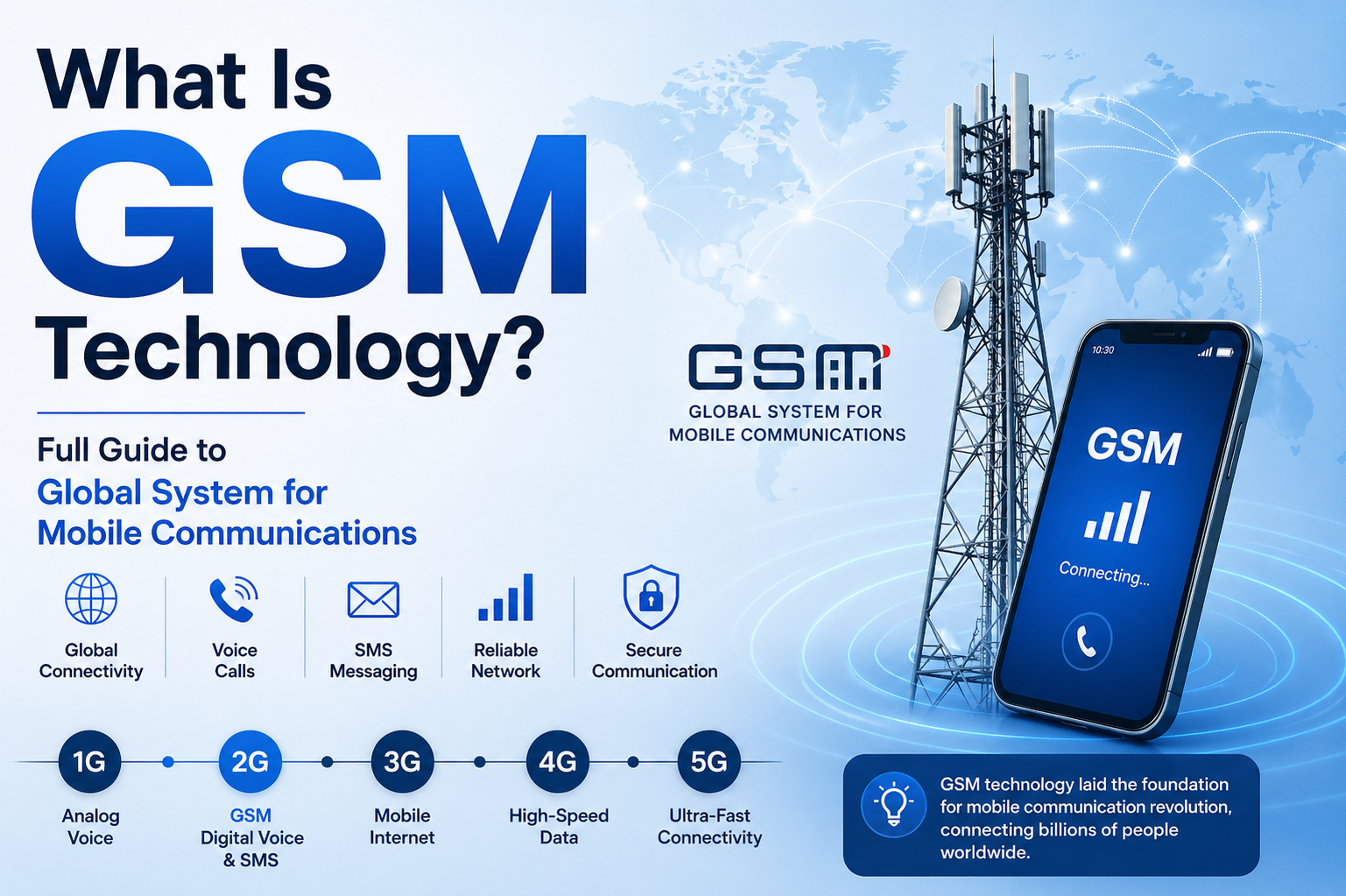
Global System for Mobile Communications is a widely used mobile communication technology that allows users to make calls, send messages, and access basic data services across different networks and countries. It established one of the first truly global standards for mobile communication, solving a major problem that existed in the early days of mobile networks. At that time, different countries developed their own communication systems, which were often incompatible with each other. This meant that a mobile phone designed for one country would not function in another, creating limitations for both users and service providers. GSM eliminated these barriers by introducing a unified system that could operate seamlessly across borders.
GSM also brought important improvements in security and reliability. It introduced authentication systems that verify the identity of users and devices before granting network access. This helped prevent unauthorized usage and added a layer of trust to mobile communication. In addition, GSM implemented over-the-air encryption, which protects voice calls and data transmissions from interception. While these features were highly advanced when GSM was first introduced, some of them have become less secure over time due to advancements in technology and the emergence of more sophisticated threats.
Origins and Development of GSM
The idea behind GSM began in the early 1980s when the rapid growth of mobile communication highlighted a serious issue: the lack of standardization. Different countries had developed their own systems, leading to fragmentation and inefficiency. Recognizing the need for a unified approach, the European Conference of Postal and Telecommunications Administrations initiated efforts to create a common standard that could be adopted across multiple regions.
This initiative was later managed by the European Telecommunications Standards Institute, which played a key role in developing and formalizing the GSM specifications. After years of collaboration and technical development, GSM services were officially launched in 1991. Although it started as a European project, its benefits quickly became evident, leading to rapid global adoption. Countries around the world began implementing GSM networks, making it the dominant mobile communication standard.
One of the main reasons for GSM’s success was its open standard approach. Unlike proprietary systems, GSM allowed manufacturers and network providers to build equipment based on publicly available specifications. This openness encouraged innovation and competition, resulting in better technology and more affordable devices for consumers. As more companies entered the market, the availability of GSM-compatible devices increased, further accelerating its global spread.
How GSM Technology Works
GSM operates through a well-organized architecture that divides tasks among different subsystems. This structure ensures efficient communication and reliable service delivery. The two primary components of a GSM network are the Base Station Subsystem and the Network Switching Subsystem.
The Base Station Subsystem is responsible for managing radio communication between mobile devices and the network. It includes base transceiver stations, commonly referred to as cell towers, which transmit and receive signals from mobile phones. These towers cover specific geographic areas known as cells. Each cell is managed by controllers that coordinate multiple towers, ensuring smooth communication and efficient use of radio frequencies. Voice codecs within this subsystem convert speech into digital signals, allowing it to be transmitted efficiently over the network.
The Network Switching Subsystem handles the core operations behind the scenes. It manages call routing, user data, and network connectivity. High-capacity switches direct calls to their intended destinations, whether within the same network or to external systems such as landlines and other carriers. Databases keep track of the location of mobile devices as they move between cells, ensuring that calls and messages are delivered accurately. Gateway systems enable communication between GSM networks and other types of networks, creating a seamless experience for users.
Global Adoption and Key Advantages
GSM became the leading global mobile communication standard due to several key advantages. One of its most important features is the use of Subscriber Identity Module (SIM) cards. These small, removable chips store user information and authentication data, allowing users to switch devices or carriers easily by inserting the SIM card into another phone. This flexibility has made GSM highly convenient for users and contributed significantly to its widespread adoption.
Another major advantage of GSM is international roaming. Because GSM networks follow a common standard, users can access mobile services in different countries without needing to change their devices. This has been particularly beneficial for travelers and businesses that operate internationally, as it ensures continuous connectivity across borders.
GSM also uses efficient methods for managing radio frequencies, allowing multiple users to share the same communication channels without interference. This efficient use of resources enables networks to support a large number of users simultaneously. As mobile communication demand grew, this capability became essential for maintaining service quality and reliability.
The open standard nature of GSM further enhanced its success. By allowing multiple manufacturers to develop compatible equipment, GSM created a competitive environment that drove innovation and reduced costs. This led to the rapid development of mobile devices and network infrastructure, making mobile communication more accessible to people around the world.
Planning and Preparing GSM Deployment
Deploying a GSM network requires careful planning and detailed analysis. The first step is to evaluate the coverage area and estimate user demand. Factors such as population density, geographic conditions, and usage patterns must be considered to design an effective network. Urban areas with high population density require more base stations to handle increased traffic, while rural areas may focus on wider coverage with fewer installations.
Understanding peak usage times is also important. Different areas experience varying levels of demand depending on the time of day. Business districts typically see higher usage during working hours, while residential areas may experience increased activity in the evenings. Special events, transportation hubs, and daily commuting patterns can create temporary spikes in network traffic. To ensure reliable performance, networks are often designed with additional capacity to handle these fluctuations.
Selecting the right hardware is another crucial aspect of deployment. Base stations must be equipped with reliable power systems, including backup batteries and generators, to ensure continuous operation during outages. Environmental controls such as cooling systems help protect equipment from extreme temperatures. Protective measures like surge protection and secure enclosures safeguard infrastructure from environmental damage and unauthorized access.
Antenna placement plays a significant role in network performance. Antennas must be positioned to provide optimal coverage and minimize interference. A clear line of sight to the target area is essential for effective signal transmission. Proper mounting and alignment ensure stability and consistent performance, even under challenging environmental conditions.
Installation and Physical Infrastructure
The installation process is critical to the success of a GSM network. Base stations are typically placed on elevated structures such as towers or tall buildings to maximize coverage. However, accessibility for maintenance is also important, as regular inspections and repairs are necessary to maintain network performance.
Environmental protection is a key consideration during installation. Equipment must be shielded from weather conditions such as rain, humidity, and extreme temperatures. In coastal regions, exposure to salt can cause corrosion, making it important to use durable materials and protective coatings. Proper grounding systems are essential to protect equipment from lightning and electrical surges.
A reliable power infrastructure is necessary to keep the network operational. This includes power conditioning systems, battery backups, and generators to handle outages. Automatic switching systems ensure a smooth transition between power sources, minimizing service disruptions.
Attention to detail during installation helps prevent future issues. Even small errors, such as misaligned antennas or loose connections, can lead to coverage gaps and reduced performance. By following best practices and using high-quality equipment, network operators can ensure long-term reliability.
Testing and Performance Verification
After installation, thorough testing is conducted to ensure that the network operates correctly. Each component is tested individually and as part of the overall system. This helps identify and resolve issues before the network becomes fully operational.
Field testing provides valuable insights into real-world performance. Drive testing measures signal strength and coverage across different areas, while walk testing evaluates indoor signal quality. Load testing assesses the network’s ability to handle high traffic volumes, ensuring that it can support peak demand. Interference analysis helps identify potential sources of signal disruption, allowing for corrective measures to be implemented.
Security testing is also essential. GSM networks support various encryption methods, each offering different levels of protection. Stronger encryption provides better security, while older methods may be more vulnerable. Verifying the use of secure encryption ensures that user data is protected.
Performance metrics such as call quality, connection stability, and data throughput are carefully monitored during testing. These measurements help operators understand how the network performs under different conditions and make necessary adjustments to improve service quality.
GSM Network Configuration
Configuring a Global System for Mobile Communications network involves much more than simply installing hardware and turning on equipment. It requires careful coordination of multiple parameters to ensure smooth communication, efficient resource usage, and reliable service delivery. Once the physical infrastructure is in place, the next step is to define how the network behaves under different conditions. This includes setting frequencies, managing signal strength, controlling how devices move between cells, and ensuring that calls and data are routed correctly.
One of the most important aspects of configuration is frequency planning. GSM networks operate within specific frequency bands, and each cell must be assigned frequencies in a way that minimizes interference. If neighboring cells use the same or overlapping frequencies without proper planning, it can lead to dropped calls, poor voice quality, and unstable connections. To avoid this, engineers design frequency reuse patterns that allow efficient use of the available spectrum while maintaining signal clarity. This process becomes more complex in densely populated areas where many cells are located close to each other.
Power control is another critical factor. Each base station must transmit signals at the right power level to ensure adequate coverage without causing interference with other cells. Too much power can overlap signals into neighboring cells, while too little power can create coverage gaps. Balancing these levels requires continuous adjustment based on real-world conditions, including user density and environmental factors.
Handover configuration is equally important in GSM networks. As users move from one cell to another, the network must transfer the connection seamlessly without interrupting the call. This process, known as handover, depends on carefully defined thresholds such as signal strength and quality. If these thresholds are not set correctly, users may experience dropped calls or unnecessary switching between cells. Efficient handover management ensures a smooth user experience, especially in high-mobility scenarios like traveling in vehicles.
Timing synchronization is another essential element. GSM networks rely on precise timing to coordinate communication between multiple devices sharing the same frequencies. Any mismatch in timing can lead to interference and reduced efficiency. Modern equipment includes advanced tools to maintain accurate synchronization across the network, ensuring consistent performance.
Security Configuration in GSM Networks
Security has always been a key component of GSM technology, although its effectiveness has evolved over time. Early GSM systems introduced authentication and encryption mechanisms that were considered highly secure when first implemented. These systems were designed to protect users from unauthorized access and to ensure the confidentiality of communications.
Authentication in GSM networks involves verifying the identity of a device before allowing it to connect. This process typically relies on SIM card validation, where the network checks the credentials stored on the SIM against its own database. Additional checks, such as verifying the device identity through unique identifiers, help prevent fraudulent activities. These mechanisms work together to ensure that only authorized users can access the network.
Encryption is used to protect communication between the mobile device and the network. GSM supports multiple encryption algorithms, each offering different levels of security. Some networks use stronger encryption methods that provide better protection against interception, while others may still rely on older algorithms that are more vulnerable to attacks. Choosing the appropriate encryption method is essential for maintaining user privacy and network integrity.
Monitoring plays a vital role in maintaining security. Network operators must continuously watch for unusual patterns that could indicate potential threats. Repeated authentication failures, unexpected traffic spikes, or suspicious connection requests can signal attempts to breach the system. By identifying these patterns early, operators can take corrective actions to prevent security incidents.
Fraud detection systems are also an important part of GSM security. These systems analyze network activity to identify abnormal behavior, such as unauthorized usage or cloning of SIM cards. By detecting and addressing these issues promptly, operators can protect both their infrastructure and their users.
Performance Optimization and Tuning
Achieving optimal performance in a GSM network requires ongoing adjustments and fine-tuning. Even after careful planning and configuration, real-world conditions can vary, making it necessary to adapt the network to changing demands. Performance optimization focuses on improving coverage, enhancing call quality, and ensuring efficient use of resources.
Power levels are often adjusted to balance coverage and interference. In areas with high user density, reducing power in certain cells can help minimize interference and improve overall performance. In contrast, increasing power in low-coverage areas can extend signal reach and reduce dead zones. These adjustments are typically based on data collected from network monitoring tools.
Handover parameters also require continuous tuning. By analyzing handover success rates and call drop statistics, operators can refine thresholds to improve performance. Proper tuning ensures that users remain connected without unnecessary interruptions, even when moving between cells.
Load balancing is another key aspect of optimization. In busy networks, some cells may become overloaded while others remain underutilized. By redistributing traffic across multiple cells, operators can prevent congestion and maintain service quality. This involves adjusting parameters such as cell boundaries and handover criteria to ensure an even distribution of users.
Voice quality is a major indicator of network performance. GSM networks use codecs to compress and transmit voice signals, and selecting the right codec settings can significantly impact call clarity. Operators monitor voice quality metrics to identify issues and make adjustments as needed.
Data performance is also becoming increasingly important, even in traditional GSM networks. While GSM was primarily designed for voice communication, it has been adapted to support data services. Optimizing data throughput involves managing network resources efficiently and ensuring that users can access services without delays.
Network Monitoring and Maintenance
Maintaining a GSM network requires constant monitoring and regular maintenance. Modern networks generate large amounts of data that provide insights into performance, usage patterns, and potential issues. By analyzing this data, operators can identify problems early and take corrective actions before they affect users.
Key performance indicators are used to measure network health. These include call completion rates, which indicate how successfully calls are connected, and call drop rates, which show how often calls are interrupted. Other metrics, such as signal quality and network congestion levels, provide additional information about overall performance.
Authentication success rates are also closely monitored. A sudden increase in authentication failures may indicate a security issue or a problem with network configuration. By tracking these metrics, operators can quickly identify and resolve potential threats.
Regular maintenance activities are essential for keeping the network running smoothly. This includes inspecting equipment, replacing faulty components, and updating software. Preventive maintenance helps reduce the likelihood of unexpected failures and extends the lifespan of network infrastructure.
Software updates play a critical role in maintaining network security and performance. These updates often include patches for known vulnerabilities, as well as improvements to existing features. However, updates must be carefully planned and tested to avoid introducing new issues. Scheduling maintenance during low-traffic periods helps minimize the impact on users.
Troubleshooting GSM Networks
Despite careful planning and maintenance, issues can still arise in GSM networks. Troubleshooting involves identifying the root cause of problems and implementing effective solutions. A systematic approach is essential for resolving issues quickly and efficiently.
The troubleshooting process often begins at the physical layer. Problems such as loose connections, damaged cables, or faulty equipment can disrupt communication. Environmental factors, such as water damage or overheating, can also affect performance. Addressing these issues requires thorough inspection and proper maintenance practices.
Network-level problems are more complex and may involve interference, capacity limitations, or configuration errors. Interference from nearby equipment can degrade signal quality, while channel conflicts can lead to communication disruptions. Capacity overload occurs when the network cannot handle the volume of users, resulting in congestion and reduced performance.
Routing issues can also impact connectivity. If calls are not directed correctly through the network, users may experience failed connections or delays. Authentication failures may prevent users from accessing the network altogether. Identifying and resolving these issues requires detailed analysis of network data and careful adjustment of configuration settings.
Advanced troubleshooting tools help operators diagnose and resolve problems more effectively. These tools provide real-time insights into network performance, allowing operators to pinpoint issues and take corrective actions بسرعة. By combining technical expertise with data-driven analysis, operators can maintain a high level of service quality.
Evolving Role of GSM Technology
Although newer technologies have emerged, GSM continues to play an important role in the telecommunications landscape. In many regions, especially in developing areas, GSM remains a primary means of communication due to its affordability and widespread infrastructure. Its reliability and simplicity make it a practical choice for basic communication needs.
GSM is also widely used in machine-to-machine communication and Internet of Things applications. Devices such as remote sensors, tracking systems, and utility meters rely on GSM networks for connectivity. These applications benefit from GSM’s extensive coverage and low power requirements.
In more advanced markets, GSM networks are gradually being phased out to make room for newer technologies. However, legacy devices that depend on GSM still require support, ensuring that the technology remains relevant for the foreseeable future. Understanding GSM provides a strong foundation for learning more advanced communication systems, as many of its core principles continue to apply in modern networks.
Advanced Frequency Management and Interference Control
In a Global System for Mobile Communications network, managing radio frequencies efficiently is one of the most critical technical challenges. GSM operates within limited spectrum bands, which must be shared among thousands or even millions of users. Without careful planning, signals from different cells can overlap and interfere with each other, leading to degraded call quality, dropped connections, and inconsistent coverage.
Frequency reuse is a core concept that allows GSM networks to maximize the use of available spectrum. Instead of assigning unique frequencies to every single cell, the same frequencies are reused in cells that are far enough apart to avoid interference. This approach significantly increases network capacity but requires precise engineering to maintain signal integrity. Engineers design reuse patterns based on geographic layout, user density, and environmental conditions. In urban areas with dense infrastructure, smaller cells are used with tighter frequency planning, while rural areas may use larger cells with broader coverage.
Interference can come from multiple sources, including neighboring cells, external radio systems, and even environmental factors such as buildings or terrain. Co-channel interference occurs when two cells use the same frequency, while adjacent-channel interference happens when nearby frequencies overlap. Both types must be carefully controlled through proper configuration and ongoing monitoring. Techniques such as adjusting antenna direction, modifying power levels, and optimizing cell boundaries are commonly used to reduce interference and improve network performance.
Another important factor in frequency management is the allocation of control and traffic channels. Control channels handle signaling tasks such as call setup and location updates, while traffic channels carry voice and data. Balancing these channels ensures that the network can handle both communication and signaling efficiently, even during peak usage periods.
Capacity Planning and Traffic Management
As mobile usage grows, GSM networks must be designed to handle increasing traffic without compromising performance. Capacity planning involves estimating how many users the network can support and ensuring that sufficient resources are available to meet demand. This requires analyzing usage patterns, predicting future growth, and implementing strategies to manage traffic effectively.
One of the key challenges in capacity planning is dealing with peak demand. Network usage is rarely constant; it fluctuates based on time of day, location, and special events. For example, business districts may experience heavy usage during working hours, while entertainment venues may see spikes during events. To handle these variations, networks are designed with additional capacity, often referred to as headroom, which allows them to absorb sudden increases in traffic.
Traffic management techniques are used to optimize resource allocation. These include prioritizing certain types of traffic, balancing load across multiple cells, and dynamically adjusting network parameters. Load balancing ensures that no single cell becomes overloaded while others remain underutilized. This improves overall efficiency and enhances the user experience.
Queue management is another important aspect. When network resources are limited, calls and data requests may need to be queued. Efficient queue management ensures that users experience minimal delays and that high-priority services are handled appropriately. By carefully controlling how resources are allocated, operators can maintain service quality even under heavy load conditions.
Mobility Management and Location Tracking
Mobility is a defining feature of GSM networks, allowing users to move freely while staying connected. Managing this mobility requires sophisticated systems that track the location of devices and ensure seamless communication as users move between cells.
Location tracking is achieved through a combination of databases and signaling processes. Each mobile device periodically updates its location with the network, allowing the system to know which cell the device is currently in. This information is stored in centralized databases, which are used to route calls and messages efficiently. When someone calls a mobile user, the network queries these databases to determine the device’s location and establish the connection.
Handover mechanisms play a crucial role in maintaining connectivity during movement. As a user travels from one cell to another, the network must transfer the connection without interruption. This requires continuous monitoring of signal strength and quality. When certain thresholds are met, the network initiates a handover to a neighboring cell. The process must be fast and accurate to avoid call drops or noticeable disruptions.
There are different types of handovers, including intra-cell and inter-cell handovers. Intra-cell handovers occur within the same cell but may involve switching frequencies or channels, while inter-cell handovers involve moving between different cells. Both types require precise coordination between network elements to ensure a smooth transition.
Roaming is another aspect of mobility management. GSM allows users to access services outside their home network by connecting to partner networks in other regions or countries. This is made possible through standardized protocols and agreements between operators. Roaming ensures that users remain connected even when traveling, making GSM a truly global communication system.
Quality of Service and User Experience
Maintaining a high quality of service is essential for any GSM network. Users expect clear calls, stable connections, and reliable performance, regardless of their location. Achieving this requires continuous monitoring and optimization of various network parameters.
Call quality is influenced by factors such as signal strength, interference, and codec performance. Weak signals can result in poor audio quality or dropped calls, while interference can cause distortion or delays. By optimizing network configuration and addressing interference issues, operators can improve call clarity and reliability.
Latency is another important factor, especially for data services. Although GSM was originally designed for voice communication, it has been adapted to support data transmission. Ensuring low latency and consistent performance is essential for applications such as messaging and basic internet access.
Network availability is a key indicator of quality. Users expect the network to be accessible at all times, without unexpected outages. Achieving high availability requires robust infrastructure, reliable power systems, and effective maintenance practices. Redundancy is often built into the network to ensure that failures in one component do not disrupt overall service.
Customer experience is also shaped by how quickly issues are resolved. Efficient troubleshooting and responsive support systems help maintain user satisfaction. By combining technical optimization with effective customer service, operators can deliver a consistent and reliable experience.
Integration with Other Communication Systems
GSM networks do not operate in isolation. They are designed to integrate with other communication systems, enabling seamless interaction between different technologies. This integration is essential for providing a comprehensive communication experience.
One of the primary integrations is with traditional landline networks. Gateway systems connect GSM networks to public switched telephone networks, allowing users to make calls between mobile and fixed-line devices. This ensures compatibility with existing communication infrastructure.
GSM also interacts with other mobile technologies. In regions where multiple standards coexist, interconnection allows users on different networks to communicate with each other. This requires standardized signaling protocols and coordination between operators.
Data networks are another important area of integration. GSM supports basic data services, which can be connected to broader internet infrastructure. This enables users to access online services, send multimedia messages, and use various applications. Although data speeds are limited compared to newer technologies, GSM still provides essential connectivity in many areas.
Interoperability is a key advantage of GSM. By adhering to standardized protocols, the technology ensures that devices and networks from different manufacturers can work together. This compatibility has been a major factor in its global success and continued relevance.
Energy Efficiency and Infrastructure Considerations
Operating a GSM network requires significant energy resources, making efficiency an important consideration. Base stations, switching centers, and supporting infrastructure must be designed to minimize energy consumption while maintaining performance.
Energy-efficient equipment helps reduce operational costs and environmental impact. Modern base stations are designed to consume less power while delivering improved performance. Features such as dynamic power adjustment allow the network to reduce energy usage during periods of low demand.
Renewable energy sources are increasingly being used to power GSM infrastructure, especially in remote areas. Solar panels and wind turbines provide reliable energy solutions where traditional power sources may be unavailable or unreliable. These approaches not only reduce costs but also support sustainable development.
Infrastructure design also plays a role in efficiency. Proper site selection, optimized antenna placement, and effective cooling systems contribute to better performance and lower energy consumption. By combining advanced technology with thoughtful design, operators can build networks that are both efficient and reliable.
Regulatory and Standardization Aspects
GSM operates within a framework of regulations and standards that ensure consistency and compatibility across different regions. Regulatory bodies define frequency allocations, set technical requirements, and oversee network operations to prevent interference and ensure fair usage of resources.
Standardization is essential for interoperability. By following common specifications, manufacturers and operators can develop equipment and services that work seamlessly together. This has enabled GSM to become a global standard, with widespread adoption across diverse markets.
Compliance with regulations is critical for network operation. Operators must adhere to guidelines related to spectrum usage, safety, and security. Failure to comply can result in penalties or disruptions to service. By maintaining adherence to these standards, GSM networks can operate efficiently and reliably in different regions.
GSM Security Evolution and Modern Challenges
Global System for Mobile Communications introduced security features that were considered highly advanced at the time of its development. Authentication and encryption formed the backbone of its security model, ensuring that only authorized users could access the network and that communications remained private. However, as technology has progressed, new challenges have emerged that expose limitations in the original GSM security design.
Early GSM encryption algorithms were designed to balance security with performance, especially considering the limited processing capabilities of devices at that time. Over the years, researchers have identified weaknesses in some of these algorithms, particularly those that were widely adopted in early deployments. As a result, modern networks have moved toward stronger encryption methods that provide better protection against interception and unauthorized access. Despite these improvements, some legacy systems still rely on older encryption standards, which can create vulnerabilities if not properly managed.
Another challenge is the risk of unauthorized network access through techniques such as device cloning or identity spoofing. Attackers may attempt to replicate the identity of a legitimate user to gain access to network services. To counter this, operators implement advanced authentication mechanisms and continuously monitor network activity for suspicious behavior. Security is no longer a one-time setup but an ongoing process that requires constant vigilance and adaptation to new threats.
Network monitoring tools have become more sophisticated, allowing operators to detect anomalies in real time. These tools analyze patterns such as repeated failed authentication attempts, unusual traffic flows, and unexpected connection requests. By identifying these signs early, operators can take immediate action to prevent potential breaches and maintain the integrity of the network.
GSM in IoT and Machine-to-Machine Communication
Although newer technologies have emerged, GSM continues to play a significant role in machine-to-machine communication and Internet of Things applications. Many devices rely on GSM networks for connectivity due to their wide coverage and reliability. These include tracking systems, environmental sensors, utility meters, and industrial monitoring equipment.
One of the key advantages of GSM in these applications is its ability to provide consistent coverage over large geographic areas. In remote or rural regions where newer technologies may not be available, GSM remains a practical solution for connecting devices. Its relatively low power requirements also make it suitable for battery-operated devices that need to operate for extended periods without frequent recharging.
GSM-based IoT solutions are often used in scenarios where small amounts of data need to be transmitted periodically. For example, a sensor may send updates at regular intervals, or a tracking device may report its location. These applications do not require high data speeds, making GSM an efficient and cost-effective choice.
Another benefit is the established infrastructure. Since GSM networks have been in place for many years, they provide a stable and widely available platform for deploying IoT solutions. This reduces the need for significant new investments and allows organizations to leverage existing resources.
Transition to Newer Technologies
As the demand for faster data speeds and advanced services has grown, newer mobile communication technologies have been developed. These include third-generation, fourth-generation, and fifth-generation networks, each offering significant improvements in performance and capabilities. While GSM laid the foundation for these advancements, its role has gradually shifted as operators adopt more modern systems.
In many developed regions, GSM networks are being phased out to free up spectrum for newer technologies. This transition allows operators to provide faster data services, improved efficiency, and enhanced user experiences. However, the process is gradual, as many devices and applications still depend on GSM for connectivity.
The transition also presents challenges. Legacy devices that rely on GSM may not be compatible with newer networks, requiring upgrades or replacements. This can be costly and time-consuming, especially for large-scale deployments. As a result, operators must carefully plan the transition to ensure minimal disruption to users and services.
Despite these changes, GSM continues to coexist with newer technologies in many parts of the world. In some cases, it serves as a backup or complementary system, providing basic communication services when other networks are unavailable. This highlights the enduring value of GSM as a reliable and versatile communication technology.
Role of GSM in Developing Regions
In developing regions, GSM remains a primary means of communication for millions of people. Its affordability, reliability, and widespread availability make it an accessible option for both individuals and businesses. Unlike newer technologies that require significant infrastructure investments, GSM networks can be deployed and maintained at relatively lower costs.
For many communities, GSM provides essential connectivity that supports economic and social development. It enables communication between individuals, facilitates business operations, and provides access to basic information services. In areas where internet access is limited, GSM-based services such as text messaging play a crucial role in information sharing.
The simplicity of GSM technology also contributes to its continued use. Devices designed for GSM networks are often more affordable and easier to operate, making them suitable for users with varying levels of technical expertise. This accessibility has helped bridge the digital divide and expand communication opportunities in underserved regions.
Governments and organizations often rely on GSM networks for critical services, including emergency communication and public safety systems. The reliability and coverage of GSM make it a dependable choice for these applications, ensuring that essential communication remains available even in challenging conditions.
Legacy Systems and Continued Relevance
Even as newer technologies dominate the telecommunications landscape, GSM continues to support a wide range of legacy systems. Many industries rely on equipment that was designed specifically for GSM networks, and replacing these systems can be both complex and expensive. As a result, GSM remains an important part of the communication ecosystem.
Legacy devices include everything from industrial machinery to security systems and transportation infrastructure. These systems often require stable and predictable connectivity rather than high-speed data, making GSM a suitable choice. Maintaining support for these devices ensures continuity of operations and avoids unnecessary disruptions.
GSM also serves as a valuable backup communication system. In situations where newer networks experience outages or coverage issues, GSM can provide a fallback option for basic communication. This redundancy enhances overall network resilience and ensures that users remain connected under various conditions.
The continued relevance of GSM highlights the importance of backward compatibility in technology. By supporting older systems while transitioning to newer ones, operators can balance innovation with stability. This approach allows for gradual evolution without compromising existing services.
Future Outlook and Industry Perspective
The future of GSM is shaped by both technological advancements and practical considerations. While its role is diminishing in some areas, it remains significant in others. The ongoing transition to newer technologies will continue to redefine how GSM is used, but it is unlikely to disappear entirely in the near future.
In the coming years, GSM is expected to remain active in regions where newer networks are not yet fully developed. It will also continue to support IoT applications and legacy systems that depend on its infrastructure. As long as there is a need for reliable, low-cost communication, GSM will retain its relevance.
The lessons learned from GSM development and deployment continue to influence modern communication technologies. Concepts such as frequency management, network optimization, and security protocols have evolved but remain rooted in the principles established by GSM. Understanding these principles provides valuable insight into the broader field of telecommunications.
As the industry moves forward, the focus will be on integrating different technologies to create more efficient and versatile communication systems. GSM will play a supporting role in this ecosystem, complementing newer networks and ensuring that connectivity remains accessible to all users.
Conclusion
GSM transformed mobile communication by introducing a unified global standard that enabled seamless connectivity across regions and networks. Its structured architecture, innovative features, and widespread adoption laid the foundation for modern telecommunications. Over time, it has adapted to new challenges, supporting a wide range of applications from basic voice communication to IoT connectivity.
Although newer technologies have taken the lead in terms of speed and advanced capabilities, GSM continues to play an important role in many parts of the world. Its reliability, affordability, and extensive infrastructure ensure that it remains relevant even as the industry evolves. Understanding GSM not only provides insight into its own operation but also helps in grasping the fundamental concepts that underpin all modern wireless communication systems.