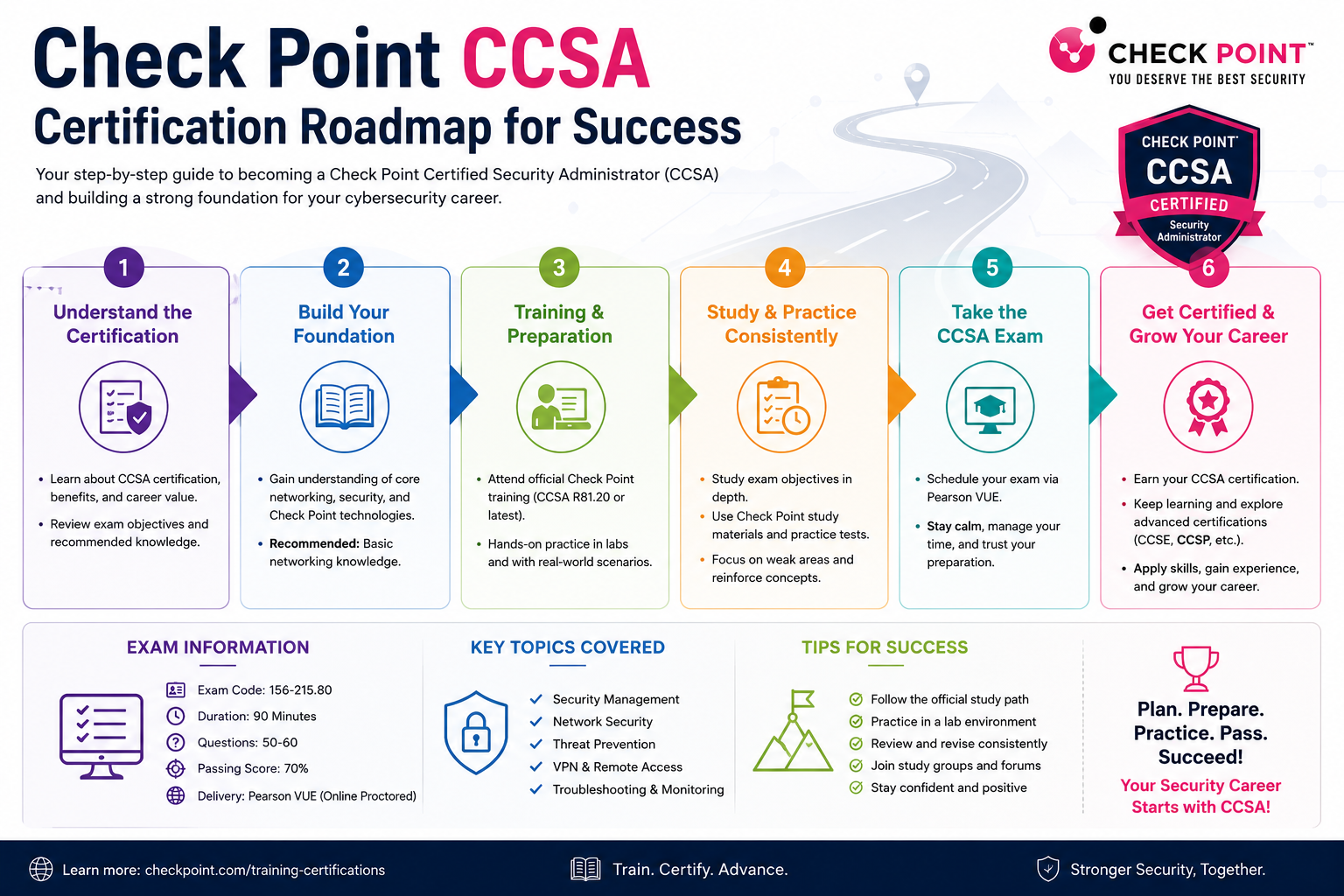
The demand for skilled cybersecurity professionals continues to rise as organizations face increasingly complex threats across digital environments. Businesses of all sizes are prioritizing security, not just as a technical requirement but as a core part of their operational strategy. This shift has created a strong need for professionals who can confidently manage, monitor, and protect network infrastructures. One of the most effective ways to demonstrate these capabilities is through industry-recognized certifications, and the Check Point Certified Security Administrator credential stands out as a practical and career-focused option for those looking to specialize in network security.
Understanding the Value of Security Certifications
Security certifications serve as a benchmark for validating technical expertise and practical knowledge. They help employers identify individuals who are capable of handling real-world security challenges. For learners, certifications provide a structured path to gaining relevant skills while also improving career opportunities. In a competitive job market, having a recognized credential can significantly strengthen a candidate’s profile, especially in roles that require responsibility over sensitive systems and data.
Certifications in cybersecurity are not only about passing exams; they reflect a deeper understanding of concepts such as threat management, system hardening, and secure network design. As threats evolve, certified professionals are expected to adapt and apply updated practices, making continuous learning a key part of the journey.
Introduction to the Check Point CCSA Certification
The Check Point Certified Security Administrator certification is designed for individuals who want to build or enhance their skills in managing Check Point security systems. It focuses on practical knowledge required to configure, maintain, and troubleshoot security gateways and management servers. This certification acts as a strong foundation for those aiming to specialize in firewall technologies and enterprise security solutions.
It is considered an intermediate-level certification, meaning it bridges the gap between basic networking knowledge and advanced security expertise. While beginners can pursue it, having prior exposure to networking and system administration concepts makes the learning process smoother and more effective.
Core Skills Developed Through CCSA
The certification emphasizes hands-on skills that are directly applicable in real-world environments. Learners gain the ability to install and configure security gateways, which are essential components responsible for protecting network traffic. Understanding how to deploy these systems correctly ensures that organizations can defend against unauthorized access and cyber threats.
Another important skill involves working with management servers. These servers allow administrators to define and enforce security policies across the network. Through the certification process, learners become familiar with configuring objects, setting rules, and managing policies using centralized tools. This ability to control and monitor security settings from a single interface is critical in large-scale environments.
Network Address Translation is also a key topic covered in the certification. Learners explore both manual and automatic configurations, understanding how IP addresses are translated to enable secure communication between internal and external networks. This concept plays a vital role in maintaining privacy and controlling traffic flow.
Working with Security Policies and Traffic Inspection
One of the most important aspects of network security is the ability to define and enforce policies that control how traffic is handled. The certification teaches how different policy layers influence traffic inspection and how rules are applied in a structured manner. This knowledge helps administrators ensure that only legitimate traffic is allowed while malicious or unauthorized access attempts are blocked.
Understanding traffic inspection also involves analyzing how data moves through the network and identifying potential vulnerabilities. By mastering these concepts, learners can design policies that not only protect systems but also maintain optimal performance.
Application Control and Web Filtering Capabilities
Modern security solutions go beyond simple firewall rules. They include advanced features such as application control and URL filtering. These capabilities allow administrators to regulate which applications can access the network and which websites users can visit.
Through the certification, learners gain insight into how these features work and how they can be configured to align with organizational policies. This level of control is essential for preventing data breaches, reducing exposure to malicious content, and maintaining compliance with security standards.
Logging, Monitoring, and System Health Management
Effective security management requires continuous monitoring and analysis. The certification covers how to configure logging parameters, which enable administrators to track network activity and identify suspicious behavior. Logs provide valuable information that can be used for troubleshooting, auditing, and incident response.
In addition to logging, learners explore tools used to monitor system health. This includes both graphical interfaces and command-line utilities that provide insights into the performance and status of security devices. Being able to quickly identify and resolve issues ensures that systems remain secure and operational at all times.
Recommended Knowledge and Experience Before Starting
Although there are no strict prerequisites for pursuing the certification, having a foundational understanding of networking concepts is highly beneficial. Knowledge of protocols, IP addressing, and basic security principles helps learners grasp advanced topics more effectively.
Experience with operating systems, particularly those commonly used in enterprise environments, can also make a significant difference. Familiarity with command-line interfaces and system configuration allows learners to focus more on security concepts rather than basic technical skills.
Practical experience with security products, even at an entry level, can provide valuable context. Those who have spent time working with firewalls or network monitoring tools often find it easier to relate theoretical concepts to real-world scenarios.
Exploring the Structure of the Certification Exam
The certification exam is designed to evaluate both theoretical understanding and practical knowledge. It includes a combination of multiple-choice questions and scenario-based questions that test the ability to apply concepts in realistic situations.
Candidates are given a limited amount of time to complete the exam, which requires not only knowledge but also time management skills. The number of questions can vary, but each question is intended to assess a specific area of expertise. Achieving a passing score demonstrates that the candidate has a solid understanding of the core topics covered in the certification.
Preparing for the exam involves more than memorizing facts. It requires a deep understanding of how different components work together and how to apply that knowledge in various scenarios.
Approaches to Effective Preparation
Preparation strategies can vary depending on individual learning styles, but a combination of theoretical study and hands-on practice is generally the most effective approach. Training courses provide structured learning paths that cover all exam topics in detail. These courses often include demonstrations, exercises, and assessments that help reinforce understanding.
Self-study is another important component. Reviewing documentation, practicing configurations, and experimenting with different scenarios can help learners build confidence and improve retention. Practice exams are particularly useful for identifying areas that need further attention.
Consistency is key when preparing for the certification. Setting a study schedule and dedicating regular time to learning ensures steady progress and reduces the risk of last-minute stress.
Expanding Knowledge Beyond a Single Certification
While the certification provides a strong foundation in Check Point technologies, many learners choose to broaden their expertise by exploring other areas of cybersecurity. This can include certifications that focus on general security principles, ethical hacking, or advanced security management.
Diversifying skills not only enhances career opportunities but also provides a more comprehensive understanding of the security landscape. Professionals who are familiar with multiple technologies and approaches are often better equipped to handle complex challenges.
Career Opportunities After Achieving CCSA
Earning the certification can open doors to a variety of roles in the cybersecurity field. Positions such as network security engineer, security analyst, and systems administrator often require the skills validated by this certification. These roles involve responsibilities such as managing firewalls, monitoring network activity, and responding to security incidents.
Career growth in this field is often influenced by experience, additional certifications, and the ability to adapt to new technologies. The certification serves as a stepping stone, providing the knowledge and credibility needed to pursue more advanced roles.
Understanding the Broader Certification Path
The certification is part of a larger pathway that allows professionals to advance their expertise over time. Starting with foundational knowledge, learners can progress to more advanced certifications that focus on specialized skills and deeper technical understanding.
Each level builds on the previous one, creating a structured journey that supports continuous learning and professional development. This progression not only enhances technical skills but also increases the potential for career advancement.
The Importance of Practical Experience
While certifications are valuable, practical experience remains a critical factor in achieving success. Working with real systems, solving actual problems, and gaining hands-on exposure to security environments help reinforce theoretical knowledge.
Employers often look for candidates who can demonstrate both certification and practical skills. Combining these elements creates a well-rounded professional who is capable of delivering effective security solutions.
Building Confidence Through Continuous Learning
The field of cybersecurity is constantly evolving, with new threats and technologies emerging regularly. Staying updated requires a commitment to continuous learning and professional development. Certifications provide a structured way to achieve this, but ongoing practice and exploration are equally important.
Building confidence comes from understanding not just how systems work, but why certain approaches are used. This deeper level of knowledge enables professionals to make informed decisions and adapt to changing circumstances.
Laying the Foundation for Long-Term Success
The journey toward mastering network security begins with a strong foundation. The Check Point Certified Security Administrator certification provides the knowledge and skills needed to manage and secure network environments effectively. It introduces learners to essential concepts, tools, and practices that form the basis of a successful career in cybersecurity.
By focusing on practical skills, structured learning, and continuous improvement, individuals can build a solid path toward achieving their professional goals. The certification is not just an endpoint but a starting point for further growth and specialization in the ever-evolving world of information security.
Conclusion
The journey toward becoming a skilled network security professional requires both direction and dedication, and the Check Point Certified Security Administrator certification offers a strong starting point for that path. It equips learners with practical knowledge that goes beyond theory, enabling them to confidently manage security gateways, enforce policies, monitor traffic, and maintain the overall health of network environments. These capabilities are not just valuable—they are essential in a world where cyber threats continue to grow in scale and complexity.
Pursuing this certification reflects a commitment to building real-world skills that organizations actively seek. It demonstrates an understanding of how security systems operate in live environments and how to respond effectively to challenges that arise. More importantly, it lays the groundwork for deeper specialization, allowing professionals to progress into more advanced roles and certifications with greater confidence.
Success with this certification does not come from memorization alone but from consistent learning, hands-on practice, and a willingness to explore how security concepts apply in different scenarios. Those who invest time in understanding the underlying principles will find themselves better prepared not only for the exam but also for real-world responsibilities.
In the broader context of a cybersecurity career, this certification serves as a meaningful milestone. It opens opportunities, strengthens credibility, and provides a clear direction for future growth. With the right approach and persistence, it can become a powerful stepping stone toward long-term success in the ever-evolving field of information security.